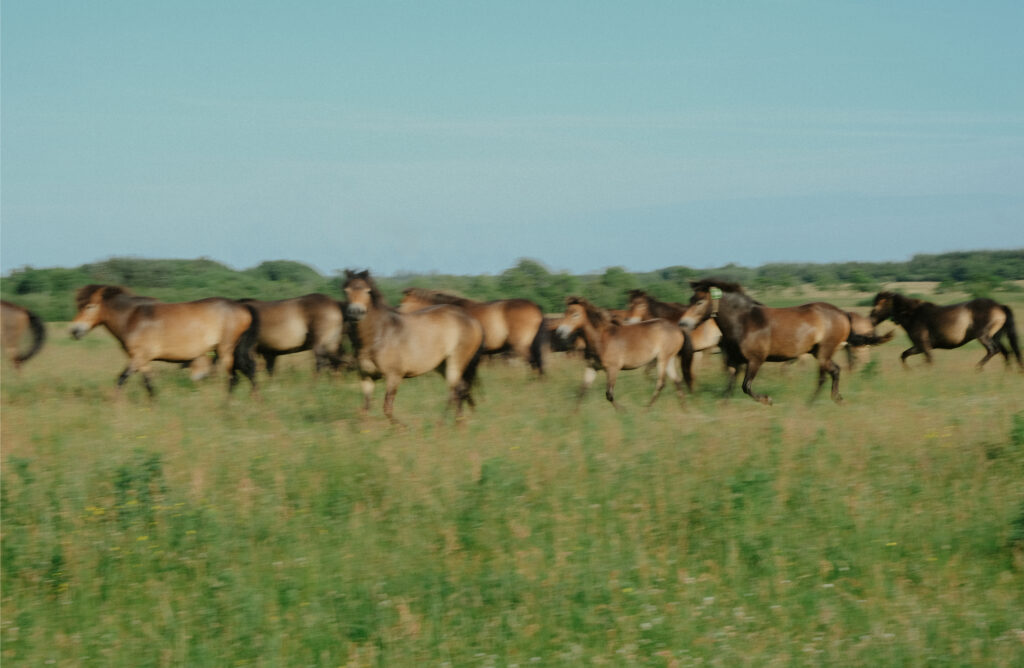
From pastoral sheep herding to organic farming and community outreach, women are challenging Denmark’s “green” façade and reviving socio-ecological practices.
Denmark is often praised as one of the world’s most sustainable nations, largely due to its renewable energy initiatives, goal of carbon neutrality by 2050, and its widely accepted culture of ecological consciousness. Words like “organic,” “eco,” and “sustainable” have become buzzwords in Danish life, reassuring citizens of their ethical consumption. From afar, it is easy to believe Denmark has solved the climate crisis. But behind the polished statistics lies a carefully maintained “green” façade.
Over 60% of the country’s land is devoted to industrial agriculture, primarily for pigs, cows, and export crops like wheat and barley. While “engineered” farms and tree plantations make up much of the nation’s landmass, wild forests cover less than 1% of Danish land, reflecting a drastic lack of biodiversity. Despite promising new initiatives like the 2024 Green Tripartite Agreement, which aims to tax livestock emissions and restore biodiverse landscapes, Denmark’s climate strategy remains confined behind bureaucratic doors. These top-down policies rarely engage local communities and overlook the potential of grassroots climate solutions.
Yet across the country, a quiet few are championing the cause of “rewilding” Denmark’s landscapes and reconnecting individuals with the natural world through sustainable practices — and the majority of them are women.
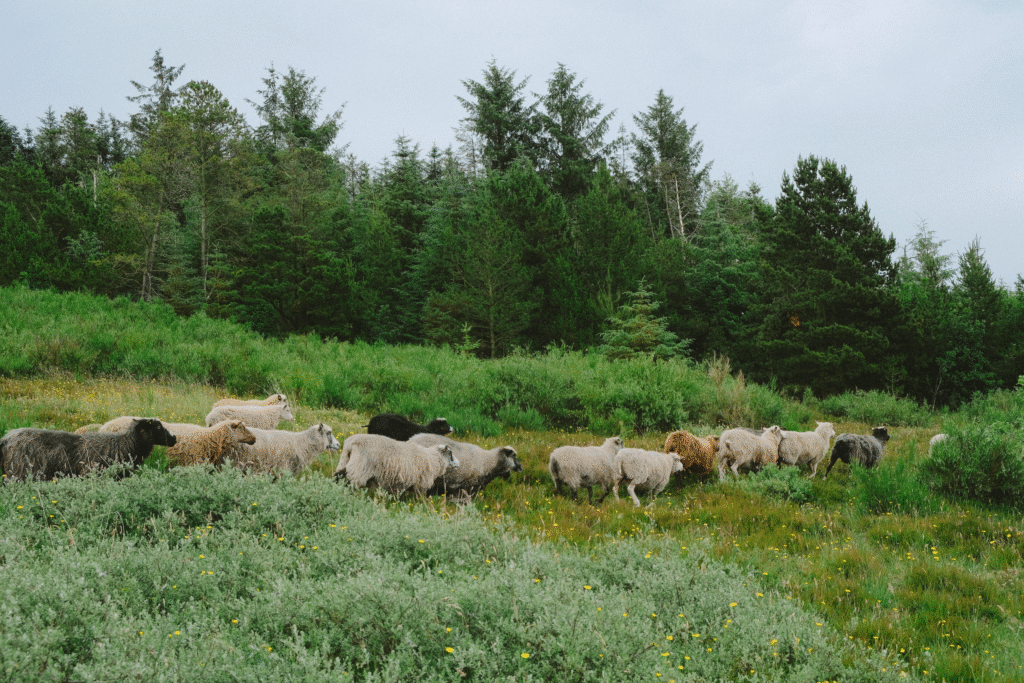
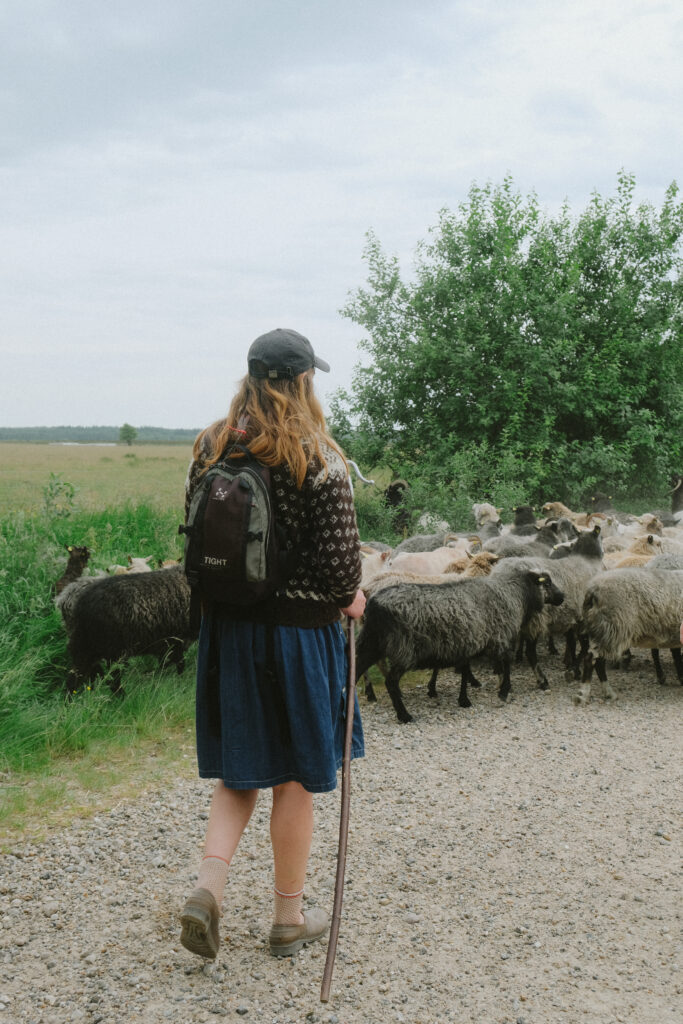
On Denmark’s Western coast of Jutland, Berit Kiilerich has spent decades preserving the ancient art of pastoral sheep herding at her farm, Lystbaekgaard (est. 1999). She is the country’s only formally trained shepherdess, and her livelihood is being threatened.
“We learn nothing about sheep and land use in the school system, but land care and animal care in regenerative farming are so important,” says Berit.
Pastoral herding is a nomadic practice in which sheep raised for wool and meat are rotated between fields, allowing the land to rest and regenerate while giving the animals ample room to roam. The sheep eat invasive species and spread seeds of native plants through their movement and excrement, bringing equilibrium to the landscapes while increasing biodiversity. But over the last 200 years, as industrialised agriculture spread rapidly across Europe, wealthier countries in the North have entirely abandoned traditional forms of grazing, apart from Indigenous communities such as the Sámi. Now, pastoralists worldwide are struggling to compete against large-scale farms.
“The problem is that nature has no money to pay and [Danish farmers] choose pig and cow farming for money over the free skills, like nomadic shepherding.”
For Berit, her daily work of caring for and harvesting from her herd is rooted in a relationship of reciprocity. She warns that the erasure of traditional agriculture will not only make life unsustainable for small businesses like hers, but for the land as well. With more pastures used for continuous grazing, there will be increasing areas of erodible, unsalvageable land beyond the point of regeneration.
“The sheep teach you new knowledge every day, while knowledge [among humans] is not given from hand to hand anymore. Ancestral knowledge is hard to find,” says Berit.
In recent years, Berit has been training young farmers. While her doors are open to both men and women, the majority of her students are young women who travel from all over the country to stay on her farm and live with the sheep. Berit hopes her mentorship will make the future of farming in Denmark less “male and machine dominant,” and instead create a circular economy where small businesses can continue to thrive while nurturing the land and animals they profit from.
“The sheep teach you new knowledge every day, while knowledge [among humans] is not given from hand to hand anymore. Ancestral knowledge is hard to find,”
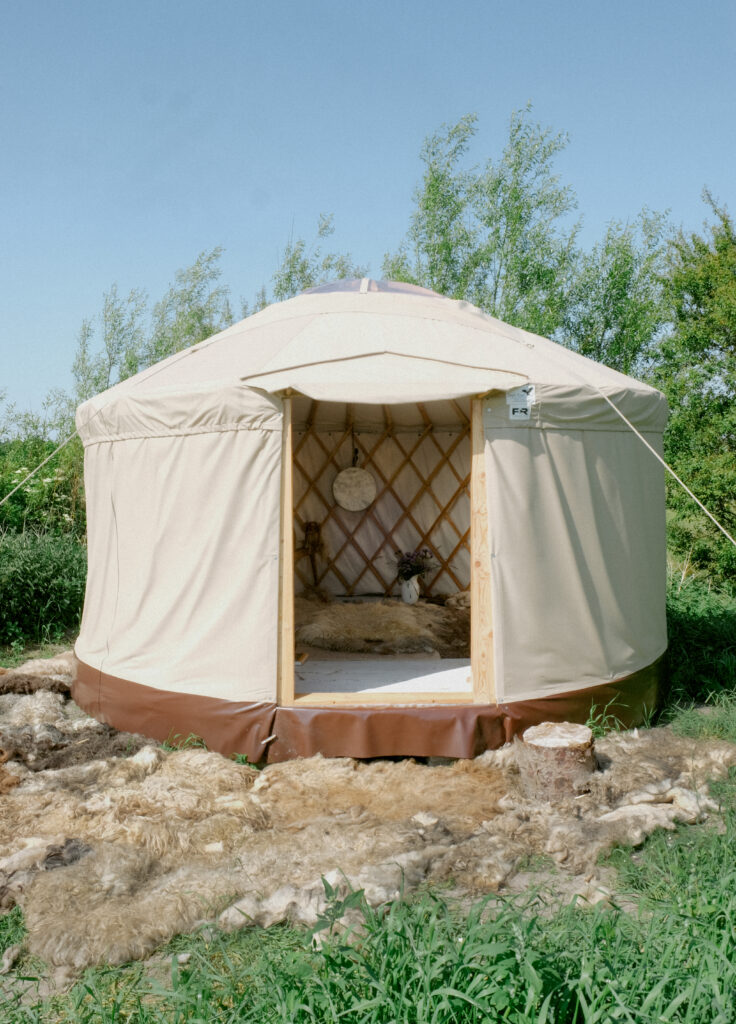
While Berit works with animals, Lærke Lyhne is redefining plant agriculture. From her organic farm in Skanderborg, she teaches workshops on identifying and cultivating medicinal plants.
Lærke challenges the farming practices she encountered in her schooling, which she found to be too reliant on extractivism. Her philosophy centers on strengthening one’s relationship with the living world and recognizing that “all flourishing is mutual.”
In a society where most of us do not know the names of the plants in our backyard, Lærke’s work proves that we cannot learn to protect what we do not recognise. Thus, her practice merges scientific knowledge with an ancient ecological tradition: witchcraft. Women across the world are reclaiming the term as a way to acknowledge the magic of the natural world and enliven their connection to it. While the idea of “magic” is often dismissed as a farce by patriarchal systems of knowledge, women farmers who identify with this concept, like Lærke, are fully aware that agriculture is a scientific process. Their goal is not to dismiss the science that is intrinsic in their work, but to educate people that nature is abundant, transformative, and healing. It is “magical,” and therefore worth saving.
“For me, magic is the celebration of what we don’t understand, rather than the fear of what we do not know,” Lærke says.
According to her, the reintegration into nature can be as simple as exploring a garden. Rather than relying on disembodied learning from a textbook, Lærke encourages her students to learn through their senses by interacting with the plants she grows. She then teaches them to make custom herbal drinks, natural skincare remedies, and medicinal blends.
Each step in her process is an act of reconnection with the natural world, affirming for her students that we are not separate from nature’s medicine.
“The situation in the world right now is almost unbearable, and right now we need more magic. More people who dive into the wonders of nature,” she states on her Instagram.
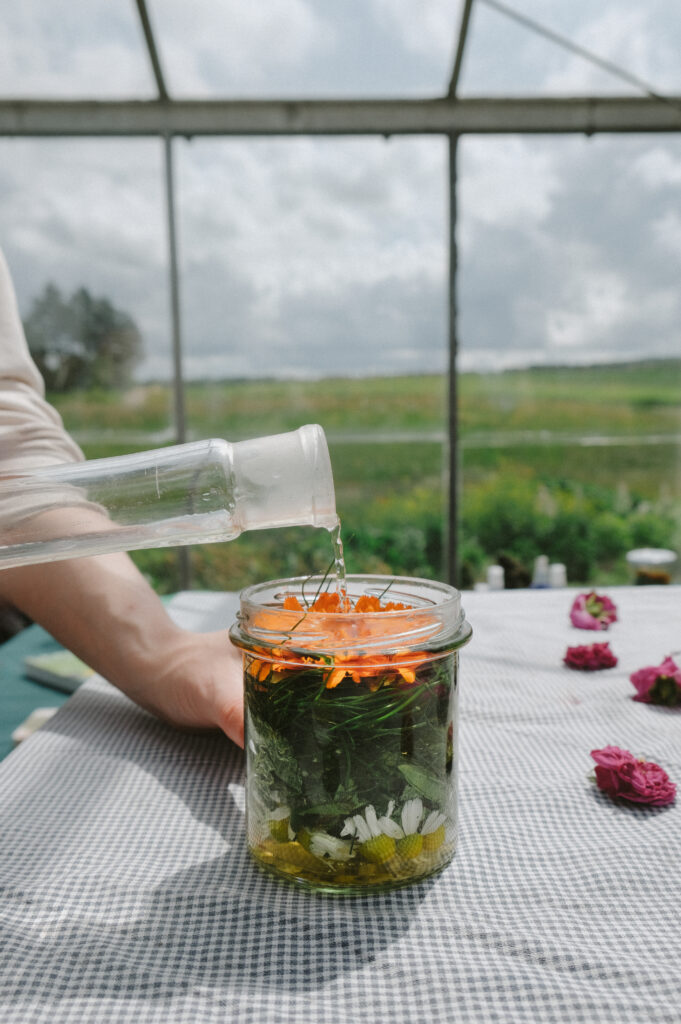
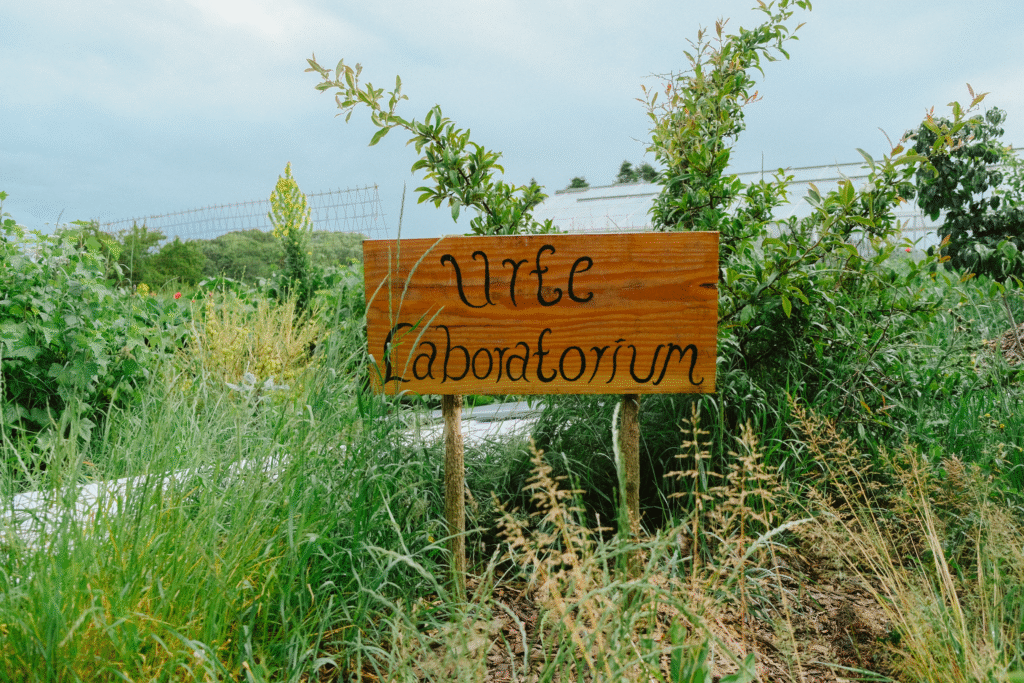
When Berit’s sheep roam and Lærke’s plants grow, the earth itself becomes a classroom. In June 2025, Berit and Lærke hosted workshops for participants of NOAH, the Danish branch of Friends of the Earth International. Based in Copenhagen, NOAH has long campaigned for environmental justice, but after noticing apathy among young people, it changed their educational approach.
“Students have gone from indignation and curiosity to total apathy and discouragement as the climate crisis worsens, which is why we have changed our programming to outdoor education,” explains Anna Rønne, NOAH’s Sustainable Project Director.
Since 2022, NOAH has received intergovernmental funding to facilitate outdoor education for young people. This summer, the group organised the four-day “Serviceberry Road Trip” across Denmark, where participants learned about nature-based approaches to the climate crisis. The groups were diverse, farmers, activists, and many newcomers to environmentalism, yet most were women and more than half were over 30 — highlighting the continued struggle to engage men and young people in community ecology.
“We know from research that young people are quite worried about these crises and are exposed to a very high degree of data about how bad things are. This is happening in parallel with children and young people having less and less contact with the nature that ‘they are losing,’ and who are constantly told they have to fix all the shit the older generations have created,” says Rønne.
According to NOAH, this constant flow of media makes it difficult for grassroots organisations to “penetrate the media wall” and engage younger audiences in their work. Road trip participants noted that this dependence on media — where users tirelessly watch climate catastrophes from their phone screens — is rooted in individual responsibility instead of collective action.
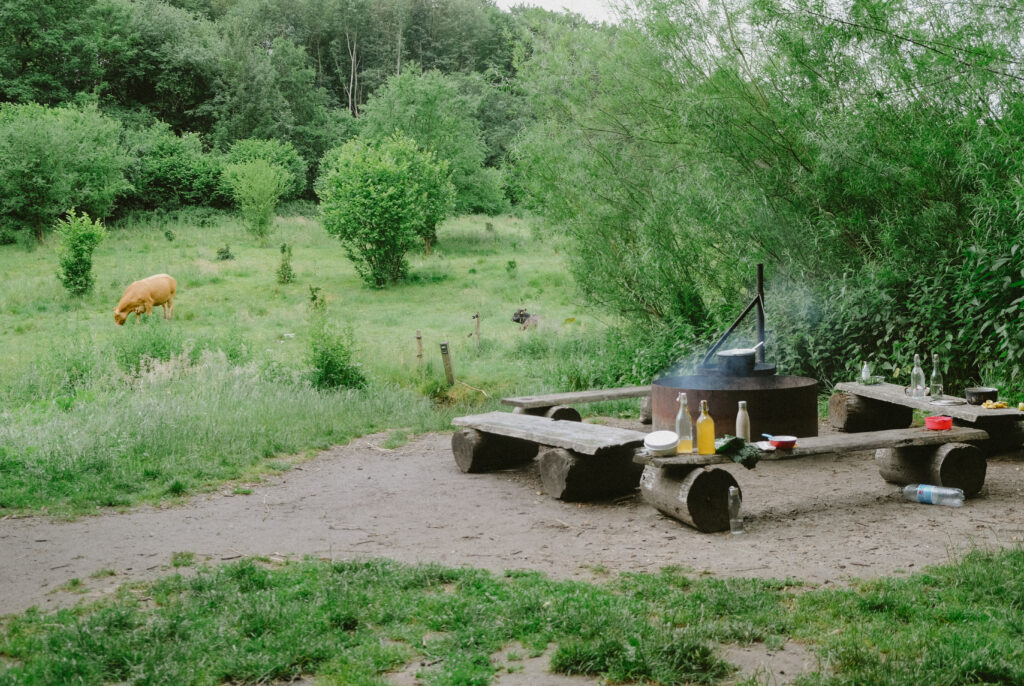
“We are afraid that large companies, disconnected from the earth’s natural regenerative systems, without regard to the nine planetary boundaries, are convincing young people that they should just fix the world’s problems with more technology,” Rønne explains. “By giving young people new connections to nature, they can gain insight into the fact that nature’s regenerative systems can fix the biodiversity crisis, the climate crisis, and our mental crises.”
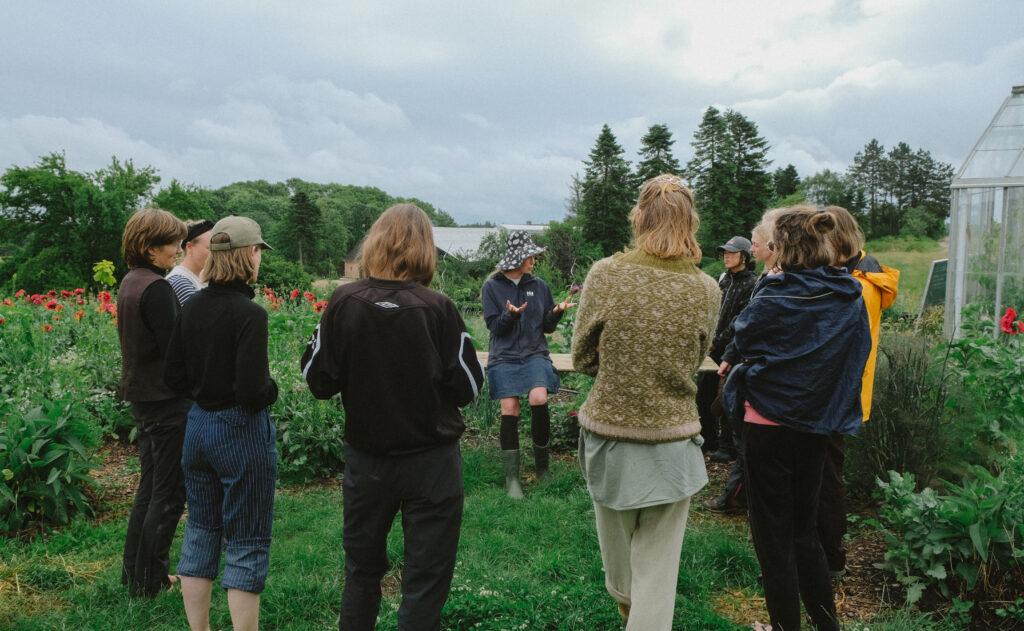
“By giving young people new connections to nature, they can gain insight into the fact that nature’s regenerative systems can fix the biodiversity crisis, the climate crisis, and our mental crises.”
Through programs like the Serviceberry Road Trip, NOAH is cultivating a network of citizens empowered by collaborative ecological knowledge. By doing so, NOAH is shifting the Danish government’s climate narrative from an overreliance on technocratic, market-based solutions to building community power from below.
By strengthening community resilience and reframing the climate crisis as a cultural and relational issue, rather than merely a technological and economic one, NOAH is filling the gaps in Denmark’s “green” progress. The women leading this transition are part of a growing global movement pushing for regenerative solutions to confront climate change. They remind us that sustainability is not just about lowering our individual footprints or developing green technologies, where our efforts can be reduced to a self-serving façade.
While critics may argue that such small-scale methods cannot meet the demands of modern economies, or that systemic change can only be achieved through policy, regenerative agriculture and community building do not seek to replace innovation. Denmark’s progress in renewable energy and emissions reduction remains significant and sincere, but it is not complete.
In a nation celebrated for its sustainability, these women remind us that climate consciousness must be lived, not just measured. Berit’s roaming sheep, Lærke’s healing plants, and NOAH’s outdoor classrooms all point to another path: one that heals our relationship with our land, our food, and each other. This path is biocultural knowledge: still alive, still possible, if we choose to listen.