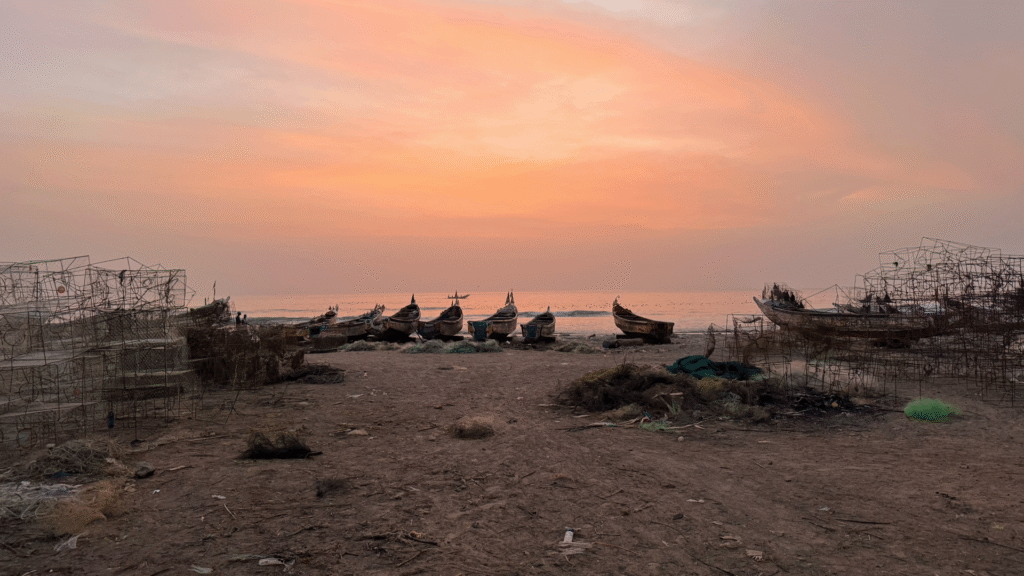
Collaborative cartographies against displacement along The Gambian shores.
West Africa’s marine ecosystem is facing serious pressure across several fronts. Climate change is altering ocean currents and shifting the migratory patterns of fish populations, meanwhile, rising sea levels are accelerating coastal erosion, and pollution continues to increase. However, perhaps most urgently, the region is experiencing unprecedented levels of ocean grabbing, as large-scale industrial fishing—often backed by agreements with countries in the Global North—extracts vast amounts of fish from West African waters. In this context, the European Union (EU) and other foreign countries have been strongly criticised for their role in the depletion of West African fish stocks with the current rates of extraction driving several species towards extinction and jeopardising the livelihoods of artisanal fishing communities.
Meanwhile, EU border externalisation practices directed at preventing migration from West Africa to Europe—such as the provision of equipment and training, maritime surveillance and border control—have become increasingly commonplace along the West African coast. The EU’s fisheries and migration regime drives displacement through overfishing, whilst simultaneously seeking to immobilise those attempting to escape it. This cycle of injustice is acutely evident along the shores of The Gambia, Africa’s smallest mainland nation. Where artisanal fishing provides direct and indirect employment to an estimated 25-30,000 people, with the livelihoods of roughly 200,000 people critically dependent on fishing and related activities. Beyond the fisheries sector, high youth unemployment and widespread poverty affect over 48% of the population, driving many to migrate. The Gambia is the African nation with the highest per capita rate of irregular migration to Europe.
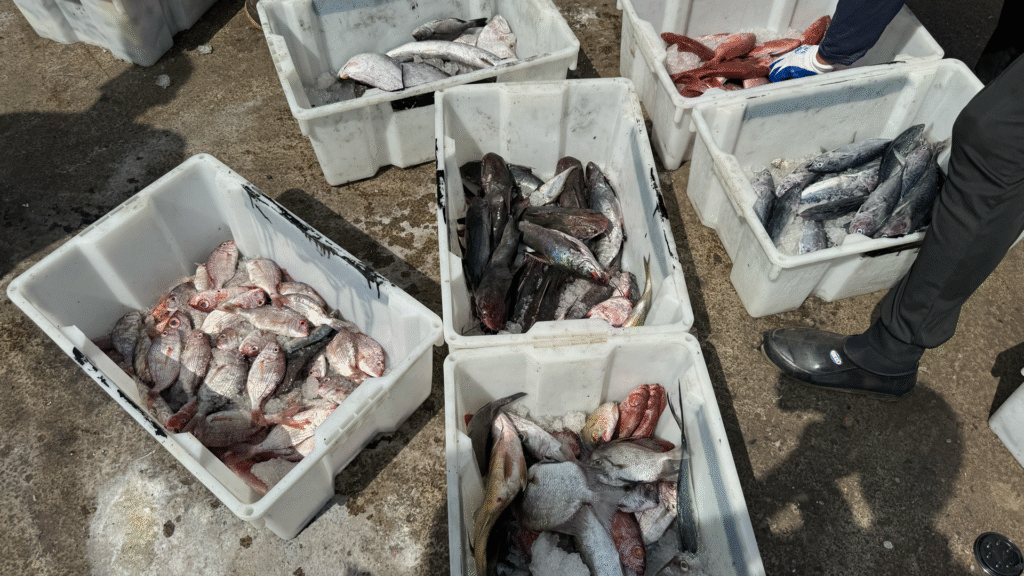
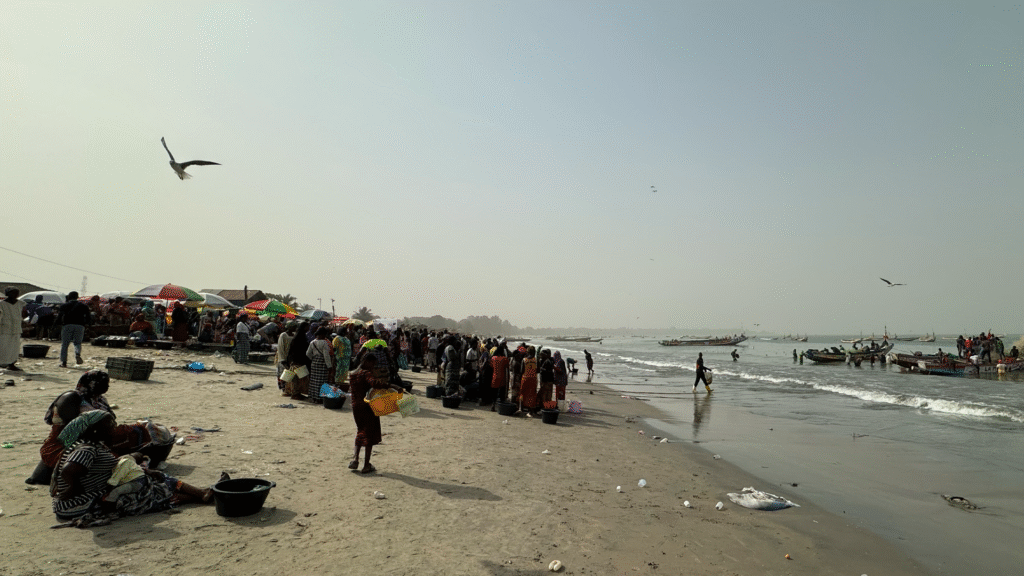
Between 2023 and 2026 LIMINAL (a research laboratory based at the University of Bologna’s Department of the Arts) investigated extractive fishing practices along The Gambian coast, and its role in the systemic displacement of coastal communities. The investigation formed part of the European Research Council funded Hostile Environments Project (HEMIG): the political ecology of border violence and migration, in which visual investigation and community-led evidentiary practices were developed to document and denounce human rights violations across a series of sites, along a typical migratory route from West Africa to mainland Europe. In The Gambian component of this project, these practices were deployed to document systemic environmental violence, widespread displacement and practices for resistance.
LIMINAL’s investigation in The Gambia centred on the operations of three predominantly Chinese owned fishmeal and fish oil (FMFO) factories, located at The Gambia’s main artisanal fishing villages; Sanyang, Gunjur and Kartong. Each factory significantly contributes to both widespread pollution and overfishing through converting the region’s most vital source of protein, Bonga and Sardinella fish, into powders and liquids. Products which are sold exclusively to foreign consumers, including in the EU, and widely used across the agriculture, aquaculture and cosmetic industries. Whilst members from the communities surrounding each factory have long denounced the ongoing environmental and social impact brought about by these activities, systemic corruptions and a general lack of government oversight have so far left many of these voices unheard, with the factories’ operations continuing largely unchecked.
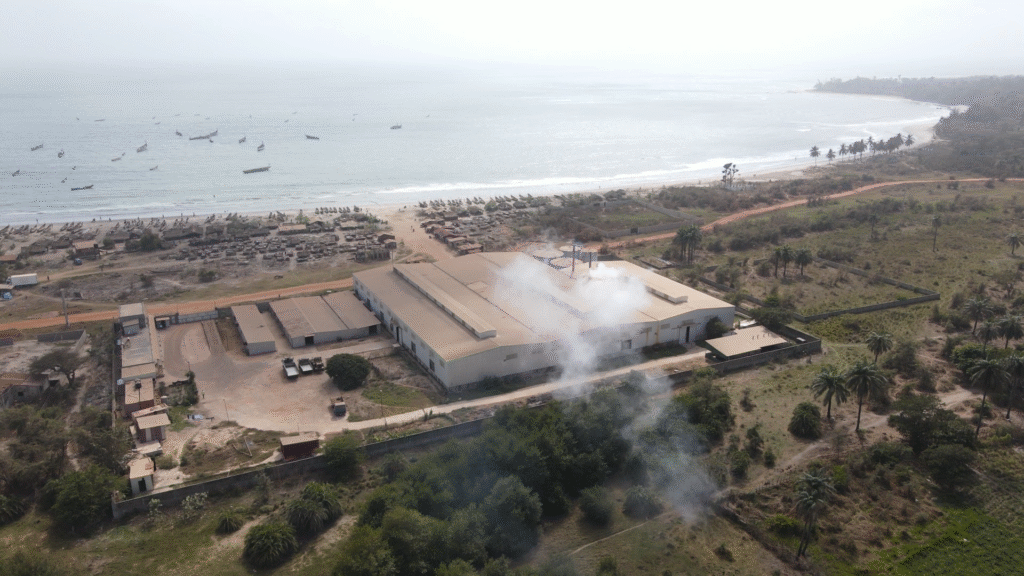
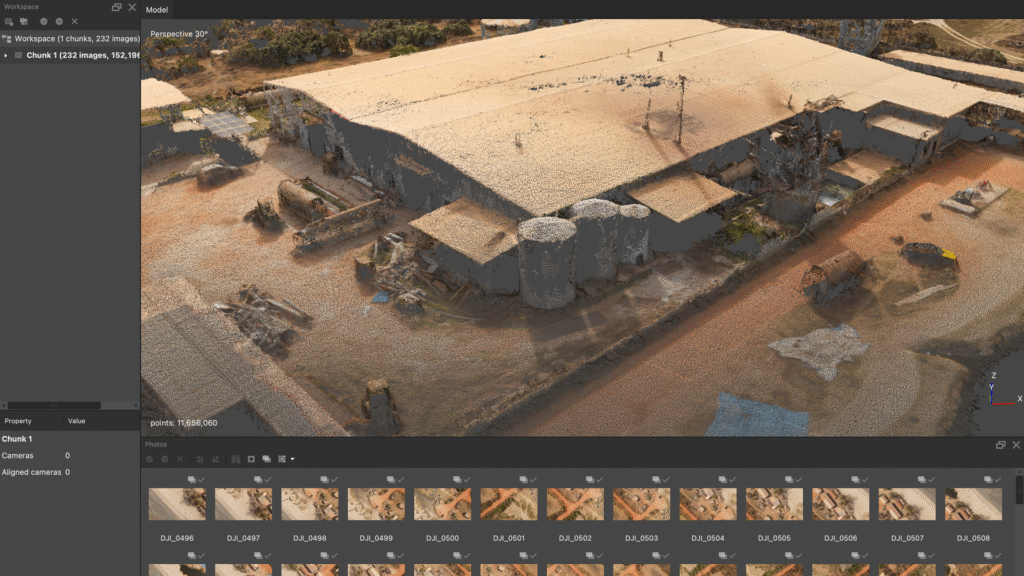
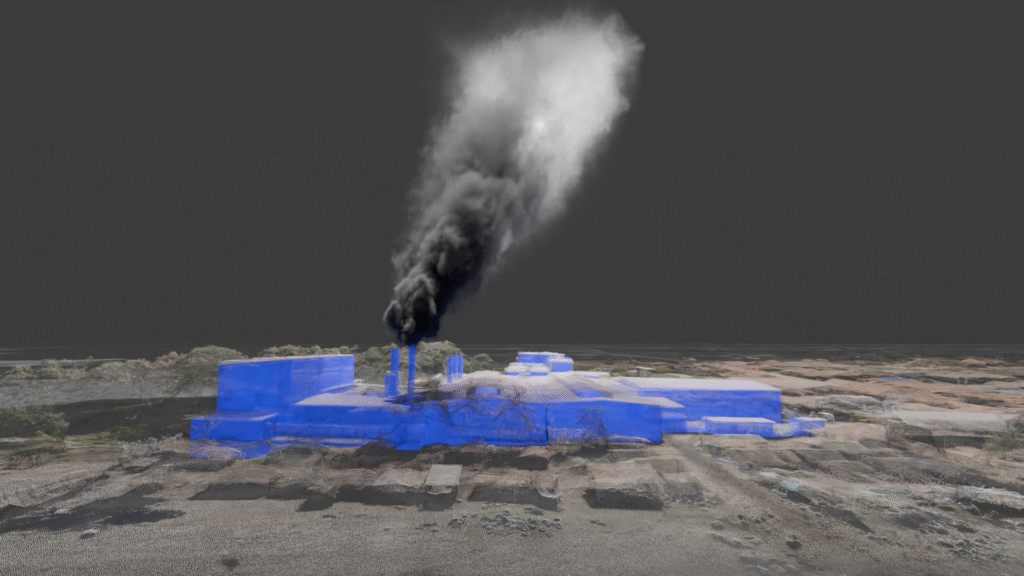
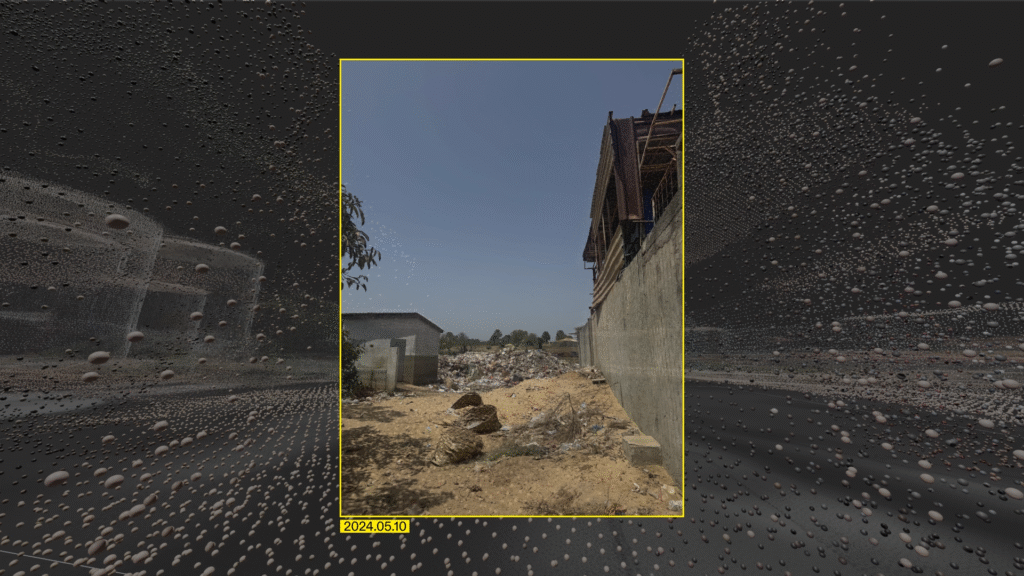
The initial stages of the investigation built upon LIMINAL’s previous experience in mapping state sponsored violence in the Central Mediterranean Sea, by evidencing the veracity of oral testimonies from members of affected communities in Sanyang, Gunjur and Kartong. Drone surveys and the computation of a photogrammetric 3D point cloud model of the Golden Lead factory at Gunjur allowed for the ‘geo-location’ of images gathered by LIMINAL researchers, provided by activists, and gathered online via social media. The 3D modelling, a geo-spatial archive of evidence documenting instances of pollution and environmental violence around the factory’s coastal site, included data from as far back as 2016.
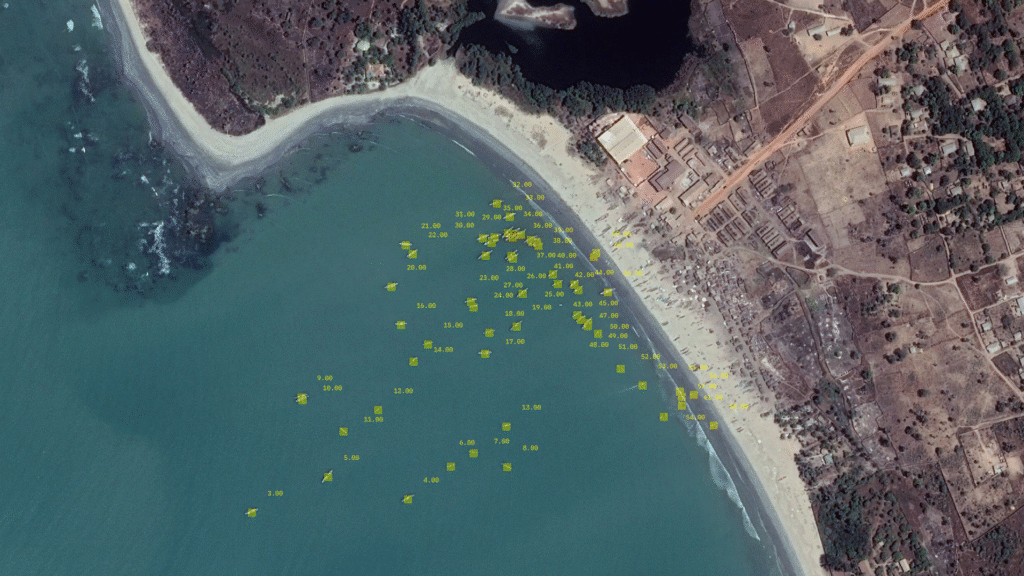
“The fishmeal factory calls [the Senegalese fisherfolk], for that six months [fishing season], so when they come, they don’t buy our fish, they only buy these peoples’ fish. Even when they want to buy our fish, they buy it for less, when they buy this [the Senegalese fisherfolks fish] for 600, they will buy our fish for 200 or 250”
Meanwhile, data gathered by an air quality sensor adjacent to the factory’s entrance at Gunjur (supplied by The Permian Lung Institute) provided insights into atmospheric pollution around the site. The use of open-source coding languages such as python script, and conventional practices from the field of environmental science and data analytics allowed for the comparison of air quality at Gunjur over an entire calendar year between 2022 and 2023. The results of which highlighted a daily reduction in air quality during the factory’s operating season, accounting for chronic health issues and disruptions to daily life described by many in the community, and in the testimony of prominent Gunjur marine biologist Ahmed Manjang.
“This quiet part of The Gambia was reserved for Eco Tourism, and it was striving before the coming of the fishmeal factories. But once they are here, the smell, if you come during the season, you cannot sit here comfortably. The smell goes right into our living rooms. Much more the lodges along the beach…local Eco Tourism lodges employ local youths, and they cannot employ them anymore. And [the smell] also has a direct link to the vegetable growth because the fishmeal [smell] attracts certain kinds of flies, and these flies end up landing on the growing vegetables, and they transfer some kind of worm to it. So eventually the women have to pause to plant, they have to leave these low water level areas. Because there is this flies that is destroying there, so the impacts cannot be over emphasised.”
In the context of LIMINAL’s investigation in The Gambia (and indeed throughout their wider practice) these methods in visual analysis, counter-cartography and data collection provide a means to both investigate systems of violence and exclusion, and advocate for systemic change. In particular, through the production of visual tools such as maps, diagrams and films which simultaneously exist as the means of engagement with the site, and a practice for registering, documenting and denouncing acts of violence and negligence, across a range of public forums.
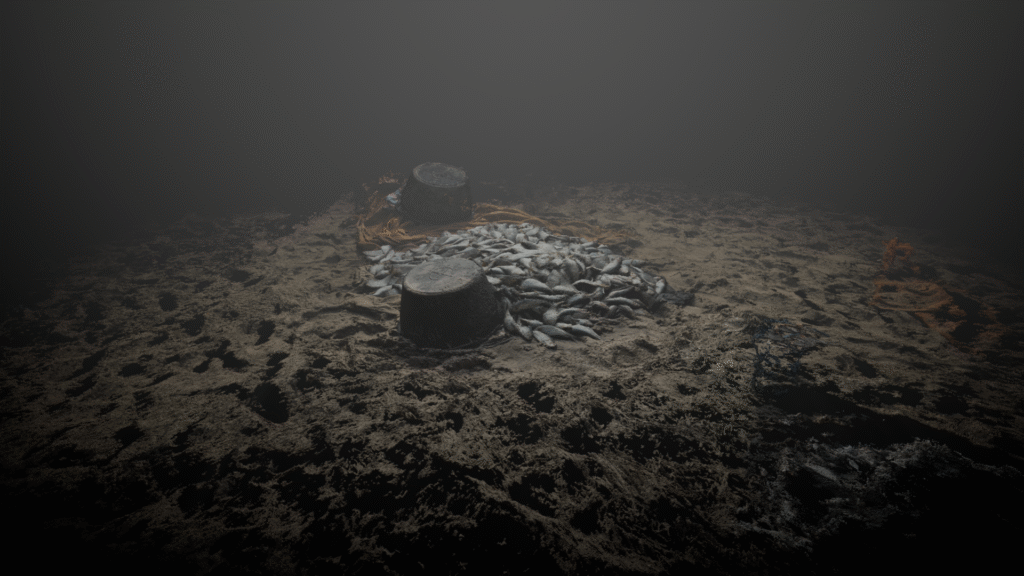
However, structural inequalities within frontline affected communities often render access to complex technical visualisations and cartographic studies difficult, if not impossible. Questions of technological literacy mean a purely cartographical approach to conceptualising issues of environmental violence risk isolating those most affected by it. Meanwhile, the technocratic nature of purely cartographic spaces often nullifies or excludes the profound cultural (or qualitative) impacts of environmental violence. In the case of The Gambia, this extends to the destruction of an entire socio-cultural life-world built around fishing, as outlined in the testimony of Italian based Gambian activist Bakary Cham.
“When you say, today what has changed, I would say it’s the difference between the sky and ground. Though it’s been years that I’ve not been back to The Gambia, but from what I have been seeing, and what I have been hearing I think it’s a pity because we are losing our culture, we are losing our tradition.”
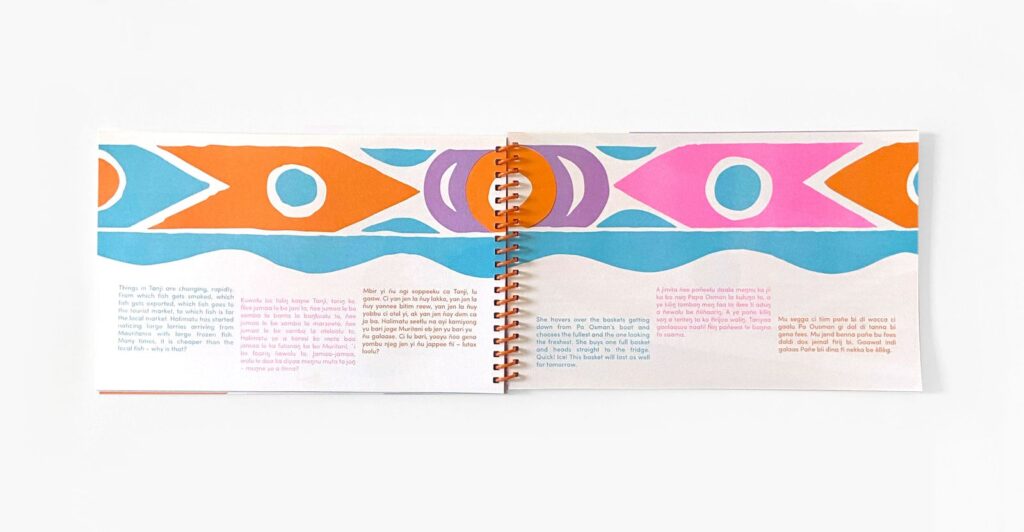
As part of LIMINAL’s investigation in The Gambia, a wider range of creative approaches were developed which, whilst also rooted in visual practices and cartography, sought to provide alternative forms of collective research and storytelling. This component of the investigation focused on the production of an illustrated children’s book that could be both shared locally and reach other audiences. The book centred on how fishmeal and fish oil factories were affecting everyday lives along the coast, whilst allowing children to learn from the experiences, realities and struggles of past generations.
While most of the workers interviewed as part of the environmental analysis were men, this part of the investigation chose to concentrate on the women within fisherfolk communities. An acknowledgment of the varied tasks carried out by men and women in the Gambian fishing industry: men mostly go to sea or work at the fishmeal factories, while women take charge of local fish retailing—smoking, salting, drying, cleaning and selling fish in the markets.
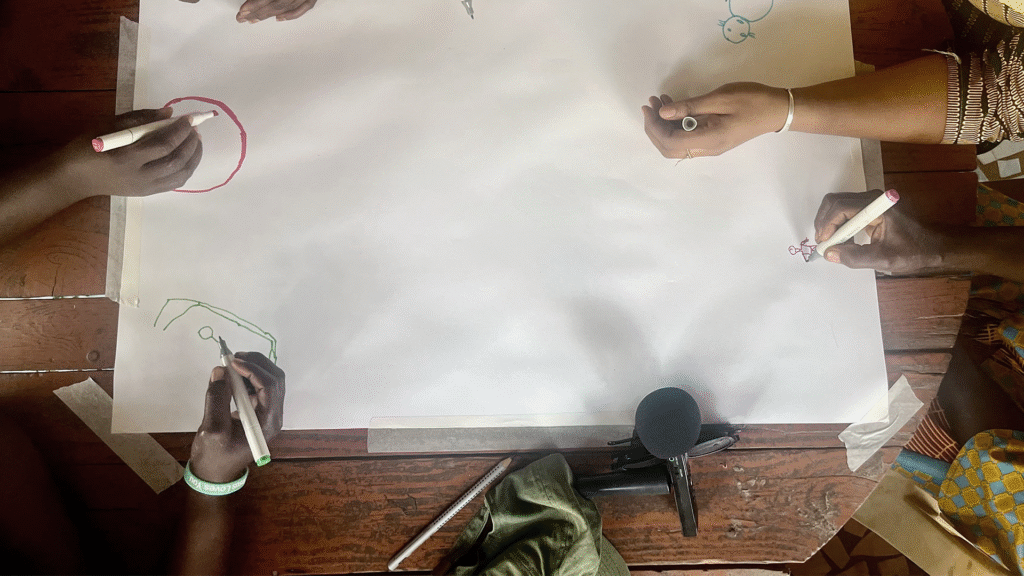
The book was realised through a series of collective storytelling workshops in which the participants authored their own lived experiences in a combination of Mandinka, Wolof, and English. These storytelling circles became spaces of communal world-making, where personal stories intertwined with collective reflection. Throughout these sessions drawing and mapping were used to visually anchor conversations and elicit stories. A practice of collective cartography which encouraged the women to diagram and visualise day-to-day practices, distill common relationships, and visually represent experiences that were translated into a collective narrative. A process in which oral histories were transformed into physical maps and written text that could circulate within and beyond the community, inverting the usual flow of extractive research practices.
Ultimately, the children’s book became both a tool for pedagogical community building and resilience, bridging generations, whilst ensuring that the memory of environmental violence, harm and displacement is not erased within the process of its very own enactment. During the storytelling circles women described how the presence of FMFO factories, dwindling fish supplies and rising prices affect their livelihoods, as demonstrated by the following quote from businesswomen Binta Bayo, who tragically passed away during the period in which the workshops were conducted.
[Nessim FMFO factory at Sanyang] is this factory that makes fish expensive here, because if they are fishing, they fish out everything. These ‘Fila turnes’ [Senegalese fishing boats] that go there usually carry along all the baby fish that are not useful for us. The fish that should reproduce for tomorrow all goes that way…we think that it helps us but if you come to look at it closely, this factory does not help us, it does not help us because it makes fish expensive here. It makes it difficult in The Gambia here.”
The various and disparate but interconnected cartographic components of LIMINAL’s investigation in The Gambia each seek to enact small yet profound gestures of resistance. In the case of the children’s book; redefining collective mapping and storytelling as a space of reciprocity rather than extraction, and as an act of reparation in the face of ecological and epistemological dispossession.
Meanwhile, the forensic and environmental analysis seeks to provide a wider platform for the testimonies of affected communities in their struggle for environmental and mobility justice, throughout The Gambia and beyond. Each of these components within a coalition of artistic, scientific and visual practices foreground mapping as a means to both study systems of violence and effect change within them. In turn, highlighting the role research-oriented practices can play in supporting victims of environmental violence throughout West Africa and abroad, whilst amplifying the voices of those most affected by it.
Text by; Clara Dublanc, Jack Isles & Sarah Walker. Project Team; Famara Jawara, Alagie Jinkang, Lorenzo Pezzani.
This project was made possible through the European Research Council funded HEMIG project; The political ecology of migration and border violence, under Grant ERC, HEMIG, 101042338. Views and opinions expressed are however those of the author(s) only and do not necessarily reflect those of the European Union or the European Research Council Executive Agency. Neither the European Union nor the granting authority can be held responsible for them.