Yuri Tuma on an active era of listening.
We often encounter the climate crisis through images and metrics: rising graphs, burning forests, melting ice. But long before catastrophe becomes visible, it is audible. The infrastructures that sustain contemporary life, including extraction sites, transport networks, and energy systems, generate a continuous field of sound. So do forests, oceans, insects, livestock, and laboratories. Some of these sounds are amplified; others are drowned out.
For Yuri Tuma, these overlapping sonic worlds are not background texture but a way of understanding the present. As co-founder of the Institute for Postnatural Studies, Tuma works at the intersection of ecology, technology, and more-than-human life, exploring what it means to live in a postnatural condition, where industrial systems, animal bodies, and human perception are irreversibly entangled.
In our conversation, Tuma speaks about the Phonocene, an era marked by the sonic consequences of human activity. We discuss petrochemical infrastructures and the low frequencies they release into bodies and landscapes, the physical and mental spaces where sound unfolds, and the forms of extraction involved when animal voices are recorded and used. Listening emerges as a way of relating to other beings, what Tuma calls an ‘active era of listening’. We also touch on the surprising absence of vocabulary for many environmental sounds and consider how ecological balance might be heard.
Icarus Complex spoke with Yuri Tuma about power, responsibility, and the politics of being heard.
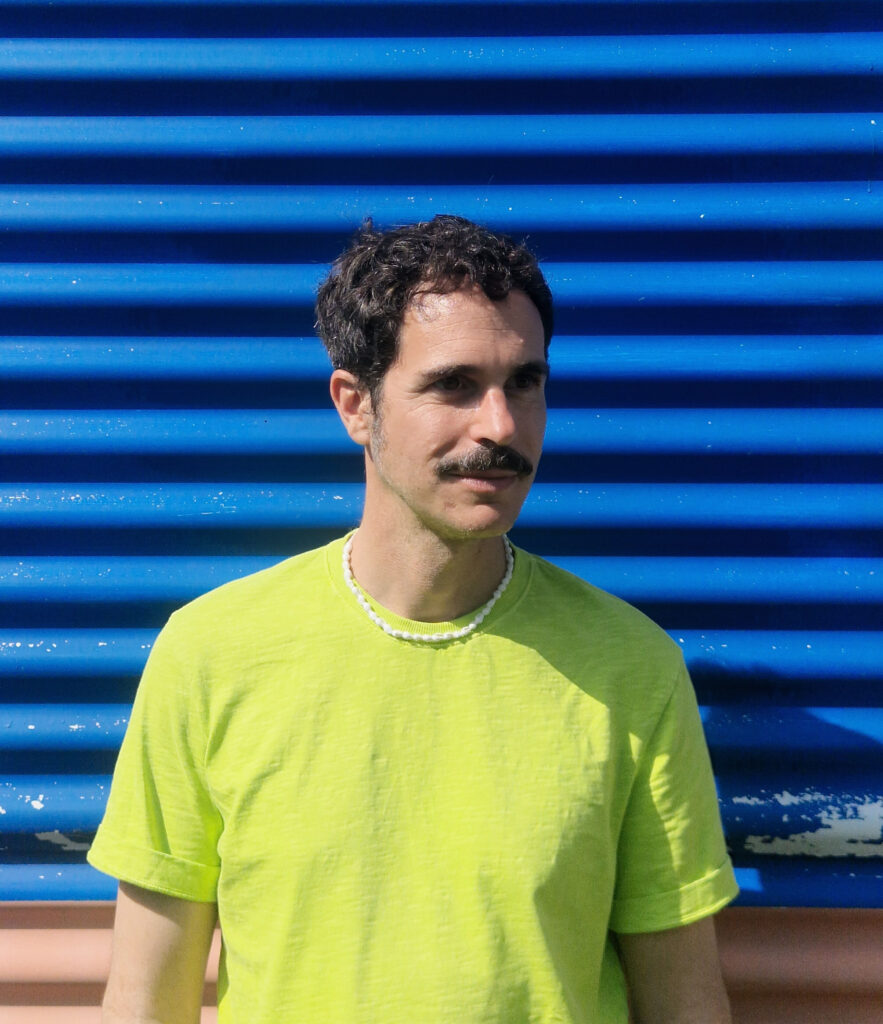
Yuri Tuma is a multidisciplinary Brazilian artist living in Madrid, where he co-founded the Institute for Postnatural Studies and practices as its Academic and Artistic Co-Director.
Yuri’s work focuses on the investigation of contemporary narratives related to sonic and queer ecologies through collective practice, active listening, sound art, installation, and performance. In early 2020, he co-founded the Institute for Postnatural Studies (IPS) in Madrid, a platform for critical thought and a collaborative network of artists, researchers, curators, and thinkers engaged with the complexities of the ecological crisis. In addition to participating in residencies and coordinating workshops around interspecies kinships and sound ecologies, Yuri has worked with educational and mediation programs at Spanish and international institutions such as Museo Nacional Centro de Arte Reina Sofía, Matadero Madrid, HEAD Géneve, Berlinale, Fundación Mar Adentro, School of Commons, among others. Within IPS, he also actively shapes the editorial route of Cthulhu Books, an editorial platform to showcase the political potential of imagining new worlds and possible stories for the planet through academic and artistic research.
YT: The Institute for Postnatural Studies, we are a research platform that we provide academic programming, cultural programming and curatorial or artistic projects based on critical research on ecology and contemporary arts. The way we do that is by providing seminars, short term seminars. We also have a midterm academic program, which is called the Postnatural Independent Program, which lasts six months. And then we’re also now thinking of a different format, which we’ll share eventually this year, hopefully.
So that’s one way that we engage with the postnature as a framework for contemporary thinking and artistic practices. We also have the Cthulhu books, which is our editorial line where we invite writers, thinkers, artists to engage with contemporary ecology through different formats of literary approach.
So poetry, performative writing, film transcripts, interviews, drawings, diary entries, correspondences. So we try to explore some different ways to engage with thinking about postnature through the editorial. And then we also get commissioned to perhaps produce an art piece or curate a program or curated exhibition based on a situated research or ecological framework. So that’s a little bit of what the Institute does. And to give a little glimpse of what postnature can be, because I think it’s one of those terminologies that is very elastic, it’s very malleable. I think it means something different for everyone.
A lot of people have different, even emotional reactions to that word. A lot of people receive it and get a little bit cringe with it or a bit icky. Or very excited to hear it. And I think the whole point of thinking of postnature is to create that sort of emotional reaction. Whether that may be of, oh, I don’t like that. That word just means that, like, where is nature if there is a postnature? Or it can be like, oh, I had never thought there is what comes after. But it could might as well have been prenature, before nature, future nature. Or anything that adds this timeline to the concept of nature.
And to give it in a quick glimpse, postnature is an invitation to engage with the concept of nature as a cultural construction.
So depending where you’re from, which culture you come from, which territory you come from, which land you come from, which family you come from, which book you’ve read, which TV shows you’ve seen, whatever you have engaged with, the image of nature, nature is something different to everyone. So there is not this static dictionary definition of what nature is. Because what this terminology invites to is that that is very problematic. Because it presents nature as this very static thing that doesn’t move, that has no other way to bedefined.
And in Western European culture, especially through artistic movements such as the romantic paintings, nature was this image that was outside of ourselves. That was hanging on the wall, that was the sublime, was very attached to human emotions. And suddenly there was a separation from the human to nature. Nature was this image on the wall and the human was the observer and not part of it. So postnature is an invitation for us to once again, not even enter the painting, but become the painting. Like we are part of it.
Nature is not this silent, pristine, lush green image. It’s a lot more.
CZ: The idea of the Phonocene, an era marked by the sonic consequences of human activity appears often in your work. How do you think reimagining an era of listening would change what counts as evidence, care, or responsibility in ecological practice?
YT: Sound for me has the same elasticity as the word postnature. I think sound is also very hard to define. We can think of sound in this very scientific engineering way where two things touch each other or they friction, or there is a contact, a combustion. When particles touch or objects, we hear something. Even our voices. Our bodies touch each other within. The throats. There are things touching. So that’s one way that we can understand sound.
But then I ask you, what about dreams or the dreamscape? Do you dream in sound? When you think back of a memory where, oh, I remember hearing the sound in my town when every year there was this festivity, you’re remembering a sound. There is no physical tangibility to it. When we think about this mental space and even emotional space where sound does have a reaction, can we consider the same idea of sound as something in friction? Because if I am dreaming in sound, where is that friction happening? For me, it’s also one of those words that can help us get away from these really rigid definitions which aligns a lot with queer ways of understanding ecology or nature where there is no binary.
There is no such thing as sound and silence and nothing in between. It’s not a binary, sound and unsound. So it was one of those words, methodologies where I could engage with thinking about nature as well.
So it was one of those words, methodologies where I could engage with thinking about nature as well.
The Phonocene is one of those ways in which sound and ecological thinking can interact. It’s been a very prepositive way to think about not only sound but listening. I think it’s super important to think that sound and listening as a combo, as things that happen together and simultaneously, they’re not separated, has also helped me understand how that can be applied ecologically. The Phonocene is a terminology by Donna Hathaway and also then expanded by Vinciane Desprez. I highly recommend the book Living as a Bird by Vinciane Desprez. Really incredible if you’re interested in understanding the phonocene better.
Basically, the way I understand it is what happens when we put sound and listening at the center of how we relate to each other or how we relate to our environment. What changes? It’s basically thinking, what could an era of active listening or sound be? For me, it’s been a super inspiring proposition to really question not only the speed in which capitalist society goes, but the way it extracts, the way it does not give attention, the way it’s always asking us for us to consume image. For me, it’s a very radical way to be in the world or within the system where listening is a much more caring way to interact with others and a much more time-consuming way of interaction.
One thing is to look at an image and you scroll and there is next. Another thing is for you to listen to, even if it’s a two-minute clip or three minutes, sometimes five hours. It’s a different way to just be with. That is the Phonocene, the way I understand it.
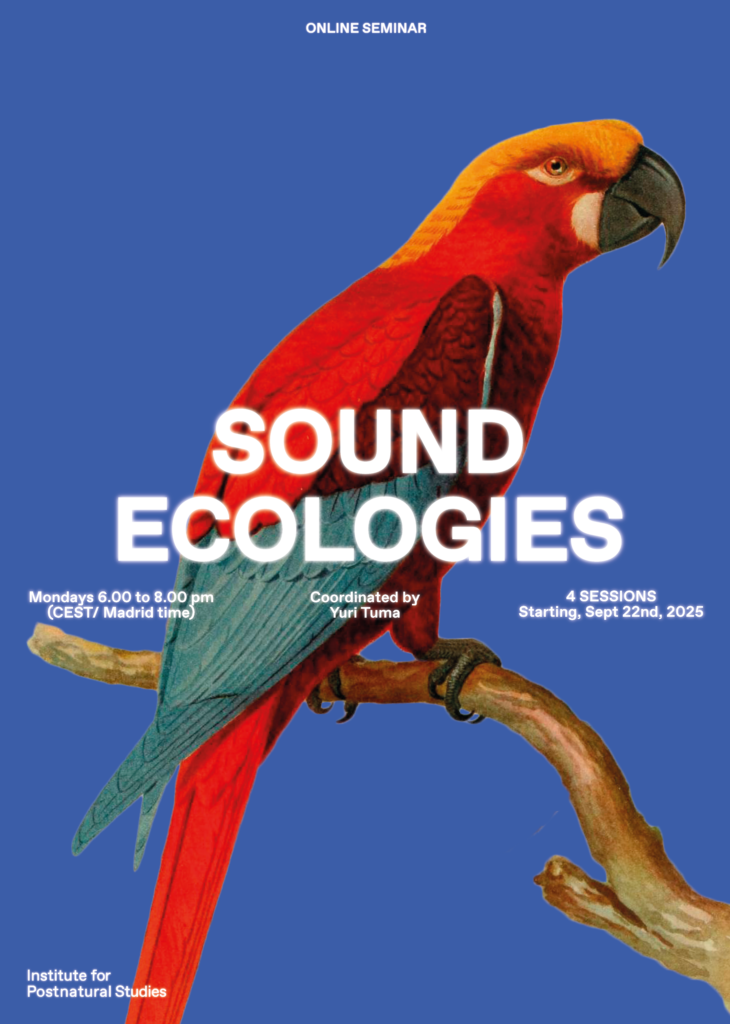
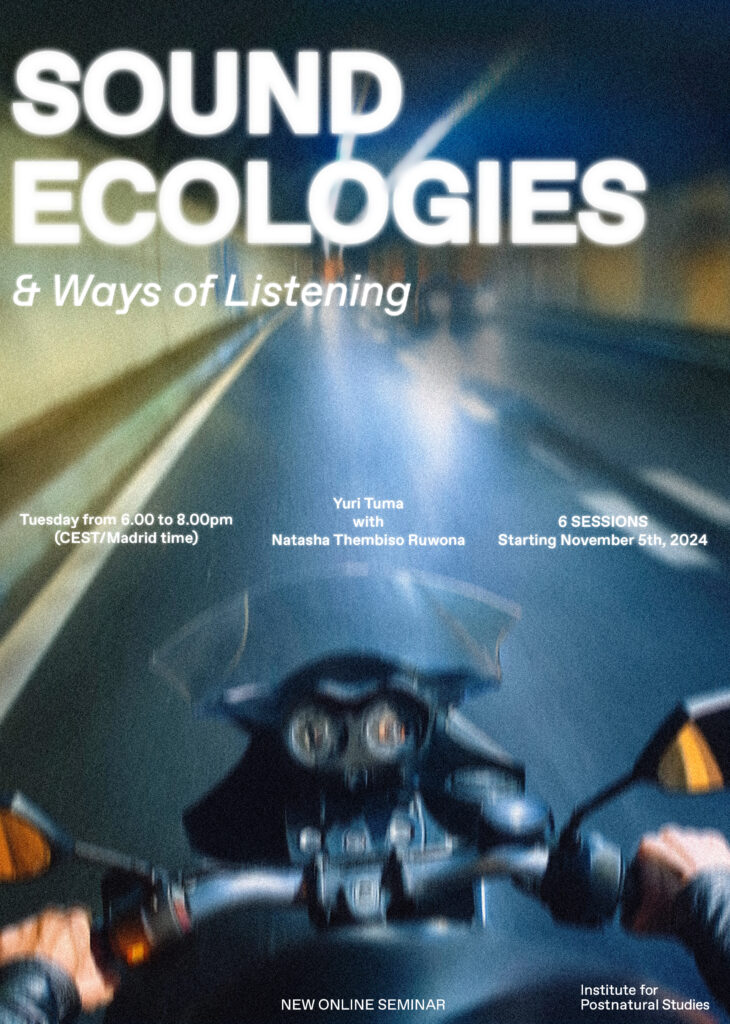
CZ: I wanted to ask about what kind of power politics or dynamics you think happen when we listen and who gets to listen and to whom?
YT: I think also it’s important to understand that not only we listen with our ears and in that sense, there are so many different ways to listen with our ears or not to listen with our ears. I think it’s also understanding there’s not just one way to listen because frequencies of sound actually alter matter.
We usually have the tendency of thinking of sound as this invisible thing that’s happening around us. It doesn’t touch us. It’s like this background thing. Even scientifically speaking, but I also like to take it on a spiritual level, sounds affect us not only molecularly. A frequency can alter our bodies. For example, imagine a loud siren if you live in the city, an ambulance. There’s a reaction in your body that we’re so accustomed to if we live in the city that we might not even pay attention to, but there is a moment of, or like you were saying, when you’re sitting down in a park or camping and the sounds of birds, your body reacts different. There is body transformation with sound. If we attached body to sound and the question of politics, I think it’s an invitation to even see the power dynamics of who is using the sound or what, who is being allowed to listen or who is being induced to listen to something.
It’s a big, big question that I’m not sure we have a lot of time to dissect it, but it’s definitely something I cover in the seminar, especially when we think about gender politics around sound, how sound culture, sonic culture also constructs gender. You can think, for example, of if we think of tech feminism, where Siri and Alexa and all these AI assistant voices have started off as like women’s voices, and that is very much a reflection of how perhaps women have been portrayed in Western European culture as someone that serves, that is there to give you information, that is there to help you, that is there to just give you whatever you need. There is an intention to genderize technology there, and that manifests itself through sound. Because it is not a real voice, even though there was a real Siri voice that recorded the sound, but what we’re listening to is a machine, it’s a piece of technology. But there’s an intention thereto genderize it. So there is a political gesture there of this technology is going to sound like this, and it comes with a history.
On the other hand, there is, for example, the sounds of Petro-masculinity. And Petro-masculinity basically is the sounds generated by really extractivist and violent technologies, such as oil drilling, extracting oil, extracting minerals, and all the sounds that come with it. So it’s not these huge machines, these huge pieces of technology. It’s very invasive. But it can also be the sound of the motorcycle that passes by you that is so loud that basically deafens you for the moment that we know it is not part of the motorcycle. It’s an intention.
The motorcycle does not need to produce that sound in order to function. There’s an intention there for the person on the bike to be heard. And not just heard, but really, I’m here. And I’m going to bother you because I have the power to. No? So there’s this Petro-masculine also way of understanding sound. And this is just like two examples. And what I’ve been really enjoying exploring is what is in between and this queer politics of understanding and how glitching the sonic constructions around gender can be. And for example, the song, I Believe by Cher, which is one of those first songs that used autotune with the intention to make the voice androgynous. It’s already breaking that. Oh, okay. It doesn’t sound like a gender. It sounds like something that I can’t really pinpoint. So that could be seen as like a queer sonic glitch, for example. So the way I answer your question is by going through this first understanding of sound affects our bodies and affects the way we feel. It affects the way we think. It affects the way society works. And I’ve been engaging with that through sonic gendering. Which is a terminology by Anne Carlson, who, if you’re interested in that, very much a reference to look into.
CZ: I think a lot of these machines are not being seen because they’re usually, I don’t know, deep sea mining or just in general, something that you have in your life. And it usually has the function of something. So you don’t think of it as a machine itself, but what it does. So the motorcycle, you don’t think of it as the engine, but you just think of it as this motorcycle, this transportation that goes places. But it’s true that there is intention behind it and decision making. And the politics of this decision making is usually so forgotten and unseen.
YT: And just to add to what you’re saying, it exists under a heteropatriarchal system in which the louder you can be, the more power you have. So if we even take it to sonic weaponry, or the sounds of war and genocides, the louder you can be, the more power you have. So there’s also this politics of sound that goes into these conflict politics as well.
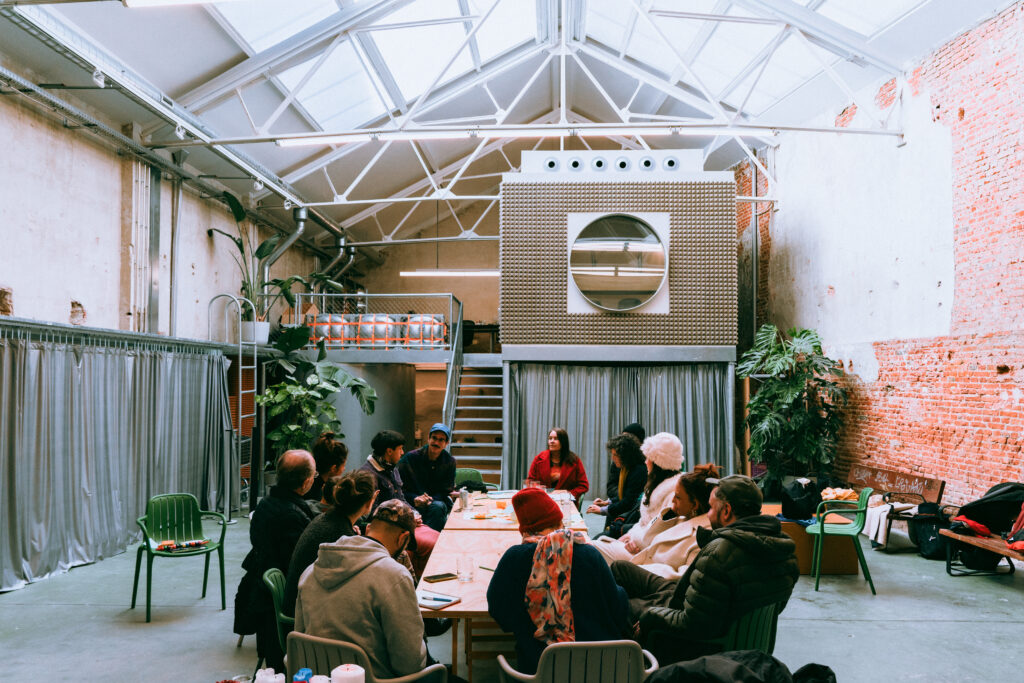
CZ: I wanted to connect it a bit more to climate crisis in the sense of evidence and care. Because I think a lot of the things, either it is in environmental justice, or it is in data, or whatever it is, everything we see is visual, because we live in a very visual culture as well. And I’m wondering in this idea of listening, how can that change the evidence and the idea of care? And feel free to connect it with the war or any kind of crisis.
YT: I think I’ll connect to something different, to also approach sound in three different ways. Thinking about sound and climate crisis or ecology, what comes to mind as an example is interspecies communication. And more specifically, how we perhaps listen to non-human beings, and what kind of procedures and technologies are involved in that practice. So right now there is a lot of investment being made on artificial intelligence technology in order to translate whale songs. And it begs the question, why are we doing that? What does it mean to translate? What is the piece of technology that is mediating that? Who is intervening in the aquatic maritime environment to do that? There is a lot of colonial dynamics of the human entering a space and extracting, and in this case it’s a song, but it doesn’t mean that it’s not extractive. Just because it’s extracting a sound doesn’t mean that it’s not extracting something.
Once again, sound is also this material. It’s not just minerals that can be extracted. It’s not something tangible. So there’s questions also of cultural appropriation. If we think as animals having culture, there can be a question of cultural appropriation, there can be a question of data extraction, unpaid labor. I love to think of we, as humans, accept cookies on our phones and we accept all these things in order to use certain websites and social media, even though we’re not reading between the lines, most of us, I feel, we accept.
We have that choice, whatever that may be. But in this case, how can a non-human being say or feel free to extract my data. So how could we listen to the whales without wanting to extract or try to translate into a human way of understanding? That is a question I will leave it open.
And I also don’t want to demonize this venture into translating because there’s also, I am not a biologist. And even though some of the ways this is being done is very questionable, there may also be some some ecosystemic aid for these whales or cetacean beings that are perhaps endangered or with a system that is failing them and this technology can potentially help. So it’s complex. It’s not necessarily good or bad, wrong or right. I think it’s just an invitation also to just look at it, think about it, see the intention. I think intention is one of those keywords with listening.
What is your intention when listening to someone? Are you actively there? How do we take individual listening practices from the individual?
Because if you think of a scale of listening, there is the individual scale of how do we listen to ourselves? And maybe perhaps that’s the first and foremost step on active listening is how do we listen to ourselves? Then you grow on scale. How do you listen to the person next to you? How do you listen to a group? How do you listen to your environment? How do you listen to your community? How do you listen to eventually to the planet in a way? And perhaps even how do you listen to your insides? How many of us, I mean me personally, I don’t even know what my organs are, what they sound like. I don’t know.
How can we even actively listen not just to our internal space but to our physical space? There is a beautiful exercise of putting an echo. How do you call that? Well, a contact mic of sorts to your heart and you listen to your heart. And it’s amazing. We are not used to listening to our hearts. And that gesture, that exercise that I invite you, whoever is listening to engage with, or just even one of those stethoscope I think it’s called when you go to the doctor. It’s a beautiful way to practice active listening to oneself.
And I say all this because I am still thinking how that goes from the inner self to a community. The way I’ve been doing that for now is through workshops and experimenting with methodologies, with groups, with collective practices. But I think a step that will follow is how can institutions listen better? How can the systems that are so rigid and conservative perhaps open themselves up to listen? You think of bureaucracies, that’s kind of like the anti of listening because it’s so pragmatic, this needs to happen.
But how could we listen to bureaucracy in a way that doesn’t give us an anxiety? Or how can we rethink bureaucracy? But yeah, it’s a question that it’s still growing.
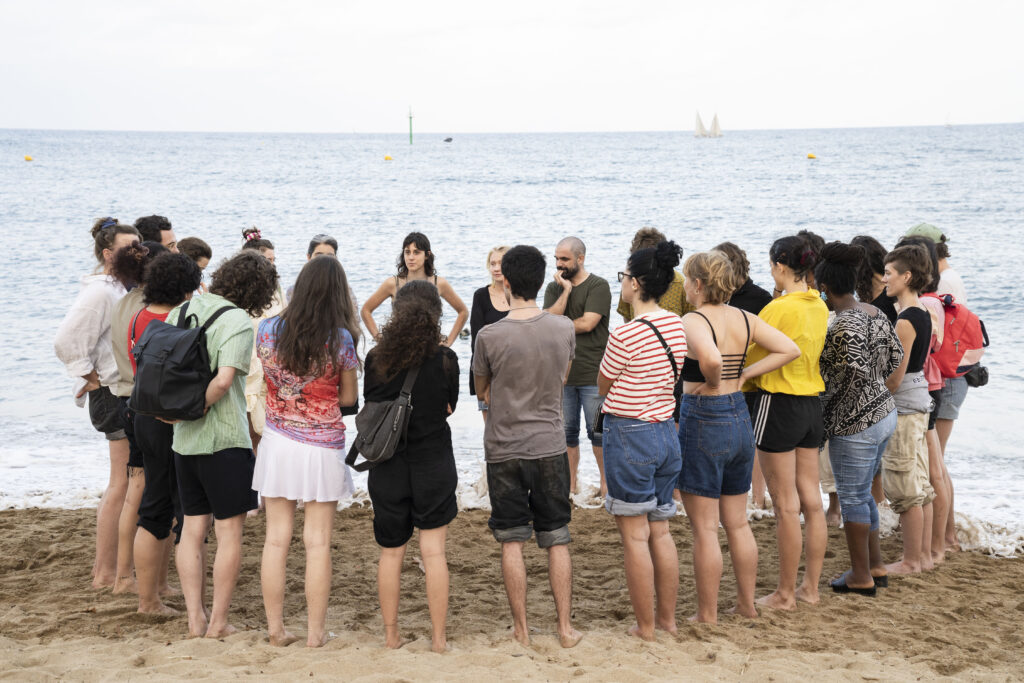
CZ: Let’s go a bit further away from the crisis itself, from the climate crisis. And let’s talk a bit more about how sound can help us move further and beyond the language of crisis and more to experience the planet in a way of communication. Can you give us some examples of projects or practices that use sound to restore ecological connection?
YT: I think that’s a beautiful question, Christina. And it definitely inspired me to think of the languages that we use around ecological thinking. Because I definitely thought a lot about language because language is sound making as well. Or it can also be sound making. I love that idea of rethinking the language around the climate crisis to engage with it differently. And I always think that there’s a lack of words or a lack of ways to describe sound, for example.
I think we usually refer to the way a sound sounds like through imagery. Like, oh, that sounded like nails on the wall or that sounded like… We refrain to compare it to something that we can visualize. And I think it’s because there’s a lack of sound words.
Maybe that sound of the nail on the wall. Sorry for anyone that has cringe with that. That was an example that came to mind. Maybe there can be a word for that or a word for, at least in the languages that I speak, I don’t have a word for that. Or the word for the wind and the leaves. And that way, that language generation can already be a positive way to engage with the natural environment.
Because I am learning more words. I’m making more capacity for sound in my mind. And by making that extra effort of learning the way things sound, or creating new ways of listening to the sounds around us, it’s already an act of care, of placing energy, placing attention and placing resources around it.
As far as projects that are doing that, I think there are many. I’ll cite a few. I’ll start with a book reference by Alexis Pauline Gumbs, which is called Undrowned, Black Feminism Through Marine Sea Mammals. And there’s a chapter on listening that for me has been really expensive in the way I understand listening. So I will invite anyone that’s wanting to understand listening in a different way. Also, there’s a project in Copenhagen, which is called Bureau for Listening. And they’re doing amazing work to create cultural programming around the act of listening. Making an institution out of listening, which I think is important, because then it becomes a serious thing, which can be problematic. But I think as of now, I think they’re doing such an amazing job to promote listening, to engage with people through listening
And the Listening Biennial, which includes the Listening Academy, which is a project run by Brandon Labelle and his collaborators. And I think this biennial, what it’s doing that is so amazing is decentralizing the knowledge around listening from Europe or Western thinking. So it’s a biennial that’s very nomadic, and it’s in every continent almost, or maybe it’s in every continent.
And there is very situated ways of understanding listening. So what are artists or thinkers in Brazil thinking about listening, or in India, or in all these different places? And I think that’s such an important way to engage with listening, and the environment, and politics, and yeah, listening to…
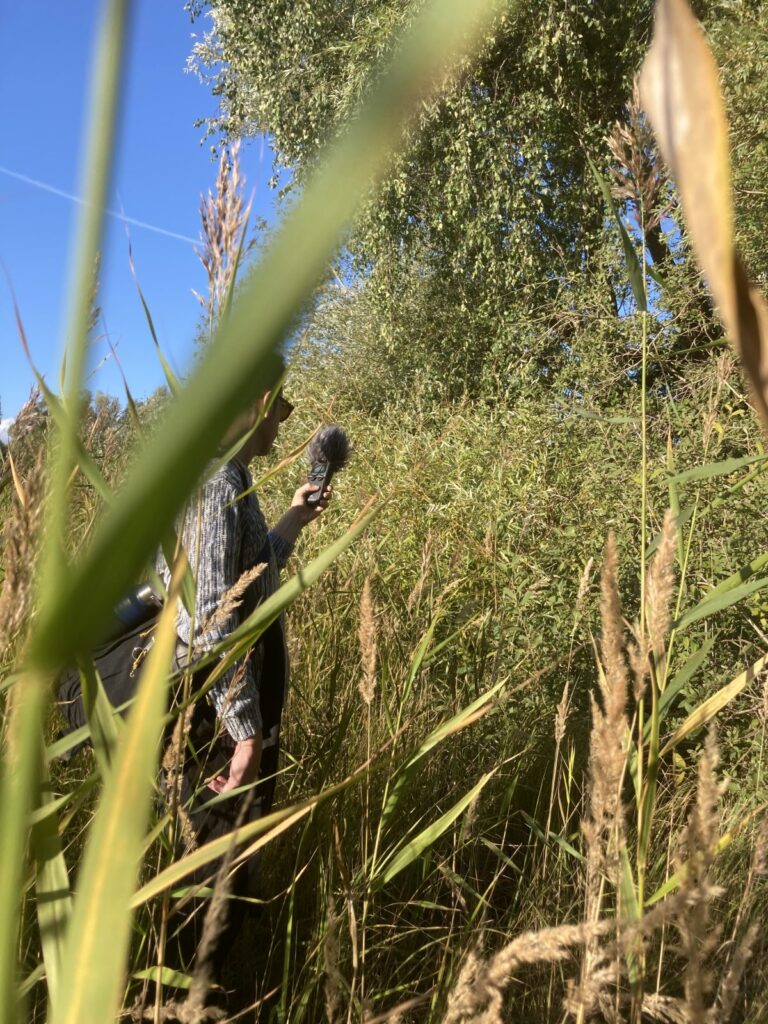
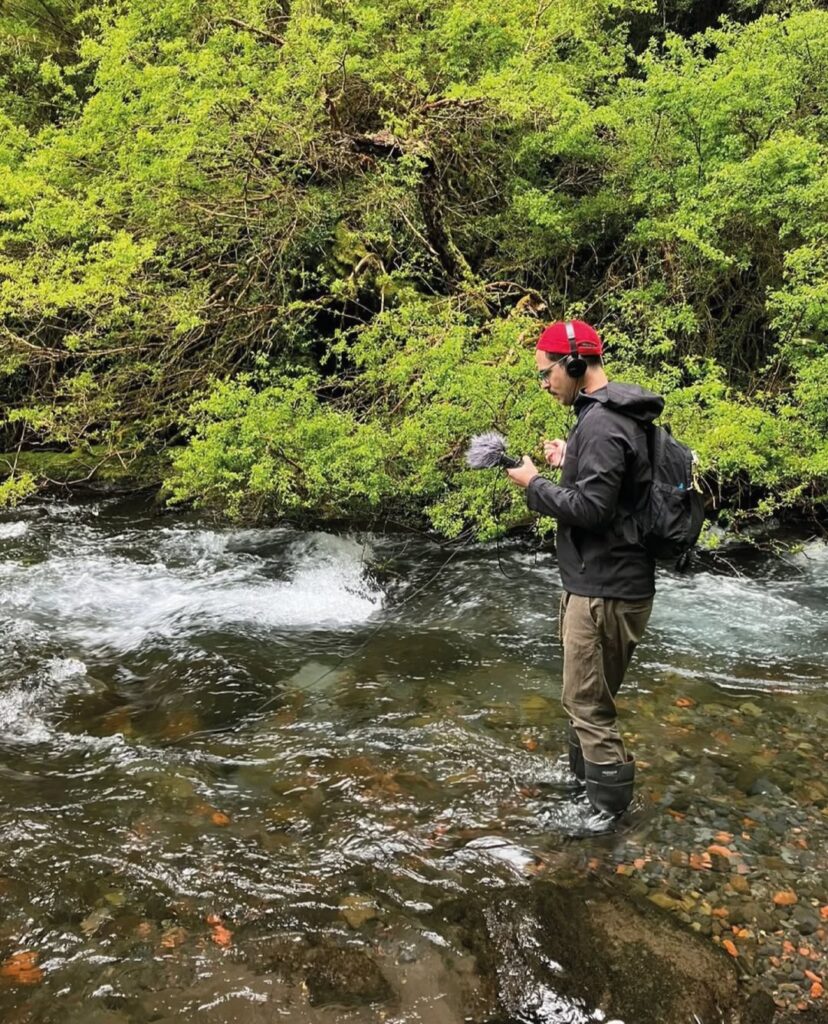
It can be overwhelming to think of listening to it all. And I think someone that’s becoming a huge reference in sound studies and listening practices, who was around in the 70s, 80s, was Paulinho Oliveros, who was a composer, and philosopher, and teacher, educator, who proposed the idea, the concept, the method of deep listening. And the way I understand it, and just to give a little glimpse of what that is, is really breaking the barriers between external and internal sound. Like we were talking about, when we think of a sound, is that really sound, or is that something else? Or is it a memory? Or is it a sonic memory? And to understand how the exterior sound affects us.
There’s no in and out. Sound is with us, is in us. It’s not only around us, it’s in us. And it’s a beautiful invitation to engage with ecological thinking, because if sound is in us, I am also in the sound. And that invitation to become part of nature again, to be nature again.
CZ: I never thought about it as physical, which is also quite interesting when you think about what we talked about before, which is the evidence of how we understand the world, and also the data that we get together, and how the data looks, and all this stuff, but actually sound could be part of it as well. So I’m going to ask you one more question, which is, what do you think that an ecologically balanced future would sound like? I don’t want to say it would look like, but it would sound like. Because I know that we have a lot of sounds about when things go wrong, when a machine is about to break, when things are too loud, but what do you think an environmental balance would sound like?
YT: I love that question. I think what I’m going to say a few things that are coming to mind, one that relates to communication, and in this speculative question, what could a future or a vision sound like? I always question the way I communicate or the way the human community I interact with is usually through language, not through words, through verbal definitions, etc. And I have this practice of engaging with people, dialoguing without words, as a way to propose how do we explore our sound making technology without being constricted by making sense in the very academic way of linguistics.
This word comes first, the second, the third, because you’re going to send a message. But what happens if I’m like, you know, like, you’re getting something that doesn’t make sense, you’re feeling something, maybe that felt awkward, maybe that felt like, but I communicated something. At least I felt, you know, like, I’m exemplifying what I’m saying through this sound. So maybe this sound of the future can be like, different ways of communicating that don’t rely on word, that I think can open up a connection with this natural concept of nature, and to each other, that goes beyond language. And I think language is one of those barriers between this binary of human and animal. And I think it’s an invitation for us to return to our animal as well, not as something that has been placed as beneath human, no, by Western science and philosophy, that being an animal is below being human, and even religion.
But as an invitation to know we are also animals, and that is amazing. And I think the way we produce sound with our bodies is a way to return to that animality, and enjoy that and connect through that. So maybe there’s one vision of what the sonic future could look like, a city where people are just making sounds and connecting and being joyful.
I don’t want to get rid of words, but could be a mixture of things and ways to connect through sound. Something else that comes to mind is something that you mentioned as well, and it comes up a lot in conversation when speaking about sound and nature. I think there’s this Western capitalist way of understanding silence that comes very much with this narrative, when I go to nature, I find silence. And I think it’s interesting to think about that statement. Because when you go to nature, first, what is nature? No, but that’s something else. But when you go to perhaps a natural landscape, or the field, or by the beach, you feel their silence.
But in reality, there’s a lot of noise happening. The birds, the wind, maybe it’s raining, the ocean, the waves are super loud. But we have this tendency of having also this really rigid understanding of silence. And I think it also, silence can be this very elastic way of understanding sound as well. So it’s also an invitation to what is silence to each and every one of us. Because what I’m finding in nature, perhaps it’s not silence, it’s just a different way of listening, or opening my ears up to other sounds that I’m not used to. And that brings me comfort. Because what I’m used to is an urban environment. And that doesn’t bring me comfort. Most of the times it does, you know, that’s an individual experience. So this vision of the future, perhaps is inhabiting silence differently. I don’t know what that would sound like, maybe it’s just more of a modus operandi.
A way of being with sound, a vision of way of being with sound is how to navigate silence, how to be with silence, how to define silence, and how to give space to other sounds through silence.
CZ: So as a closing, I thought I should ask you, if you would like to give an exercise that readers could have to begin post-natural listening at home, like a small exercise, and maybe a short sentence you wish more people understood about sound ecologies.
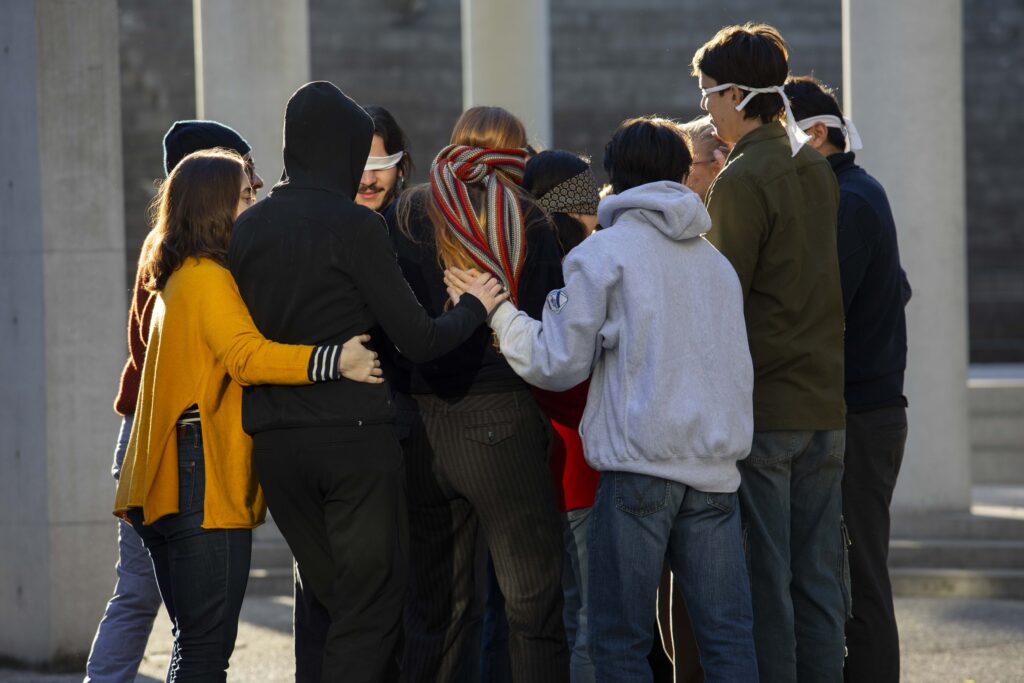
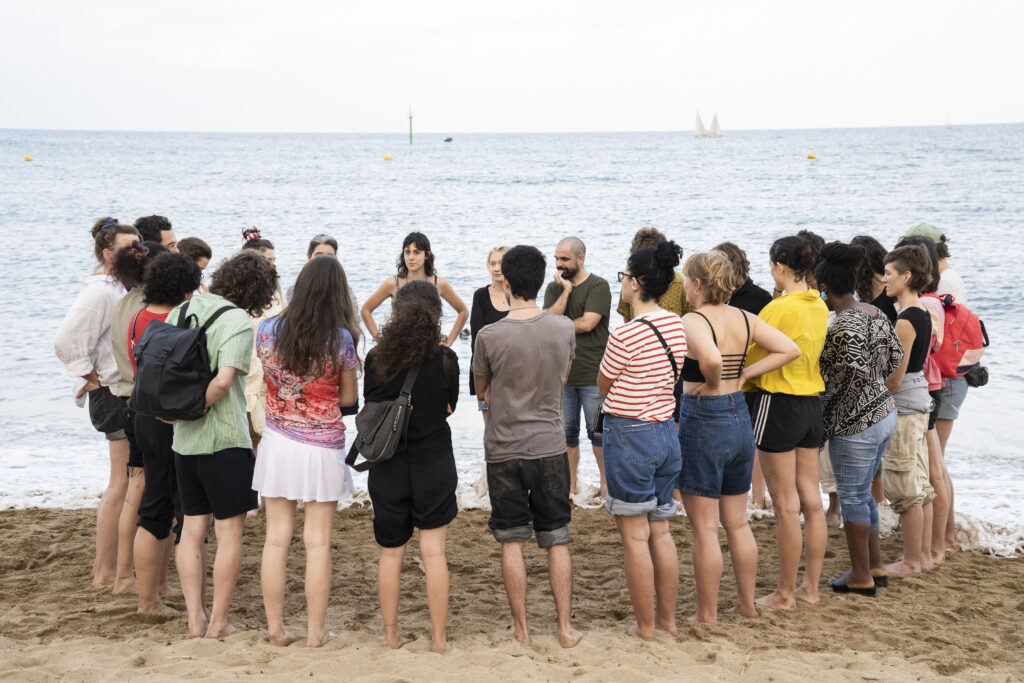
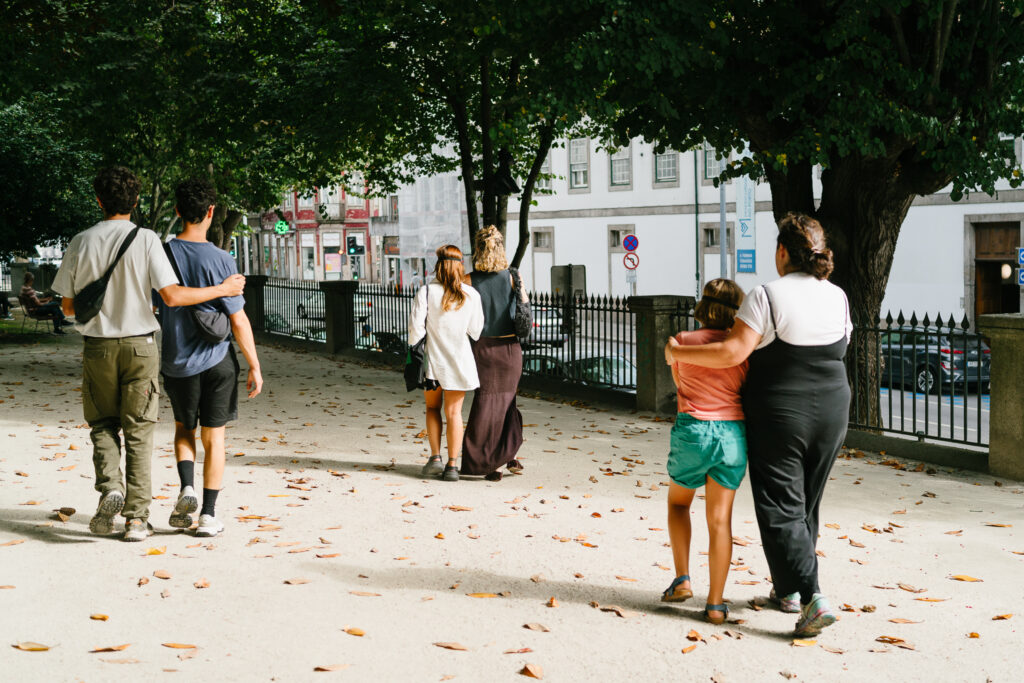
YT: Okay. I think the exercise that I would give goes very much in hand with the vision of future, a sound of the future. I’ll invite anyone to find a friend or two, and try to speak with each other without using words. And it’s not just about making weird sounds together, which is also amazing and super fun. So you can stay on that. And that is already a way to listen differently, but engage with this friend or family member, whoever you would like to share this moment with, and actively listen to each other without words. And try to build on an individual language together, where you’re speaking, communicating through the same sound, kind of like compositions together. So you can either just make weird sounds together with your body, or you can try and create a new language together, just by making these weird sounds and listening to each other. Sometimes closing your eyes helps. So I invite you to also close your eyes as you’re making the sounds. It can be a little bit more liberating.
CZ: Oh, that sounds so fun.
YT: It is fun. And the sentence, maybe it’s not a sentence, maybe it’s a question. And it’s a question that has already come up. And it’s an invitation to reconsider what sound is.
Do you dream in sound?