Glaciers have become witnesses and warnings, and the Austrian Alps are not exempt from this global reality. More than 68 percent of the freshwater on Earth is stored in ice caps and glaciers, while just over 30 percent is found in groundwater.
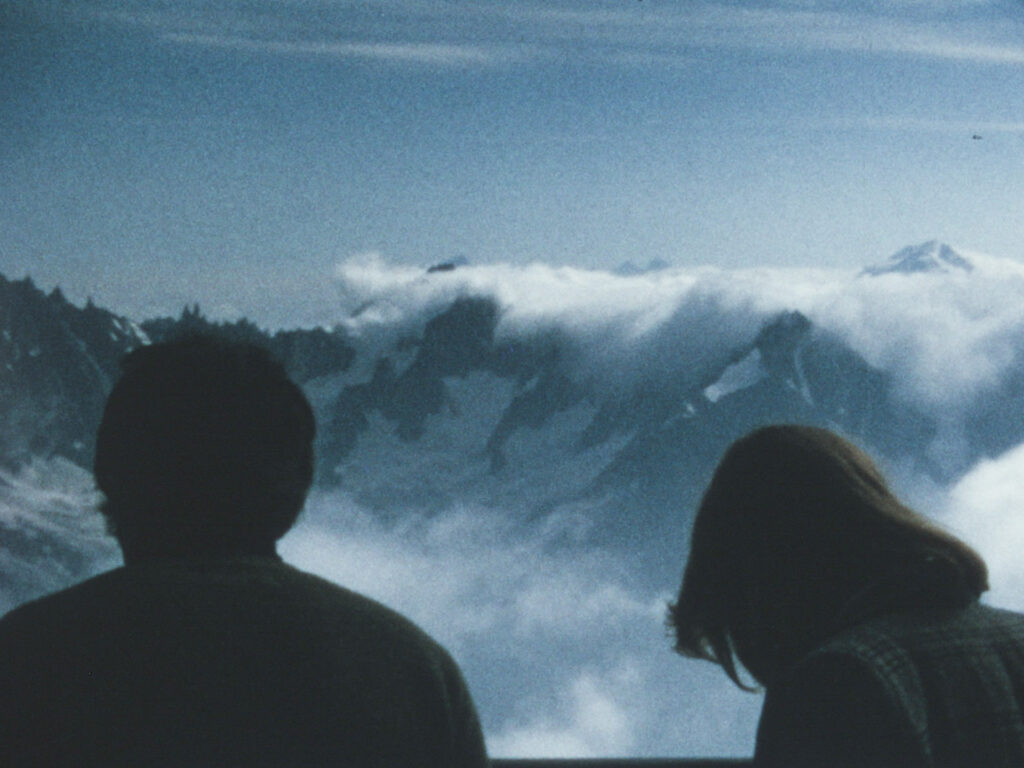
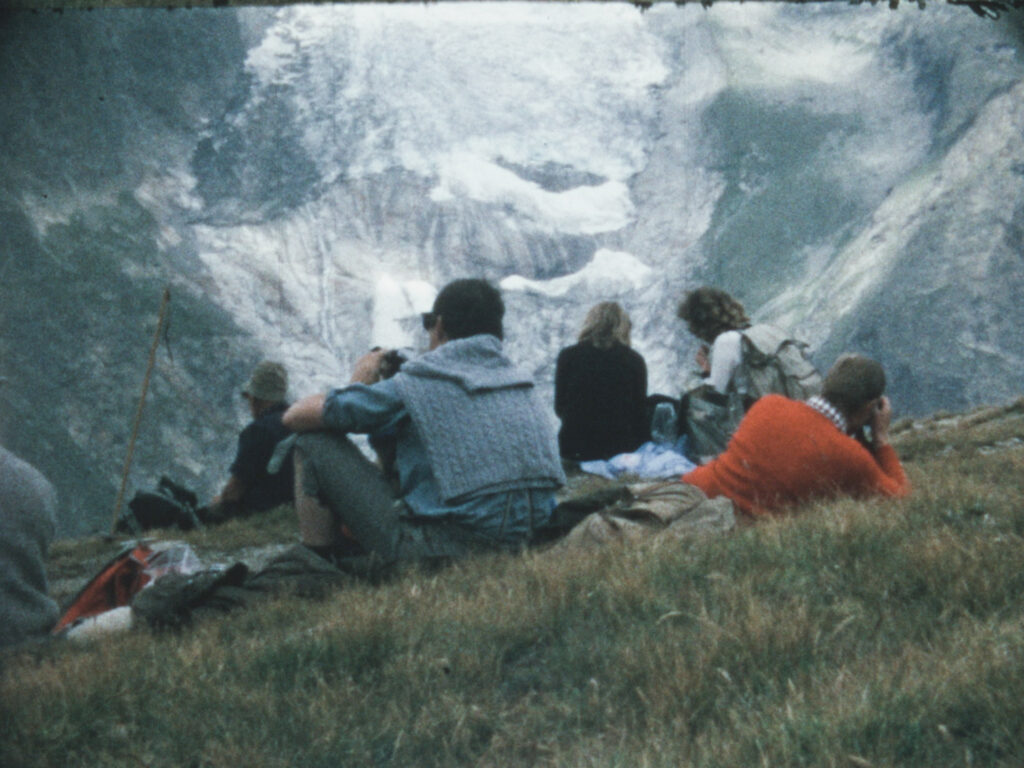
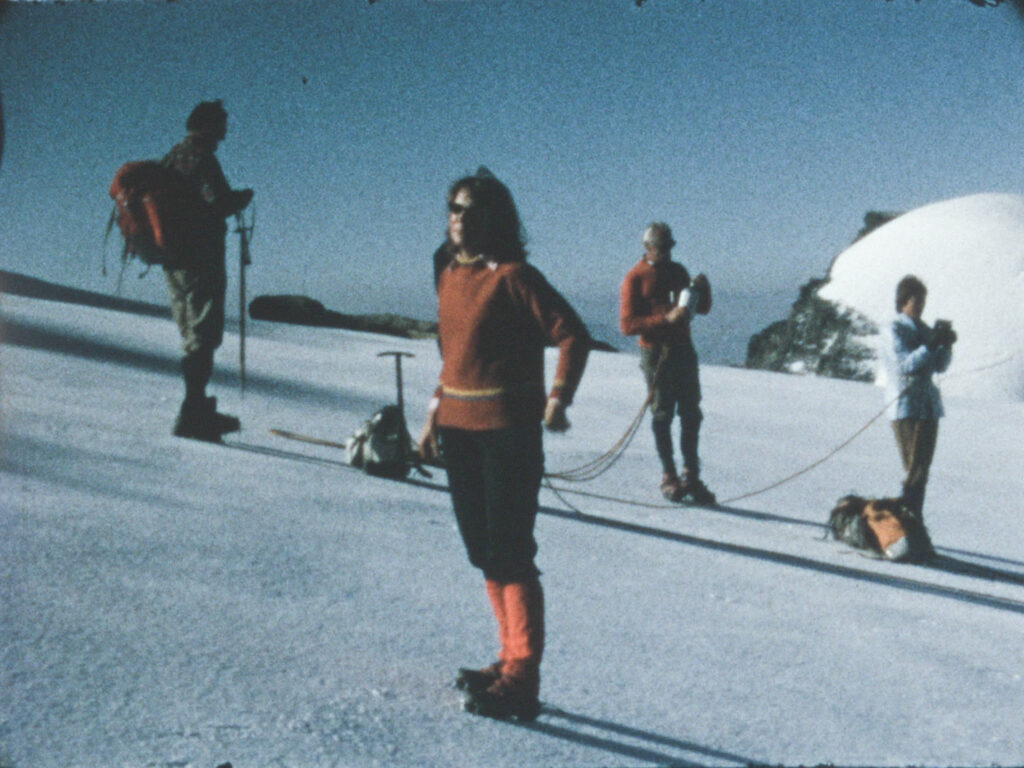
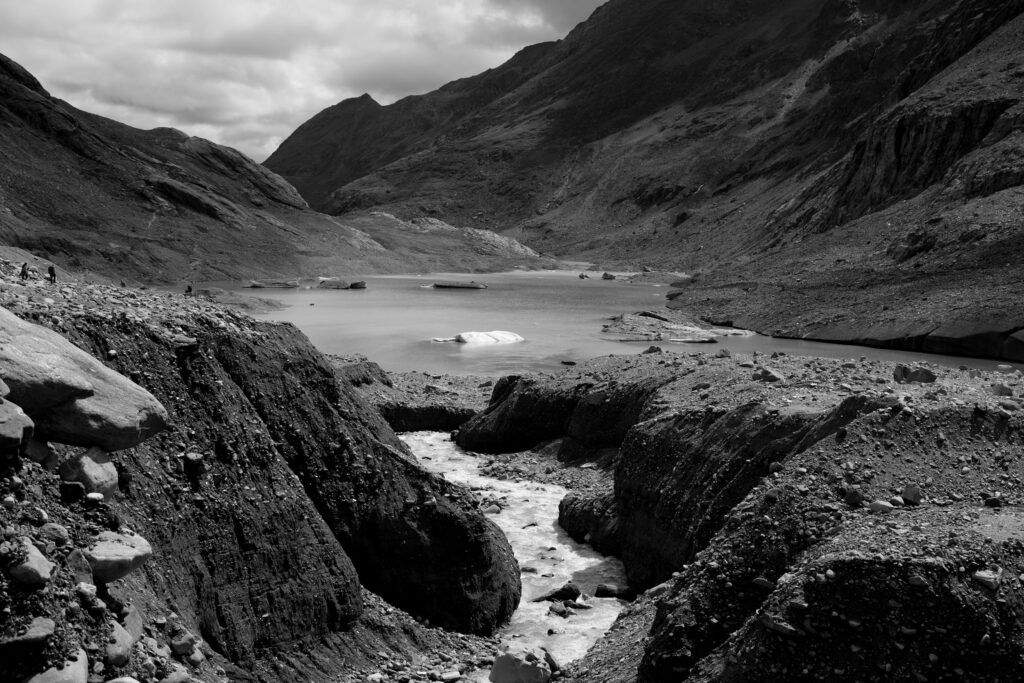
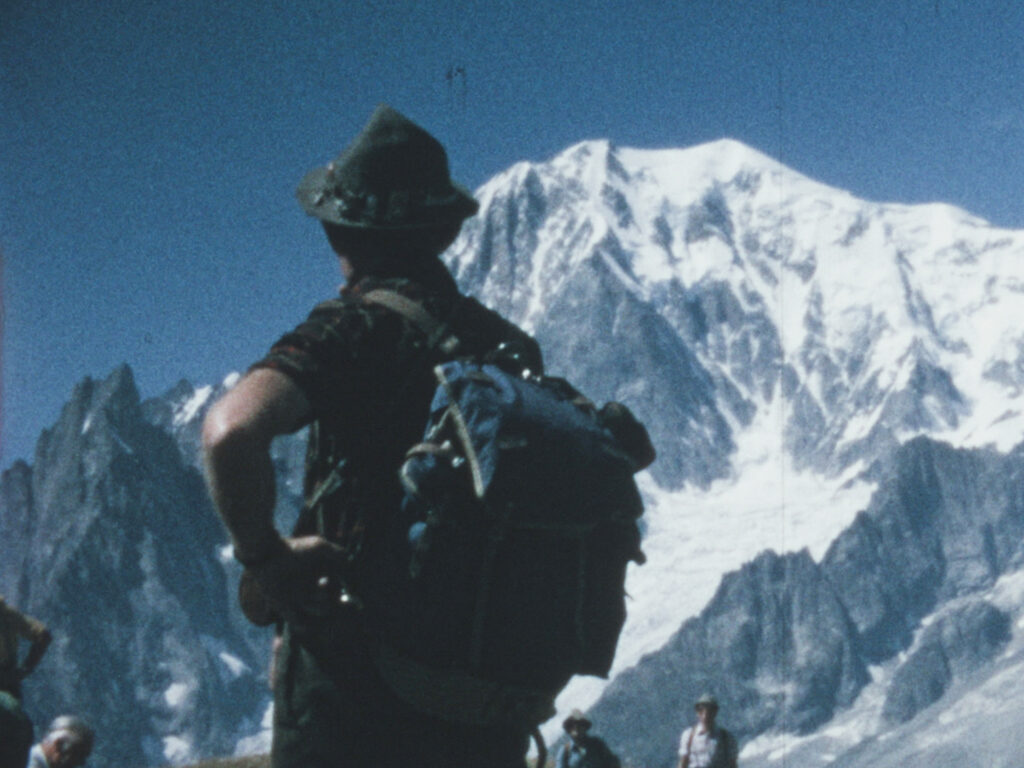
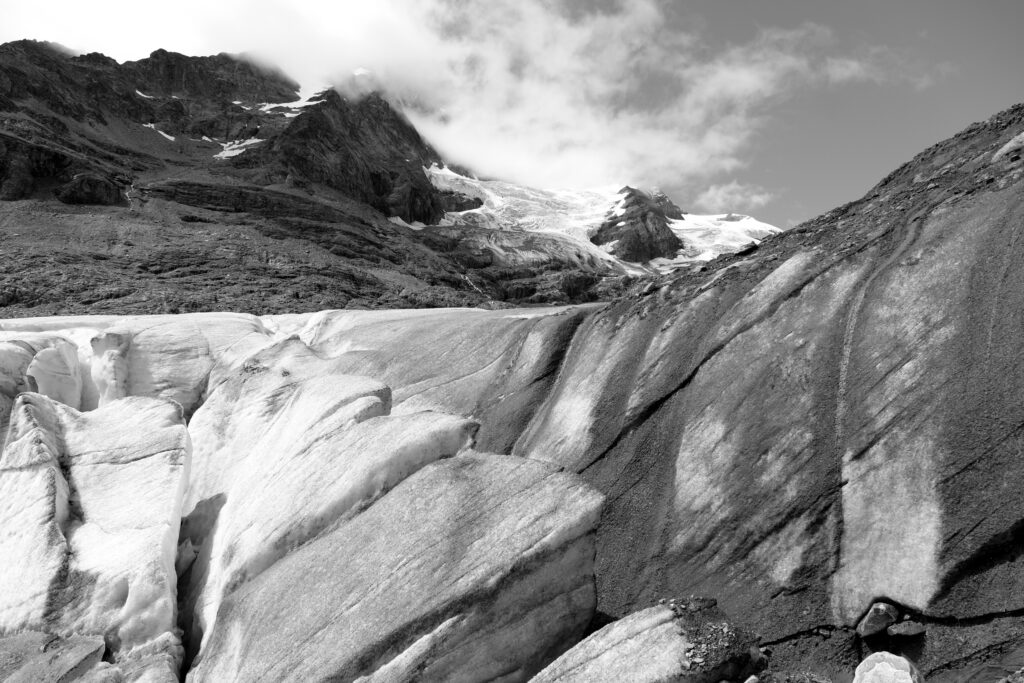
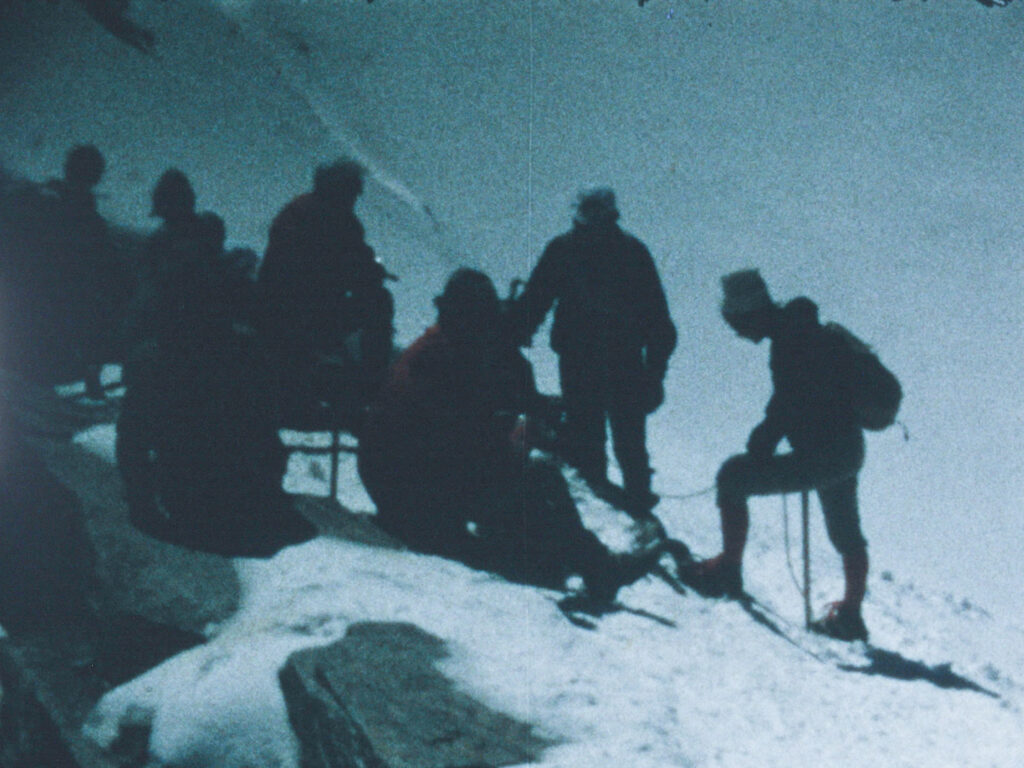
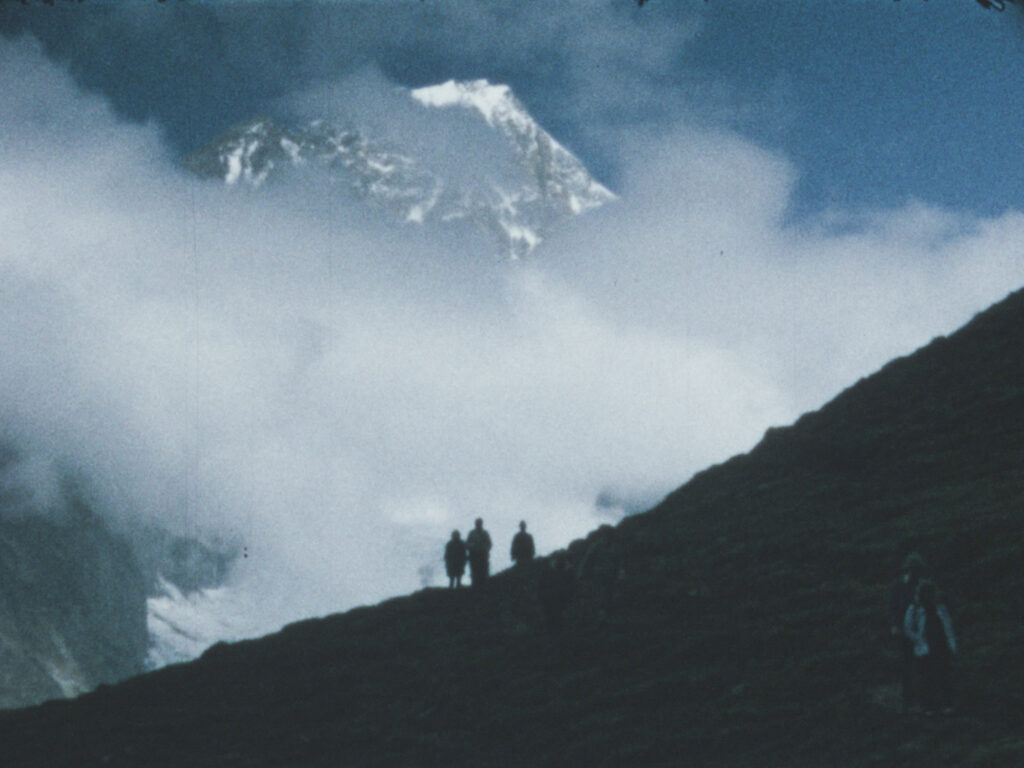
For artist Nina Allmoslechner, returning to these disappearing landscapes is not simply an act of documentation, but one of remembrance. Spanning photography, film, family archives, and personal memory, her recent book When White Blankets traces the slow retreat of glacier ice across three generations of her family. Combining her grandfather’s Super 8 footage from glacier expeditions beginning in the 1960s with her own analogue photographs made today, Allmoslechner’s work meditates on grief, inheritance, and environmental transformation.
In conversation with Icarus Complex, she reflects on photography as a way of holding space for vanishing landscapes, the intimacy of returning to place, and what it means to witness climate change across generations.
Melina Lindinger: Could you begin by introducing yourself and your practice?
Nina Allmoslechner: My name is Nina, I am a London and Tyrol based artist from Austria, mainly working with photography, film and writing. I have been documenting glaciers since 2021, since graduating from my BA Photojournalism and Documentary Photography course at London College of Communication.
ML.: Your recent book When White Blankets, which was presented alongside a film screening at The Photographers’ Gallery in London, spans three generations of your family. How did this intergenerational narrative come together, and at what point did the idea of connecting family archives, personal memory, and your ongoing documentation of glaciers begin to take shape?
NA: It is a body of work which is a collaboration between my grandfather, my father and myself – a story about vanishing glaciers, family, grief, time and home.
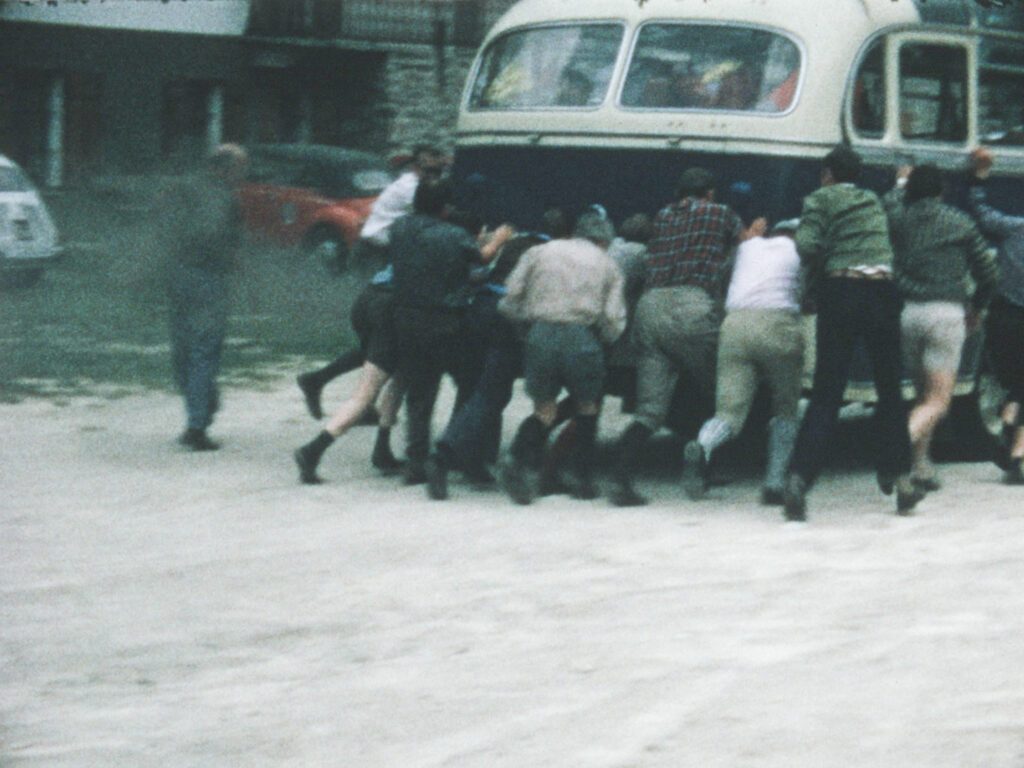
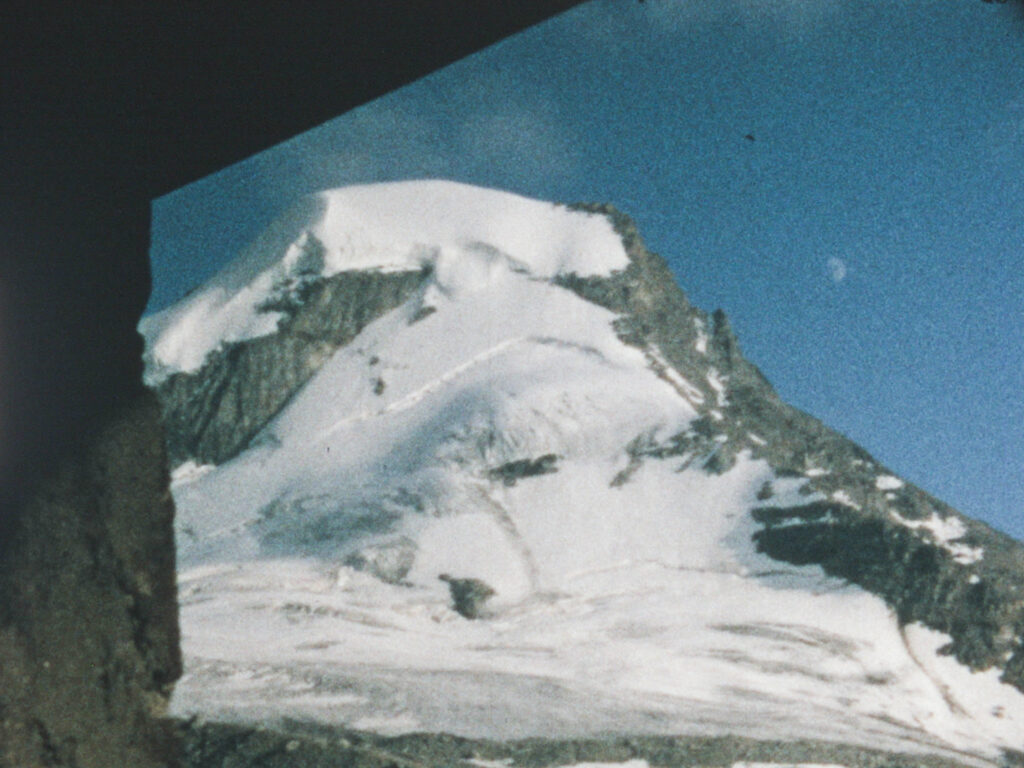
It was only two years ago though, that I shared these images with my grandparents and that’s when they handed over a magical box to me which was filled with old super 8 archives from their Glacier expeditions between the 1960s and 1970s. That’s pretty much the time that glaciers started to decrease so drastically, which is what triggered the idea to connect his documentation from the past with the current state of these glacier landscapes. Dr. Jennifer Good, author and senior lecturer, as well as Dr. Andrea Fischer, glaciologist, kindly contributed text to the book as well.
ML: Can you tell us more about the area and that particular glacier?
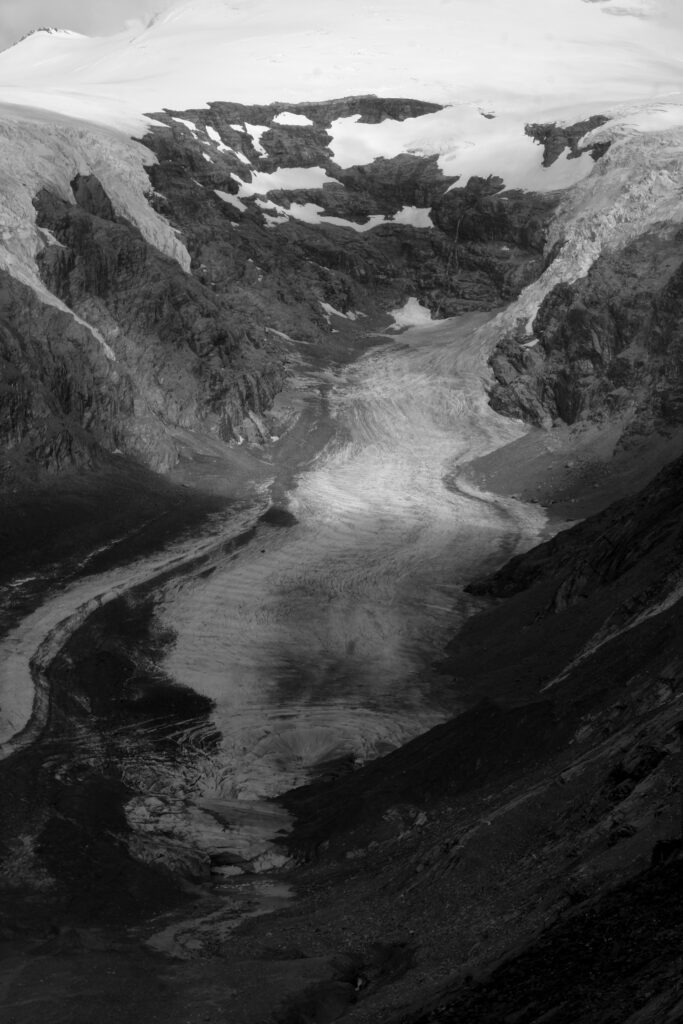
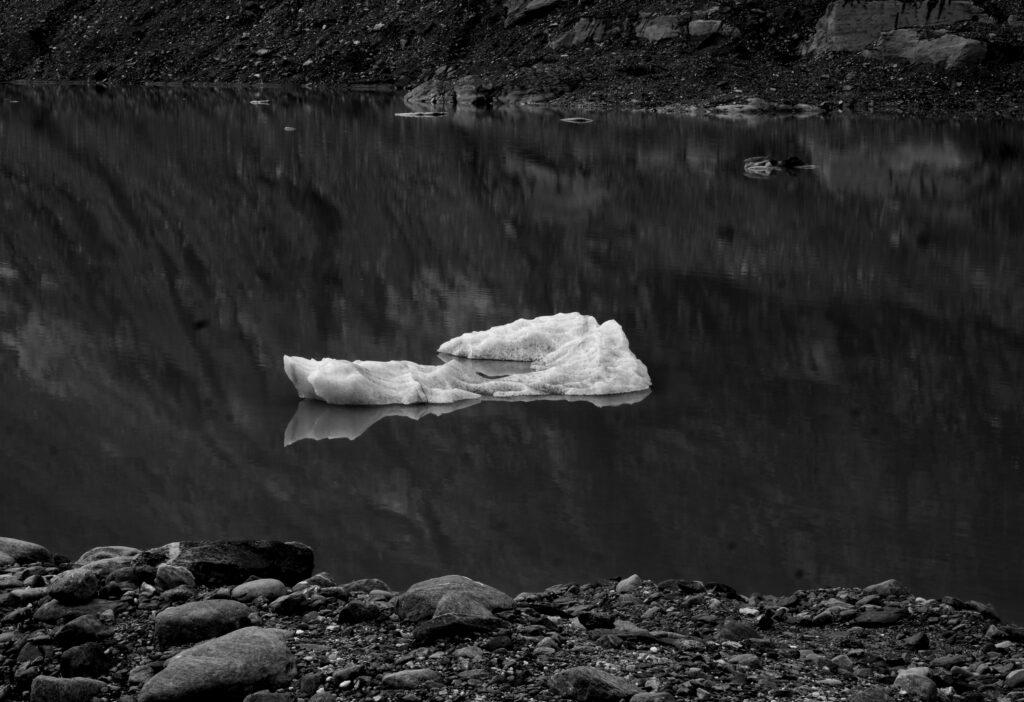
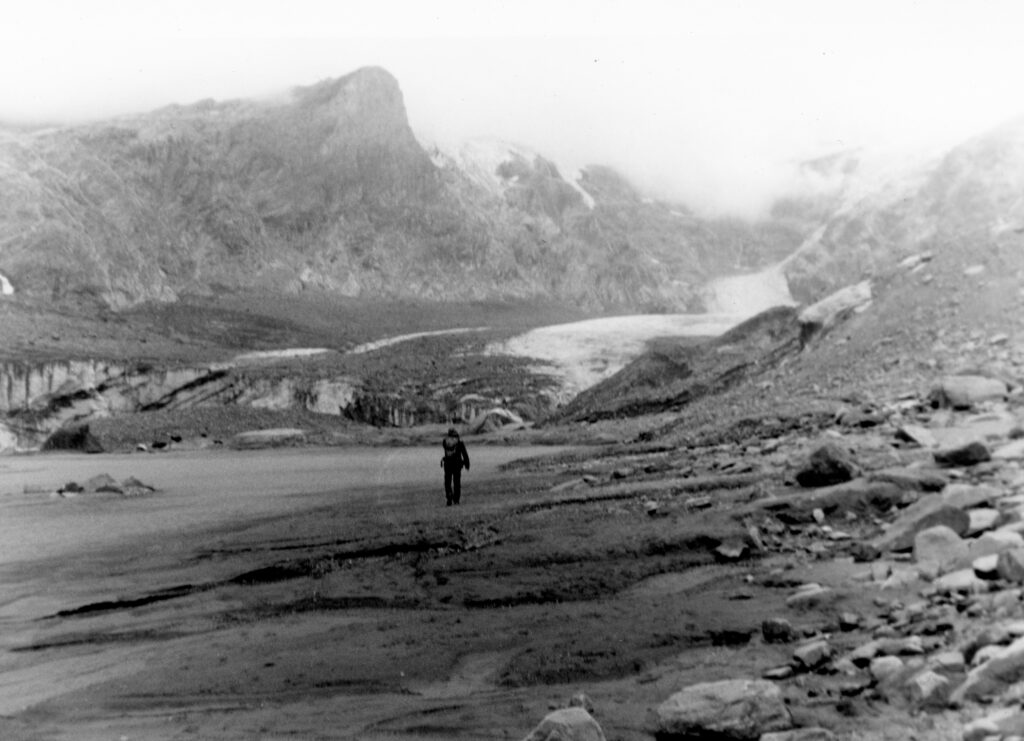
NA: The glacier I have returned to over the past five years is the Pasterze Glacier at the Großglockner, the highest mountain in Austria. It is only a little over an hour from where I live. The starting point of my book is a photograph from the late 1960s showing my grandfather, my aunt and my father on that very glacier. That image opened up this entire world for me. The project is not a closing chapter, but an opening one. I see it as a continuation. I want to keep returning, keep observing, and keep understanding.
I think Repetition is essential – only through returning do you build trust in a place – and only then can change become truly visible.
ML: My grandmother also lived in the Austrian mountains, where I spent a lot of my childhood, so I felt a strong resonance with your work. Do you think being raised in this environment shaped you, both as a person and in your artistic practice?
NA: Yes, very strongly. The project is essentially also a love letter to my grandparents and my parents. I grew up in a village of fewer than 1,000 people, surrounded by nature.
It was normal for us to go hiking or spend time in the mountains. I would constantly escape into the forests, and my parents would simply say: “Come back when it gets dark”. That relationship to time, landscape and nature felt completely natural and very beautiful.
I also realised early on that I was often daydreaming and very creatively inclined. At some point, I understood that I would need to leave this place in order to develop further – which is why I later moved to London. But distance is important. Only when you leave something behind can you truly return to it in a new way. In my work, I am constantly returning, and through that, the place keeps changing in my perception. I feel very fortunate that I was raised with such a deep respect for nature. It is now central to my photographic and film practice.
ML: As glaciers increasingly attract tourism, do you see this growing visibility as an opportunity to deepen engagement with the climate crisis?
NA: I find it interesting that language separates “nature” and “human”, when in fact we are part of nature. In the Alps, I often experience tourism as something that accelerates the problem rather than raises awareness. For example, at some glaciers there are lifts operating in summer, and people can rent sledges to ride down the last remaining ice. It feels more like entertainment than reflection. For people who did not grow up in such landscapes, it may be exciting to get close to a glacier.
But at the same time, these places become consumed rather than understood.I believe nature should be accessible, but not turned into a spectacle that contributes to its own disappearance.
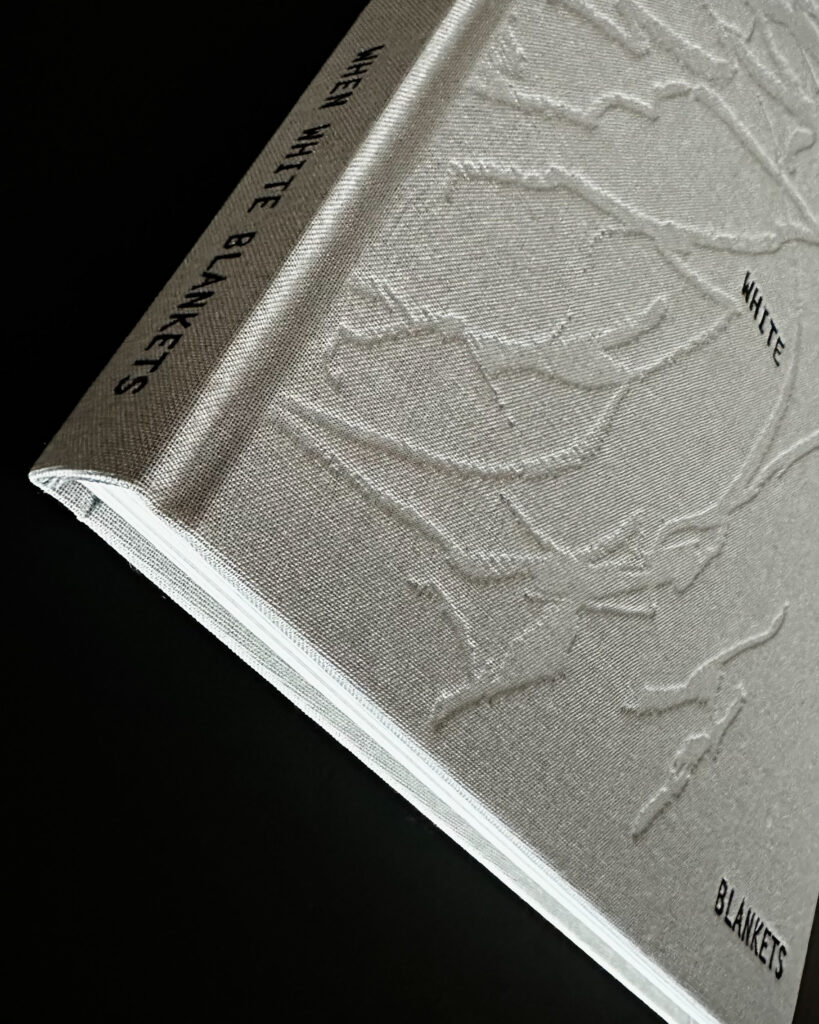
ML: The title When White Blankets is both poetic and evocative – what does it mean to you, and how does it reflect your relationship to these landscapes and their ongoing transformation?
NA: I came up with the title over three years ago, when I was reading a book by my favorite artist and author, Patti Smith. She described snow as white blankets which I found is a very beautiful and metaphorical way of describing snow. The title back then was ‘When White Blankets Will Be Gone’ but the title sounded so negative, aggressive and I felt I wanted to highlight some lightness and love for a landscape rather than focusing on the heavy side of things only. When the project grew into the direction of it being a three generational body of work, I knew I wanted to keep three words and three names.
A blanket; an object to keep us warm and to protect us. In the climate change context however, the reality of a white plastic blanket is being used to cover and preserve the last pieces of glacier ice in the summer months.
ML: There is a strong interplay in your work between archival imagery of your family and your own analogue photographs. How do these speak to one another, and what continuities emerge through that dialogue?
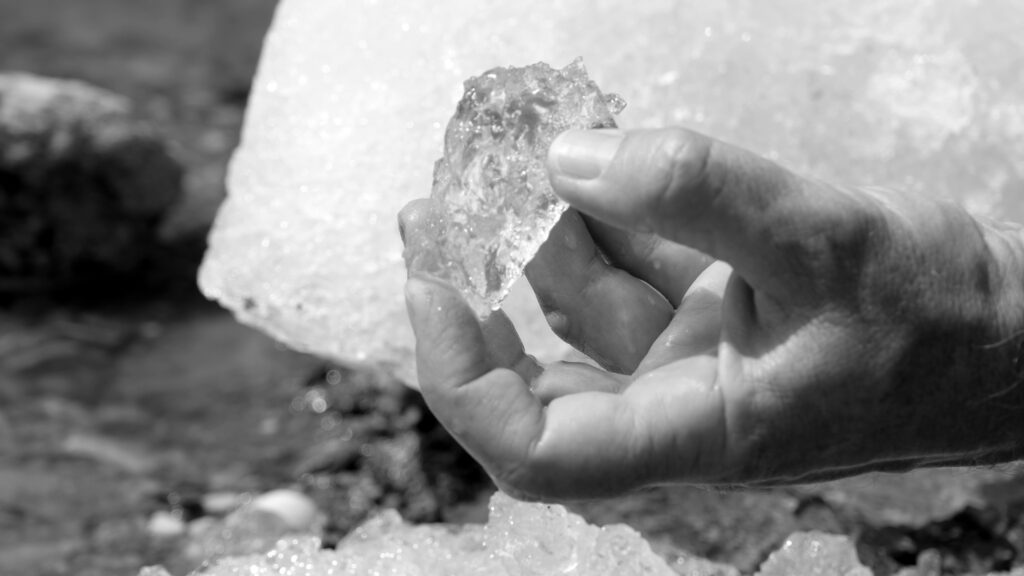
NA: For me, analogue photography is about materiality and presence. It is a physical process developing film, printing in the darkroom, archiving negatives. It slows things down. And that slowness allows me to really think about a moment instead of scrolling through thousands of similar digital images. I also often buy old family photographs at flea markets. Some people find that strange, but for me it is a way of engaging with collective memory and time. In the book, these archival images and my own photographs are placed in dialogue. They are separate, but they clearly speak to one another. There is also a shared nostalgia in analogue photography – a texture that already carries memory within it.
Interestingly, I keep my grandfather’s images in colour, while mine are in black and white. We often assume the past is black and white, but I think it is the opposite: colour reflects a time that still felt intact, while black and white reflects a present shaped by loss and transformation.
ML: What does it mean, for you, to keep returning to a place, to a family history, when the subject itself is gradually vanishing, and how do you approach photographing a place that is itself in the process of disappearing?
NA: For me, it is about trust – trusting the place and trusting time. When I started, I didn’t realise I was documenting change. Only later did that become clear. Photography is a tool for freezing time, but also for revealing it. Especially with glaciers, change is not abstract – it is visible and ongoing. Returning is crucial. You only begin to understand what is happening when you go back repeatedly. There is also a responsibility in that. If you know something is disappearing, documenting it becomes a way of holding space for it.
Photography, for me, is also a way of dealing with grief – because it allows me to return to images whenever I need to, in my own time.
ML: In the book, your father reflects: ‘Back in 1974, at the age of 10, I unknowingly witnessed the effects of climate change for the first time’. Could you tell us which experience he is referring to?
NA: From a very young age, I think as soon as my father could walk, they already took him on quite extreme hikes. It might sound almost unimaginable today that a child that young would be taken into such demanding alpine terrain, but for them it was completely normal. Hiking together in the mountains was simply part of everyday life.
There is one particular experience he refers to: a hike in a valley in the Austrian Alps, where they went to a glacier and stayed near a mountain hut.
What stayed with him was not only the hike itself, but something he encountered inside that hut. There was a photograph showing the same glacier from an earlier time, I believe from a few decades before, and in that image, the ice came much closer to the hut than it did in reality at that moment. That comparison became a very early, unspoken encounter with what we now understand as climate change. Of course, at the time he had no language for it, but what he realised, even as a child, was that something had shifted. The landscape he was standing in no longer matched the landscape in the photograph.
ML: The written text is by Dr. Jennifer Good and Dr. Andrea Fischer, and is a mixture between sentiments, reflections and memories. Can you tell us more about their work?
NA: Dr. Jennifer Good was actually my tutor. She is a senior lecturer in photojournalism and documentary photography at the University of the Arts London, and also a writer and researcher in photography. What felt important to me is that she also works with family archives in her own research. So, asking her to contribute felt like a very natural full-circle moment – almost like the project was echoing itself. Dr. Andrea Fischer is a glaciologist based in Austria. She has been researching glaciers and mountain environments for over 20 years and is highly specialised in this field.
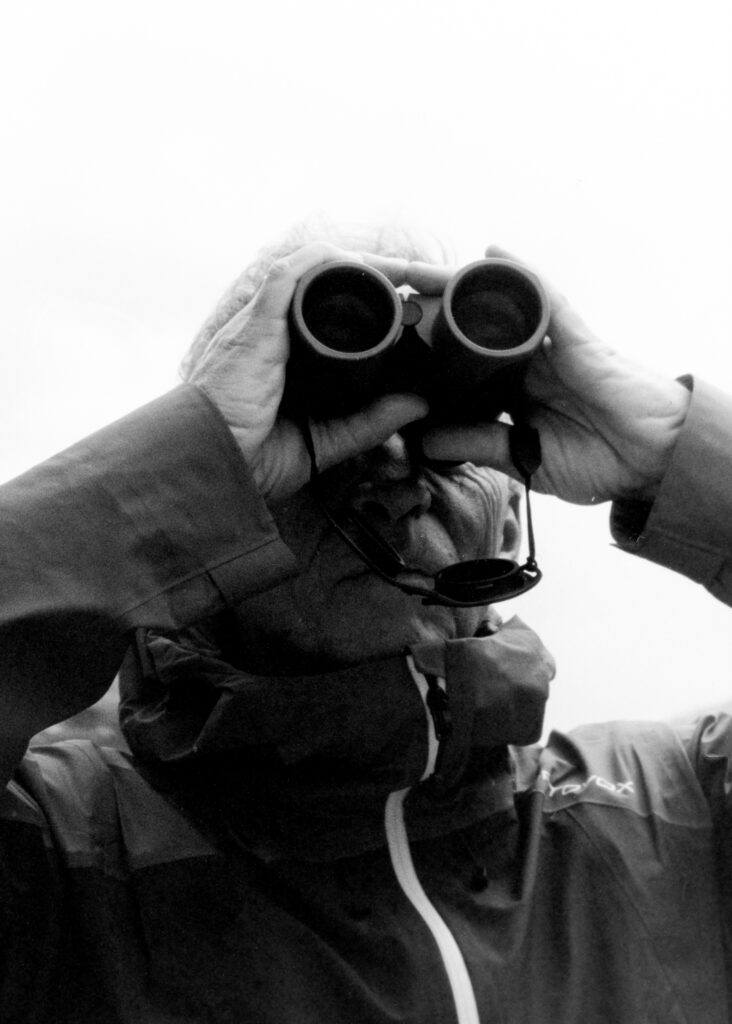
For me, it was important to bring together different registers of knowledge: scientific, photographic, and personal. Then there is also my father, who is an optician. His perspective brings something very specific into the work. At one point he said: “There is a difference between looking and seeing.”
You can look at something and still not truly see it. That idea became very central to the book.
ML: Looking ahead, how do you imagine this project evolving? Are there new forms, collaborations, or geographies that feel necessary as the work continues?
NA: I would like to dedicate my artistic practice more deeply to glacier ice, through different mediums, potentially expanding into film, writing, and other forms of storytelling. I remain very open to new places and to new forms of collaboration as the work develops.
I am also in the postproduction of my short film which is purely based on my grandfather’s super 8 archive. I have been working with a composer who is from the same mountain region as me as well as a wonderful editor. The film should be out later this year, but I hope to submit it to film festivals first. What is particularly interesting is that his research focuses on how ski sports are changing in the context of the climate crisis. This is something that is constantly present for me when I return to Austria, you can literally see how the landscape in winter is transforming.
That also connects to my own family history. My other grandfather was involved in ski tourism in my region, and I only later learned how skiing functioned before artificial snow became necessary, essentially up until the early 1990s. That shift alone says a lot about how quickly the landscape has changed.
Upcoming presentations also include a talk with the Alpine Club in London, the oldest alpine club in the world – which will take place at the end of May, and most recently an artist talk at the Foto Arsenal in Vienna.