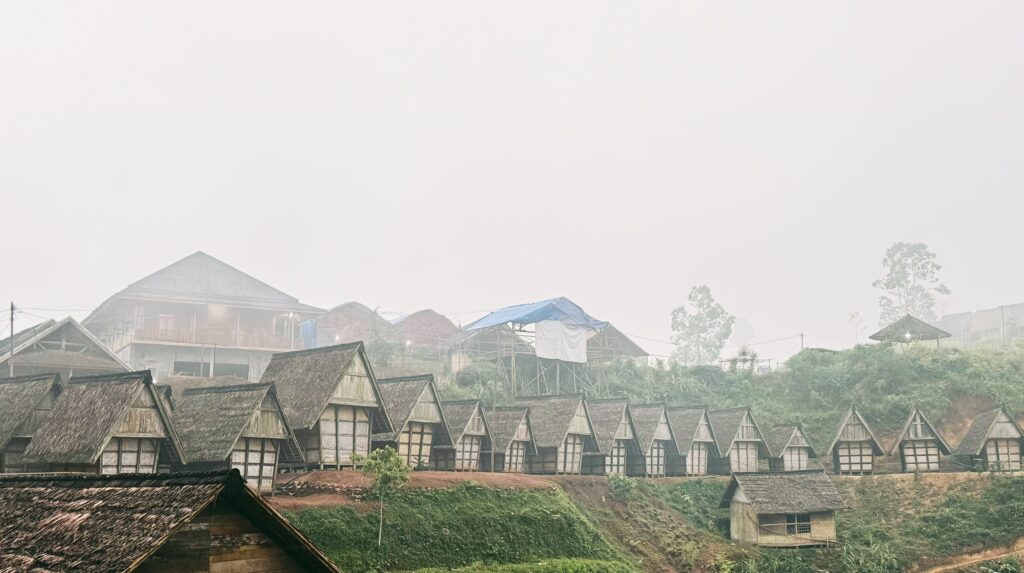
Perched on the upper slopes of Mount Halimun–Salak in West Java’s Sukabumi region, the cultural landscape of Kasepuhan Gelar Alam is easily misread by modern rationality as a sociological fossil, trapped in the romanticism of the past. Behind the thatched ijuk roofs and agrarian rituals, however, lies a progressive political laboratory. This indigenous community is enacting a radical subversion against the hegemony of extractive development: an antithesis that not only challenges the logic of limitless economic growth and a genuine experiment in food and energy sovereignty at a moment when the global climate crisis is no longer approaching but arriving.
The roots of this resistance are far older than contemporary environmental discourse. The community known as Kasepuhan Gelar Alam traces its lineage to a long continuum of Sundanese agrarian civilisation that, according to local historical records, has persisted since at least the fourteenth century, believed to have originated around 1368 M, when early custodians of the Kasepuhan established a system of communal agriculture and ritual governance in the highlands of Banten Kidul, located within the Mount Halimun-Salak National Park in West Java. This remote region, part of Indonesia’s most populous island, remains a dense enclave of primary rainforest and ancient indigenous territories.
Within this cosmology, agriculture is not merely economic activity but a sacred covenant between humans, nature, and ancestral memory. Rice cultivation forms the spiritual axis of communal life, encapsulated in the philosophy mupusti pare, lain migusti – to honour rice without deifying it. This worldview treats sustenance as a living inheritance rather than market commodity. Over centuries, such principles have produced a resilient social system in which ecological stewardship is inseparable from cultural identity.
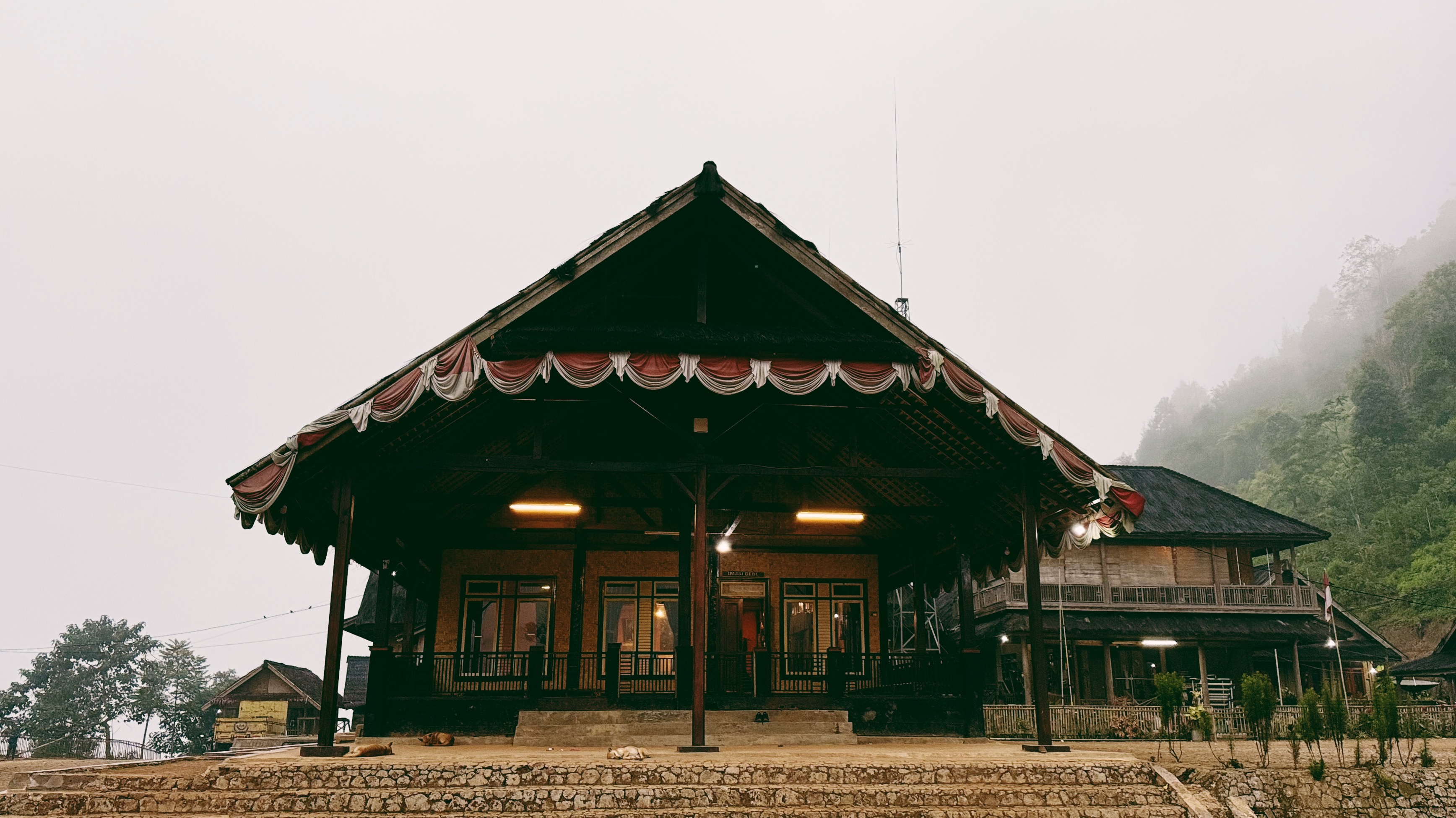
The name “Kasepuhan” itself derives from the Sundanese word sepuh, meaning “elder,” signifying a settlement governed by ancestral wisdom and the authority of elders. In this institutional structure, leadership is embodied in the figure of the Abah, a hereditary custodian who serves simultaneously as political leader, spiritual mediator, and guardian of customary law.
Today, that mantle rests upon Abah Ugi Sugriana Rakasiwi, who assumed leadership in 2007 following the death of his father, Abah Anom. His succession illustrates the deeply embedded continuity of the Kasepuhan system: leadership does not emerge through electoral competition but through lineage, spiritual legitimacy, and recognition by a council of customary ministers known as the rorokan.
Such deep-rooted institutional stability serves as the basis for the Kasepuhan’s ongoing efforts to maintain territorial autonomy against external economic pressures.
Anatomy of Vulnerability: A Product of Political Design
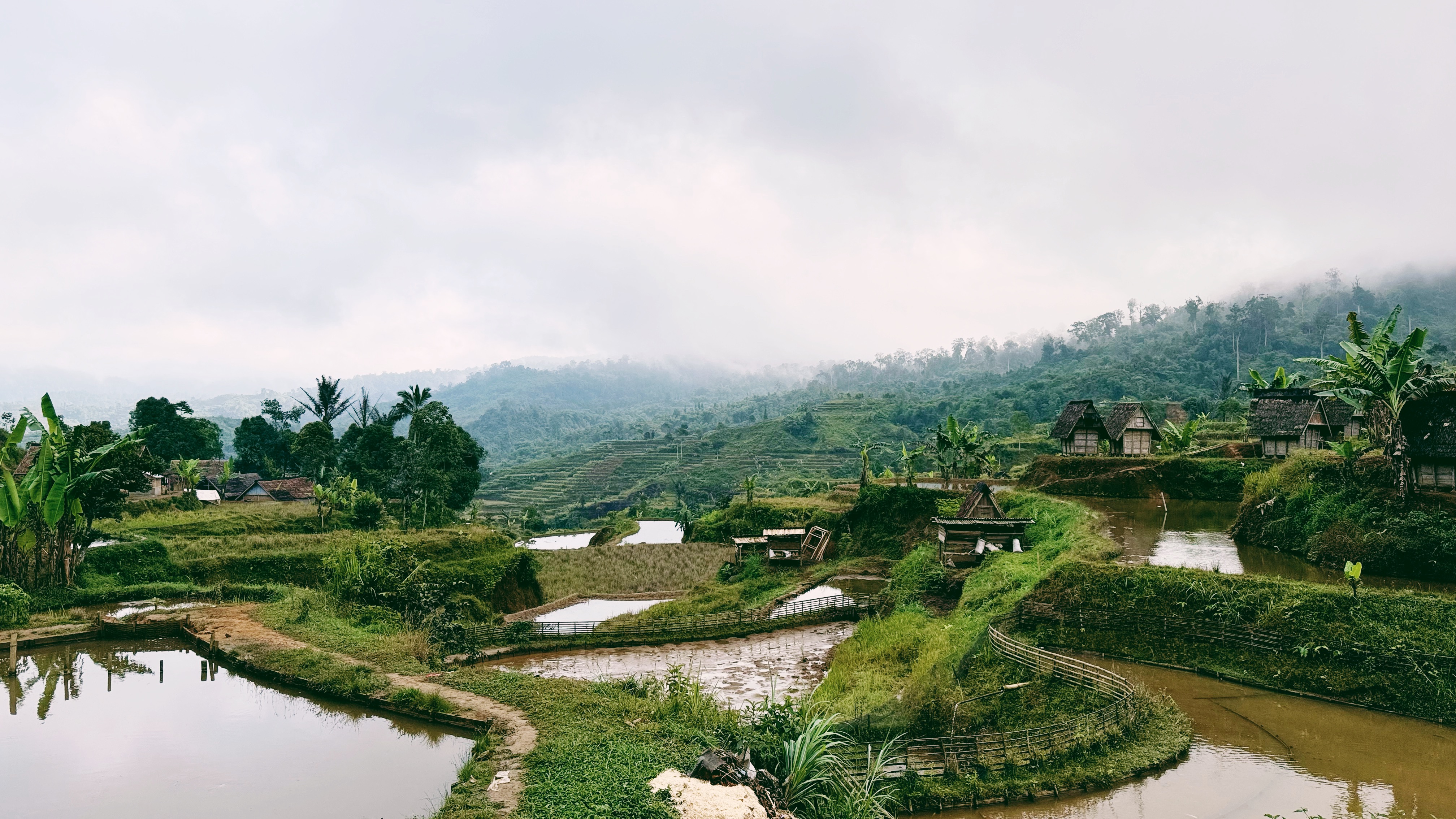
Indonesia is frequently positioned as a front-line casualty of global climate vulnerability. The dominant narrative tends to reduce this to a geographical accident or technical anomaly. In reality, climate vulnerability at the grassroots level is a political artefact: the byproduct of an economic architecture deliberately constructed over decades.
This tension sharpens when we examine the fate of indigenous communities in Indonesia. The state commits to global sustainability targets while the juridical recognition of indigenous peoples through the Indigenous Peoples Bill has remained suspended for more than fifteen years without certainty. This legal absence leaves local communities vulnerable to the expansion of extractive industries, including the commodification of land in the name of tourism.
Mass tourism, though frequently packaged in the rhetoric of green solutions, often functions as a coercive mechanism – uprooting indigenous communities from their agrarian foundations and depositing them into a volatile service sector. When pandemics or climate disasters halt tourist flows, these communities are stranded without safety nets, having lost sovereignty over both their knowledge and their land.
Kasepuhan Gelar Alam takes a different path: economic decentralisation. Their historical experience of migration further illuminates this position. In Kasepuhan oral tradition contains the concept of ngalalakon: ritual migration guided by ancestral visions known as wangsit. According to these traditions, the community has relocated its settlement more than twenty times throughout its history in search of land capable of sustaining their agrarian cosmology.
Such migrations were never driven by market incentives but by ecological signals: declining soil fertility, disrupted harvest cycles, or spiritual guidance perceived by the customary leader. Each new settlement, known as awisan, represents a covenant between community and landscape, reaffirming the principle that human habitation must follow the rhythms of the earth rather than impose domination upon it.
In an era, when land is increasingly treated as a speculative asset, this philosophy constitutes a quiet but radical critique of modern territorial governance.
Technology as an Instrument of Autonomy
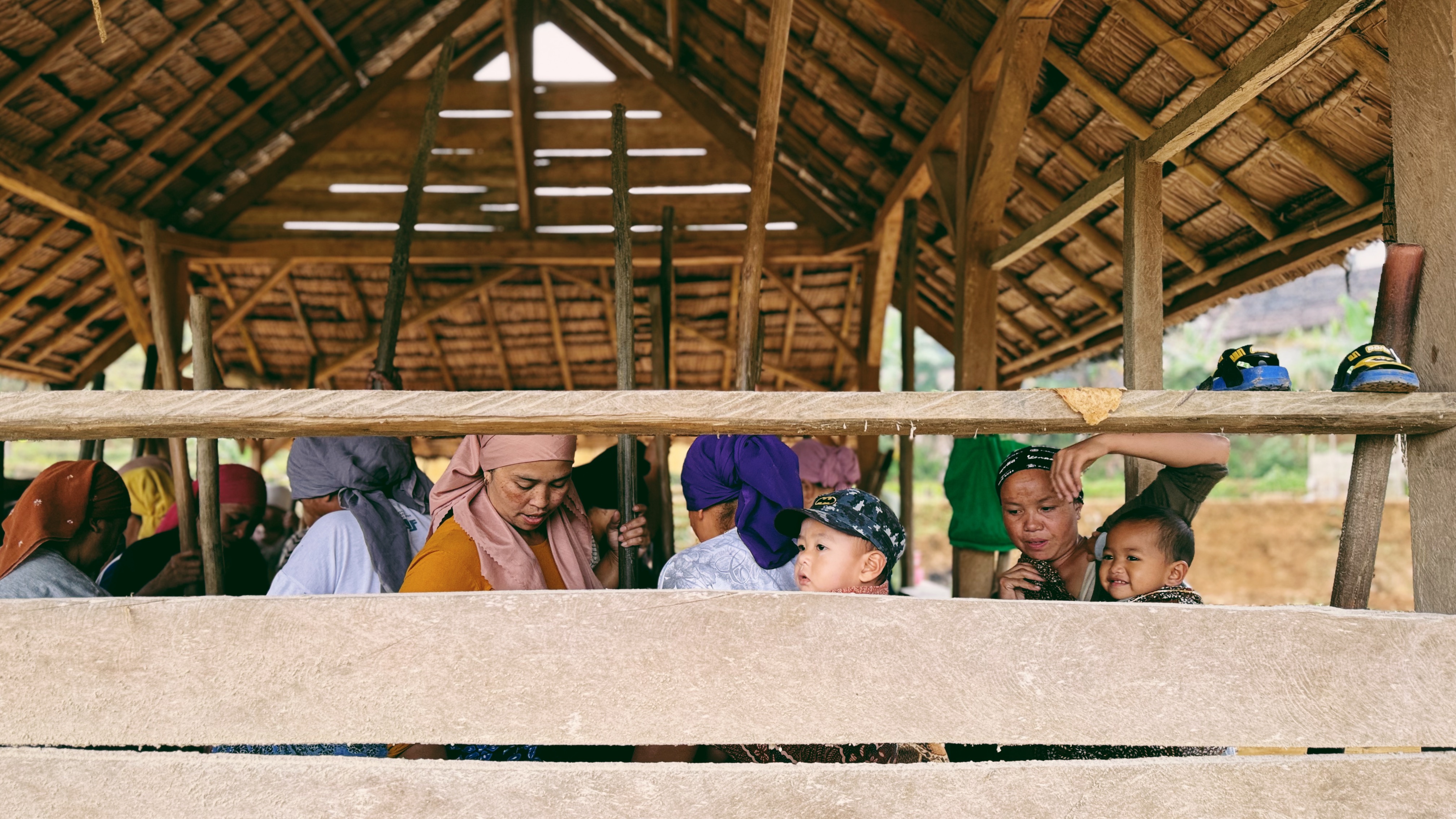
The community’s approach to technology is its most provocative expression of sovereignty – a cultural filter against uncritical modernity. Innovation is not adopted in the name of progress, but evaluated for utility and collective agency.
Their energy independence is not recent. The Kasepuhan has been energy-independent since the 1990s through self-built micro-hydro technology. By eschewing large-scale dams that disrupt the river, this system strikes a harmony between electrical needs and the preservation of aquatic life. With local technicians constantly tending to the machinery, they prove that energy sovereignty can go hand in hand with the protection of ancestral traditions.
They also operate a local television station to disseminate customary rituals, ensuring that technology serves cultural preservation rather than eroding it. This hybridisation of tradition and modernity demonstrates that indigenous communities are not anti-technology; rather, they insist that technology remains subordinate to ecological ethics and communal autonomy.
Abah Ugi Sugriana Rakasiwi, the leader of Kasepuhan Gelar Alam, affirms this philosophy:
Technology is a tool to support life, not to alter an order that has long safeguarded nature. We use electricity for lighting and information, yet in matters of food we remain obedient to the natural cycles that have been tested for hundreds of years.
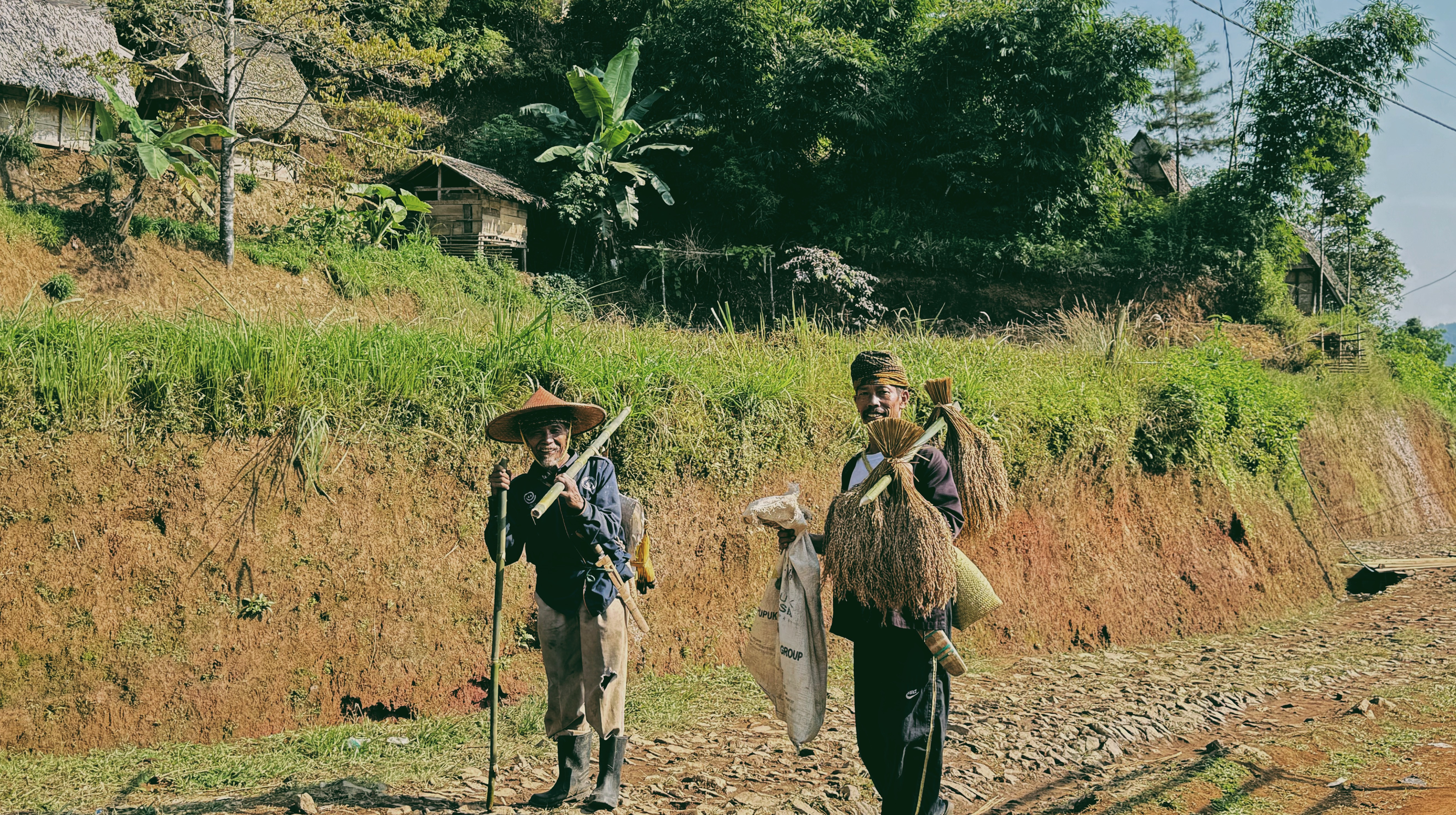
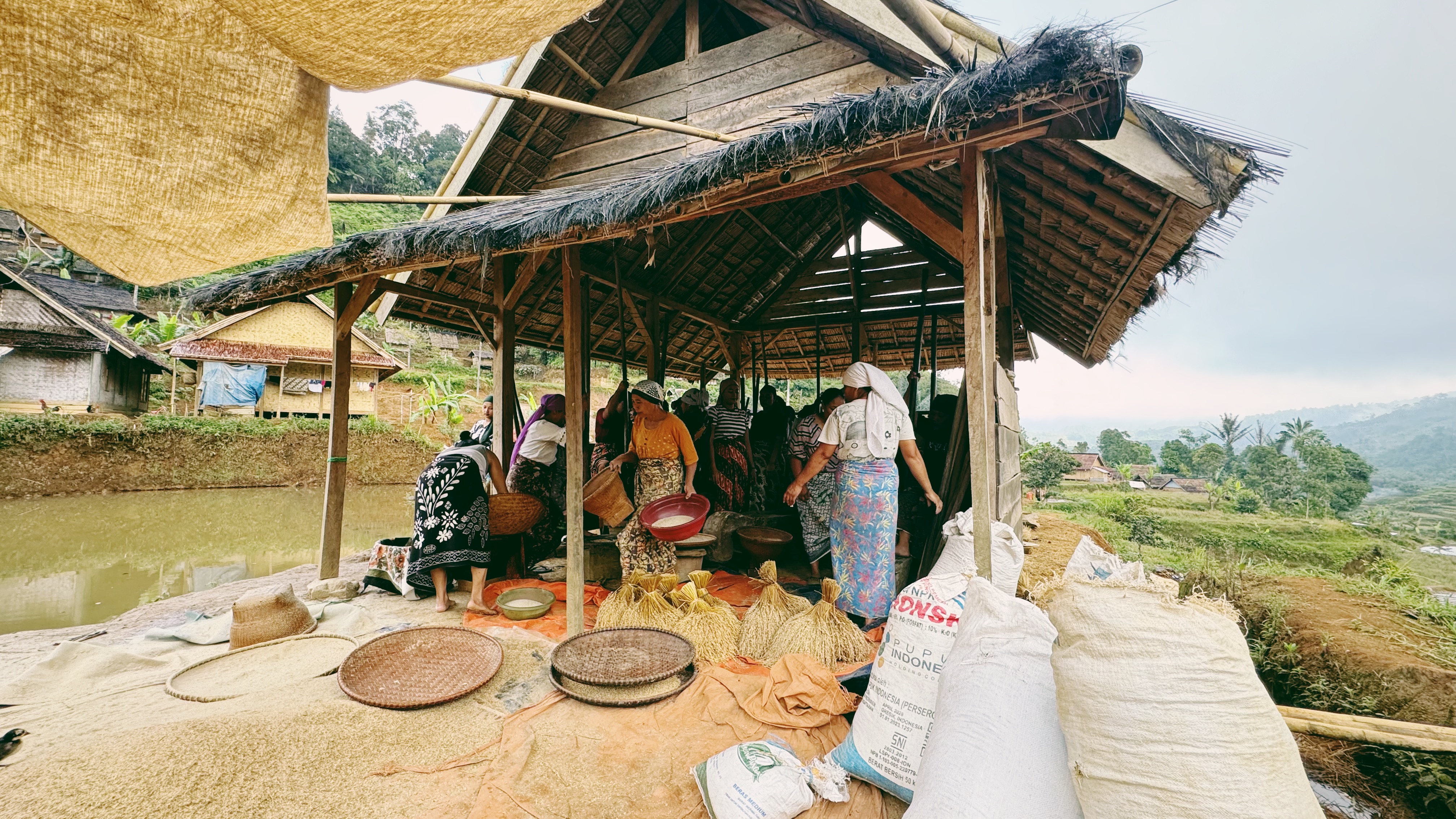
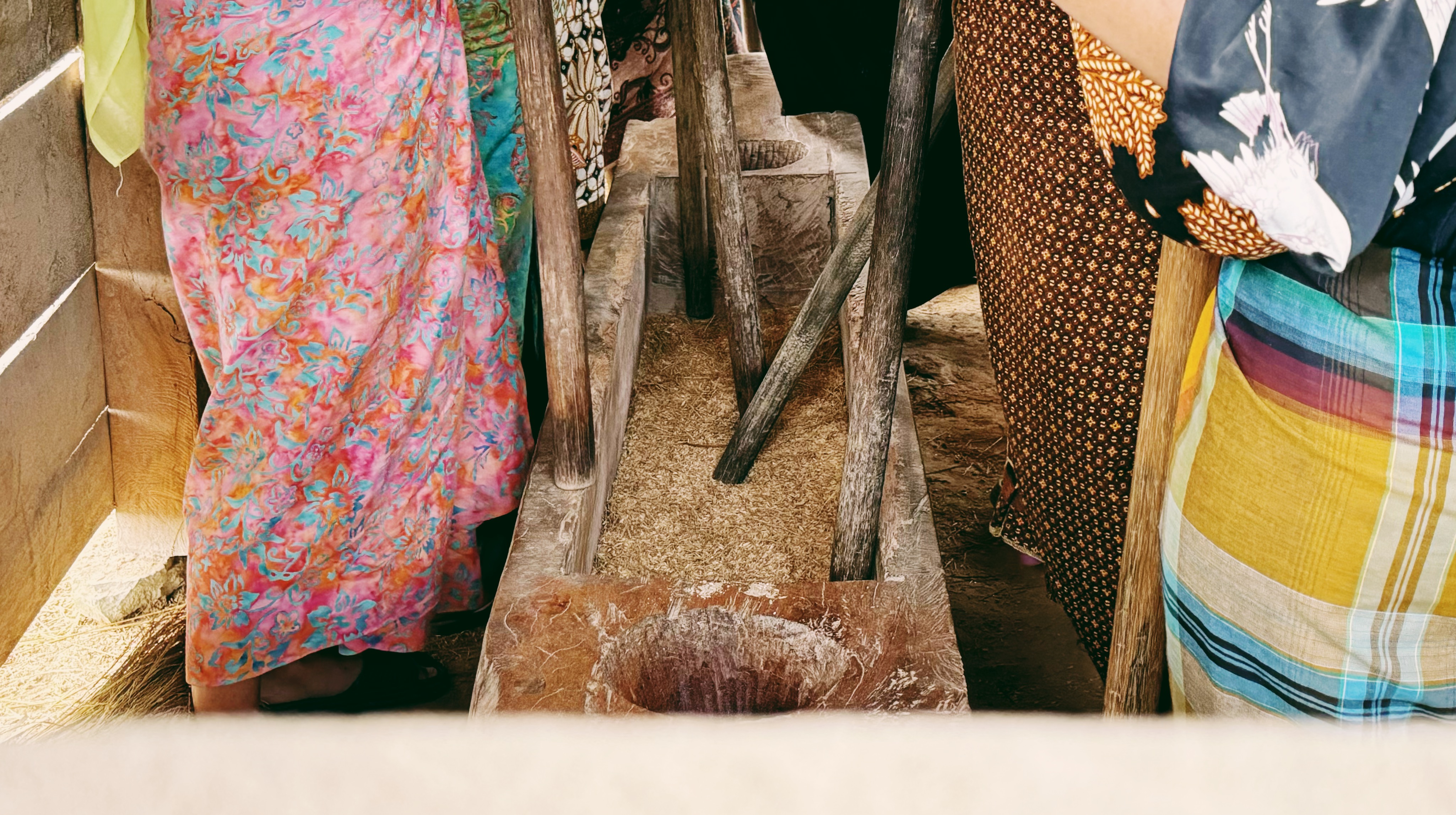
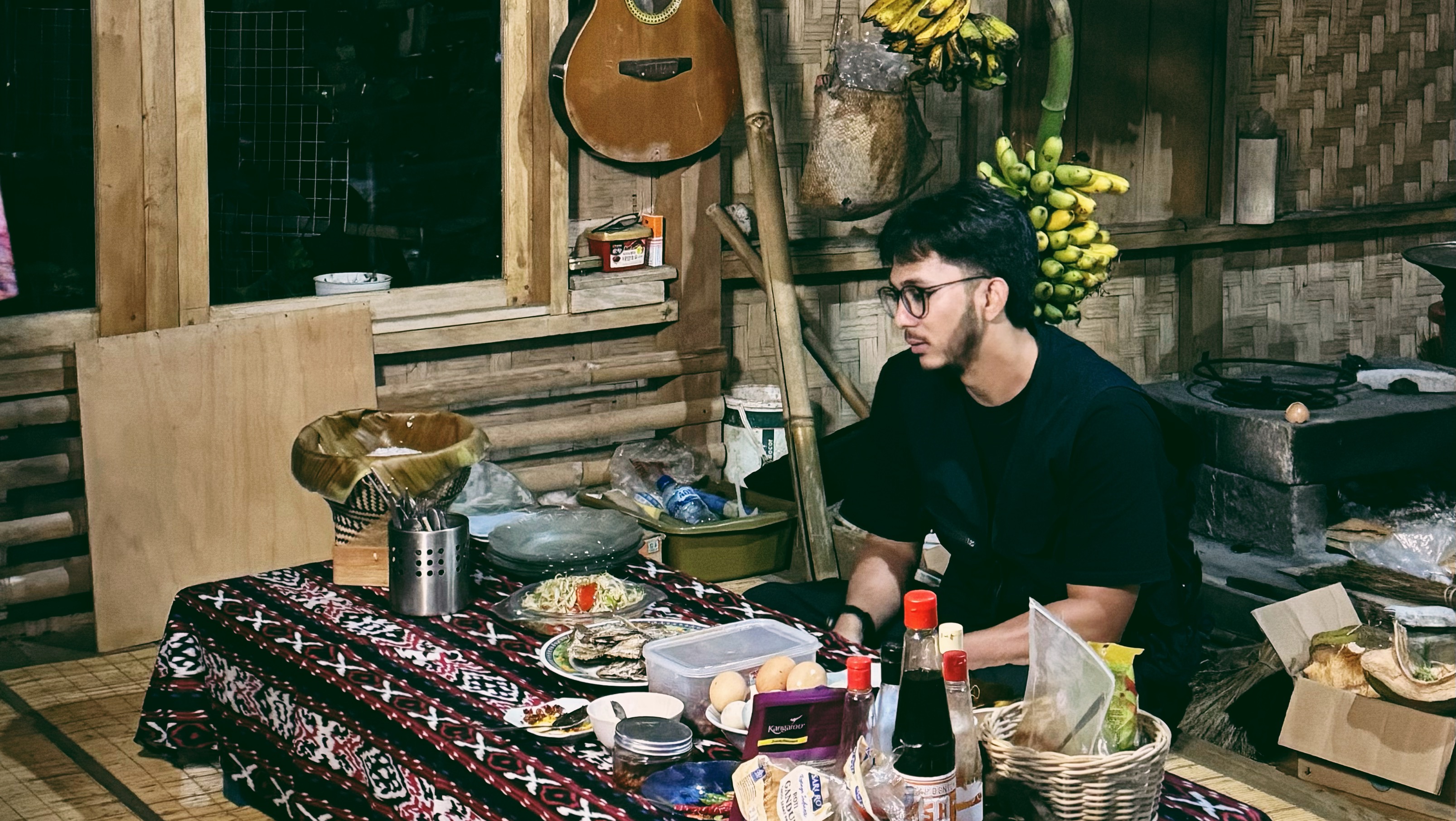
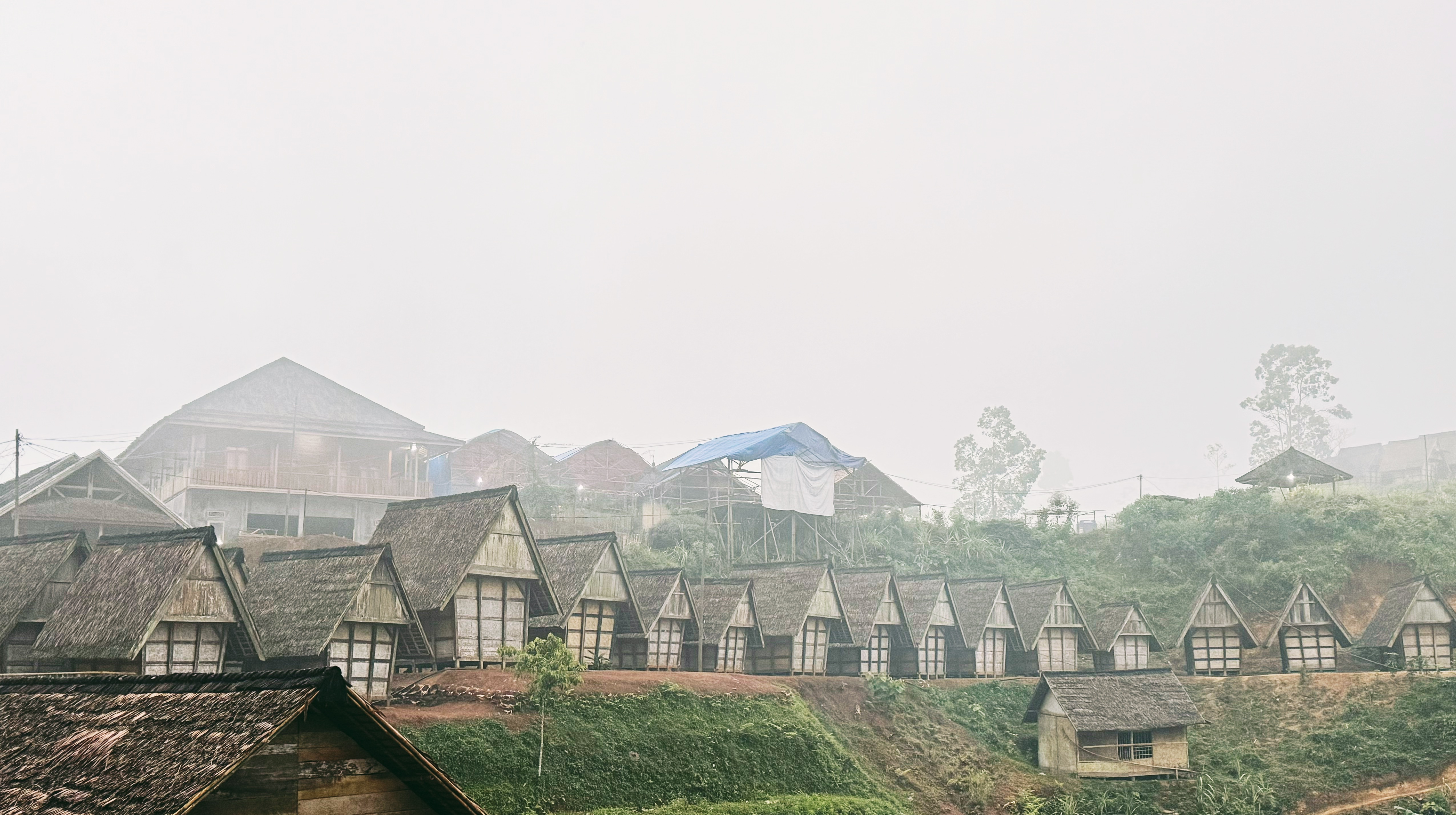
The rejection of agricultural mechanisation, such as tractors and chemical pesticides, is a political statement about self-determination. By maintaining more than 168 varieties of local rice and storing them in thousands of leuit (traditional rice granaries) capable of preserving them for decades, Gelar Alam effectively severs the circuit of dependence on the hegemony of the global agrochemical industry.
The leuit is not merely a storage facility but a cultural institution. Each granary symbolises the prosperity of the household that maintains it, while collectively they form a decentralised food security network that can sustain the community for decades.
In an era of volatile global food markets, such decentralised storage systems are a remarkably sophisticated strategy of resilience.
Local Dialectics within Global Currents
At the national level, the existence of Gelar Alam exposes the failure of Indonesia’s Food Estate schemes that prioritise industrial monoculture over popular sovereignty. This is not merely a technical problem but an ideological collision.
Agrarian policy researchers increasingly recognise that climate resilience cannot be engineered through technological solutions alone; it must also address the structural inequalities embedded in land governance.
The Kasepuhan model offers an alternative paradigm. Instead of maximising yield through monoculture and chemical inputs, they cultivate biodiversity, ritual discipline, and communal labour as the foundation of resilience.
An expression of this worldview is Seren Taun, the annual ritual performed over centuries to mark the completion of the agricultural cycle and the storage of harvested rice.
Seren Taun is not merely a celebration of abundance, for this community – it is also a philosophical reminder that prosperity arises from balance rather than exploitation. Through traditional music, ritual procession, and communal feasting, the ceremony seeks to reaffirm the covenant between humans, land, and ancestral memory.
Environmental policy analysts often interpret such rituals as cultural expressions of ecological governance. Dr. Siti Khadijah, an environmental policy analyst, observes:
Gelar Alam demonstrates that genuine climate resilience is not merely about technical adaptation but about strengthening rights over territory and local knowledge. When communities possess full authority over their food and energy, they automatically construct a fortress against global climate uncertainty.
What Gelar Alam is doing goes beyond the preservation of tradition; it is an example of resistance against a fragile economic system that places efficiency above human existence.
Constructing a New World
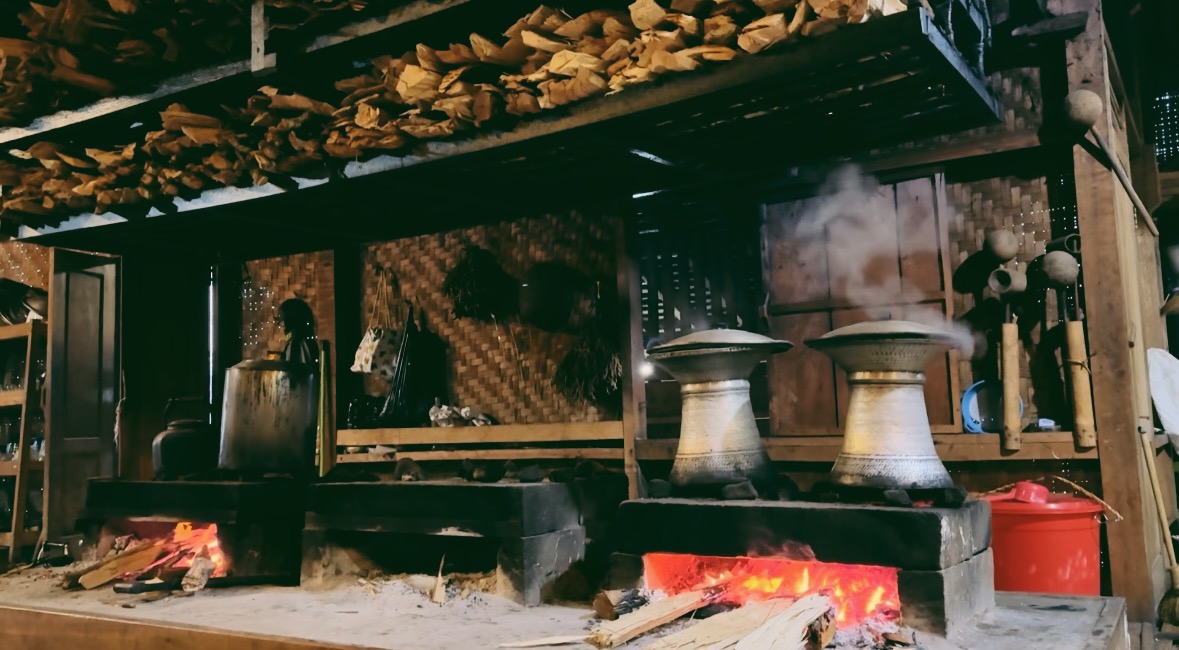
The lesson from the foothills of Mount Halimun-Salak is not a romantic invitation to return to the past. It is a commitment to self-determination within the backdrop of the climate crisis.
The historical endurance of the Kasepuhan community, across more than six centuries, demonstrates that resilience is not born from technological sophistication alone, but from a society’s capacity to maintain coherence between culture, ecology, and governance.
Policies centered on tourism and industry routinely erode traditional knowledge for the sake of sellable aesthetics. Gelar Alam tries to show that by preserving structural integrity, a society can navigate the climate crisis without surrendering its identity.
This carries international resonance: sustainability is not merely about preserving the environment, but about preserving a community’s capacity to decide its own future without being dictated by an increasingly uncertain global market.
The people of Kasepuhan Gelar Alam are not merely surviving history; they are quietly rewriting it. Their forests remain guarded not by state surveillance but by customary law; their food security rests not on global supply chains but on ancestral granaries; and their political philosophy is encoded not in policy papers but in ritual, memory, and the patient rhythm of rice cultivation.
In a century increasingly defined by ecological collapse and economic volatility, the experiment unfolding in this mountain enclave suggests a radical possibility: that the most sophisticated strategies for planetary survival may already exist within the living archives of indigenous civilisation.
Raised in the Indonesian highlands, Riza is a researcher and writer dedicated to amplifying the quiet wisdom of mountain communities. She fosters authentic climate adaptation by weaving indigenous insights into global policy to protect the landscapes she calls home.