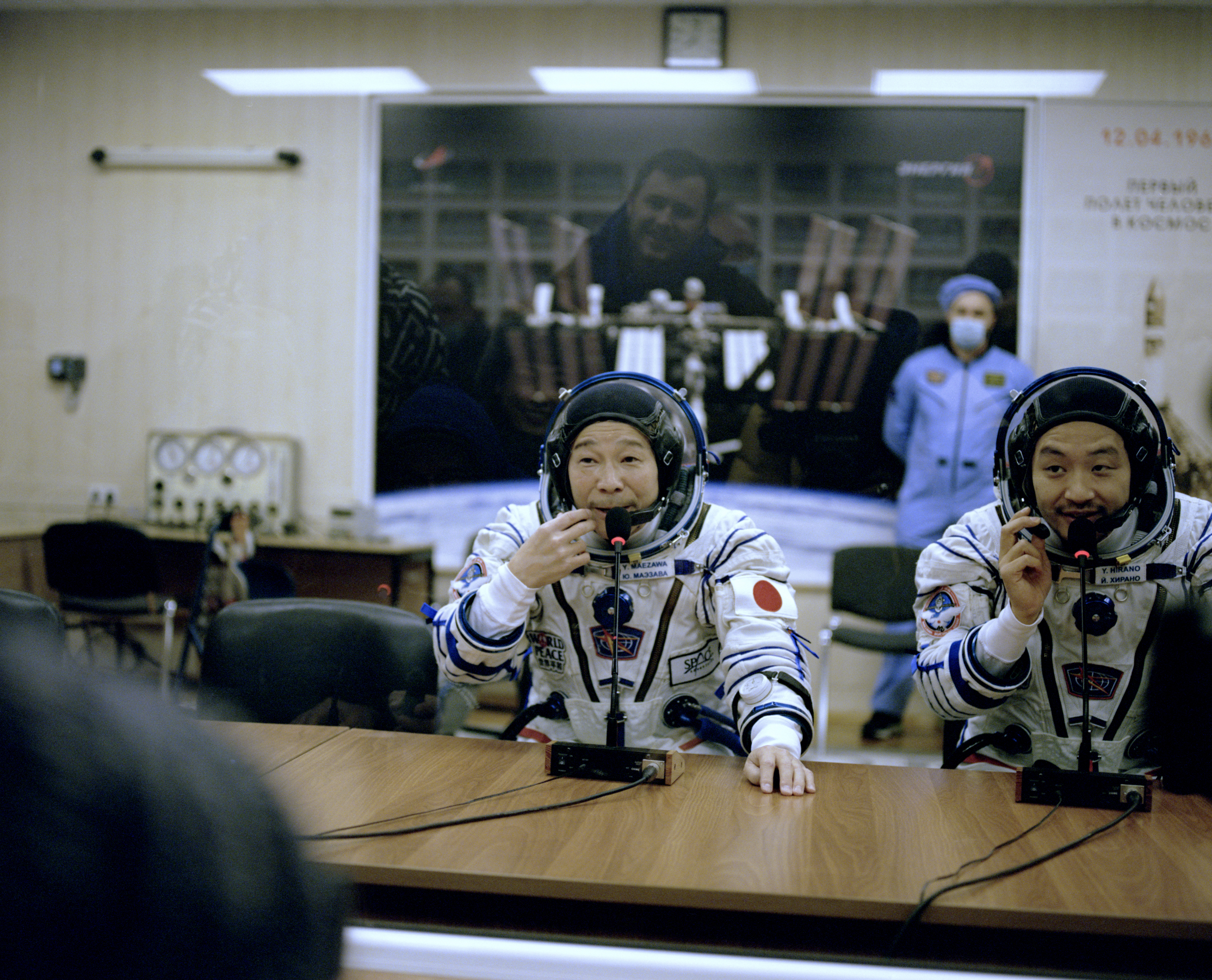
Rhiannon Adam is a queer Irish photographic artist, working between London, New York, and South Africa. She was educated at Central Saint Martins and at the University of Cambridge, and is the author of three books, including Big Fence / Pitcairn Island, and Polaroid: The Missing Manual. Her research-led long-term projects feature complex narratives relating to social injustice, outsider communities and abuse of power through the oft-close relationships between utopia and dystopia, fact and fiction. Her documentary practice is rooted in the study of cause and effect, turning her lens to the micro in order to reflect on the urgent macro issues of our time. While rooted in photographic image-making, these explorations harness the power of archive material, video, audio, and interrogate the inherent nature of the photographic medium itself. In 2021, Adam was chosen as one of the eight crew members (all creatives) on the first civilian lunar orbital mission: dearMoon. However, in June 2024, the project’s funder (Japanese billionaire Yusaku Maezawa) abruptly cancelled the mission. Adam is now working on a chapter-based self-reflexive project, Rhi-Entry, which deals with the fallout, and a body of work reflecting on the complex racial dynamics of post-Apartheid South Africa.
Adam will be speaking at Summit Photo: the Royal Geographical Society’s annual photographic event, featuring talks, exhibitions, and workshops with award-winning photojournalists, artists, filmmakers and explorers on how image-making can shape today’s world. Summit Photo will take place at the RGS in London and online, from 17-19 July. Booking and details available at rgs.org/events/summit-photo.
Icarus Complex Magazine’s Digital Producer, Madeleine Bazil, spoke with her ahead of Summit Photo. This conversation has been edited and condensed for clarity.
Content warning: This conversation includes mention of sexual violence.
Madeleine Bazil: Could you tell me about what you’re working on at the moment?
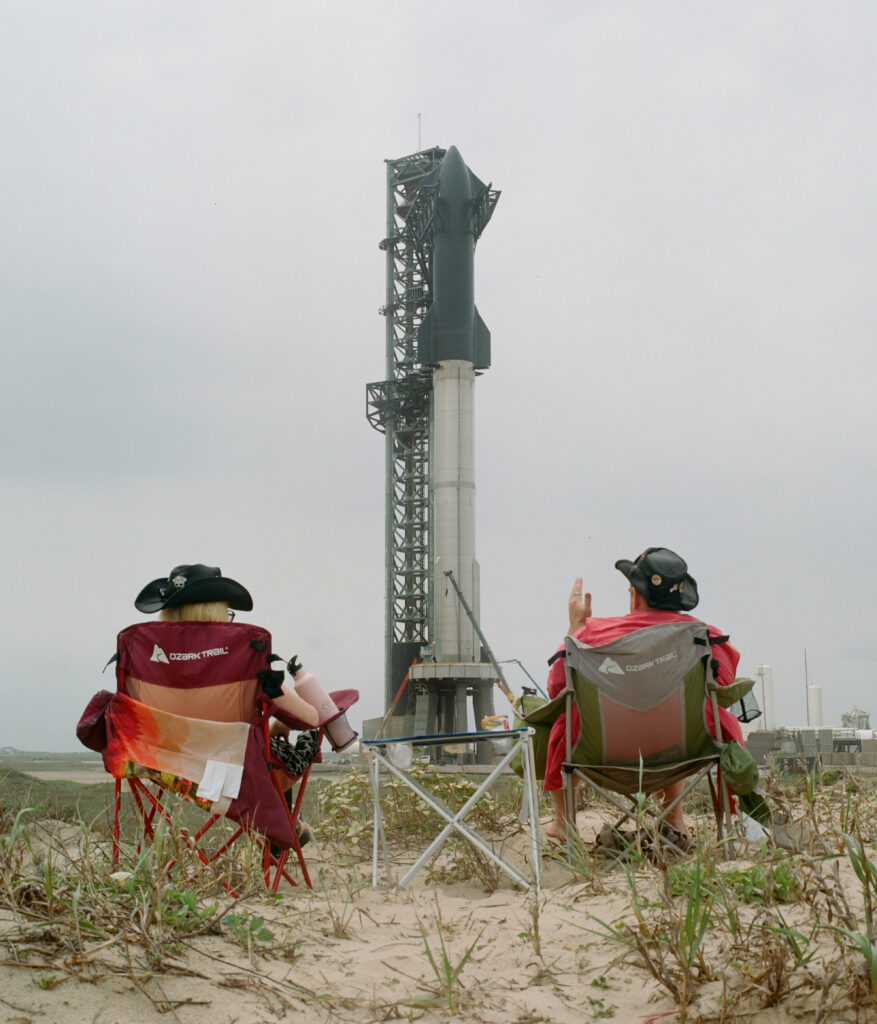
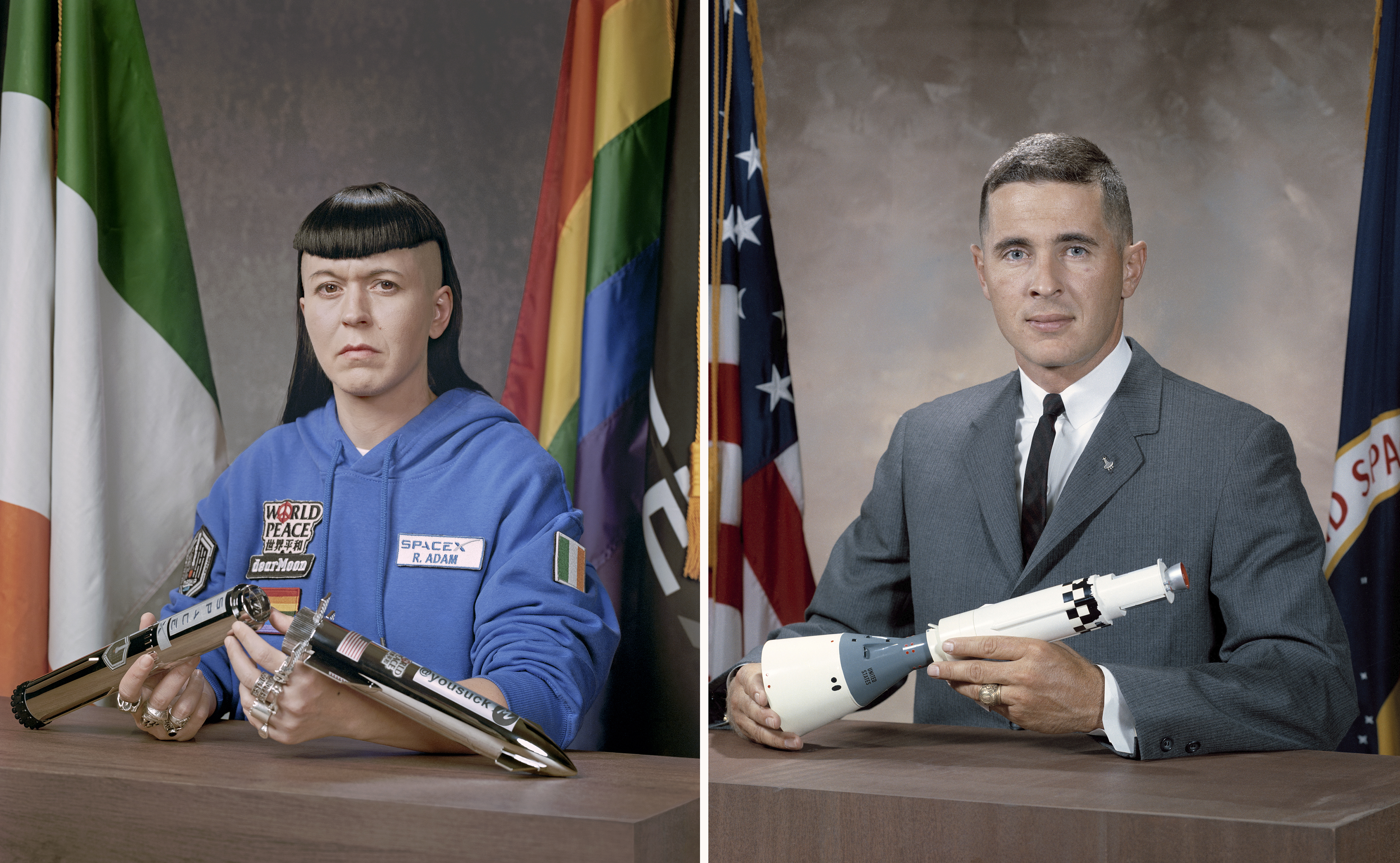
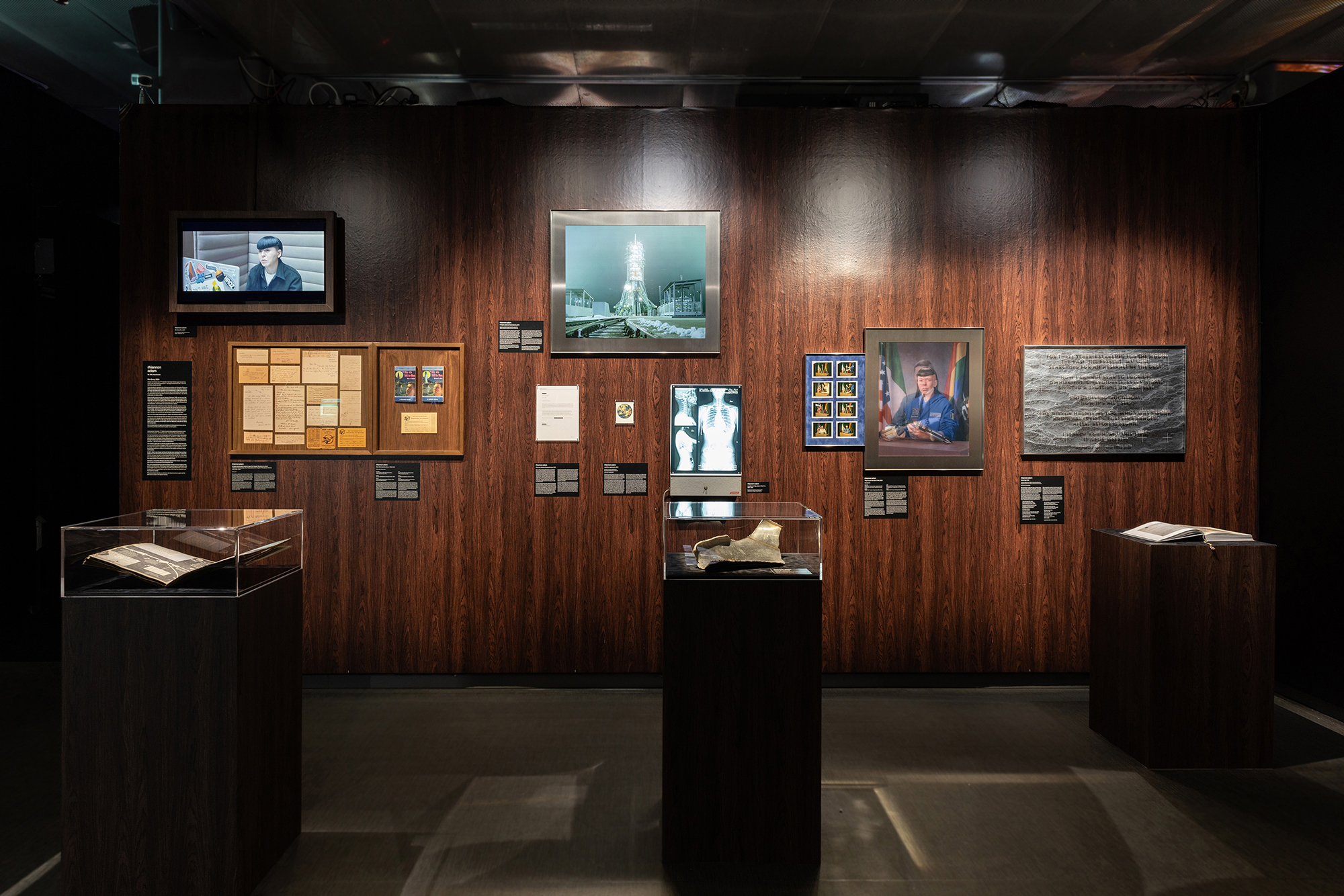
Rhiannon Adam: I’m working on two long term projects simultaneously, and they could not be more different from one another. Although, having said that, it feels that everything that I ever do in some way ends up connecting back. The first is called Rhi-Entry… I was selected in 2021 to go around the moon as part of an eight person civilian crew of artists; basically the first artist residency in space. The idea started really with Apollo 8 – the first spaceflight that ever went to or around the moon – when the crew returned, they were asked, “what would you have done differently?” And the crew said “we would have sent poets because we couldn’t express the grandeur of what we’d experienced”. Bill Anders also took the Earthrise photograph on that mission and that, of course, kind of kickstarted the environmental movement.
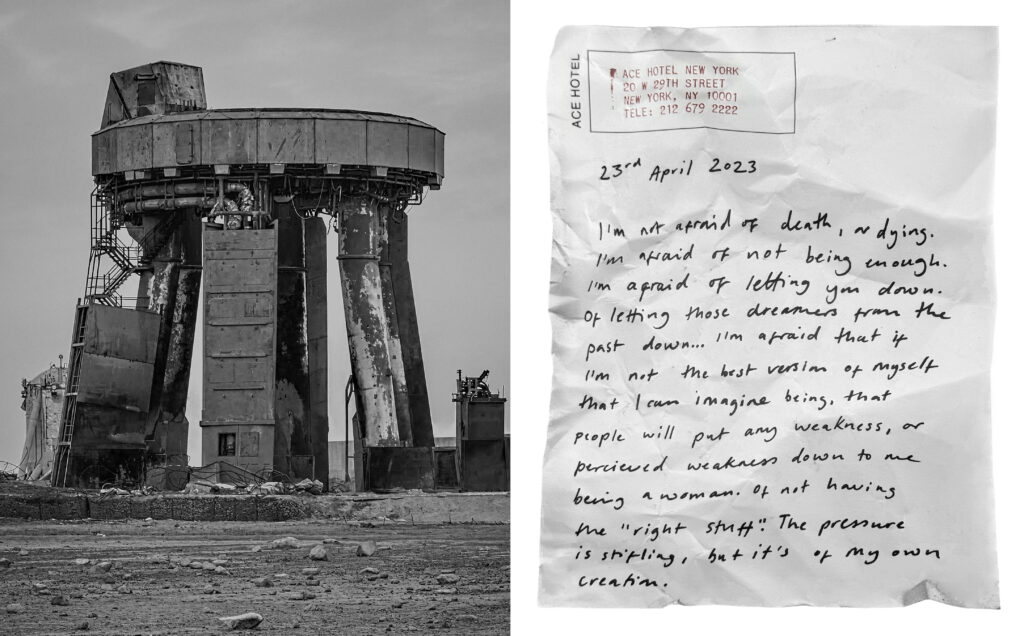
And so the point of our mission was meant to be recapturing the moment of Earthrise for the modern times. And when our project was cancelled, which happened in summer 2024 – several years of our lives had already been sucked away. But the hardest part was more like, what do you do with that sense of responsibility when you have nowhere to put it? And what do we collectively lose, insight-wise, when an opportunity like that just evaporates, because you imagine all the myriad outcomes of the things that you could have created and the things that you could have done, and the impacts that you could have had. And then you have to almost reverse-engineer it and think, well, how do I still achieve those same things, but from a different perspective? Because even though I never actually traveled to space, the opportunity in and of itself caused me to contextualise my own mortality and deeply care about the state of the world and where we are headed, and what I want to leave behind… which maybe I wouldn’t have thought about in quite the same terms.
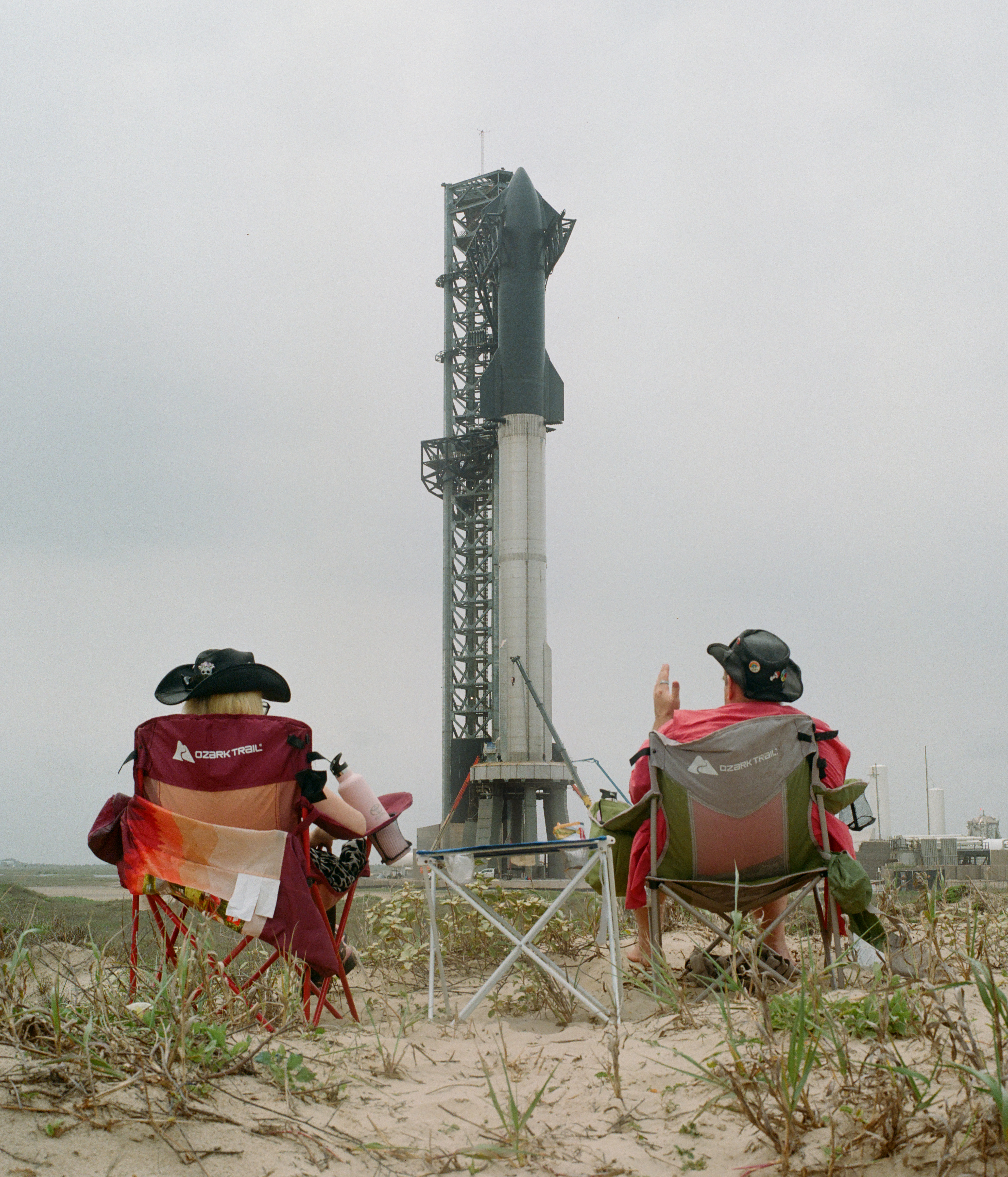
So it’s a project about framing that; a little amorphous and slippery; a little personal; a little big picture. And it’s my firm belief that within the next 10 years, people will be taking to the streets and protesting what is happening within the space industry in a way that we currently protest for climate justice or go on anti-war marches. Because I think right now, so much of what is happening in the space industry feels unrelated to us and our real lives. We think, “we should just be solving the problems here on earth, why should we care about that?” I think science fiction has taken over. There have been so many science fiction films that have taken over the narrative around spaceflight to the point where we can no longer discern what is real and what is not anymore.
MB: And it gets used rhetorically that way, intentionally, as an antidote to any societal ill. Like, we’re running out of whatever resource…
RA: Yes, the “Oh well, we’ll just go to Mars and start again.” There is this complete disconnect. And so I’ve taken it upon myself as a personal mission, that every time I show the project, it changes and it develops, and every time I exhibit it, it transforms into a new phase. The idea of it is that it keeps up to the minute with what is happening to help people to connect that this is actually their real life. A couple of weeks ago, I was at a space conference in Washington DC, and it was all of these major space companies – representatives from the likes of Northrop Grumman and Voyager and Intuitive Machines – who are cogs in a larger picture, which is that in order to reach Mars, we have to set up a fueling base on the moon using hydrogen. And Mars is the next big milestone. Basically, the gravitational pull of the earth is too great to be able to get to Mars and get home again. So you have to be able to refuel on the moon where the gravitational pull is less than one quarter of earth’s. And in order to do that, they have to build infrastructure. And I think within ten years, that’s going to really start taking shape. And then within maybe thirty years, there will be a lunar starbase, and talking about it will become as banal and commonplace as a kid now in the north of Scotland, being asked, “where’s your dad?” and replying“Oh, he’s out on the rig.” It’ll soon be “he’s out mining on the moon”. I wonder, what does it mean for humanity when we collectively lose the moon as a universal symbol of hope and unity and replace it with an industrial or economic connotation, when we lose the power of a dream to a race for profit?
So while my Rhi-Entry project started off as this personal reflection on a rejection, my gut-wrenching sadness around the cancellation of the dearMoon project was about losing a proverbial “seat at the table”. It centres the loss of a much-needed civilian perspective on the space industry – and in particular the loss of an artist’s viewpoint – what happens when we don’t question so-called progress and focus so much on the outcome. When those who have been taught to think differently and care about the inter-connective tissue…like the dearMoon crew… if those civilians lose that opportunity to have a say, or lose the ability to help guide and question what is in front of them, will there ever be another opportunity at a time when we can still make a difference, at a time when it’s key to get the public engaged with the subject matter before it’s too late, before it goes the way of AI or the climate crisis. We need to think long-term and humans are absolutely atrocious about thinking long-term. And yet we have 20:20 vision with hindsight.
MB: There’s a famous quote from Susan Sontag that basically says, 10% of any population will be bad, and 10% of any population will be good, 80% of people could be swayed either way. It’s interesting what you’re saying about the semiotics of these massive phenomena and with the moon thing, that sense of missing that sliver of opportunity to be part of a narrative that might otherwise get lost.
RA: I think that the narrative inside the space industry is that progress is happening and it’s happening at a rate of knots. Outside of the space industry, most developments sound like hairbrained pipedreams.
But I spend a lot of time now in those rooms with those people who are making it happen. So I actually do factually know the types of conversations that are being had – and – the lack of certain conversations that are being had. There is a magic in those rooms filled with engineers who see technical problems as challenges rather than blockades. But at the same time, no one’s asking what finding the solution will lead to. So many engineers are hyper-fixated on these micro problems but maybe not really thinking beyond, towards the big picture and how it all slots together in the greatest jigsaw puzzle of life. So I always comes back to: “just because we can, should we?”
I think having open discussion and interdisciplinary conversations should happen as a matter of course. And it just doesn’t. Our education systems are built around pushing you into a silo completely. I think that if we had more interdisciplinary conversations that a lot would be solved; we wouldn’t have this stonewalling ‘us and them’ attitude which prevails in modern society.
Everything is down to interpretation, but you need critical engagement to bring a breadth of interpretations to the table. Within any cutting-edge innovative industry, pushing the envelope into uncharted territory, you need people just outside of it who can translate and communicate these big concepts into accessible and relatable information for people whose minds are occupied about whether they’re putting food on the table or whether they’ve got housing. You need to make them care about something that seems so abstract – like space – which is so outside of the realm of normal concern.
And that’s why I’m exhibiting that work so much because every time I exhibit it, there’s an opportunity to talk about it, and there’s an opportunity to present it to people and through a range of environments. I’m trying not to exhibit it exclusively in gallery spaces where it’s just photography fans, or I try to present it in different ways.
MB: You’ve worked quite a lot in very closed communities. How do you build that trust with them where they do quite like you and feel open and porous with you, but then also how do you internally navigate that tension for yourself when they have beliefs that you may privately find really…
RA: Repugnant?
MB: Repugnant, that’s a great word. How do you navigate the long-term aim of the storytelling project with the sense of, these people are awful. And then how does that look for them in engaging with you?
RA: I try to remember that everyone was a baby once and a blank canvas. Everyone has had their views formed by so many factors that have come across their path, within their lives. People’s most heinous views usually originate from a place of fear, and fear is a universally identifiable emotion. Everyone has felt fear, and I try to remember that most of these people are not thinking the way that they think about the world because they’re trying to be mean or to come up with horribly oppressive ways of doing things. Most people are convinced that they’re doing the right thing, while the sum total of your life experience has led you to this other point. Both of us are actually trying to solve things in our own ways. If you just start at that base level, there’s a common goal. You have to strip away the layers of how we got there. It doesn’t mean you ever have to agree with them, but it means you can come to a place of at least understanding how they got to be the way they are. Once you understand something, it becomes less terrifying.
My own practice of breaking down that fear is to enter these communities, and be a part of these communities, and try to understand these communities, because that deflates that fear bubble. Once I see that gun toting, pro-life, homophobic, racist that I met somewhere didn’t start off life like that, and I can talk to them about all these other things and they get to the point where they quite like me. And then a year or so later, they Google me, and then they find out that I’m queer, and then they go, oh my god, I made friends with a queer person. It helps slowly chip away at this veneer by being this Trojan horse character.
MB: Does it ever start to veer into feeling like you’re giving airtime to something that actually shouldn’t be given airtime, or validating it?
RA: That’s an interesting question. And that’s something I think about a lot. That’s a hard one to navigate. I’m not trying to lead an exposé. So I think that’s the difference: I’m not doing these things as a journalist where I have a particular agenda that has to be exposed or dismantled, and it’s more like a treasure hunt than an information hunt. And so that is always hard.
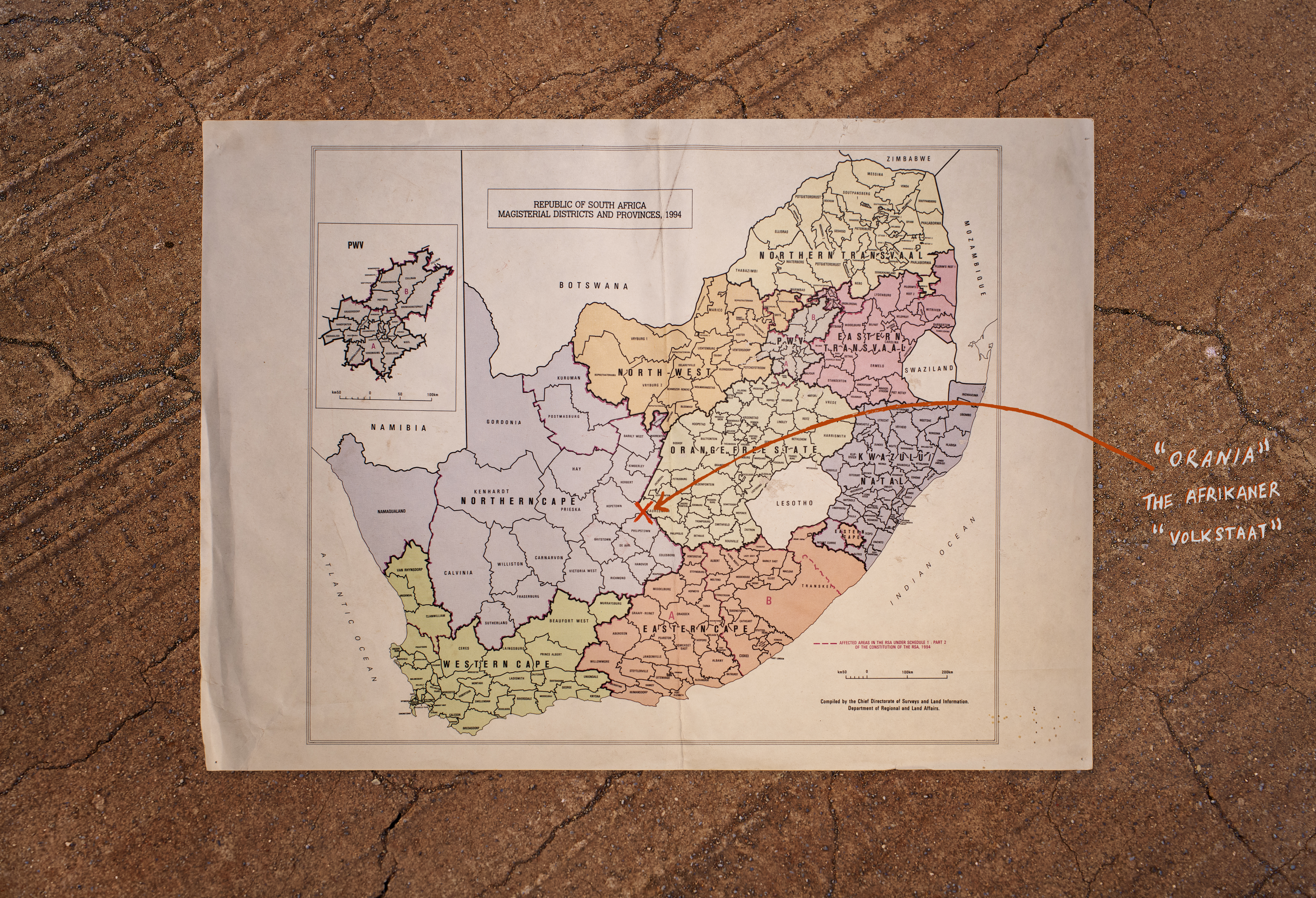
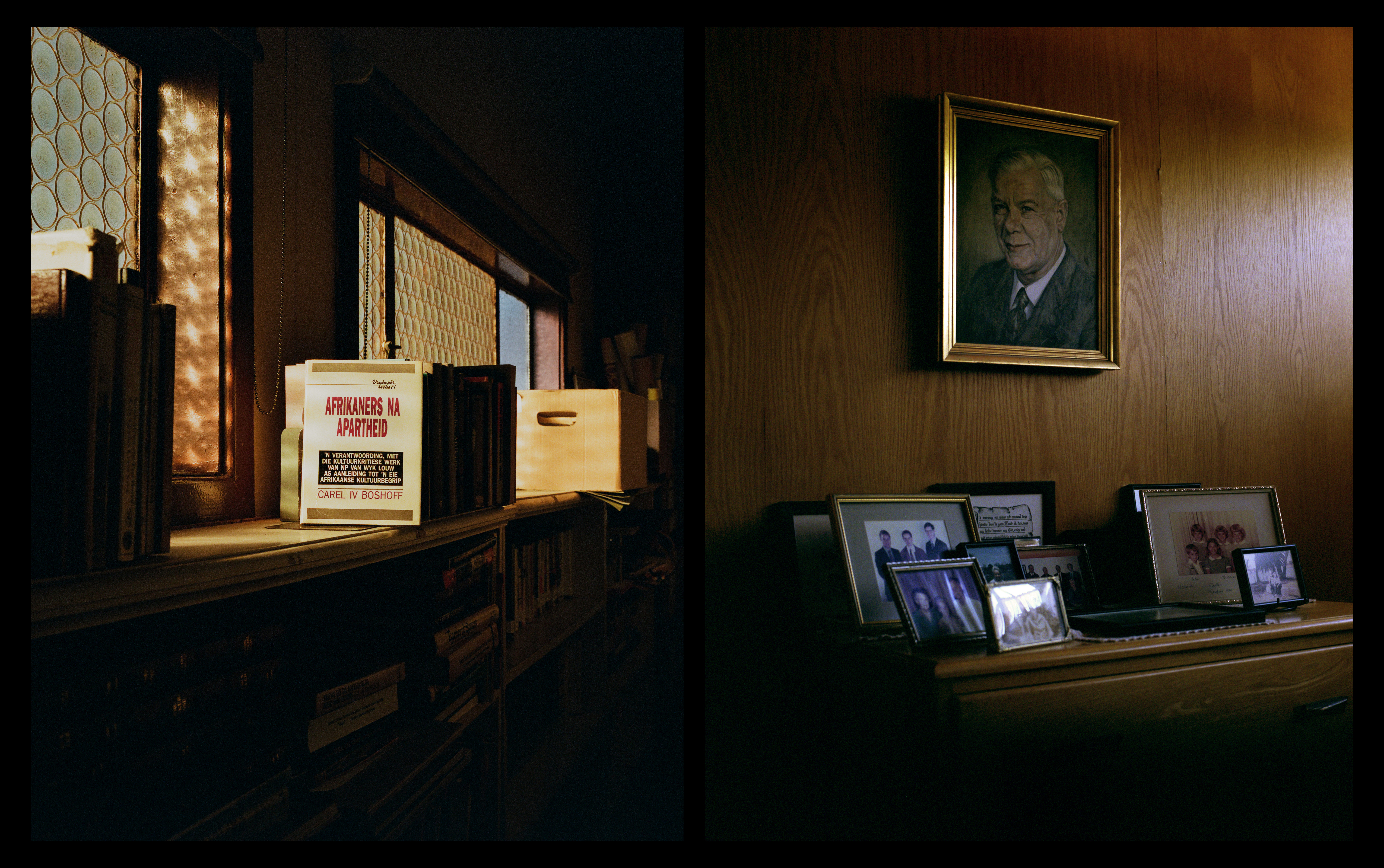
I think platforming anyone’s opinion is always difficult. Say, in this white community in South Africa that I’m working in [Orania] that’s a difficult one because having spent a lot of time there, I think it is perhaps misunderstood. But even people within that community misunderstand the purpose of that community. And there are myriad viewpoints on that community from within it. There is not one unified stance on anything, and no one agrees with each other, there is a lot of in-fighting as the community attempts to define itself and its purpose. So instead of trying to say what is it, or what it is not, I just tried to frame individual people’s experiences.
I’m very interested in this idea of intentional communities, and how even with the leadership of Orania, there is an acknowledgement that a place will grow to a certain point. And then often the things you’re running away from become more and more impossible to run away from, and then you, in the spirit of growth, have to introduce people that maybe aren’t the best for your community and can accidentally cause its downfall. Or, it’s very easy to agree amongst a group of say, 10 people, what something’s going to look like – and then you grow to a community of 3,500 and suddenly that becomes really difficult. So I’m more interested in: when you start off with an intentional rule book, how does that disintegrate? One person’s version of utopia is another person’s dystopia – I’m interested how these communities always seem to end up decaying and disintegrating because they become impossible to manage. It’s wild when you read about the origins of apartheid, where so much assumption was made about so many things based on bogus science and biased anthropology or interpretation of events from a Calvinist perspective. And you can see the trickle down of how these ideas came to be and then how misplaced they are. And again, it’s this cause and effect thing.
I’m very interested in Orania for lots of reasons. And this idea of its founding being by a group of academics that went off into the Karoo desert to start something – trying to run away from poverty and crime and the fear of being killed in their beds as retribution for apartheid. But then what ended up happening as time has gone on, is that Orania had had to import poor whites [for labour]. And then what you have now is white people in the same position as the people of colour whose bodies were used to build your comfort without being able to access it themselves. You’ve just done a swap out. And it reinforces a sense of white victimhood too. Over the long term, resentment leads to violence, and we end up with this constant feedback loop.
MB: The line that people who defend apartheid are always saying is essentially: ‘say what you will about the ethics, but at least the infrastructure worked’. But the fact is that actually it didn’t. Apartheid writ large had the veneer of functioning well because it was upheld by Black labour. And so without that, it would have collapsed immediately.
RA: The Afrikaners are very resourceful, I will say that! But as Orania imports cheap white labor, an underclass is being built. And an oppressed underclass is essentially the very thing that the founders were trying to run away from in the first place. The underclass are not really recognised in terms of voting for the town’s future either. They’re often placed in worker’s housing or live in caravans, and they haven’t got enough money to buy land. And Orania has a limited footprint, so there is a bit of a housing bubble because it has a boundary. You have a lot of people from outside who are white Afrikaners who pass the test to be there, but will buy the land and then they’ll let it out or they’ll start a guesthouse, and so there’s a lot of land that isn’t owner-occupied. And people are profiting from it, but much of that wealth leaves. Afrikaners as a whole are very against any curtailment of what might be deemed as capitalist sentiment, and in Orania, they run the risk of falling victim to their own love of capitalism. Is that a utopia, when you’re no longer serving the people you sought to help? That’s why I want this project to take a long time, because I want to observe it in real time and be able to watch it change and develop and see what actually happens with any of this.
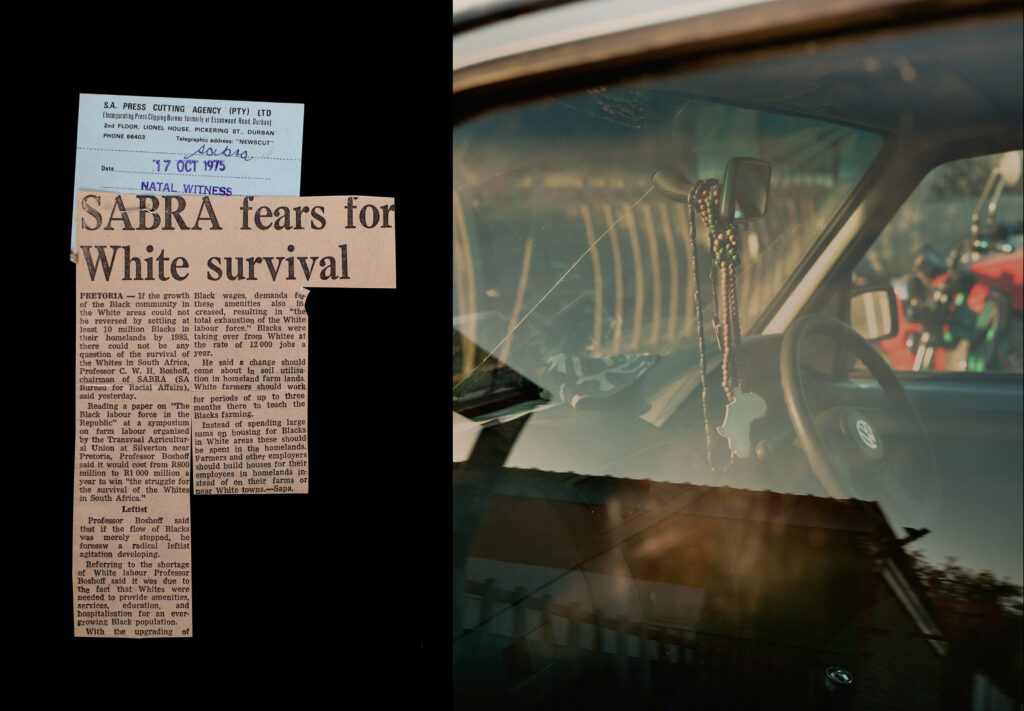
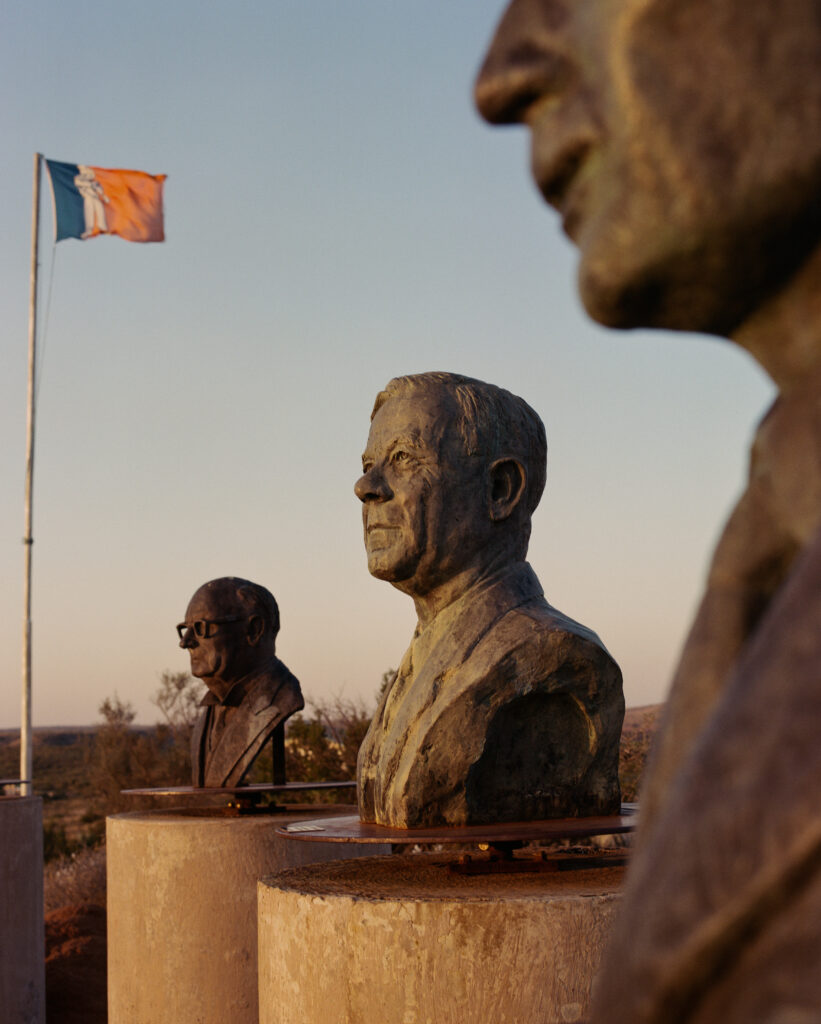
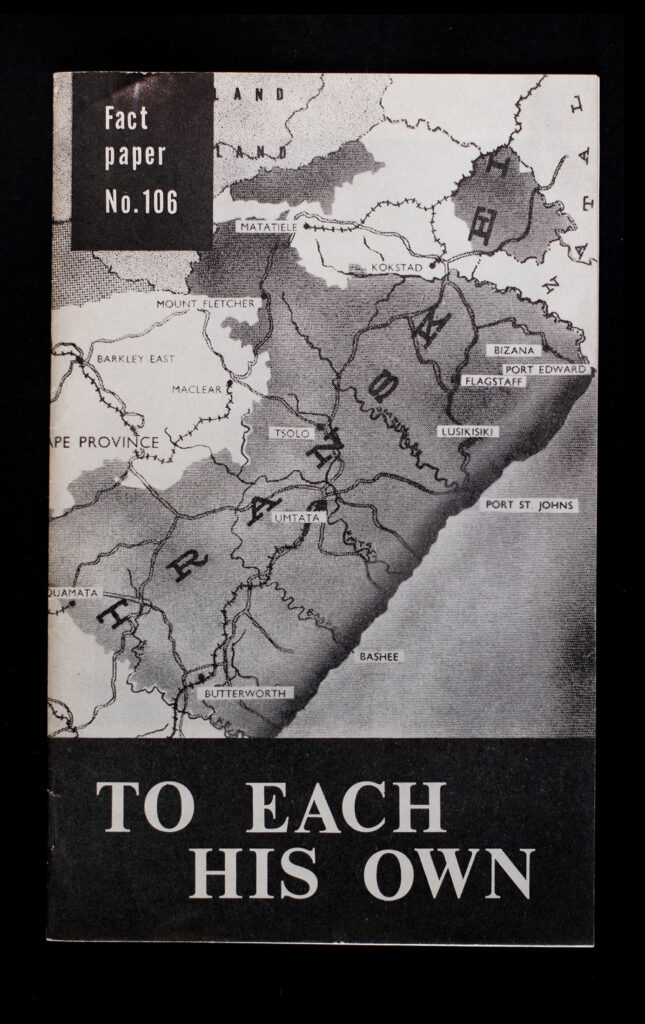
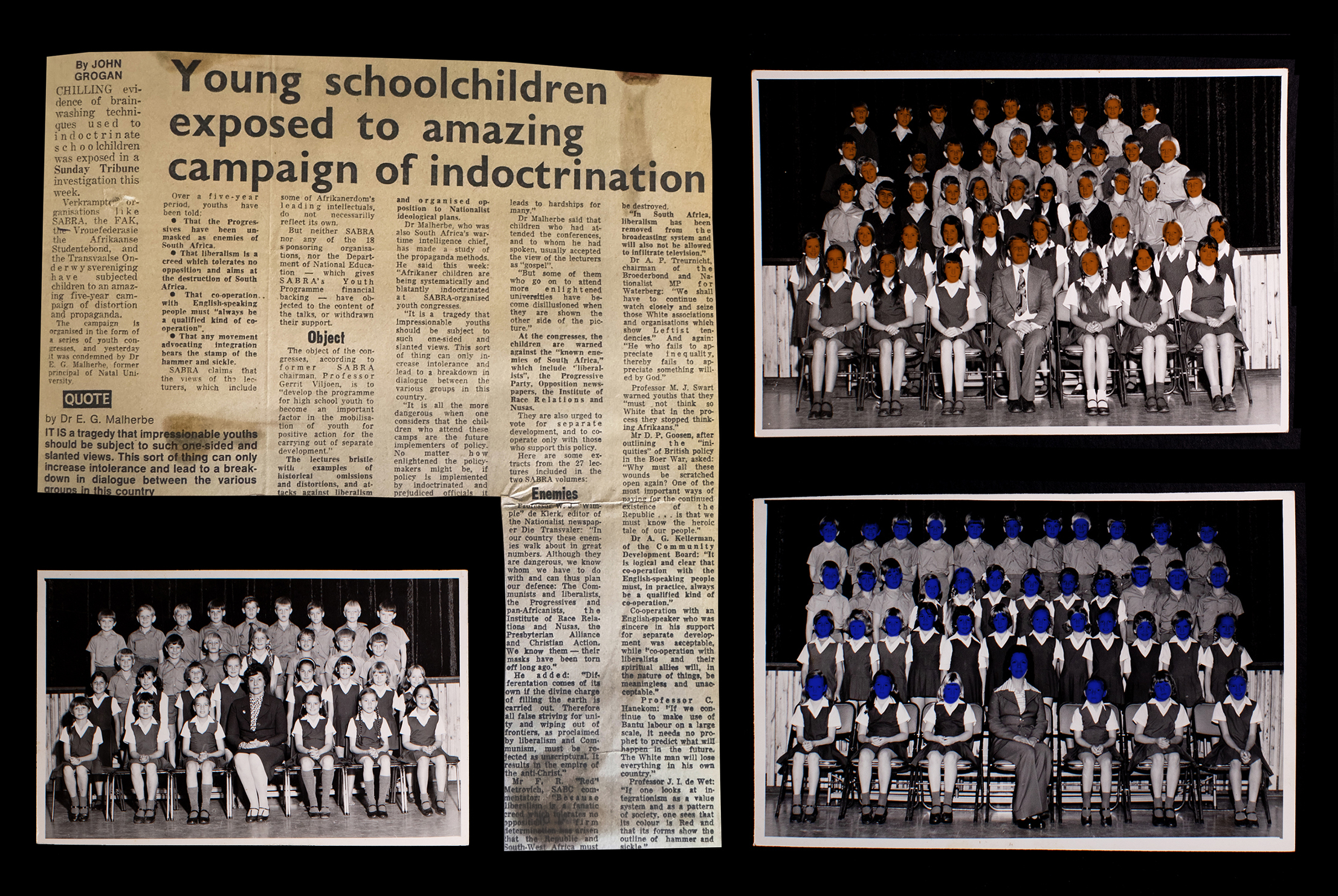
MB: In some ways, it’s a class issue.
RA: Ultimately, the entire present population of South Africa has been failed by the same system – and that system is apartheid or separate development”. BEE [Black Economic Empowerment, an affirmative-action policy by the South Africa government designed to redress inequality perpetuated by apartheid], which all these Afrikaners are up in arms about, would not exist had they not created apartheid in the first place. And now we’re talking about white Afrikaners being 99% of the refugees granted settlement into the U.S. last year.
It’s maybe not a surprise that the Afrikaner resettlement in the US has been so heavily supported by the Southern Baptists, who in an 1845 convention gathered for the first time because they wanted to keep hold of slavery. And then you’ve got the Afrikaners: the Boers who ran away from the British because the British wanted to abolish slavery. And we’ve got other parallels – Manifest Destiny in the U.S., and then we have the Great Trek and the Day of the Vow in South Africa. Those two things are: ‘God came, saved us, chose us, and therefore this land is divinely ours’. There are 30 years between the end of apartheid and the height of the [U.S.] civil rights movement. The two countries are moving in parallel. Now they’re converging in this bizarre, strange moment, with Donald Trump and this Afrikaner ‘white genocide’ claim that he saw first on Tucker Carlson’s FOX show. This is the fear. I do know, obviously, a lot of people in South Africa [to whom] terrible things have happened, but this idea that violence it’s targeting white people disproportionately, that is just wrong.
MB: I think many white people’s worst fear is of the things that have happened to Black people happening to them. It’s revealing. I don’t know if you’ve read a book called Female Fear Factory. It’s by this South African feminist academic, Pumla Dineo Gqola. Her thesis basically is that in terms of gender-based violence in South Africa, that there’s this constructed fear factory, that’s her term for it, of the narratives and the mythos of fear and how we perpetuate it. It adds this double layer on top of the real practical fears. I feel when it comes to race, an almost corollary thing sometimes happens where there’s the real material landscape, and then there’s this fear factory that people are trafficking in.
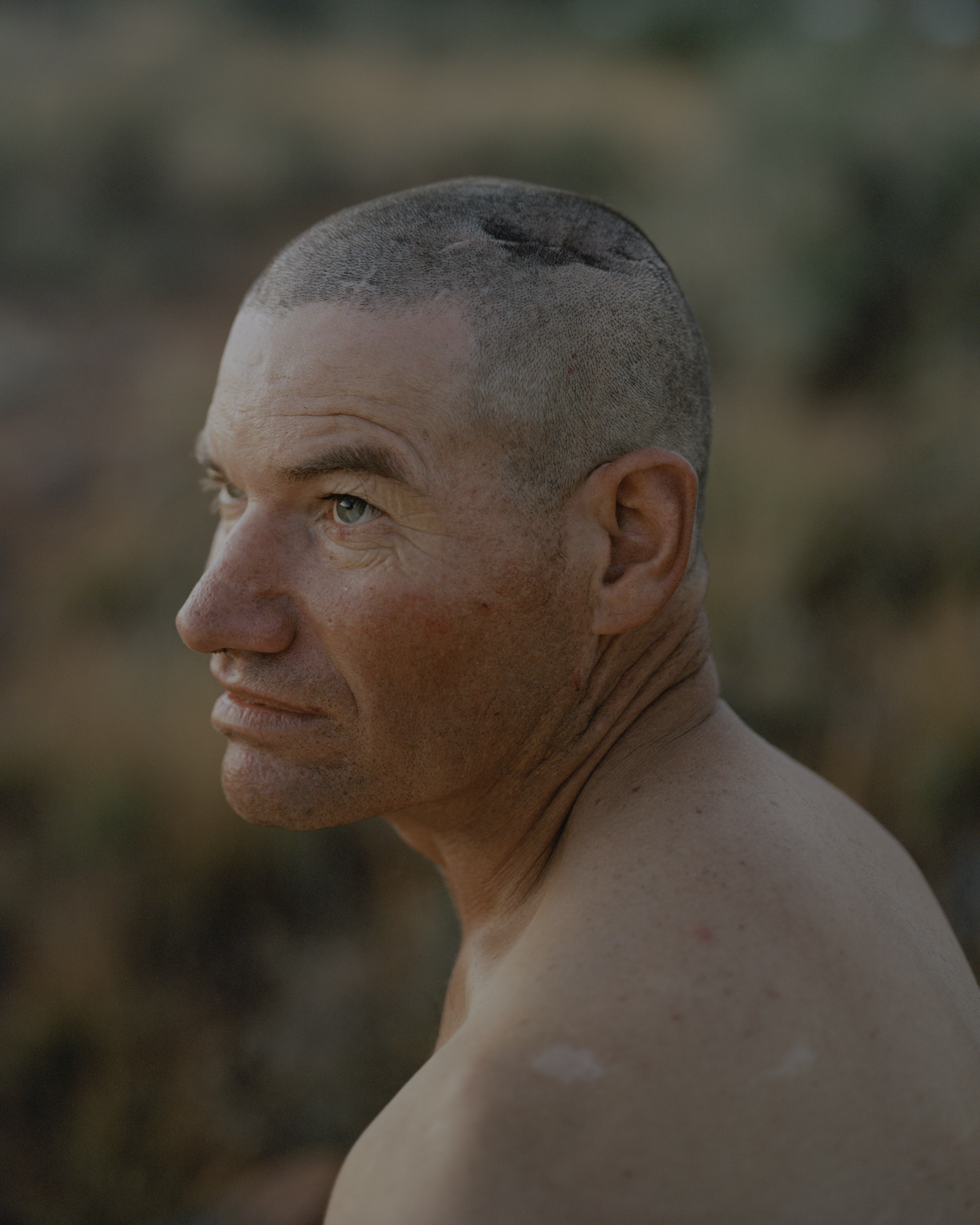
RA: In Orania, I took a photograph in this old-age home. There was a guy sitting on the verandah area quietly and I was looking at him and saw his whole skull was completely caved in. His wife and he had been attacked on their farm, and she was killed in front of him. And he now doesn’t really speak. His family moved him to Orania because there’s this perception of safety. So again, coming back to that idea of fear being a motivating factor – often it’s not a desire to be in a white-only community and to insulate yourself, it’s actually the fear of something terrible happening that’s driven you to a thing. Not a pull factor but a push factor. A lot of things in South Africa are to do with push factors. They’re not really to do with pull factors. And it feels like there needs to be a shift into this idea of: what do we want to achieve? Not what do we not want to happen?
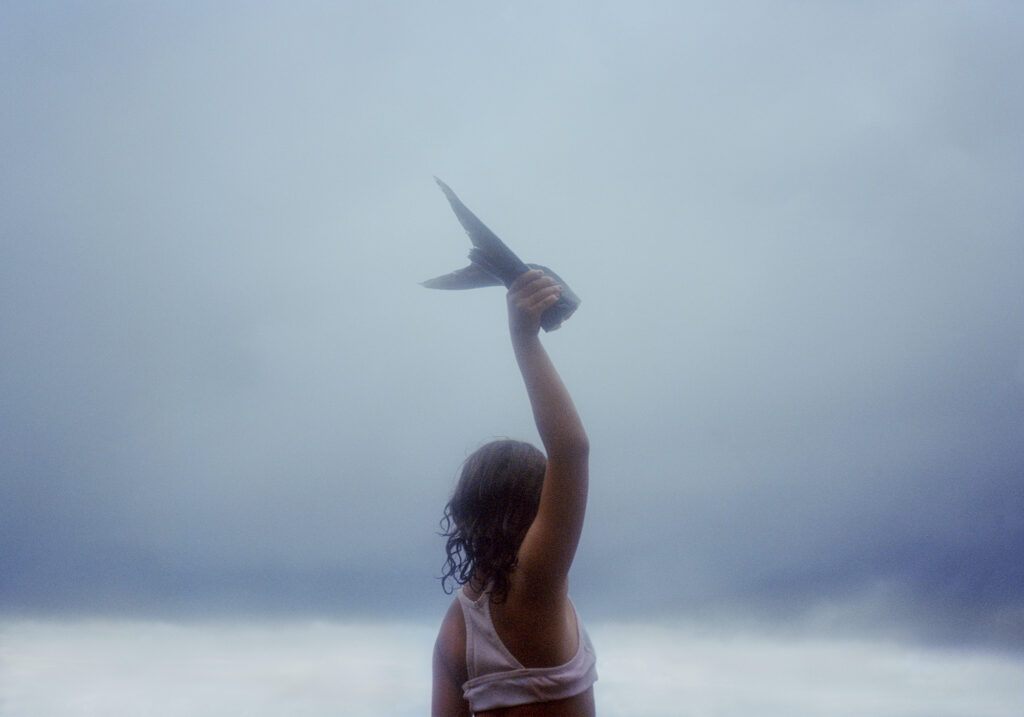
MB: Going back to some of your earlier work, your Pitcairn Island project is fascinating. In the introduction of the book, you talk about wanting it to feel a bit confusing and discombobulating. I feel like I’m hearing you talk about – in that line with the nuance of all these different challenging communities or challenging narratives – a desire to complicate the easy narratives. I’m curious about the impetus in organising that body of work that way. And I know there was a lot of archival material involved, too. On a material level, how do you feel like the archival element was part of that sense of confusing this?
RA: I like complicating the idea of what a photograph is or what a photography show might be, and that that book really originated from the archive. It was born out of my experience with a particular book that set my life on a particular course. My dad gave me a copy of The Mutiny on the Bounty before we went sailing around the world on a boat, and told me that we were going to have a rip-roaring high seas adventure, and it was going to be just like that. And then my whole life fell apart: my parents divorced, and within a few years I ended up on the other side of the world living without either of them, starting school in Britain and thinking it was temporary and it never was. [We went] from this super close-knit family to not speaking at all and complete implosion. And it was, in a way connected to this book, which is another ‘utopia’. And then the reality that sometimes when you live a life of so-called freedom, often the freedom that you’re questing after is its own form of entrapment.
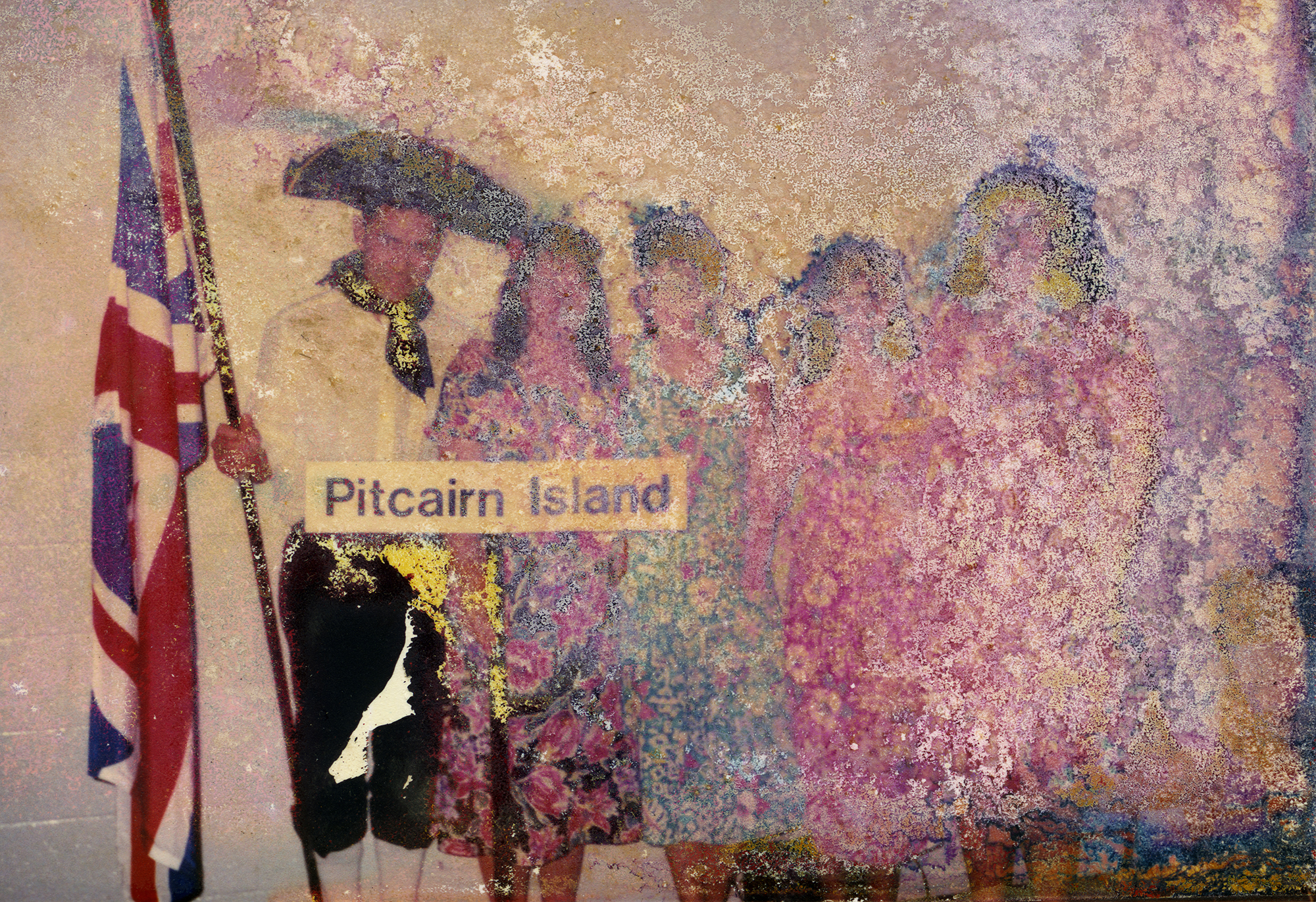
I went to multiple archives around the world and I ended up with 150,000 pieces of archived material, which I took down to 35, 000, and finally had to whittle down to 120 or so in the final book. I decided that I was going to edit the whole book based on the archival material, and almost throw away my photographs, and then reinsert my pictures into the narrative of the archive material afterwards. So the archive is really the basis of it. You could take away the photographs, and the archive would tell the story on its own. The throughline is: if The Mutiny on the Bounty story hadn’t been turned into so many Hollywood versions where bare-chested women had been looking so open and excited to be engaging sexually with white men…and if that very white male colonial view of the South Seas hadn’t been so clearly upheld in those stories… how could that have changed Pitcairn Island’s reality. How much has that legacy impacted the real lives of women on this distant island in the South Pacific, and our perception of what justice looks like… It’s as though we already collectively decided – through the media that we generated – that when it comes to Polynesian women, they should be sexually available for white men. We’re all kind of active participants in that mythology. We buy into that “romantic South Seas notion” which is deeply problematic.
On Pitcairn Island, there’s a lot of enactment of that entitlement. There’s a lot of, we’ll sign our curio because I’m Fletcher Christian’s great, great, great great grandson. There’s this affiliation. It’s not about who you are now. It’s about this legacy, which you’re trading in. So it becomes your cultural currency. And that only exists as a cultural currency because of Hollywood myth-making. So how much blame should Hollywood carry when a young girl gets raped against a tree on a South Pacific island? And so when I was making the book, I played a lot with movement to draw out the dialogue between cause and effect, fact and fiction, Hollywood and the news… For instance, there’s a picture of a school child that was very anonymous, abstract – a found photograph damaged by the island so her face is obscured. She could be anyone. But then there are two brothers, one of whom was the mayor of the island while I was there, and he and his brother were convicted of gang raping a girl of around about the same age. In the book, the first picture on the fold out is the site where this took place. It’s an abstract Polaroid, quite dreamy looking, of some sugarcane – because the rape took place by the sugarcane shed. And then there are portraits of these two men and you actively fold them one on top of the other., over the top of the destroyed picture of the girl in school uniform. So you’re actually pushing her down. You, as the viewer in the book, are actively participating in that.
MB: You’re culpable in it. I think that goes back to the [earlier topic] of engaging with these sometimes abhorrent people or ideas. It’s easier maybe sometimes to just ban it outright than to see what’s really underneath it and understand it on a serious level.
RA: What is the way of handling that difficult history? Is it better just to be like, la la la la la, we didn’t do it? I don’t think so.
MB: More and more I think that as far as there is a right way, it’s just the act of dialogue and engagement. Dialogical engagement is the point, I think.
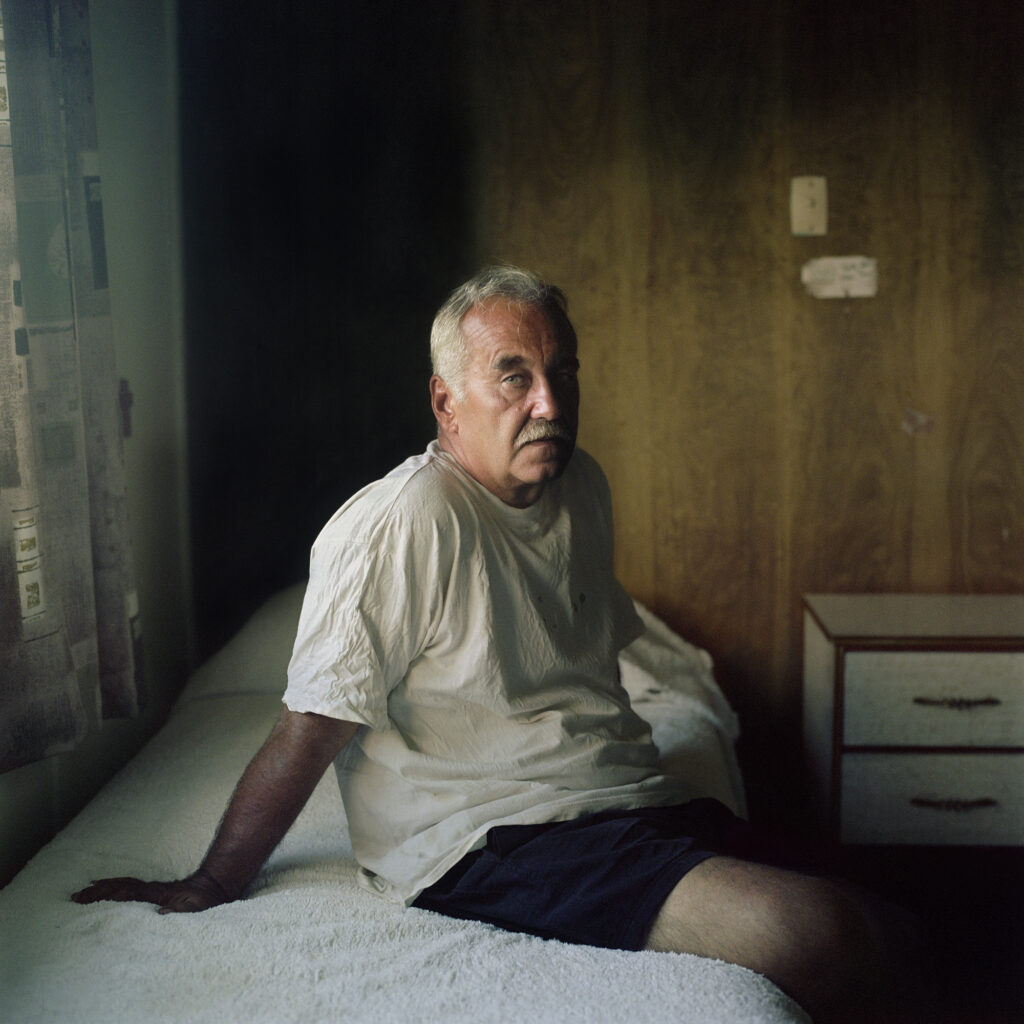
He is a born Pitcairn islander, but spent many years in New Zealand’s Air Force, from which he is now retired. In his early 60s, he made the decision to move back to Pitcairn to try to set up a wine-making business in order to bring an alternative funding (and population) stream into the island. He has visions of students coming for months at a time, and somehow getting hold of a dedicated boat to manage exports. His optimism was infectious, even if the reality seemed impossible. Here, Kevin sits on his bed in his new home, Up Tibi (later renamed Kate Fence). On Pitcairn, building materials are in short supply and high demand. The alternative is to take over an empty house when one becomes available. As the population dwindles, empty property is becoming more common. Up Tibi, for instance, is the former home of one of Kevin’s distant relatives, another man convicted in the trials, Brian Young. Brian is the only convicted man to date who has managed to leave Pitcairn permanently. Brian now lives in New Zealand with his Norwegian wife, Kari, after having served his sentence on island. New Zealand, and the Australian territory of Norfolk Island, are Pitcairn’s jump off points, and home to the bulk of Pitcairn’s diaspora. It is a generally accepted fact that, due to the severity of their crimes, the remaining convicted men would be denied permanent settlement visas, and, in some cases, even transit visas, through either territory. The only country obliged to settle them is the UK itself, Pitcairn’s funder and perceived arch-nemesis – itself more than 14,000 miles away. Though their sentences have been served, for most of the men, Pitcairn remains their own private Alcatraz. Brian, however, circumvented the system. He was granted medical dispensation to reside in New Zealand after a diabetes-linked gangrenous infection from an embedded thorn resulted in the loss of a toe.
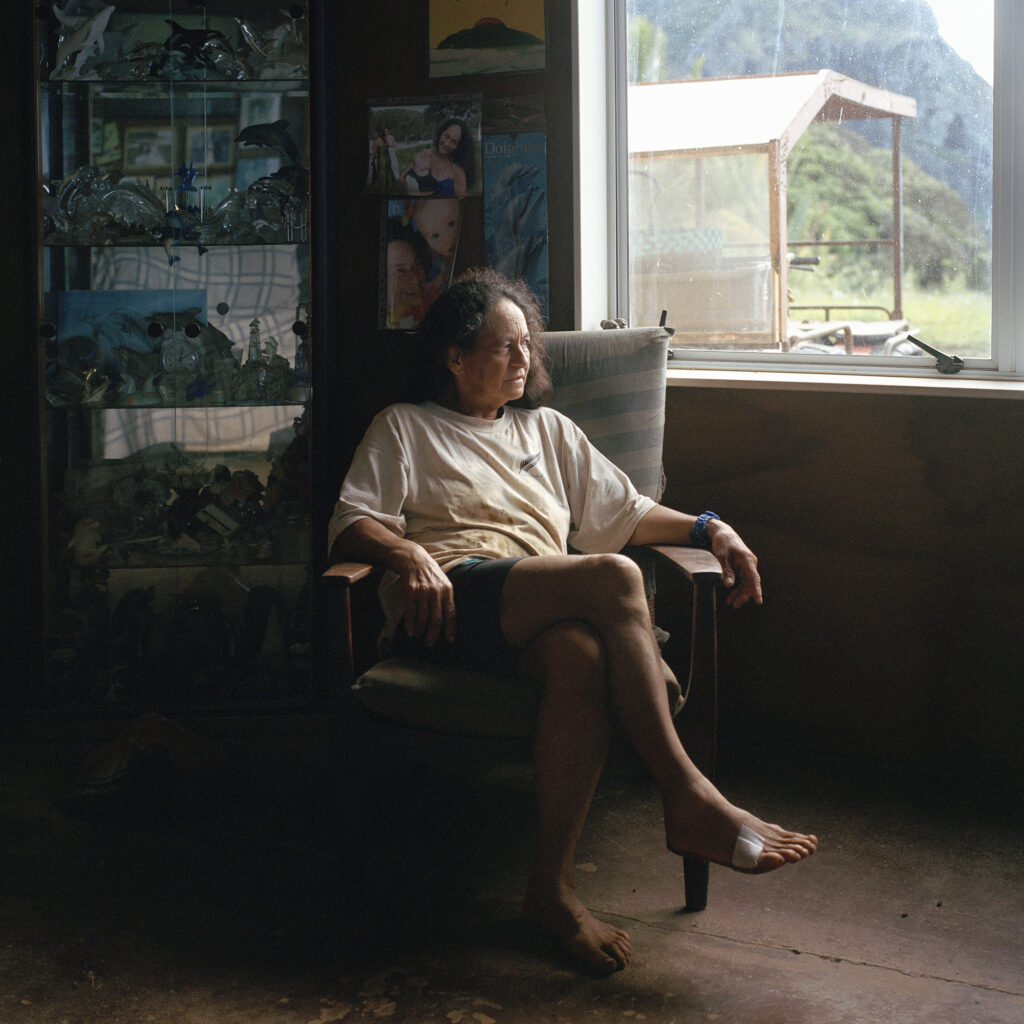
She lived off-island for many years, having originally married Michael Randall, a Welsh RAF technician who had been stationed on Pitcairn to monitor the impact of the French nuclear tests in the region in the early 1970s, eventually raising a family together in the UK. She has one child on island, her only son, Andrew “Little ‘un” Randall, Pitcairn’s only gay man. Andrew was the first baby to be born on island in over a decade, and Brenda had made the trip back specifically to give birth.
It was while she was working on an army base in the UK, that she met her second husband, Mike Lupton, an affable British divorcee with piercing blue eyes, who worked as a retail manager for the army. Before they married, Mike Lupton had – in secret – double barrelled his surname to Lupton-Christian by deed poll. When he and Brenda married in 1997, he “gave her the name back as a wedding present.” In 1999, Mike and Brenda moved to Pitcairn. Almost as soon as she arrived on island, Brenda’s life took a turn, and she found herself – for the next several years walking on eggshells – attempting to do her job as island police officer – and in the process, breaking her family apart. It was Brenda who had had to arrest her own brother, and Brenda who had to sit in court listening to every scrap of harrowing evidence. Brenda knew the “what, the where, and the who” and “had to keep it a secret for four long years.” Steve and Brenda are now back on speaking terms, but they are not close – to this day they represent the deep rifts that transformed families – and the island – forever. Brenda still serves as the island’s community police officer, a job that through Pitcairn’s history has been both thankless and difficult. It is, of course, challenging to police small communities, but even harder when you are part of that community yourself as crimes are rarely reported.
RA: Coming back to it, that is the core of what my work is about. In a way, it’s all a form of activism because it is about going: here’s the thing to discuss; I am not casting aspersions and giving you my own opinion on it, but if you ask me my opinion, I will give it to you – but here is the detail, and here is the subtitle, and then the footnote, and then the footnote to the footnote, so that you can make your own opinions. And maybe those opinions might change a little bit after engaging with my work, because what you’ve read only so far is the headline. I’m giving you all the messy detail. And here’s how this thing links to this thing, and make of that what you will. A ‘choose your own adventure’ of sorts. It’s all about creating a forum where things are more in a shade of grey than they are in black and white. And I think that’s a better place in 2026 to be coming from, because I can’t pretend to have all the answers. And I never will. And none of us ever will. All we can ever do is have good intentions and open hearts.
MB: Thanks so much. I look forward to seeing how these projects develop over time.
RA: Thank you. Cheers.