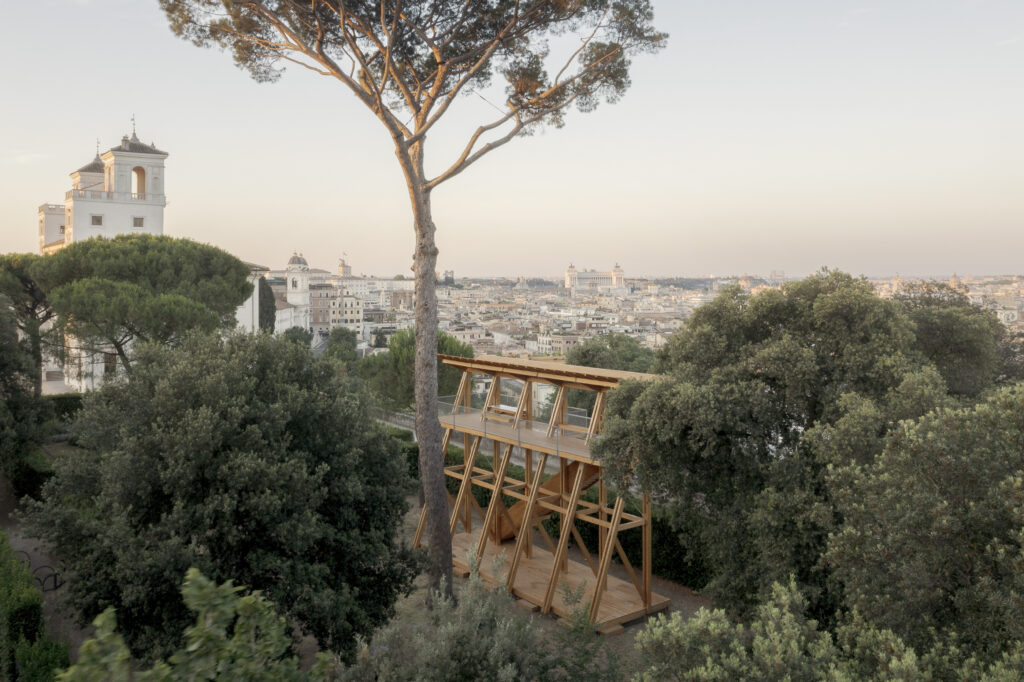
How might a “Spanish attitude” to architecture deepen our understanding of space and materials within landscapes fragmented by the energy transition?
As cities accommodate increasingly concentrated populations, building with responsibly sourced natural materials like stone and timber intuitively feels like a less disruptive way to shape the built environment. But how can we understand these materials as part of living, breathing ecological systems rather than inert construction resources?
Spanish architect Manuel Bouzas Barcala is interested in exactly this. His work looks not only at construction practices that use local, low-carbon materials, but also at their deconstruction: how a piece of engineered wood once lived in the forest before its harvesting, manufacturing, use, and afterlife. In the Spanish Pavilion that Manuel co-curated for the 2025 Venice Architecture Biennale, he captures what he describes as a distinctly “Spanish attitude” to building with less and leaving things raw.
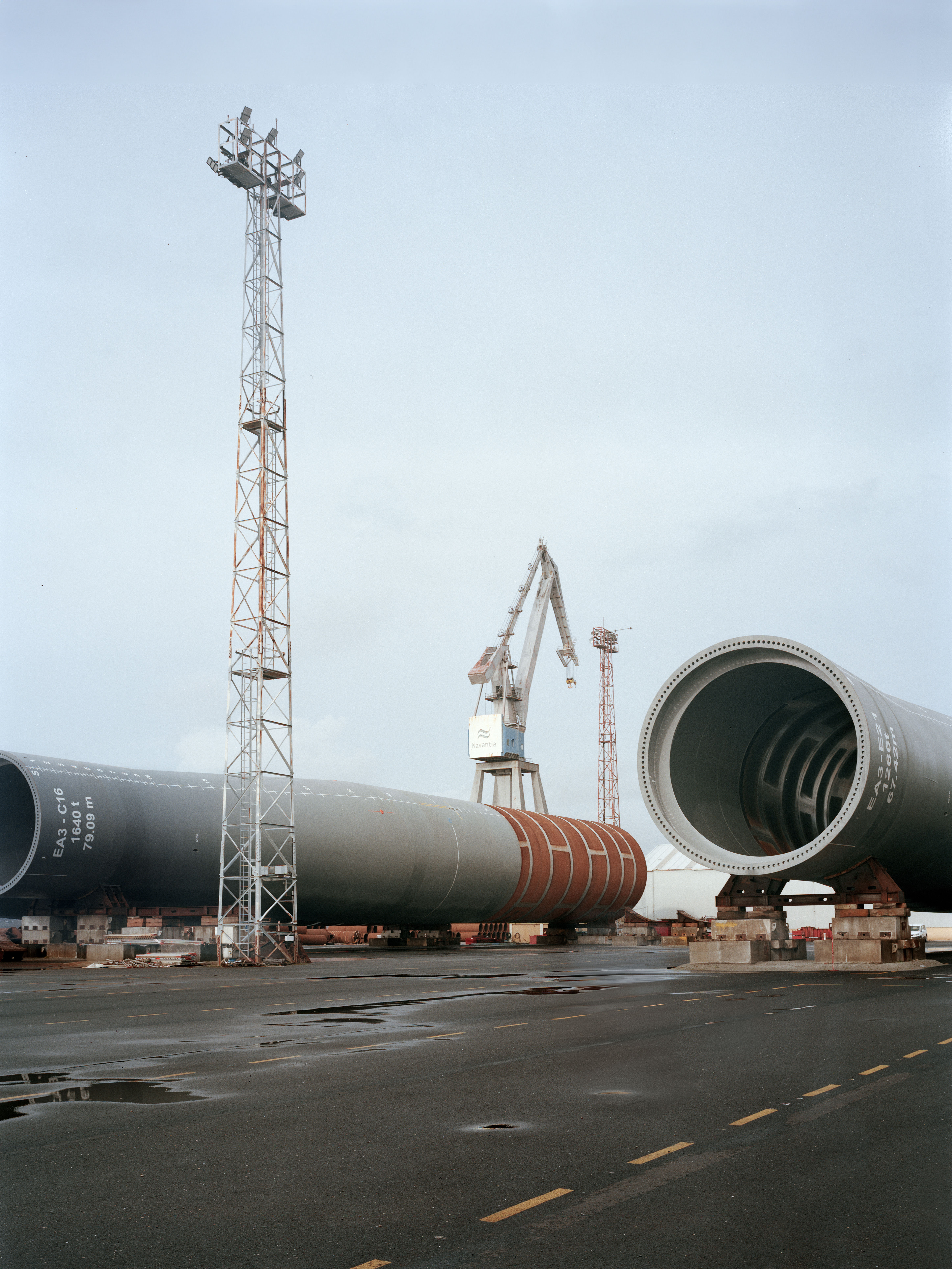
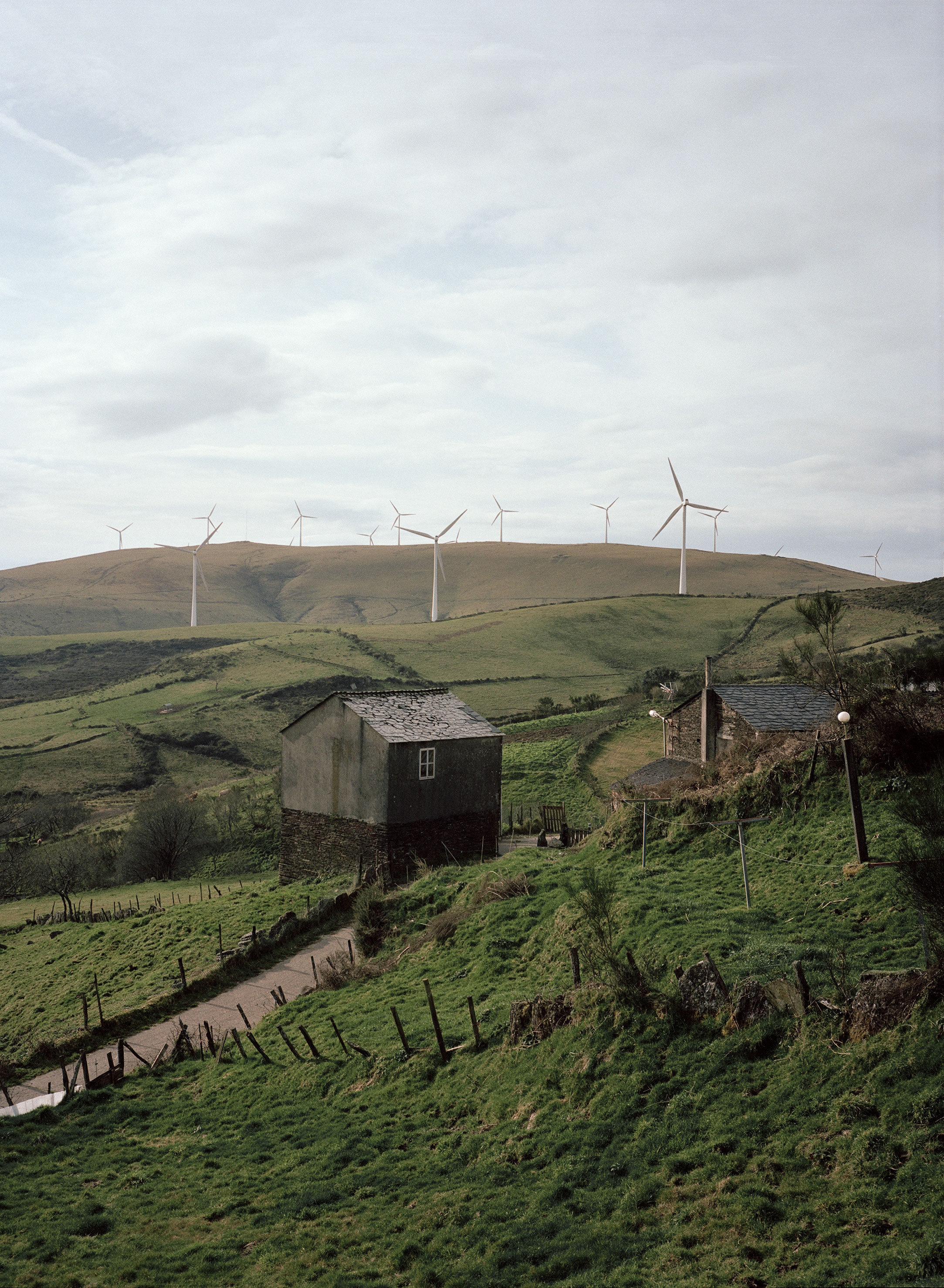
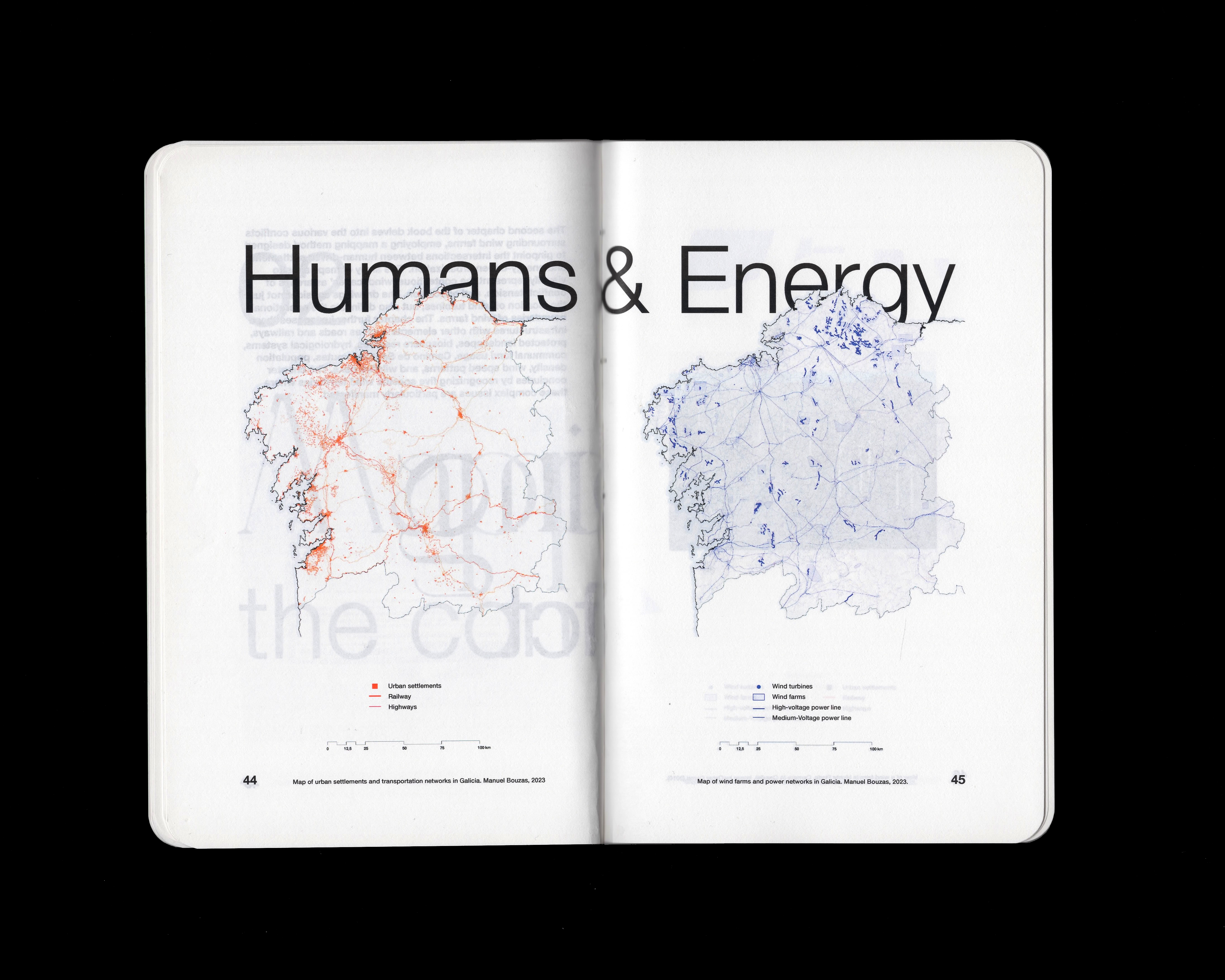
Manuel’s research into the windscapes of Galicia, critical to Spain’s energy transition, reveals the tension between new wind infrastructure and existing ecological and built environments. He argues that designers must participate in this conversation, as it is fundamentally a question of space—not planning and numbers alone.
Rupal Rathore: When I attended the Venice Architecture Biennale in 2025, the Spanish Pavilion really stood out in its response to the Biennale theme Intelligens. Natural. Artificial. Collective. The pavilion you co-curated showcased new Spanish construction that uses local materials and craftsmanship. How does the represented work engage with broader questions of architectural decarbonisation and regenerative building?
Manuel Bouzas Barcala: Thank you for the kind words. The pavilion has received very strong feedback so far, not only from Spain but also internationally. Responses have come from very different cultural contexts, which suggests that the issues addressed resonate across regions.
The Internalities project was co-created by myself and Roi Salgueiro Barrio, who is a lecturer at MIT and was my professor during my studies at Harvard and MIT. We are both from the same region in Spain—Galicia—which helped form a shared understanding.
The pavilion was firmly embedded in the discourse of decarbonisation and regeneration, and more broadly, sustainability. That said, the word “sustainability” does not appear anywhere in the pavilion texts or the accompanying publication. This was a conscious decision.
The term has become overused, often vaguely. Decarbonisation, while still technocratic, offers a clearer metric. However, our interest was in challenging a purely technical reading of emissions by reintroducing the human, territorial, and landscape dimensions. We spent nearly eight months defining a term that could capture what we describe as a specific “Spanish attitude” toward these questions.
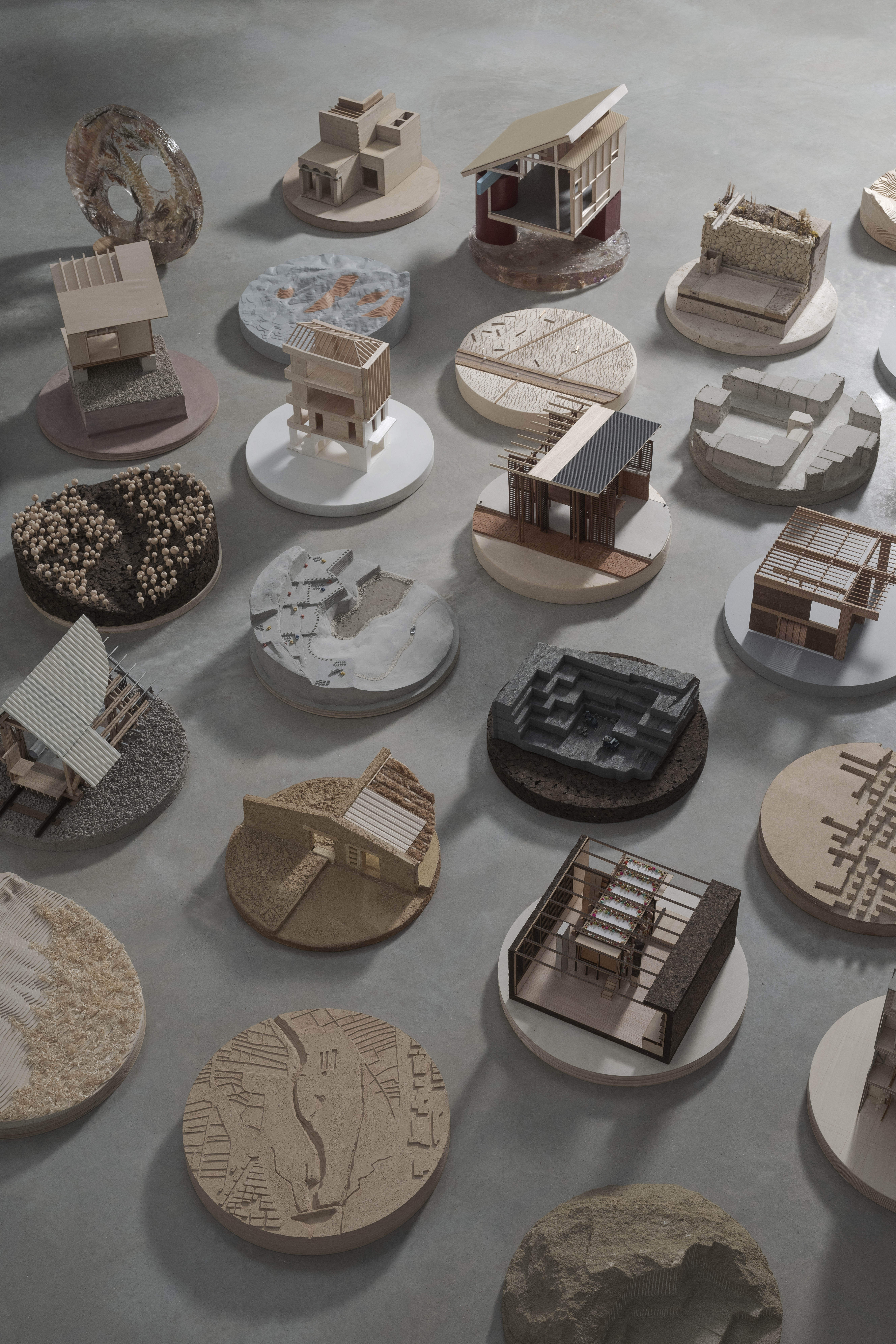
We presented sixteen projects selected out of 170 submissions, which represented a language that emerged after the 2008 financial crisis. In Spain, that crisis had a profound impact, leading architects to work with fewer resources and to embrace raw, unfinished aesthetics. The exhibition did not focus solely on materials. It also addressed labour and labour conditions, energy landscapes, and policymaking around emissions.
RR: How do you think this approach has evolved since 2008, now that carbon metrics and net-zero targets are part of political discourse? Does it challenge mainstream design in Spain, or even globally?
MBB: In Spain, these ideas are being actively promoted through policy, publications, and exhibitions. One important factor is that a key government decision-maker is an architect, which has created space for this kind of work.
Spain’s regional structure also plays a role. Some regions—particularly Catalonia and the Balearic Islands—have been especially effective in integrating carbon metrics and lifecycle analysis into public competitions. These competitions often prioritise young practices and evaluate proposals not only on cost and design, but also on environmental performance.
That said, this approach remains marginal in absolute terms. While it receives significant media attention, the vast majority of buildings constructed globally do not follow these principles. Even within Spain, this remains a minority practice.
RR: You work extensively with existing sites and local materials in your own design practice MB—AE. How does your work address climate change through interventions in the built environment?
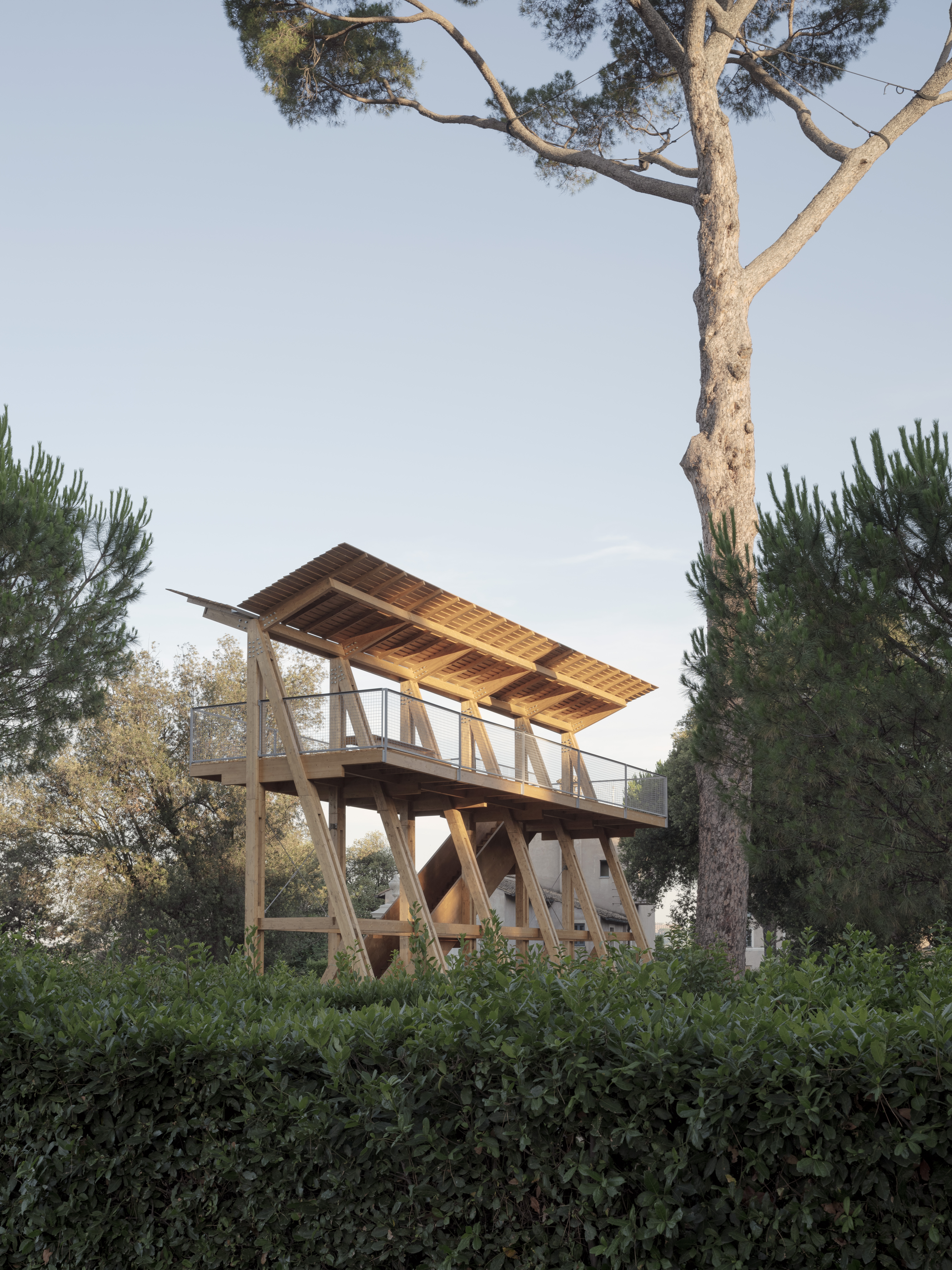
MBB: I see myself as part of this emerging generation that builds on the work of those who came before. In my practice, I try to apply the principles explored in the pavilion and in my earlier research examining energy landscapes. Some of this work is urban installations in southern Europe, particularly Spain, Portugal, and Italy that deploy timber and stone construction systems.
I work between making buildings and producing knowledge. This is part of my role as a professor at Cornell, as a curator, and as an editor. Most of my commissions come through competitions rather than private clients.
I try to situate each project within a broader lifecycle—considering what happens before construction and after use. Many of my projects link construction and deconstruction. For example, when working with timber, I focus not only on the building itself, but also on the forest: rotation cycles, thinning, harvesting, and manufacturing processes.
“I try to situate each project within a broader lifecycle—considering what happens before construction and after use. Many of my projects link construction and deconstruction.”
RR: What are the biggest challenges you encounter in working this way?
MBB: The main challenge is that much of my work is experimental. It doesn’t follow standard systems or supply chains.This means constant negotiation—with contractors, manufacturers, and suppliers.
Convincing people that the materials they consider worthless, such as burned bark, have value is an ongoing process. It requires persistence, but it’s a struggle I’m committed to.
RR: And once those hurdles are cleared?
MBB: Construction remains complex. Beyond material ecologies, I’m deeply interested in structural experimentation—lightweight systems, tension structures, and forms that push materials to their limits. Catenaries, in particular, recur throughout my work.
Structure, for me, is central to architecture. Of Vitruvius’ three principles—firmitas, utilitas, venustas—firmitas is the most fascinating. How things are made to stand, how they work. I’m currently planning a book on catenary structures, an area I feel remains underexplored.
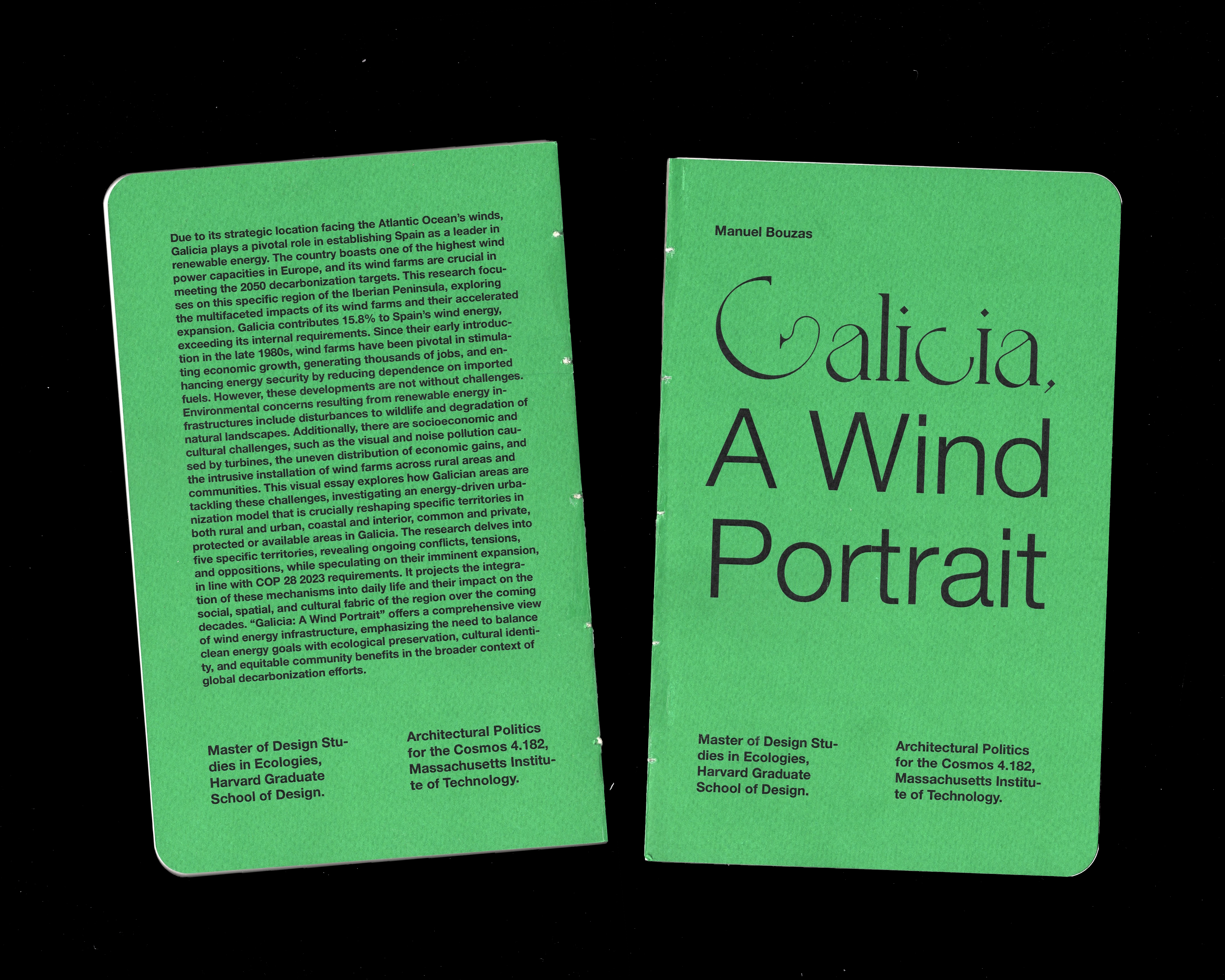
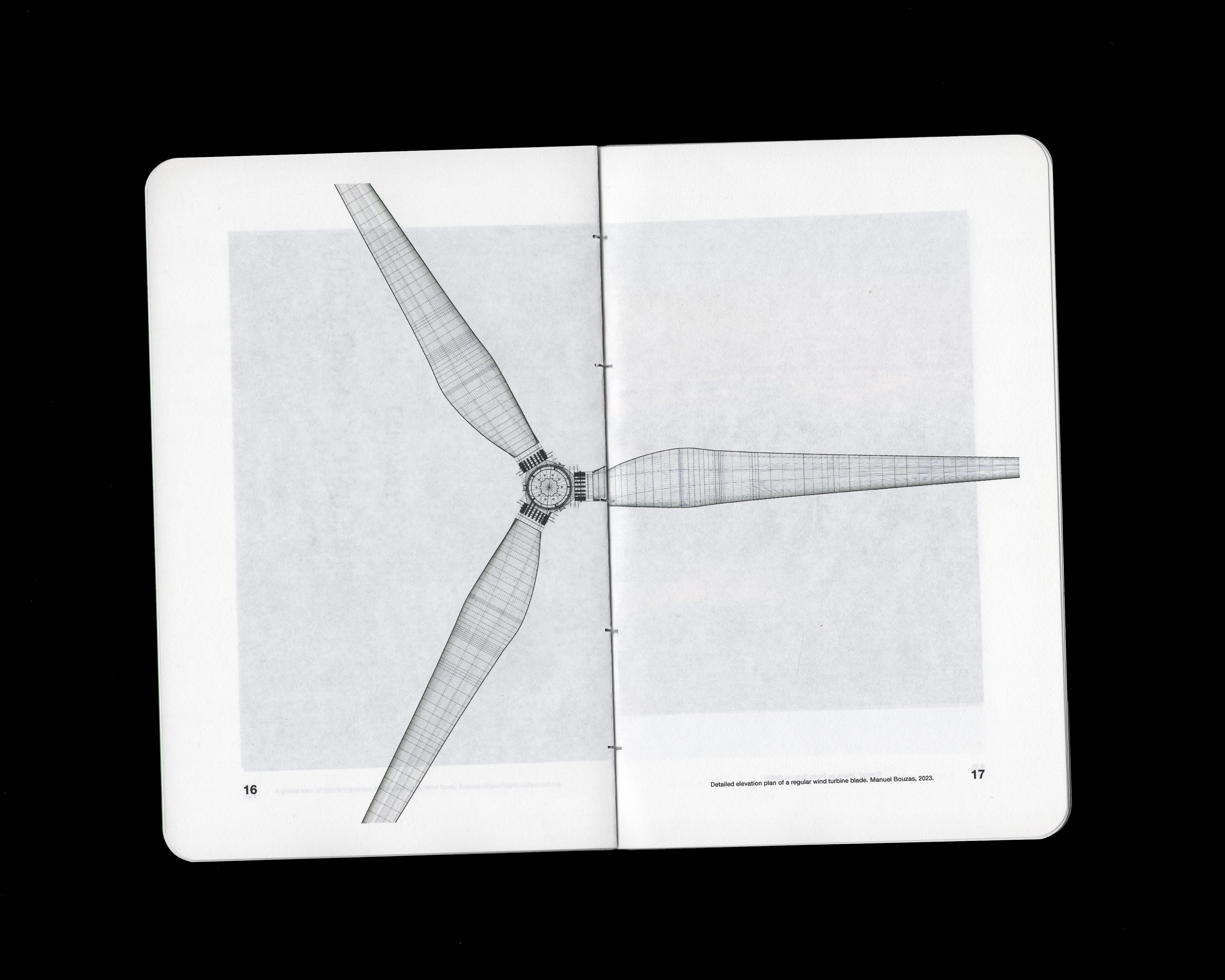
RR: Your independent research publication Galicia, A Wind Portrait (2023) explores the tension between new wind infrastructure and existing built and ecological landscapes. Galician windscapes account for 13% of Spain’s total wind energy capacity and play a crucial role in Spain’s energy transition toward a decarbonised economy by 2050. Why is it important for architects to be involved in this conversation?
MBB: This is a very important issue. Not many people have paid attention to these operational energy landscapes. I believe architects, landscape architects, planners need to step in and take on an advocacy role in these decisions.
Until now, these processes have largely been driven by civil engineers, politicians, and private companies, which have rapidly occupied rural spaces to implement energy technologies. Twenty years ago, you wouldn’t have seen wind farms covering hilltops the way they do now. In Spain, solar panels are also increasingly filling rural and populated areas.
I agree that this transition is necessary. The decarbonisation agenda demands a shift from one energy model to another, and that comes with spatial costs. But the question—at least in Galicia, where wind turbines are widespread and heavily contested—is not whether we do it, but how we do it.
“Ultimately, the energy problem is a spatial problem. Designers are experts in managing space.”
This is where designers can play an activist role. These decisions are usually based on planning classifications, zoning, and numerical criteria. But I argue that this should be a design process, not just a planning one. Design involves sensitivity: where turbines are placed, in what density, at what distance from settlements, whether they affect protected natural areas, how they shape corridors, views, noise, and ecological systems.
None of these design considerations are usually part of the decision-making process. It’s reduced to land classification and technical feasibility. There’s little attention paid to visual impact, noise, ecosystems, bird habitats, or even future developments like offshore wind farms along coastlines. There is marine life beneath those waters, and that needs to be considered.
Ultimately, the energy problem is a spatial problem. Designers are experts in managing space. Others are experts in numbers, laws, or health. We should be much more involved in these conversations.
That’s why I wrote this book. It began as research with Roi, focused on Galicia and the proliferation of wind turbines. This research later evolved into one of the projects shown in the pavilion, further developed by Aurora Armental, Stefano Ciurlo, and Luis Díaz Díaz, which explored a specific river basin and the transition from fossil fuels to wind energy.
Today, this project continues to evolve. It has received support from the MIT Leventhal Center for Advanced Urbanism to further develop it. It’s exciting, but we’re also arriving late. We’re already in the middle of the energy transition. If we want to have an impact, we need to act very quickly.
RR: What project are you currently working on that explores the intersection between climate change and the built environment?
MBB: Currently, I’m working with salazarsequeiromedina on the ARCO Madrid Art Fair guest lounge, a 1,000-square-metre installation built primarily from reclaimed burned wood from the recent wildfires in Galicia. The project is titled 350.000 Ha, referencing the number of hectares that burned down in the summer of 2025 in the forests of the northwestern Iberian Peninsula. The project is part of a broader research initiative on wildfires and their aftermath.
FINSA, one of Spain’s leading timber manufacturing companies, is the main collaborator on this project. They’re clearing burned forests to prevent disease. We’re reclaiming this material—using burned bark as cladding and producing large-scale lamps from pine that recall the fires. We’ll also host a public forum at the Art Fair to discuss fire, from craftsmanship to territorial consequences.
The goal is to make visible an issue that usually only gains attention for a couple of weeks each year. Hopefully, this helps foster conversations around prevention, reaction, and preparedness before the next disaster occurs.