Climate change, water scarcity, and sewage pollution converge in northern Iran.
In recent years, global warming and accelerating climate change have drastically reduced groundwater and surface water across Iran. Prolonged droughts, driven by declining rainfall, have caused rivers to dry up and reshaped entire agricultural landscapes.
In a developing country like Iran, population growth policies have sharply increased water consumption, while sewage production has risen alongside it. As freshwater sources disappear, domestic and industrial wastewater now flows into dried riverbeds and has become a primary water source for agriculture and livestock. This shift has pushed farming into a dangerous new phase—one where sewage and chemical contamination expose communities to rising rates of gastrointestinal and other cancers.
Visual Researcher Kianoush Saadati was born and raised in an agricultural community in northern Iran and grew up closely connected to the land. Several years ago, a small dam was built in their village to collect surface water for fish farming and crop irrigation. Today, that same dam—spanning 70 hectares—is filled with domestic and industrial sewage. It supplies water to more than 300 hectares of farmland, where farmers produce over 1,000 tonnes of rice and raise more than 200 tonnes of fish each year.
Effluents containing heavy metals pose severe risks to ecosystems and all living beings. Wastewater enters human and animal food chains, silently damaging immune systems and vital organs such as the lungs, kidneys, and stomach. According to the International Agency for Research on Cancer (IARC), northern Iranian provinces recorded the country’s highest rates of lung and gastrointestinal cancers in 2018, with water pollution and poor hygiene identified as leading causes.


Built in 1984, the Mohammadabad village reservoir lies four kilometres from the city of Gorgan. Originally covering 30 hectares, it has expanded to 70 hectares and continues to grow, now filled largely by municipal and industrial sewage.
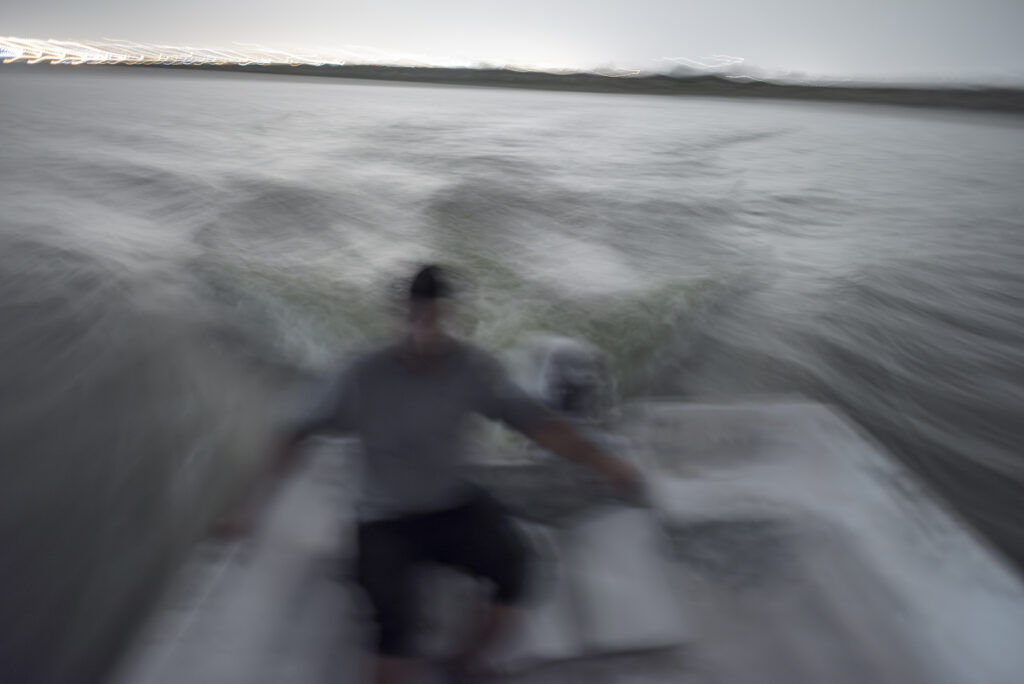
Each winter, local fishermen harvest more than 200 tonnes of fish during a single month-long season. Most are informal workers without health insurance, who fish in winter and cultivate rice paddies in spring and summer. While fish is widely valued for its omega-3 fatty acids and its role in cancer-preventive diets, fish raised in contaminated water accumulate mercury and other heavy metals in their fat and flesh—making them a significant source of carcinogenic exposure.


After the rivers dry up, municipal and industrial sewage flows into the riverbeds, carrying heavy metals and pollutants such as dioxin, a major cause of cancer. Workers use gypsum and lime to adjust the water’s pH, kill oxygen-consuming bacteria, and prevent mass fish deaths caused by low oxygen and algal growth.


The extensive paddy fields mean workers start their day at 5 a.m., wearing protective clothing to reduce exposure to infectious diseases as they farm using sewage-irrigated land.
In Mohammadabad and surrounding villages, each year sheep suffer abortions each year due to contaminated water, also lead to mass fish deaths.