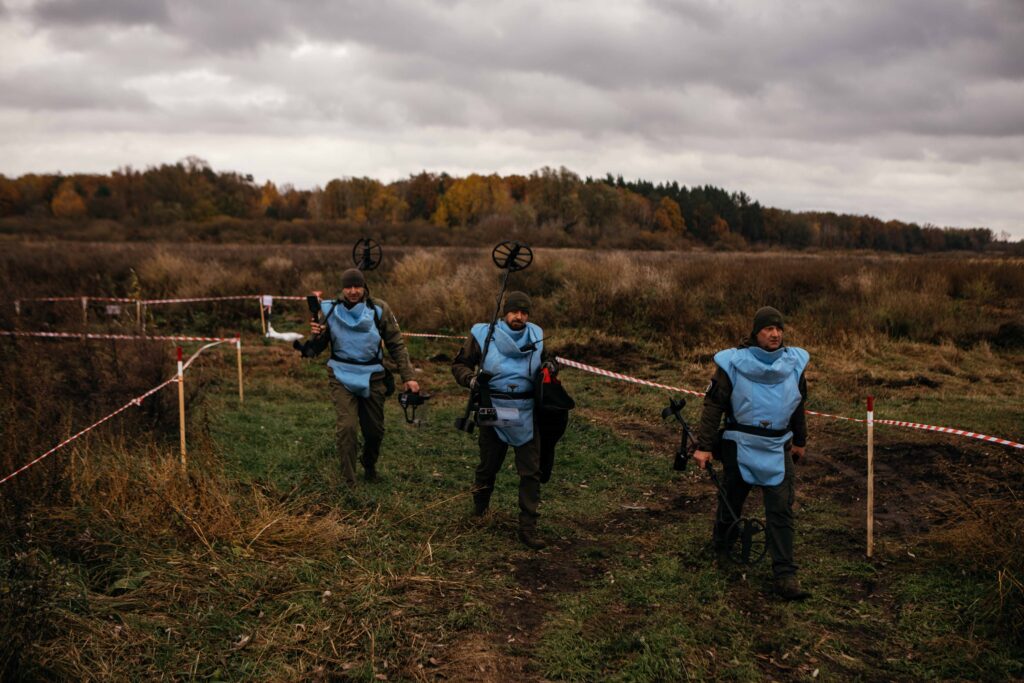
Ukrainian deminers are deploying drones to clear the remnants of Russia’s full-scale invasion—protecting communities and reclaiming land.
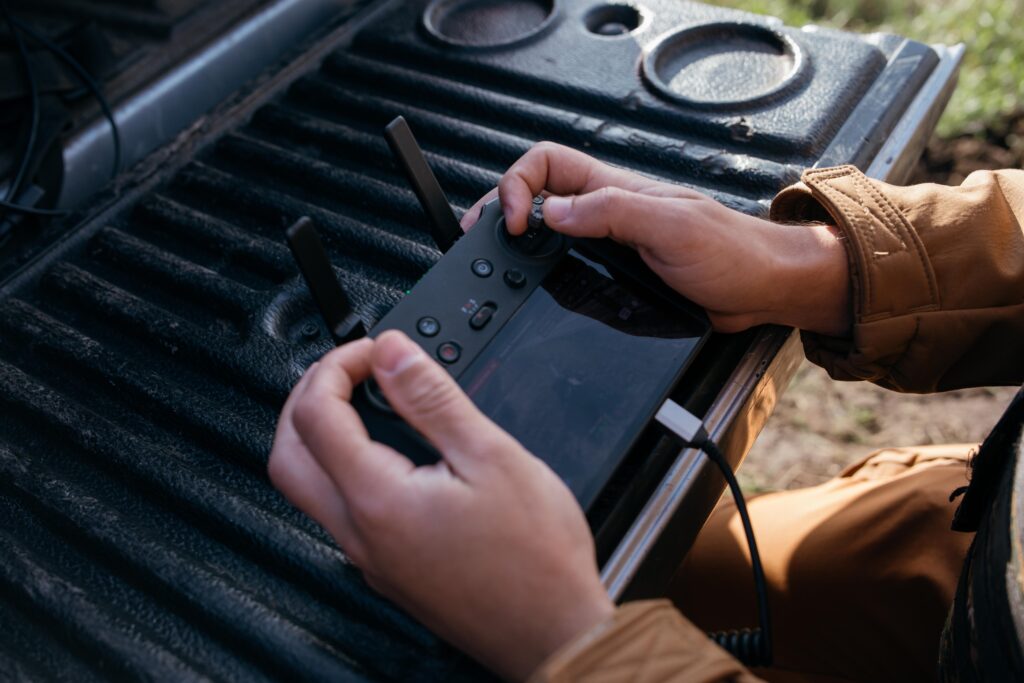
Working from the back of a Mitsubishi L200 pickup, Yuriy and Serhiy deftly navigate first person view (FPV) drones across dry, wheat-colored fields in Balakliia, a small town in eastern Ukraine’s Kharkiv Oblast. Eyes glued to their screens, the deployed drones are gliding across vast landscapes, up to 10 kilometers away, giving them a lay of the land and providing critical information.
In the four years since Russia’s full-scale invasion that kicked off the most deadly war in Europe since World War II, drones have become firmly planted at the forefront of military innovation. On the Ukrainian side, civilian-backed technology has transformed the private sector. Sophisticated advancements, such as repurposing commercial drones into kamikaze missiles, are fueled by a remarkable will of resistance and survival: to fill in the gaps where western nation states have failed to offer sufficient support to offer protection from the world’s biggest country’s military aggression. According to the Center for European Policy Analysis (CEPA), domestic production constitutes more than 90% of the drones used on the frontlines. Hundreds of small drone factories, many of them operating covertly underground, have popped up across Ukraine.
But unlike the thousands of drones carrying cluster munitions across both Russia and Ukraine’s airspace, the drones that Yuriy and Serhiy are flying are not mandated to kill.
As employees of Ukrainian Demining Services (UDS), a national humanitarian mine operator, they are the first of several layers in the expensive and risky job of identifying and removing unexploded ordnances from the environment. The FPV drones provide Yuriy and Serhiy with a bird’s-eye view of what they are working with—in this case, bushy fields of grain stalks, inaccessible to farmers since Russian occupation—to visualise their assigned plot. Then, the rest of the UDS team can coordinate their demining approach.
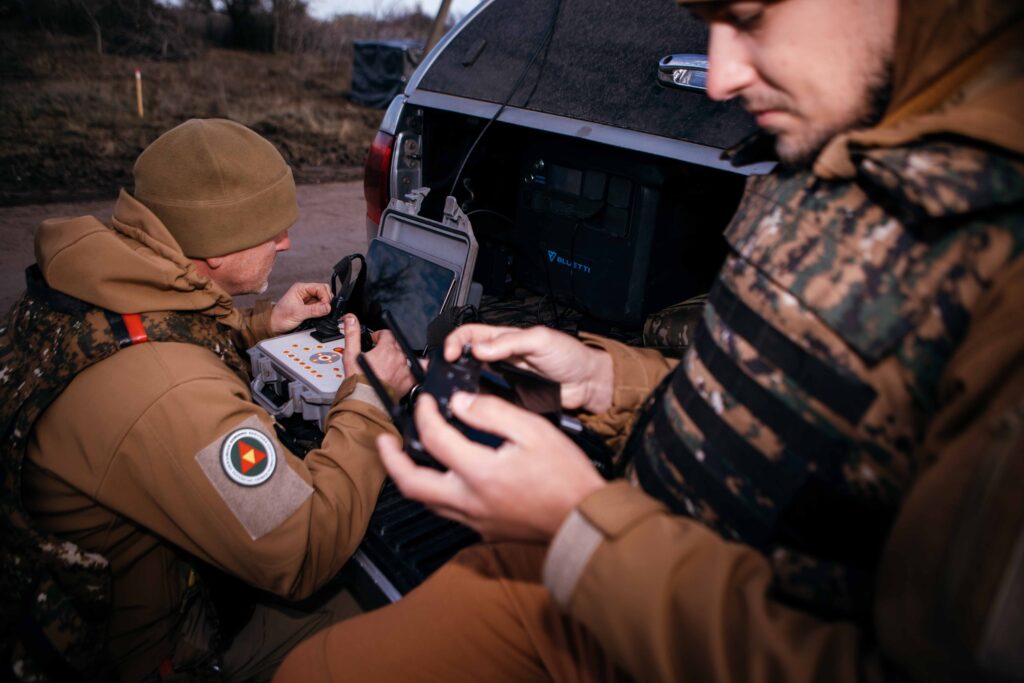
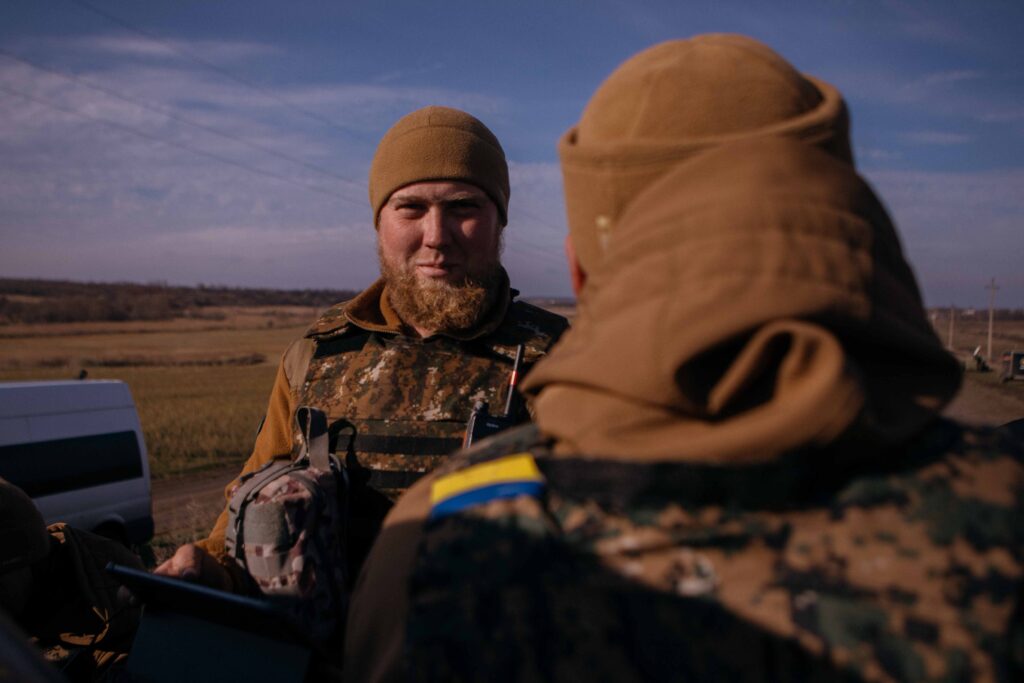
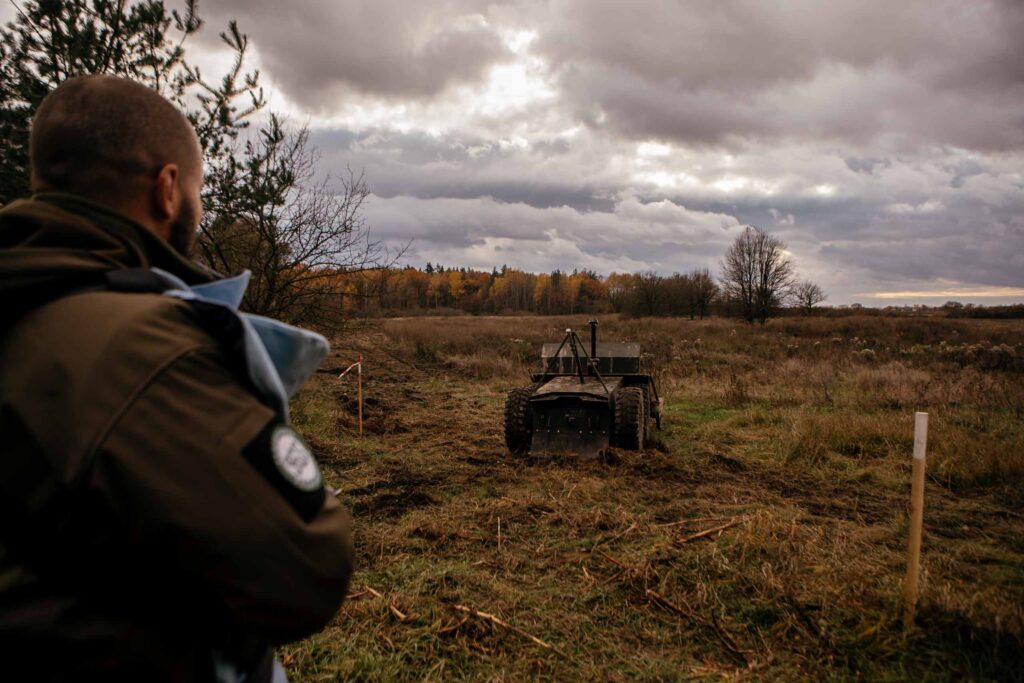
After aerial mapping comes the demining machines. The armored vehicles wade through dense vegetation to locate whatever warheads or mines they encounter. Better for a bomb to detonate on a machine than a human body. UDS’s machines of choice are the remotely controlled Bozena 4+ and 5+ robotic demining systems, of Slovakian origin, designed for exceptional resistance against 9 kilogram anti-tank mines. Lastly, sappers—specialised combat engineers—manually comb through the landscape with metal detectors before the area is considered safe again for civilian and public use.
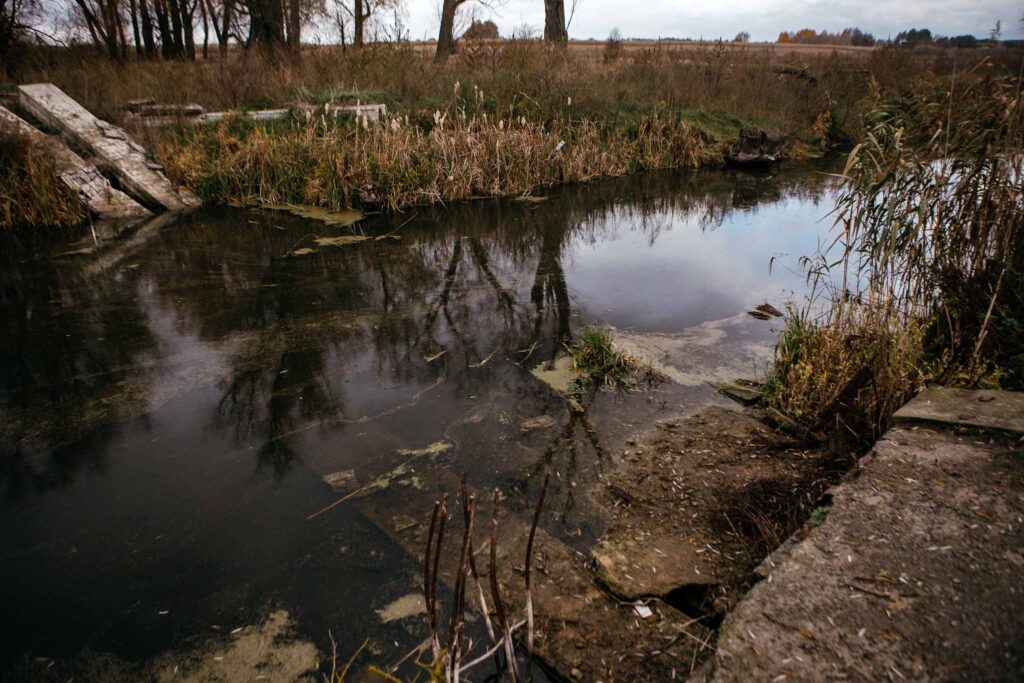
Ukraine has one of the highest rates of landmine casualties in the world – it’s estimated that it would take roughly 700 years to demine Ukraine, with each year of war adding another decade to clean-up of the aftermath. Landmines and other explosive remnants are designed to be punitive, contributing not only to soil degradation, deforestation, water pollution, and wildlife, but also forcing immense physical and psychological tolls on communities.
Research shows that both children’s test scores and general economic activity improve upon successful demining.
As part of governmental mandates, Ukrainian deminers work first in towns and on roadsides—often categorised under ‘spot tasks,’ which are addressed upon request—then on agricultural land. Wild spaces such as forests are deemed the lowest priority and tend to be neglected.
“Agriculture is a priority because it helps to keep the economy [alive] in country,” explains Olha Ilchenko, the in-Country Director of Invictus Global Response (IGR), a non-profit humanitarian demining organisation that collaborates with UDS. IGR was founded by American veteran Michael Montoya, who survived a landmine explosion himself.
It’s estimated that it would take roughly 700 years to demine Ukraine, with each year of war adding another decade to clean-up of the aftermath.
According to the Council on Foreign Relations, agriculture makes up more than 40% of Ukraine’s export income and 14% of the nation’s jobs. Africa and the Middle East receive more than half of its food exports; the United Nation’s World Food Program estimates that Ukraine’s grain feeds 400 million people. The full-scale invasion spurred a 29% decline in food exports, with long-term impact difficult to determine as the war continues.
Jamie Grieve, a mechanical demining engineer, has worked in Ukraine since 2023 with the State Emergency Service of Ukraine (SESU). What people may not understand, are the tradeoffs that come with demining, he says. “Although demining is a very noble cause, it can be environmentally disastrous.” Land that may have taken a few generations to become fertile can be destroyed in days. Demined soil becomes particularly susceptible to erosion, since the process kills microorganisms in the soil, tearing apart the root systems that binds soil together and making it more susceptible to wind or seepage from rain.
“Ukraine is totally different from any other place I’ve worked in—it’s basically a big grow bag,” Grieve continues. “It’s the most fertile place in the world. You will be amazed at what flora and fauna can be found growing in places that are mined” he says.
He recalls clearing mines around a cement factory near Balakliia, and how just a month later, farmers had already resumed planting and growing crops.
At the end of the day, Grieve believes that demining revolves around the core issue of land access. “Landmines put fear into a place, long after the mines are gone,” he says. “Perhaps it’s not so much about people stepping on them, but denying access to kilometers and kilometers of land.”
Although the Independent Expert Panel proposed amending ‘ecocide’ as a category of crime in 2021, international agreements have yet to incorporate use of this term. Researcher Ihor Kozak argues that exclusion of the term ecocide enables Russian perpetrators to evade potential prosecution.
As long as the war continues, crimes against the environment, a concept dating back to the post-Vietnam War era, will continue. Subsequent deterioration of Ukrainians’ present and future living conditions—mass habitat loss, the emergence of radionuclides from the Chernobyl accident as buried sediments in riverbeds surface with bombings of hydraulic infrastructure, the loss of irrigation water for farms and households and landscape dessication, the submerging of villages and deaths from flooding after Russian detonation of dams, loss of drainage services for hundreds of thousands of people, contraction of cholera and other diseases linked to environmental pollution—remain unquantifiable.
“Although demining is a very noble cause, it can be environmentally disastrous.”
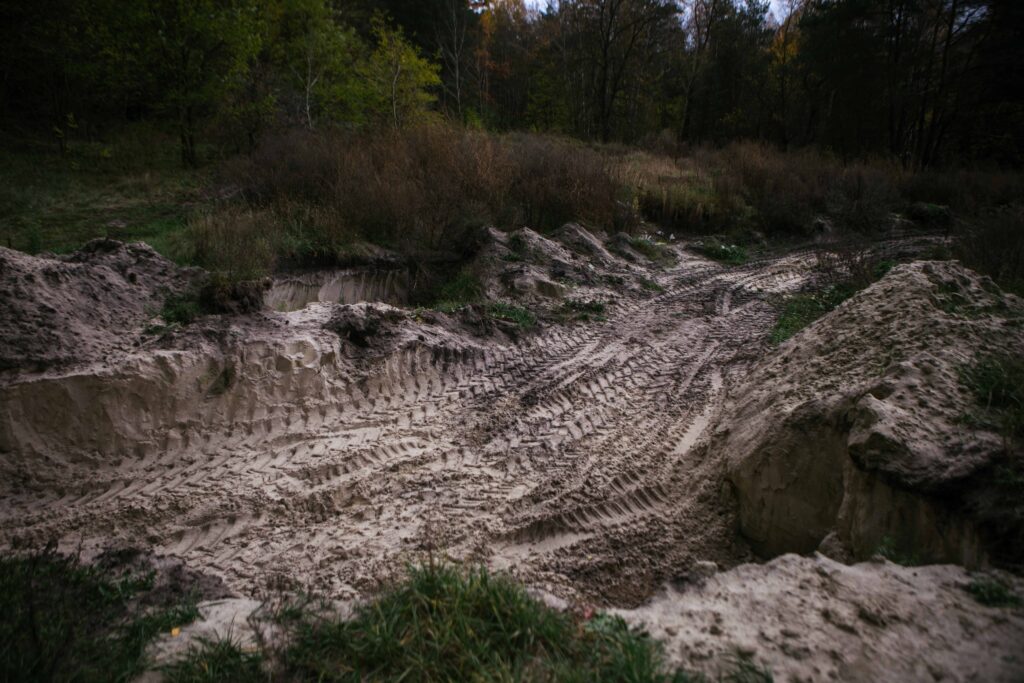

Under Ukrainian law, reserved occupations such as energy infrastructure support, humanitarian aid, and deminers are exempt from the military draft. Humanitarian deminers are usually the first to enter territories liberated by Ukrainian Defense Forces, into uncharted territory often littered with booby traps planted with the intention to maim and kill. UDS complies with both NATO and ISO international standards, and can demine up to 20 hectares a day. But even with all these lines of protection, there are inherent risks that come with such a job.
Deminers, like everyone else in Ukraine, face ongoing, escalating aerial attacks: according to the independent global monitor Armed Conflict Location and Event Data (ACLED), Russian drone strikes spiked by 150% in 2025 from the previous year, including indiscriminate bombing of densely populated areas. Last September, a Russian missile strike targeting deminers working with the Danish Refugee Council killed two and wounded three.
Shortly after Russia’s full-scale invasion of Ukraine on February 24, 2022, Balakliia was one of a string of towns along the eastern front taken over by Russian forces. Life under occupation was brutal. Residents suffered not only from shortages of water, food, electricity, and being cut off from cellular networks, but also abuses from Russian soldiers. They converted the local police station into their headquarters, capturing and torturing residents, disappearing others.
Expertly wielding tactical surprise, Ukrainian defenders launched a stunningly successful counteroffensive beginning in late August 2022, freeing 1,500 square miles of territory. Balakliia was liberated on September 8, 2022, but considering the ongoing war and proximity to the ever-shifting frontlines, life in there remains on a knife edge. Civilian deaths from drone and missile strikes remain ubiquitous.
According to Ilchenko, there have been 50,597 civilian victims from 2022 to Aug 2025, with at least 1,581 victims of land mines and ERW (explosives of war): 457 killed and 1,124 wounded. Such data for Ukrainian soldiers does not exist.
ACLED identified at least 4,466 political violence events from December 13, 2025 to January 2, 2026, with the Russian capture of 18 settlements across the east, mainly in Donetsk and Kharkiv. According to the US-based Institute for the Study of War, in 2025, Russia seized roughly 4,700 square kilometers of territory, about twice the size of Moscow, although the Federation claims to have occupied 6,000 square kilometers.
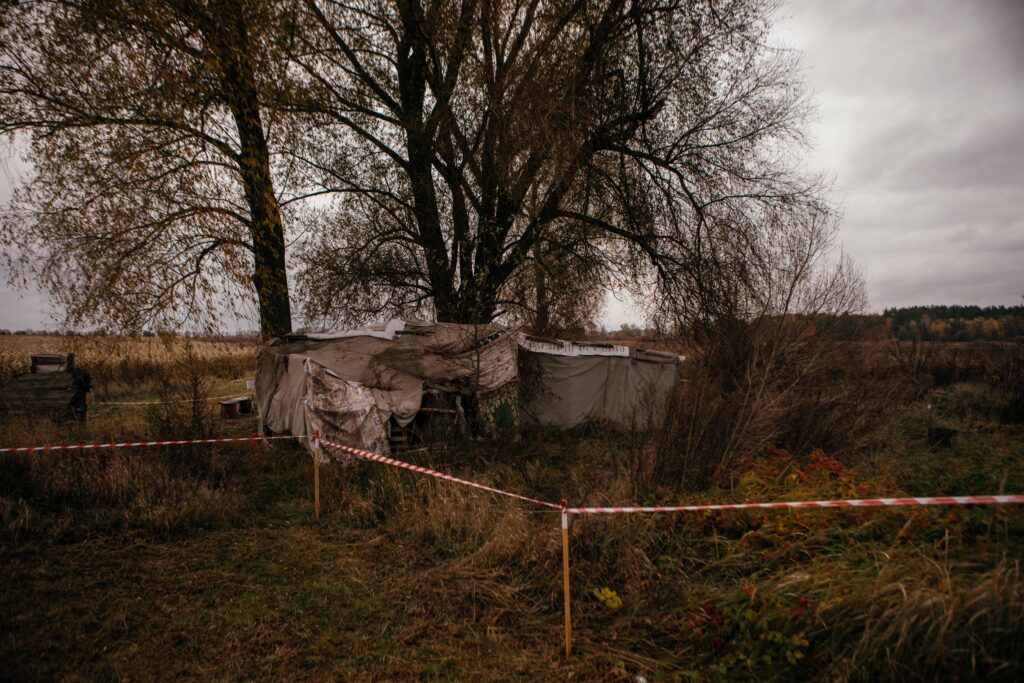
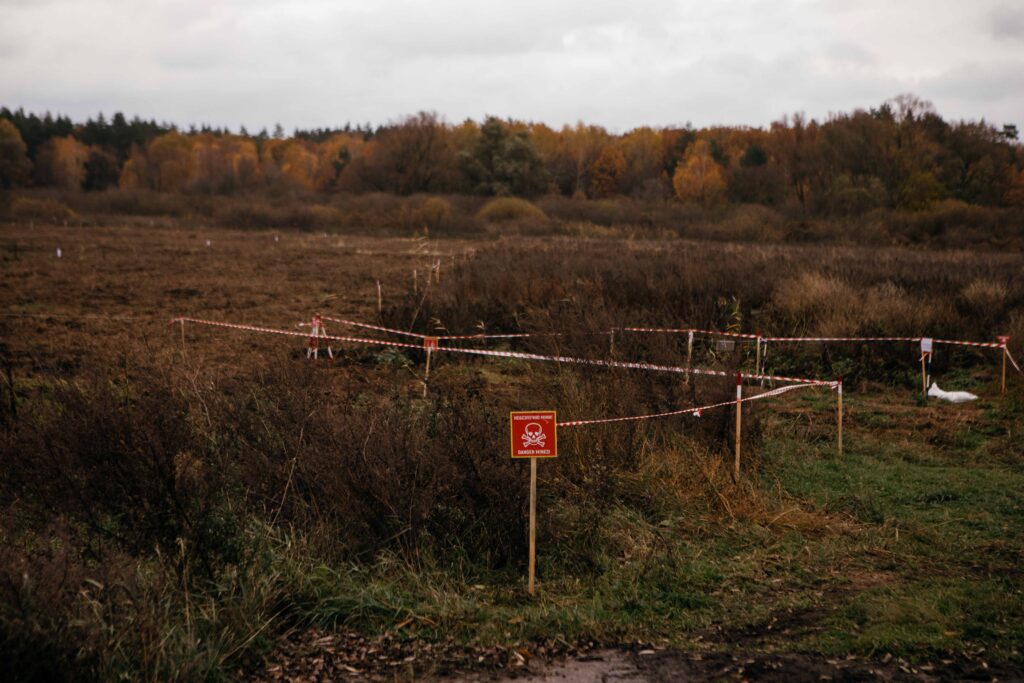
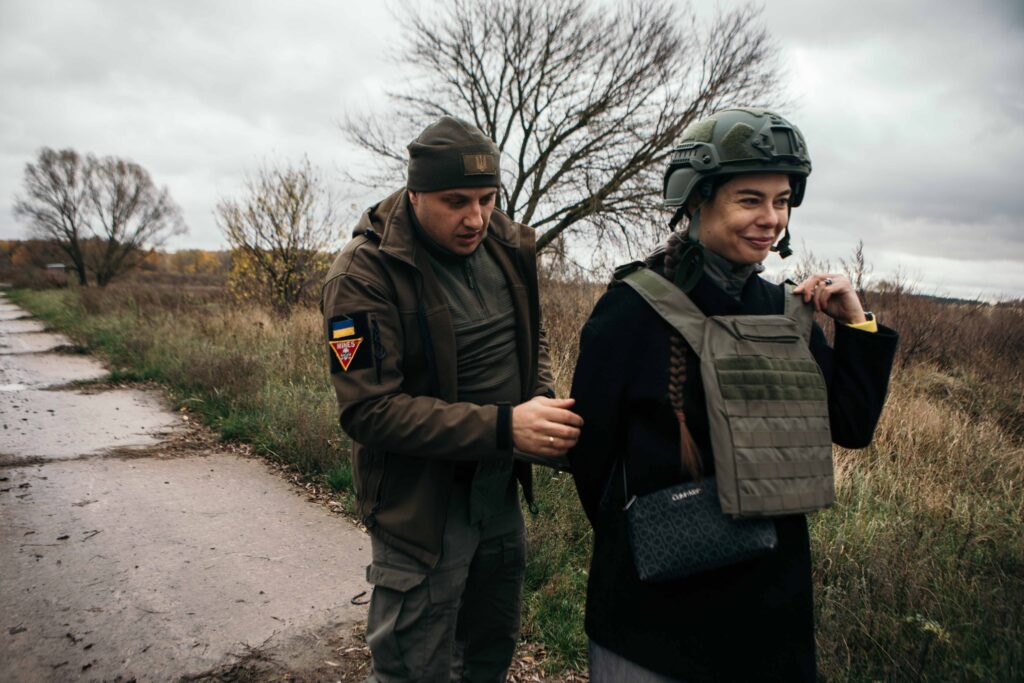
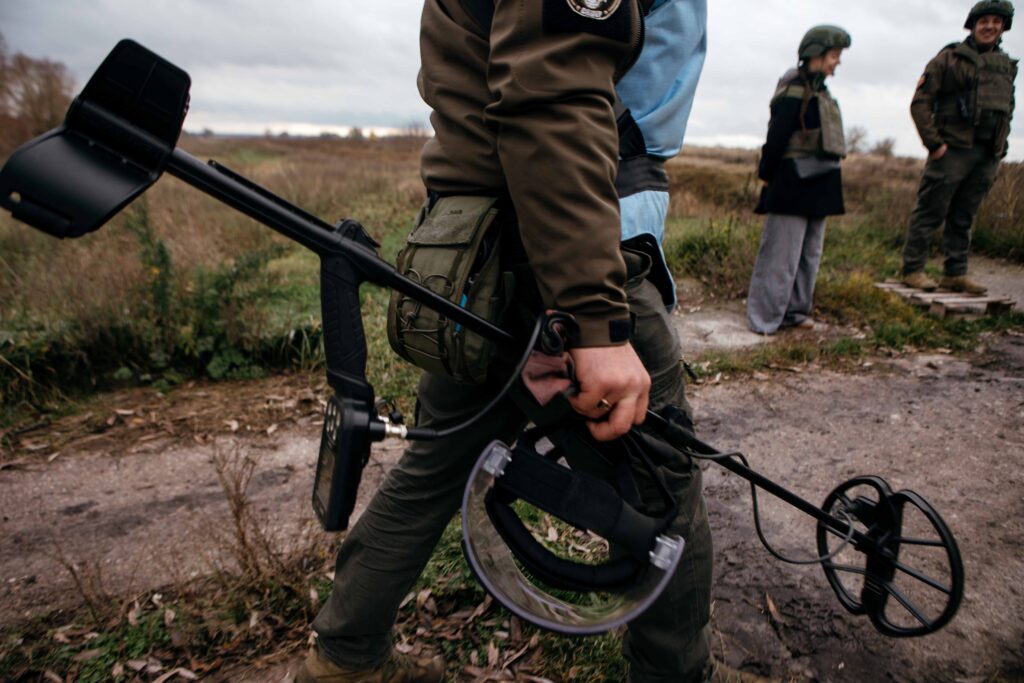
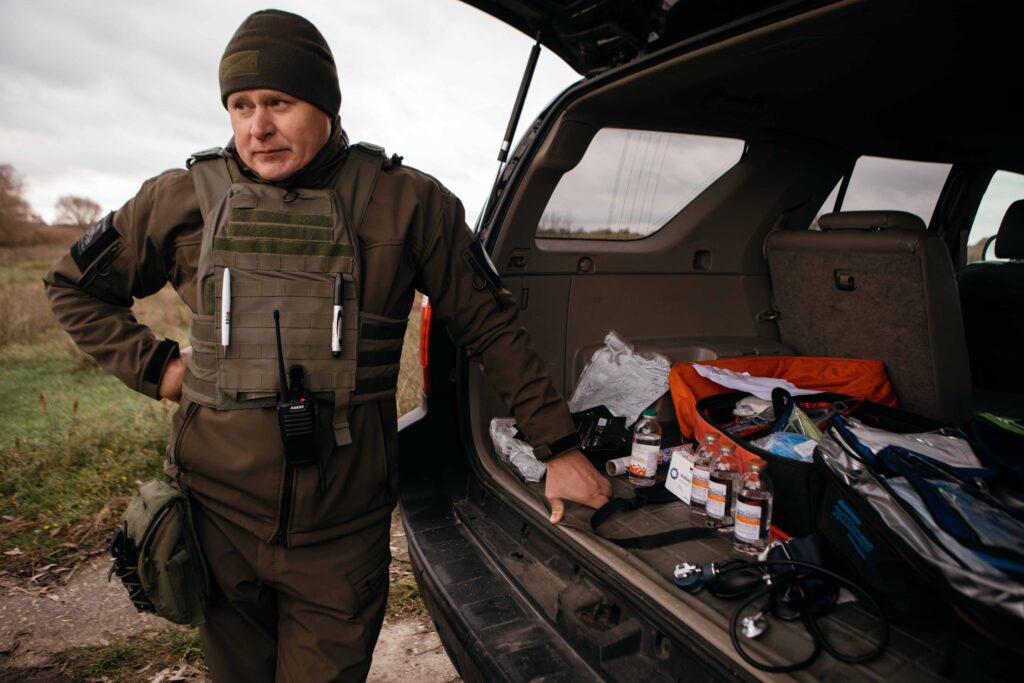
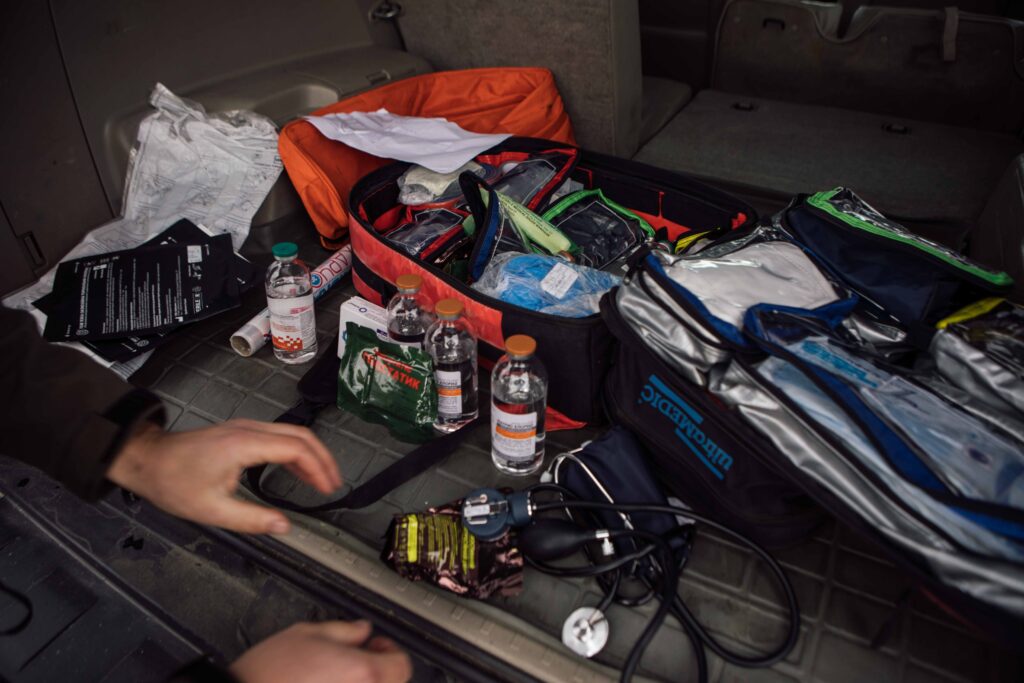
In the aftermath of liberation, besides requisite psychological mending, clean-up work for places like Balakliia are cut out: besides the repairing of bombed buildings, croplands and forests are littered with untold volumes of landmines. That’s where UDS comes in.
53-year-old Oleksander Krasikov, a Bozena operator for Ukrainian Demining services, explains that their assignment in Balakliia was 277 hectares of farmland. “In general, such [previously occupied] places could be mined and dangerous.” Their team of 56, split into 7 units, should be able to clear this area in a month and a half. “The drones guide the machines—we work in pairs like this,” he explains.
Brian Roth is a Kyiv-based forest production ecologist and founder and executive director of Forest Release, an organization advocating for Ukrainian forest managers and users, forest ecosystems, and landmines. “You’ll be finding unexploded ordnances [across Ukraine] for the next century,” he says over an encrypted call last November. While Ukraine puts down landmines for defensive purposes, Russia wields them as a form of terror. “Besides finding landmines in places where there was actual kinetic warfare, we are also finding them where they shouldn’t be—such as anti-tank mines in a dense forest,” explains Roth. “A tank would never end up there. They’re doing this to punish people.”
This is a psychological warfare tactic on top of active fighting, Roth continues. “One landmine will cause a lot of terror for the general population. For instance, when Russia drops a mine in a park, there are people who might fear going into a park for years—even though maybe that was a one-off event.”
Safe Ground Solutions (SGS) is another Ukrainian demining initiative focused on using advanced demining robots, founded in October 2023 in light of the paralysis that comes with dangerous yet liberated territories. SGS’s goal is to build local capacity and teach Ukrainians how to demine safely and in a scalable manner. Olesia Myronenko, the head of public information and community liaison, believes that working in demining is a way to accept the current, difficult Ukrainian reality.
“Five or six years ago, I couldn’t have imagined working in this environment. I didn’t believe there were so many mines everywhere,” she shares. Deminers face a Sisyphean task: every day of war comes at a cost. It’s estimated that every year of fighting contributes at least another decade’s worth of demining work.
“We don’t feel like the solution is to give up—our lives continue,” says Myronenko. “We have new performances in the opera, new art exhibitions.” But, she admits, the most scary thing is how this affects children. She has a four year old daughter who has never known peace, and attends a private kindergarten in Kyiv since the public one lacks a bomb shelter.
“My child is forced to live with these mines—I need to tell her about these risks.” SGS’s team of 6 deminers works tirelessly across Mykolaiv—one of the most affected regions by the Black Sea, and where 90% of Ukraine’s grain exports pass through—in Kherson, Kharkiv, and other frontline regions.
SGS is looking to partner with a construction company located outside of Kyiv that has pivoted to designing and manufacturing innovative demining machines. “These machines are so expensive,” says Myronenko of the eye-watering quarter-million euro price tag. “But it would bring our work to the next level.
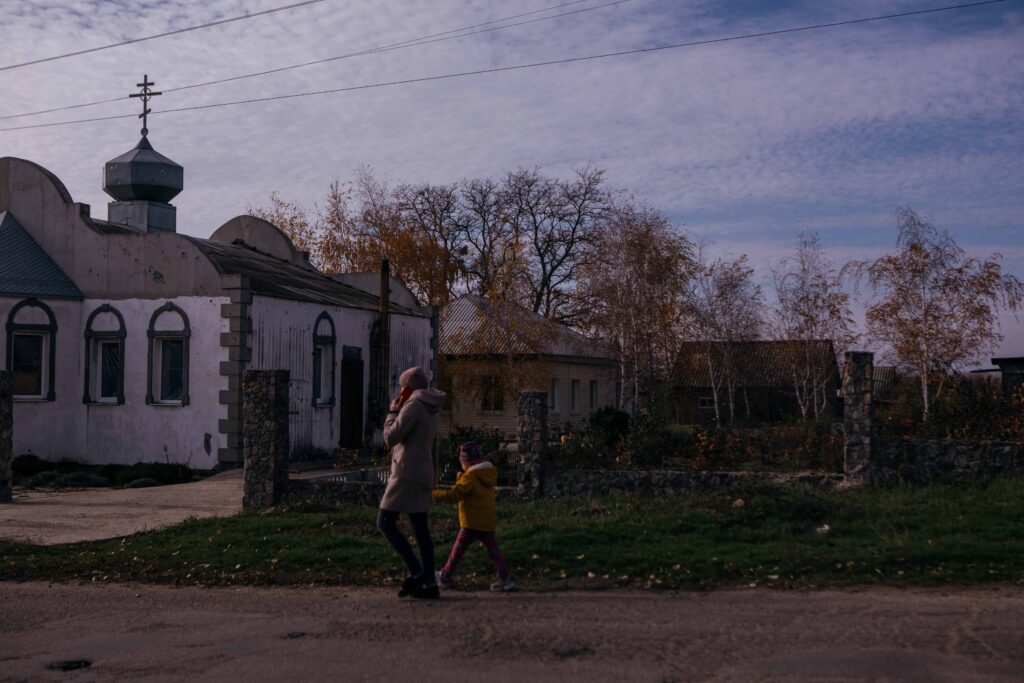
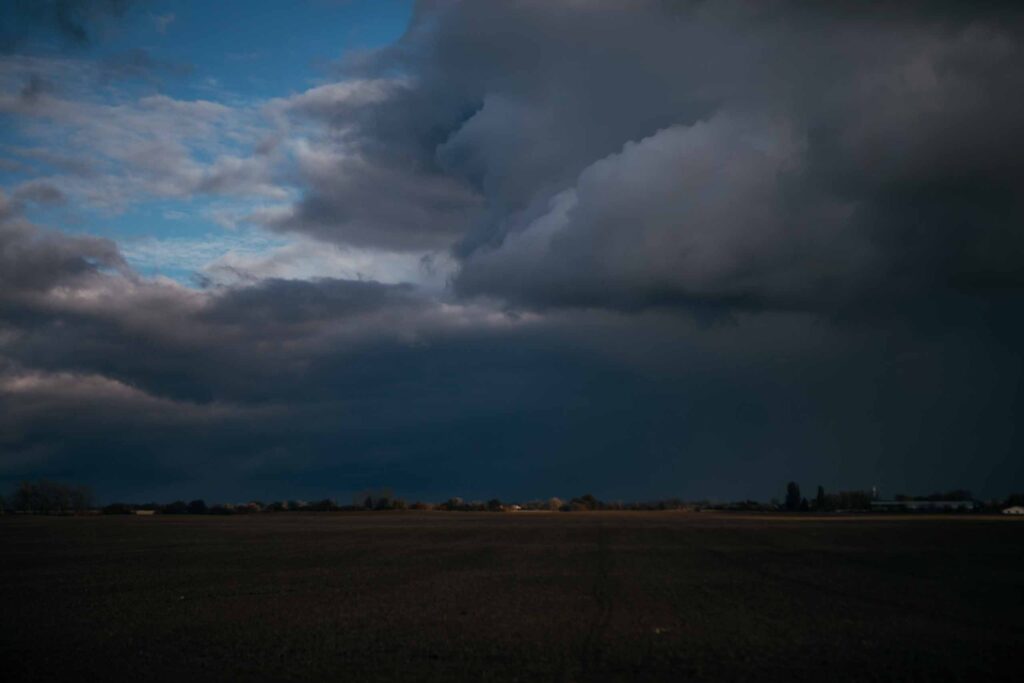
Bottom: A view of a cornfield in Rusaniv – Ukraine is the breadbasket of Europe and one of the biggest global suppliers of grain
47-year-old Ihor Chechin is the creator of the Vormela, a Ukrainian-made demining machine designed at the nexus of high mobility and productivity, and relative affordability. “A big threat to [demining machines] is Russian drone – that’s why the vehicle needs to move fast,” he explains. “It took us one year to develop the Vormela,” he says. He and the development team compared what was available on the market, identifying their weakness: slowness, heaviness, issues with cleaning. “We decided to address all of these problems from the beginning.”
Chechin translated his farm machinery expertise to the Vormela’s design, which includes a sifting bucket that can lift away tree logs (derived from tractor forklifts), and worked closely with the Ukrainian military to develop anti-jamming techniques, which has become increasingly prevalent in the war’s electronic escalation.
The operator can stand up to 5 kilometers away and is equipped with video monitoring, Chechin explains. Conversely, traditional demining robots cannot be more than 500 meters away from the operator, which poses huge user risks when massive anti-tank mines are detonated.
Chechin hails from the now-occupied Kherson Oblast in the far east. Prior to the full-scale invasion, he worked as a salesman in construction parts before being forced from his home. Chechin sees his pivot to demining and military tactical equipment as natural: “I lost so much, my lovely home in the forest, my life there,” he explains as we stand in the nippy late October breeze, before one of the Vormela robots. “Because of the situation, we have to focus on demining.”
Society at large is starting to recognise how devastating Ukraine’s landmine situation is, Chechin continues. “No car will stop on the side of the road from Kherson and Mykolaiv (by the Black Sea), since the area hasn’t been demined yet.”
“Unfortunately, wars make [technological] progress,” he says. “This was the same for World War I, World War II.”
This reporting was supported by the International Women’s Media Foundation’s Women on the Ground: Reporting from Ukraine’s Unseen Frontlines Initiative in partnership with the Howard G. Buffett Foundation. Tetiana Burianova contributed reporting to this story.