How do you experience climate change through the built environment?
The built environment encompasses the systems of buildings, roads, public infrastructure, and utilities shaped through constant interaction with the natural ecosystems that surround and sustain them: rivers, forests, soils, and climate. In his 1965 essay A City Is Not a Tree, architect and design theorist Christopher Alexander described the city as a receptacle for life. Drawing on ideas from mathematics, he distinguished between natural and artificial cities, arguing that it is the complexity of overlapping connections that allows urban life to thrive. While cities function as complex systems, our experience of them is deeply personal—formed through remembered routes, familiar atmospheres, and moments that shift how safe or connected we feel.
We invited Icarus Complex readers and contributors to participate in a shared experiment that asks a simple but revealing question: how do you experience climate as it interacts with the built environment through its designs, failures, and adaptations?
As part of the Built Environment series, conversations, photo essays, reportage, and immersive features will explore how the built environment relates to—and is reshaped by—the systems underpinning climate change.
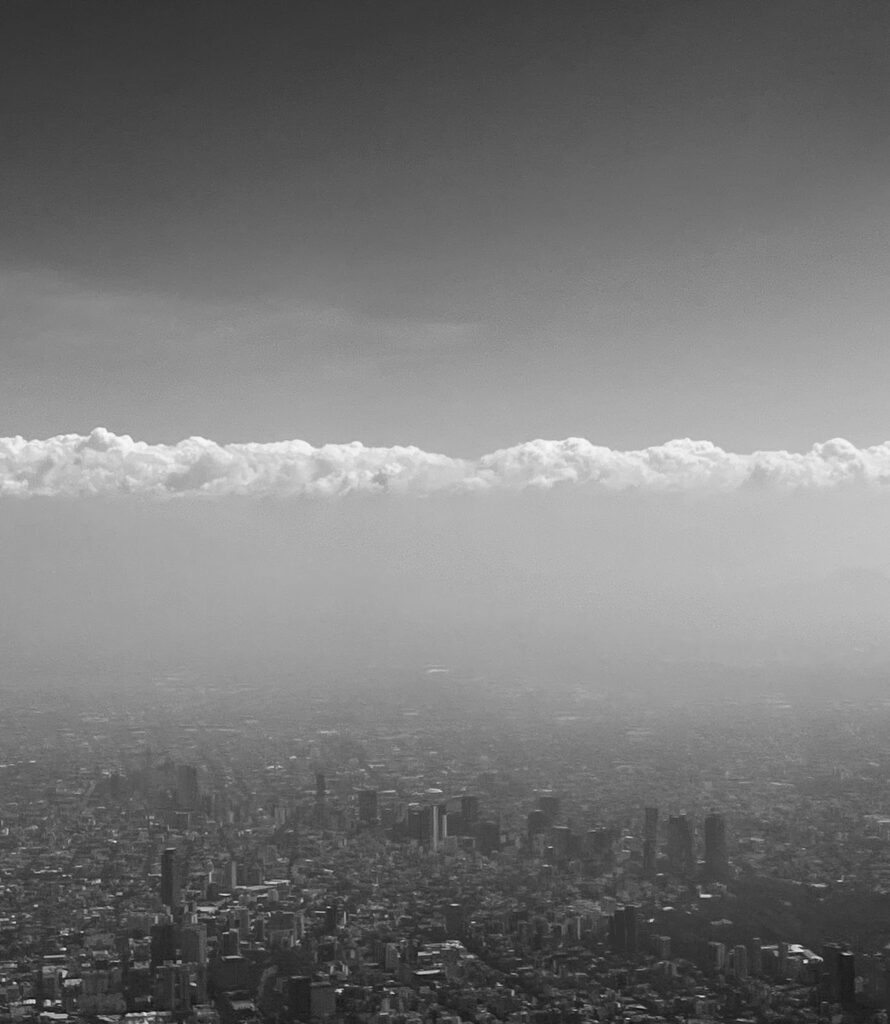
Mexico City, Mexico
Vir Shah (Architect and Visual Designer)
Mexico City, one of the most densely populated cities in the world, generates a substantial volume of emissions. During the warm and dry season, high temperatures, minimal cloud cover, and low wind speeds create ideal conditions for ozone to form and accumulate near the surface. This image seeks to visualize the vertical layers of the atmosphere that quietly shape the city’s environment and the everyday lives of its inhabitants.
Gangtok, Sikkim, India
Siddharth Behl (Documentary Photographer)
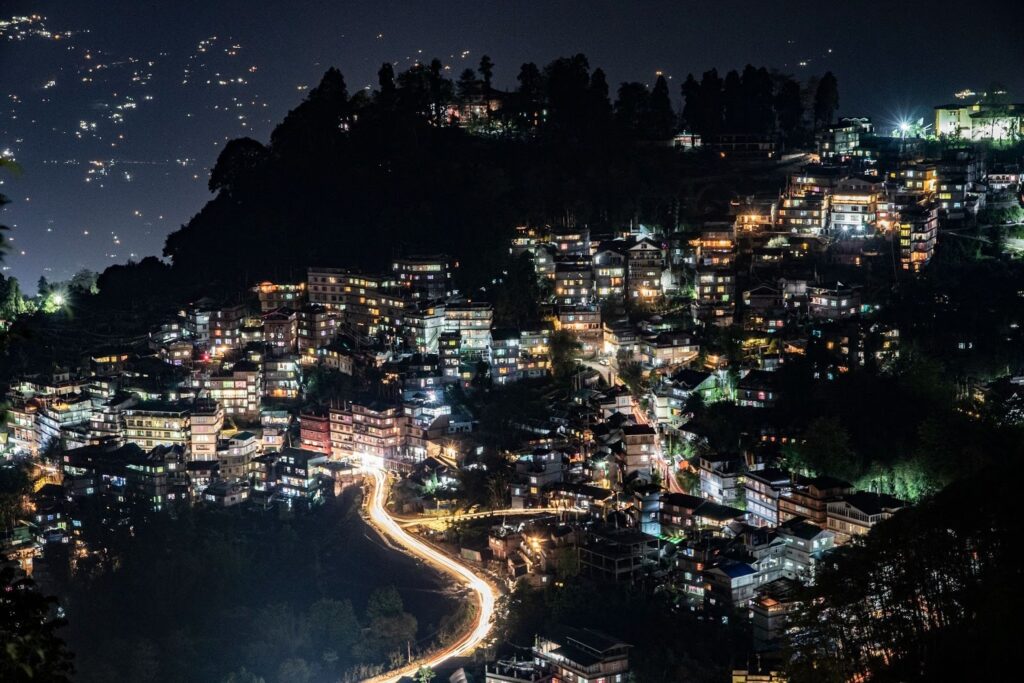
Gangtok at night unfolds like a living network; homes layered into the mountainside, roads glowing as connective veins. The built environment bends to steep terrain, pressing gently yet persistently against forests and fragile slopes. Light traces human presence within a sensitive ecosystem, where climate, geography, and aspiration intersect, reminding us that mountain cities survive through careful balance within complex, interdependent systems.
Tampines HDB Sand Stockpile, Singapore
Chen Zhan (Architect, Filmmaker, and Anthropologist)
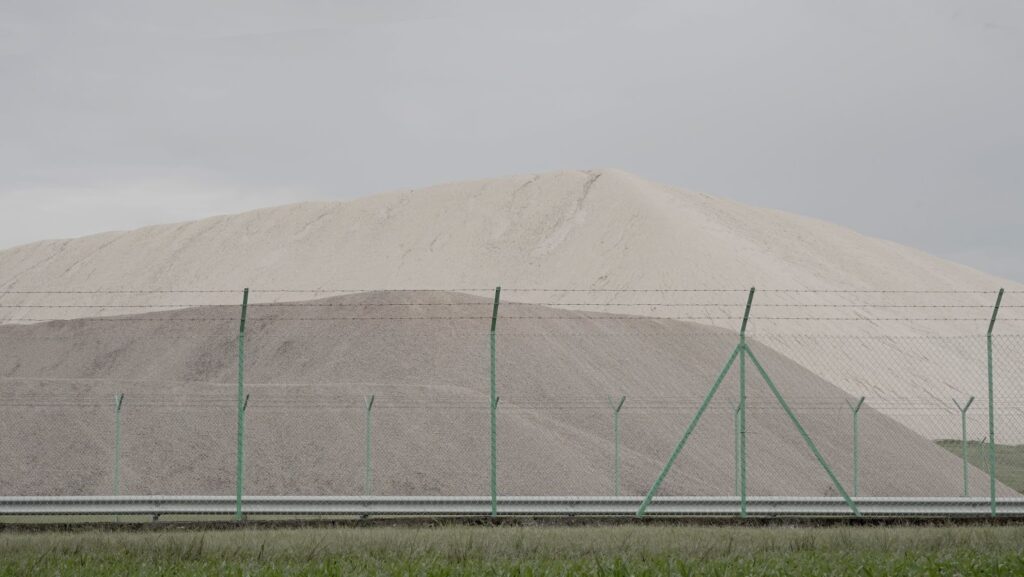
Massive piles of sand quietly sit behind high fences—dredged and imported from afar. Once sand quarries, Singapore’s Tampines district now holds grains of promise: the raw marrow of the built environment that feeds the city-state’s ongoing land reclamation and public housing projects. Here, prosperity and national security reside not yet in towers, but quietly in earth itself.
Larderello, Tuscany, Italy
Reuben J. Brown (Multimedia Journalist and Editor)
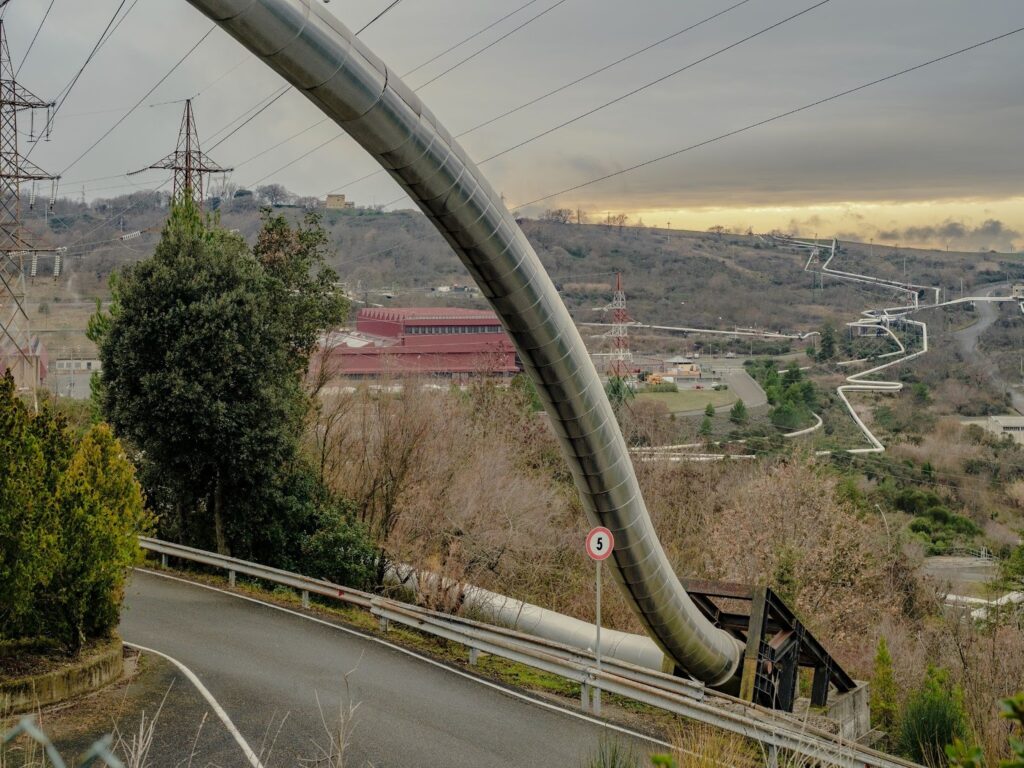
Thought to have inspired Dante’s Inferno, Tuscany’s Valle del Diavolo is today traversed by a tangle of steel tubes, threading through forests and leaping over roads. The scene may echo views of fossil fuel extraction, and many of its processes are similar. But this is actually the site of the world’s first geothermal power plant—an increasingly important climate solution—and the pipes are merely carrying steam.
Kolkata, West Bengal, India
Shubhodep Roy (Photographer)
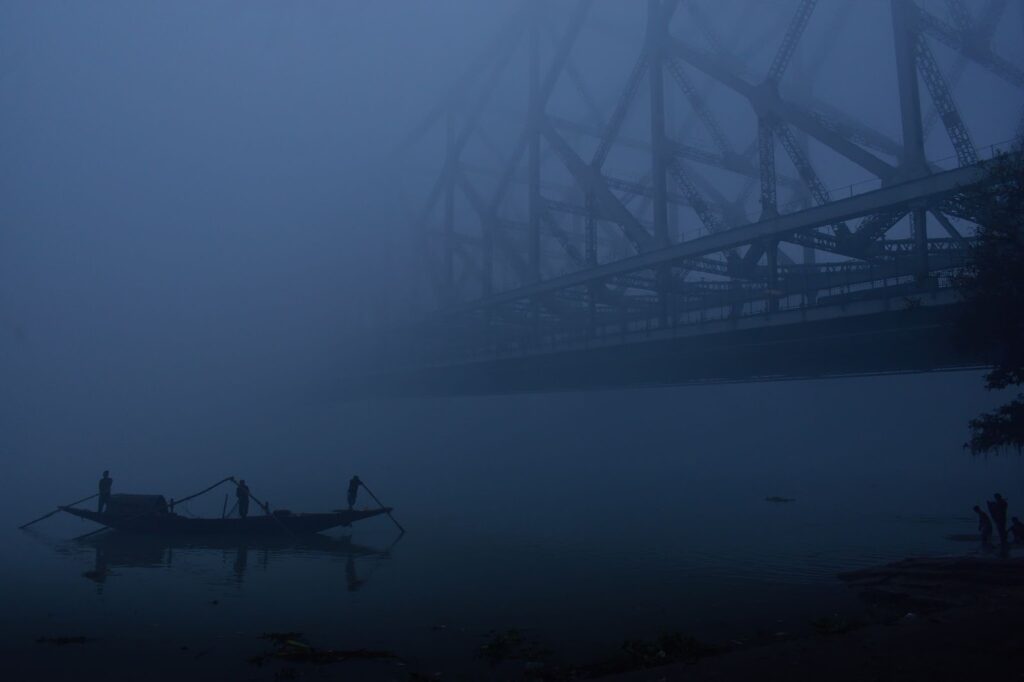
Morning fog envelops the Howrah Bridge as boatmen navigate the Hooghly River in Kolkata. The reduced visibility alters familiar routes and perceptions of scale, revealing how everyday movement adapts to shifting climate conditions. In this moment, infrastructure, river, and atmosphere intersect, showing how built environments are continuously shaped by natural systems and lived human experience.
Dunakeszi, Hungary
János Novák (Photographer)
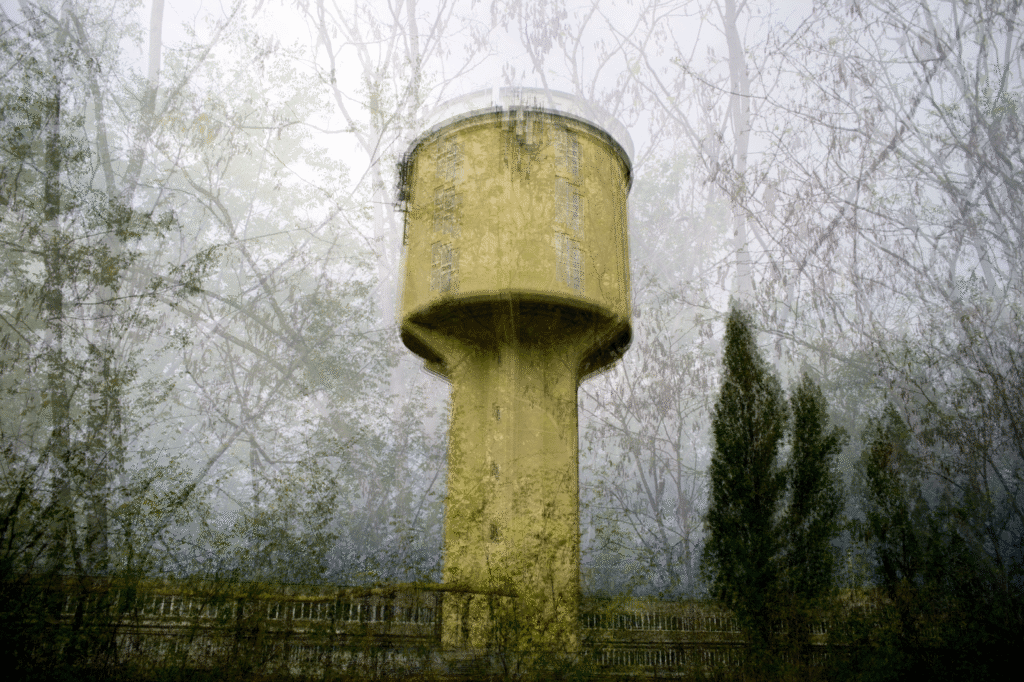
The abandoned 1950s Hungarian water tower stands as a silent sentinel in the urban landscape. Once essential to industry, now empty, it is a monument to short-term thinking amid long-term environmental needs. It echoes the evolving challenges of water management, a critical issue for modern societies.
Penjaringan, Jkt Utara, Indonesia
Dikye Ariani (Photographer)
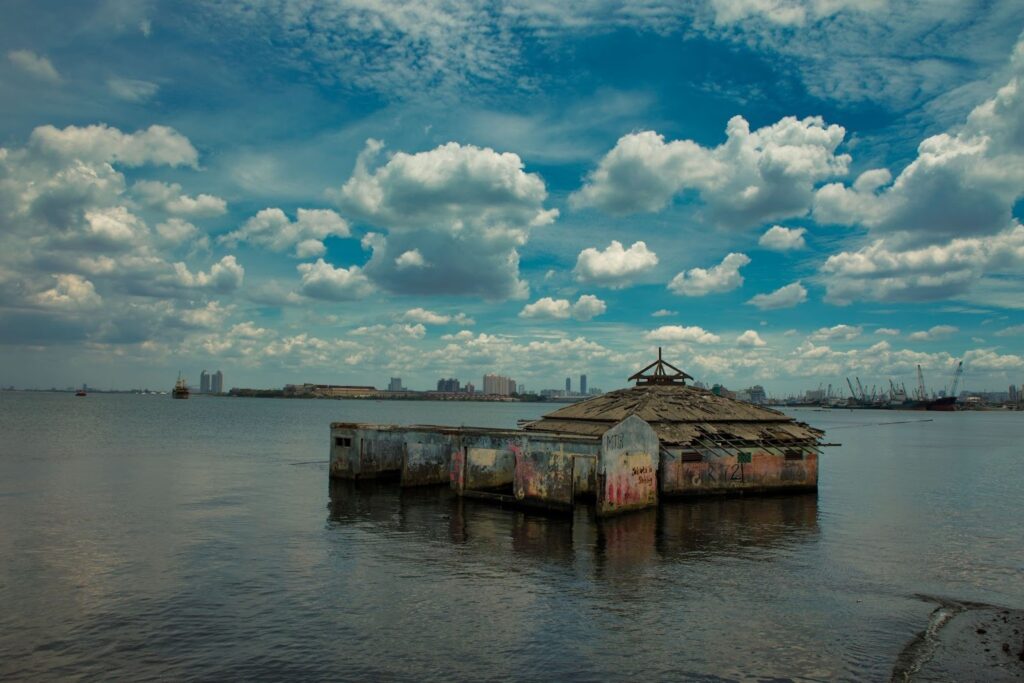
The Wal Adhuna Mosque, which has been slowly sinking for the past 12 years, has become a permanent fixture of the sea north of Jakarta. The mosque is located just behind the large seawall at Sunda Kelapa Harbor. The zinc roof of the mosque has also crumbled. Various types of debris carried by the current are caught on the sides of the mosque. Given its condition, it’s hard to believe that the Wal Adhuna Mosque was once a center of worship in the Sunda Kelapa area. Hundreds of worshippers regularly performed the five daily prayers there, especially on Friday prayers and Eid al-Fitr.
Benchakitti Park, Bangkok, Thailand
Munem Shahriar Islam Shamonto (Architect and Strategist)
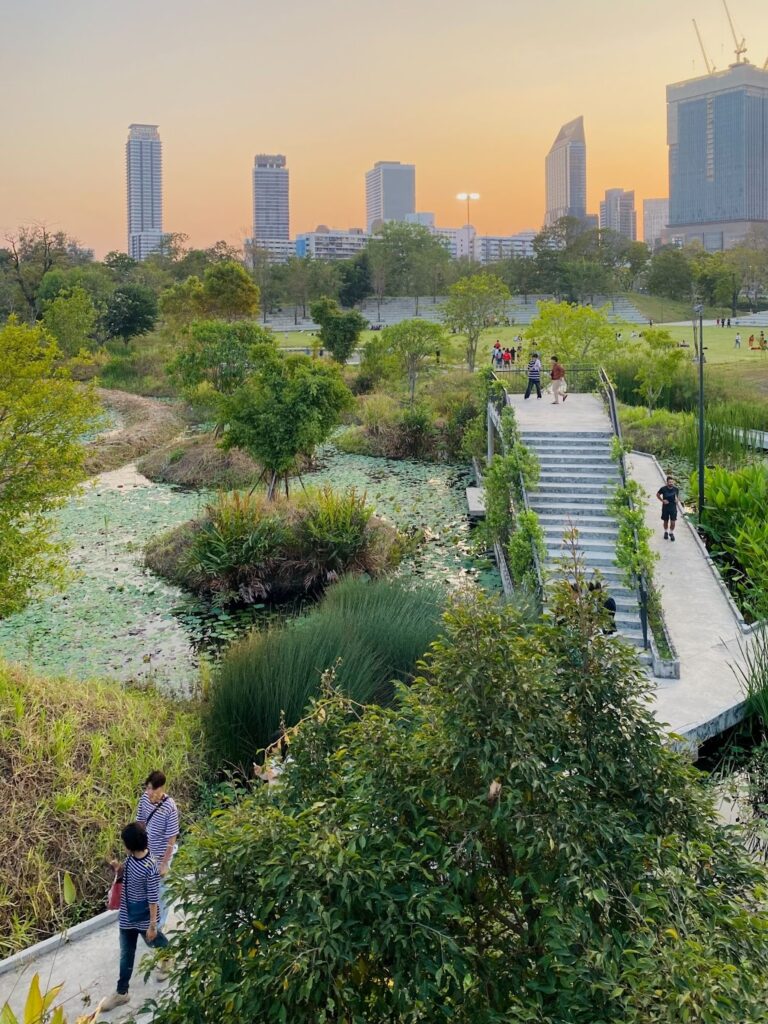
In the golden glow of a Bangkok sunset, Benchakitti Park emerges as a vital ecological sanctuary where the tropical climate breathes through intentional architectural design. These engineered wetlands soften the urban edge, transforming the city’s intense heat into a moment of communal relief. Here, the hum of metropolitan life fades into a quiet, reflective connection between the cooling landscape and the people who seek its peace.
Baixo Onça, Belo Horizonte, Brazil
Arthur Sá Motta (Architect)
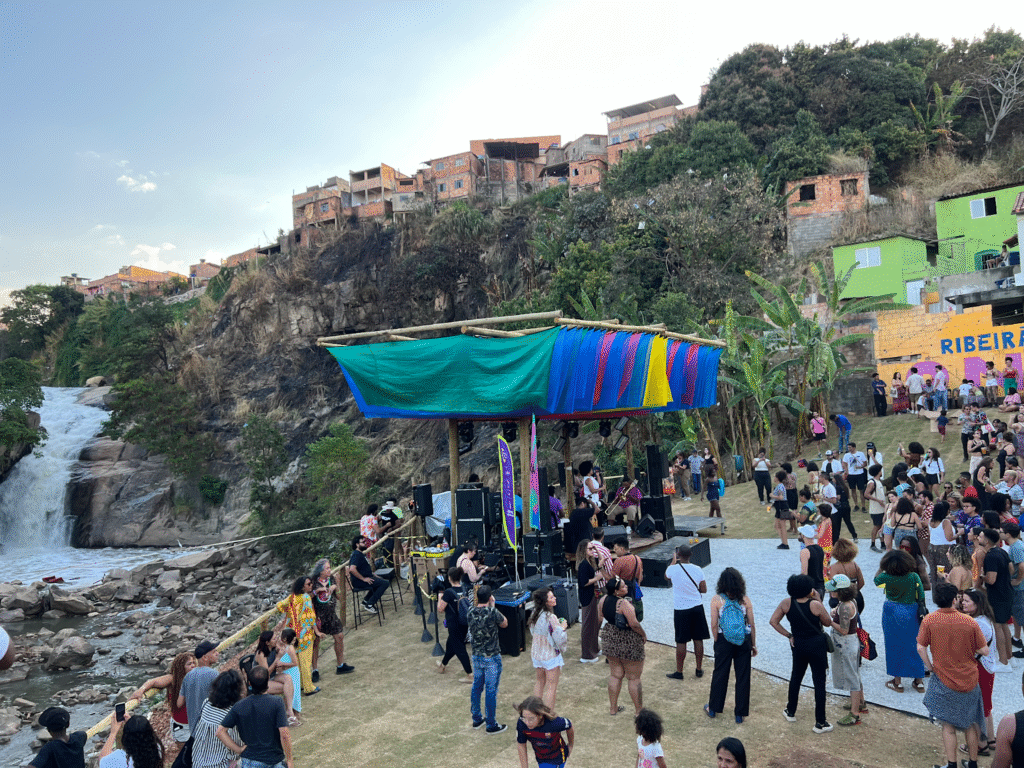
Waterfall Lookout is a resistance initiative created during the 2025 Festival da Onça. Situated by the largest, and polluted, waterfall in a Brazilian capital, the project employs community work parties to regenerate degraded areas into shared public spaces. Featuring modular, multifunctional structures, it promotes leisure and collective appropriation, reinforcing the historic struggle for environmental justice and the effective implementation of the Ribeirão Onça Ciliary Park.
Hiiumaa, Estonia
Alexander Petrounine (Architect)
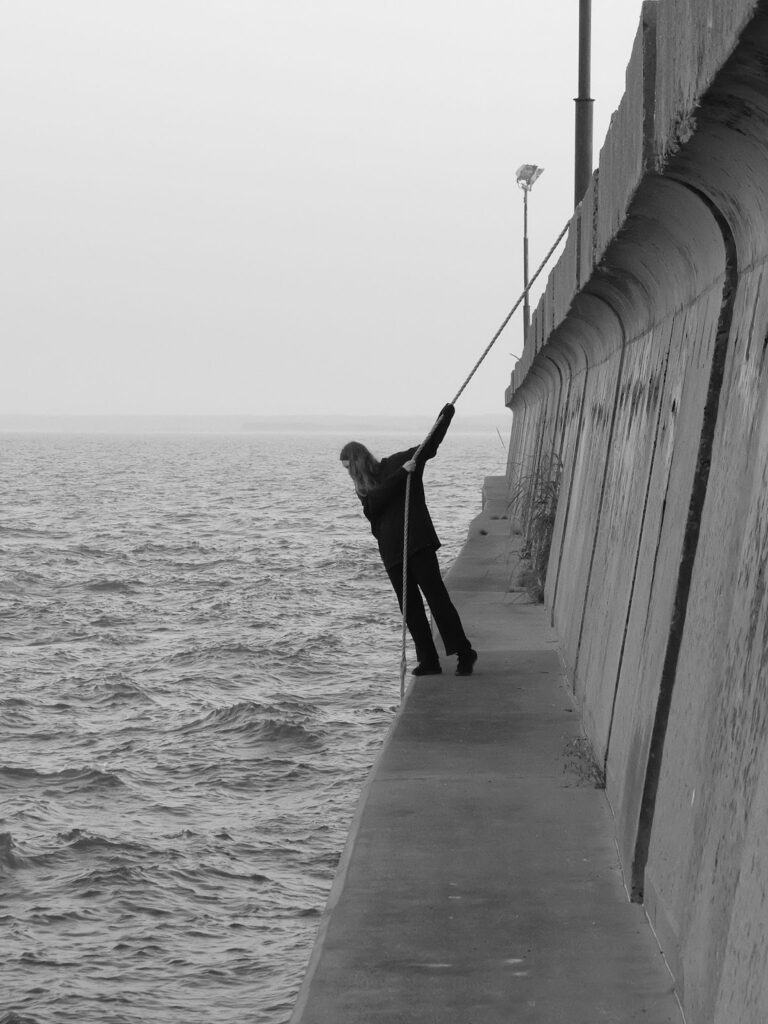
A young woman hanging above the edge of what once was the Iron Curtain. This abandoned military port still evokes dark thoughts, whilst at the same time local communities have grown accustomed to this structure, as well as the altered landscapes and atmospheres that it creates. The thought of war lingering around the corner makes the community question the meaning of the structures in the 21st century.
Dakar, Senegal
Yatou Sallah (Writer and Editor)
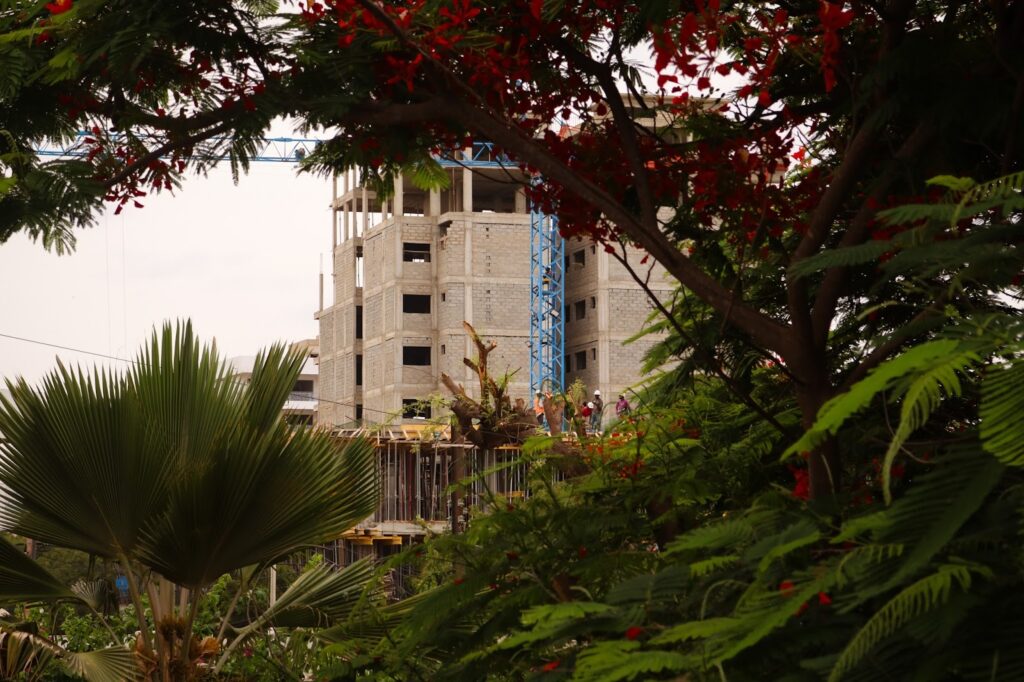
In Dakar, rising temperatures combined with irregular Harmattan winds bring heavier heat, dust, and dryness into daily life. Trees are cleared to make space for urban expansion—for the construction of buildings and roads—replacing shade and cooling with concrete that traps heat. These changes feed into one another, making climate change something people feel directly in their bodies through hotter streets, thicker air, and fewer places to escape the heat.
Ravangla, Sikkim, India
Lungmying Lepcha (Writer and Photographer)
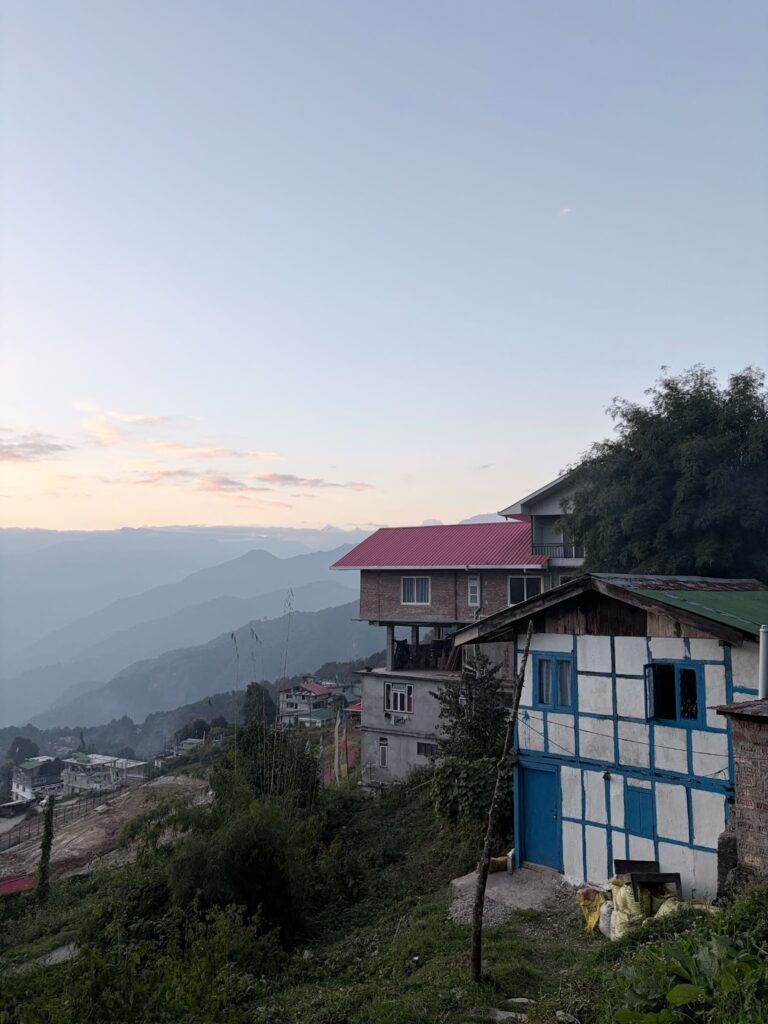
As I was returning to my hostel after spending the weekend, I took a shortcut and saw this view of old traditional houses built on the hills, which are no longer built, and the area below them being constructed into a man-made structure. It led me to think for a moment about how things are constantly changing and how nature is slowly losing its beauty with the advent of construction.
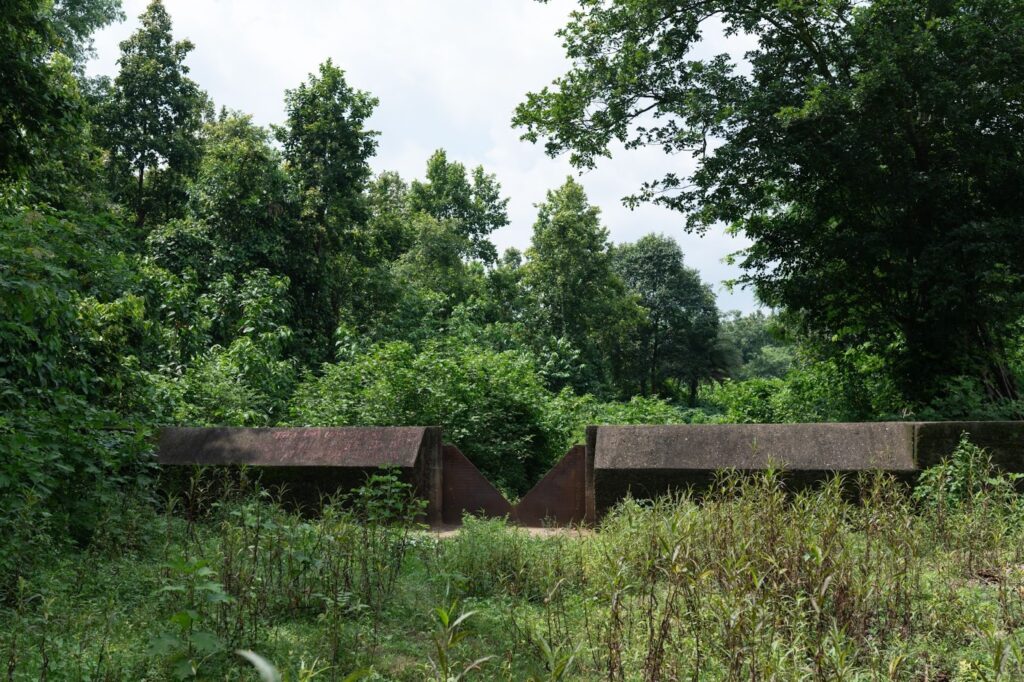
Ajodhya Hill, Purulia, West Bengal, India
Ayan Das (Documentary Photographer and Filmmaker)
A water-level checking wall stands in the Thurga River, built for a proposed hydroelectric project that was postponed following villagers’ protests. The concrete structure now stands overtaken by forest. Climate is sensed here through absence and resistance, negotiated between infrastructure, ecology, and lived relationships to land.
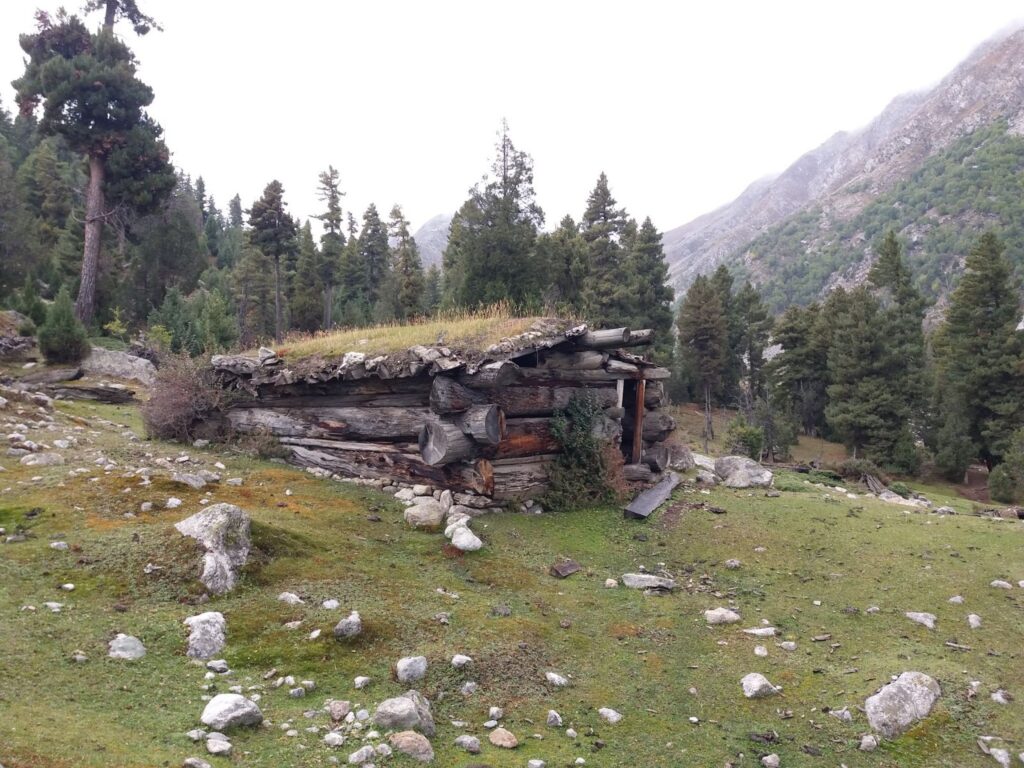
Fairy Meadows, Pakistan
Siraj Hussain (Architect and Researcher)
In Fairy Meadows, climate is not resisted but accommodated. These vernacular huts are built with local materials and forms that respond to moisture, cold, and seasonal change—allowing grass to reclaim roofs and edges over time. The built environment remains light, temporary, and adaptive, shaped by ecological cycles and lived use rather than permanence or extraction.
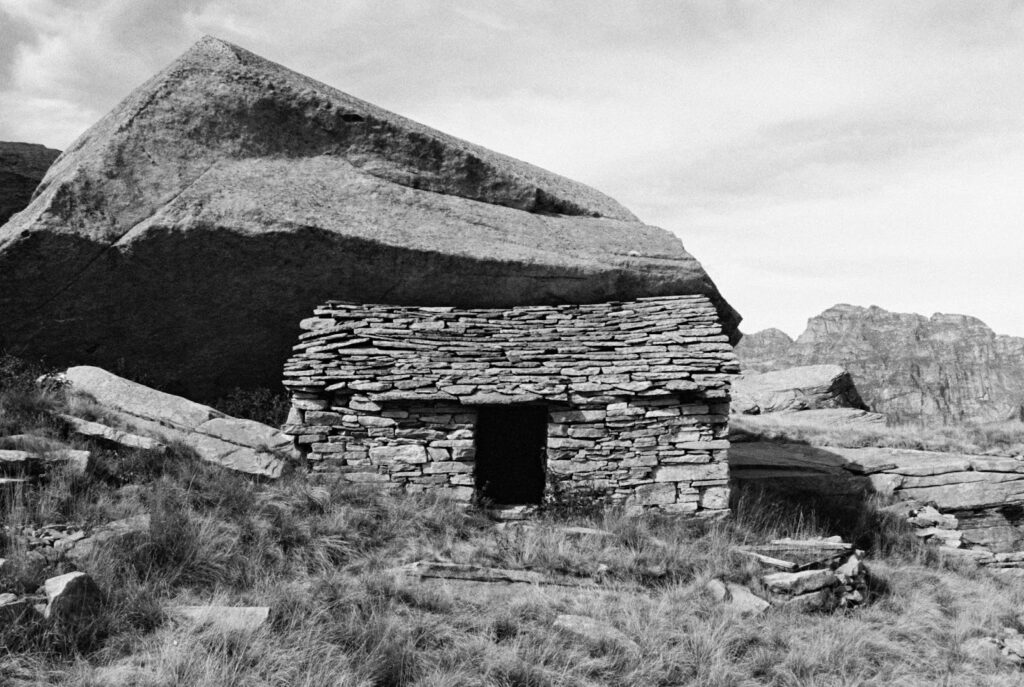
Ticino, Switzerland
Anton Bucich (Architect, Writer, and Photographer)
About halfway through my studies at the Accademia di Architettura di Mendrisio, I had the privilege of speaking with Michelangelo Pistoletto. He told me that Arte Povera is not about poverty but about that which is essential. Some time later, while hiking in Ticino during the summer break, I came across this shelter—a profound embodiment of the essentialism Pistoletto spoke of. Half of the space was readymade.
Mawa, Munshiganj, Bangladesh
Mohammad Rakibul Hasan (Documentary Photographer, Filmmaker, and Visual Journalist)
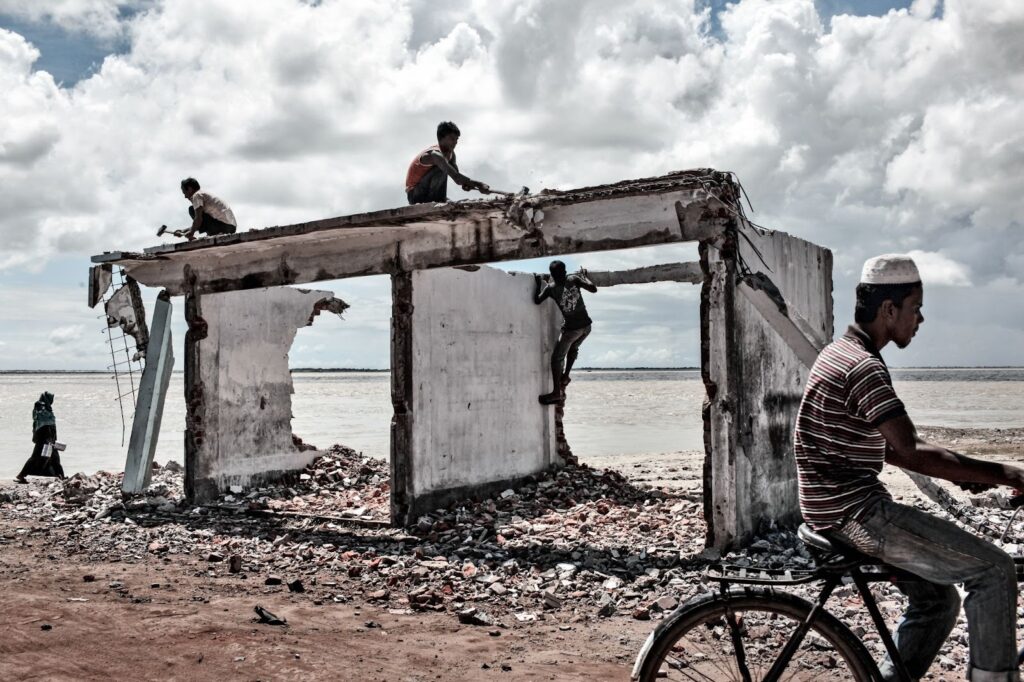
Bangladesh, one of the primary victims of anthropogenic climate change, faces increasingly variable conditions. An overpopulated, agro-based country, it endures frequent cyclones, floods, droughts, salinity, and river erosion. These hazards displace people as climate refugees, destroying land, livelihoods, and leaving communities on the brink of socio-economic insecurity.
Auwa, Rajasthan, India
Rupal Rathore (Architect and Design Journalist)
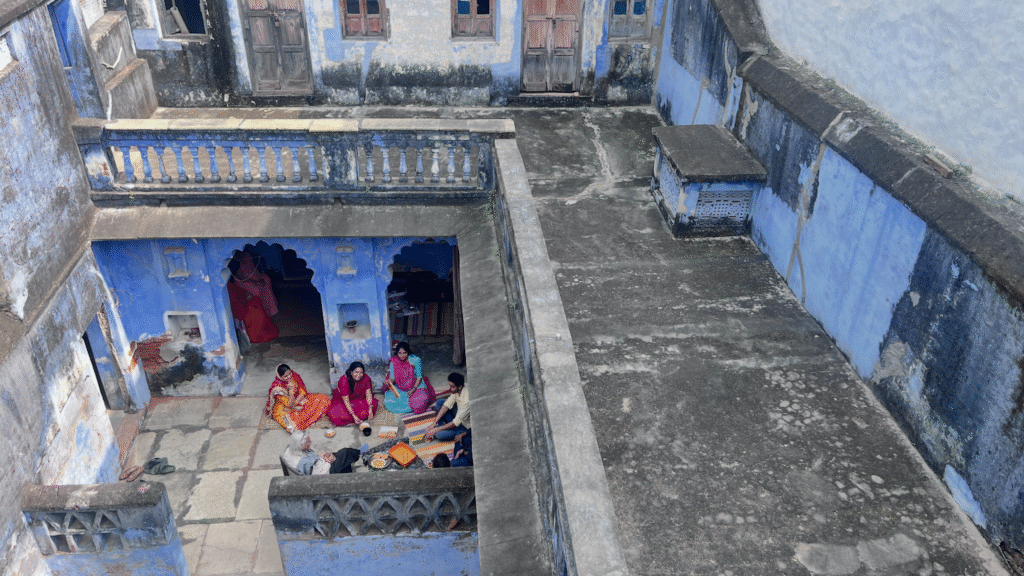
Weathered by rain, heat, and decades of neglect, our ancestral home no longer functions as a house, yet it remains the heart of our family. Even as climate and time erode its walls, we return to its open courtyard for weddings, funerals, and moments that bind generations together. Within this climate-marked space, memory and history endure, even as the building is now unsafe for daily living.
OmVed Gardens, Highgate, North London, United Kingdom
Katie Bonner (Photographer)
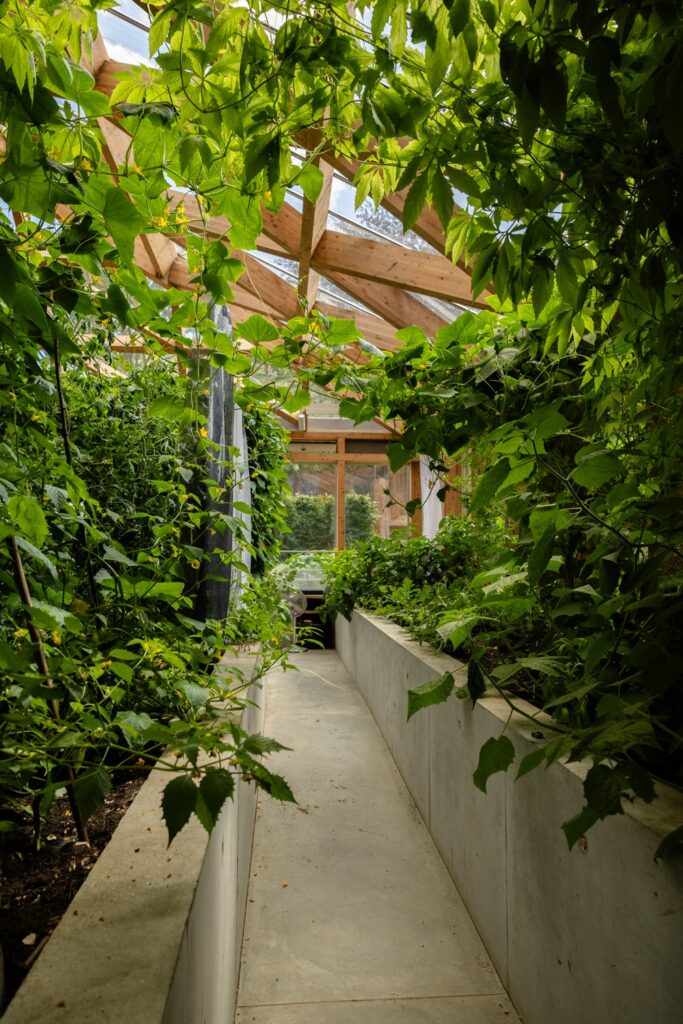
OmVed Gardens is a living landscape in North London that explores food, ecology, and creativity for climate resilience. The greenhouse, designed by Piers Smerin and framed by landscape design by Paul Gazerwitz, mediates extremes, gathering excess and scarcity alike. Light, heat, humidity, and air are carefully invited in. Here, sunlight is harvested, heat is held, and water is softly cycled.
Al Salt, Jordan
Abeer Awad Khader (Architect, Fashion Designer, and Cultural Researcher)
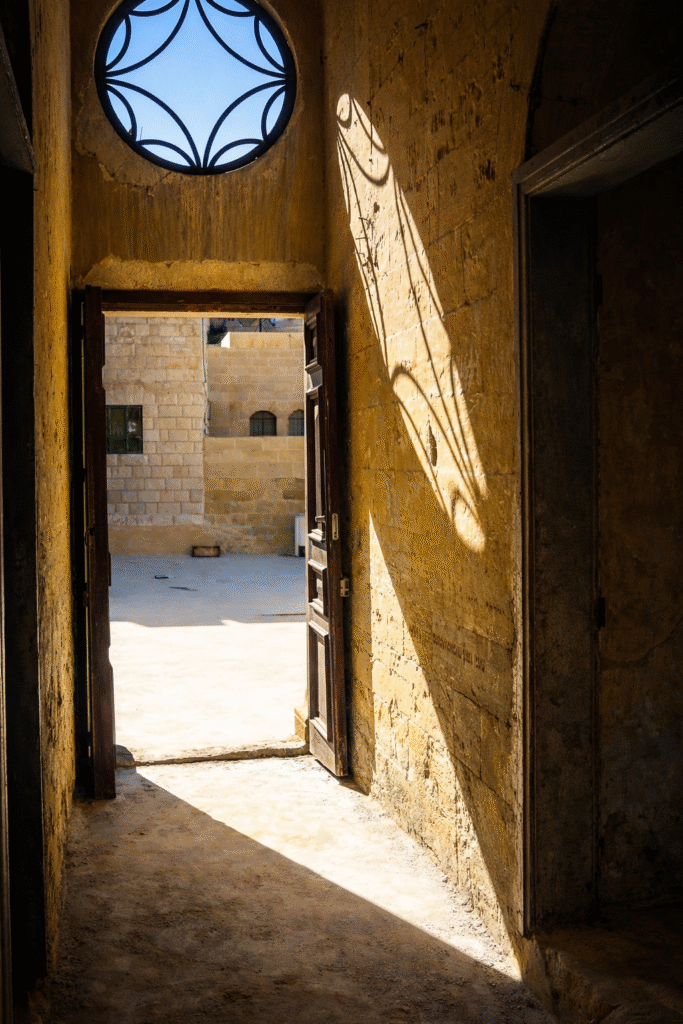
A narrow stone corridor opens to a sunlit courtyard, where a circular window projects a floating geometric shadow across worn plaster. The image studies the threshold between interior and exterior—cool darkness, warm stone, and a sharp blade of light. In this quiet passage, time becomes visible through texture, patina, and the slow choreography of the sun.
Village of Asos, Cephalonia, Greece
Ana Cirlioru (Architecture Student)
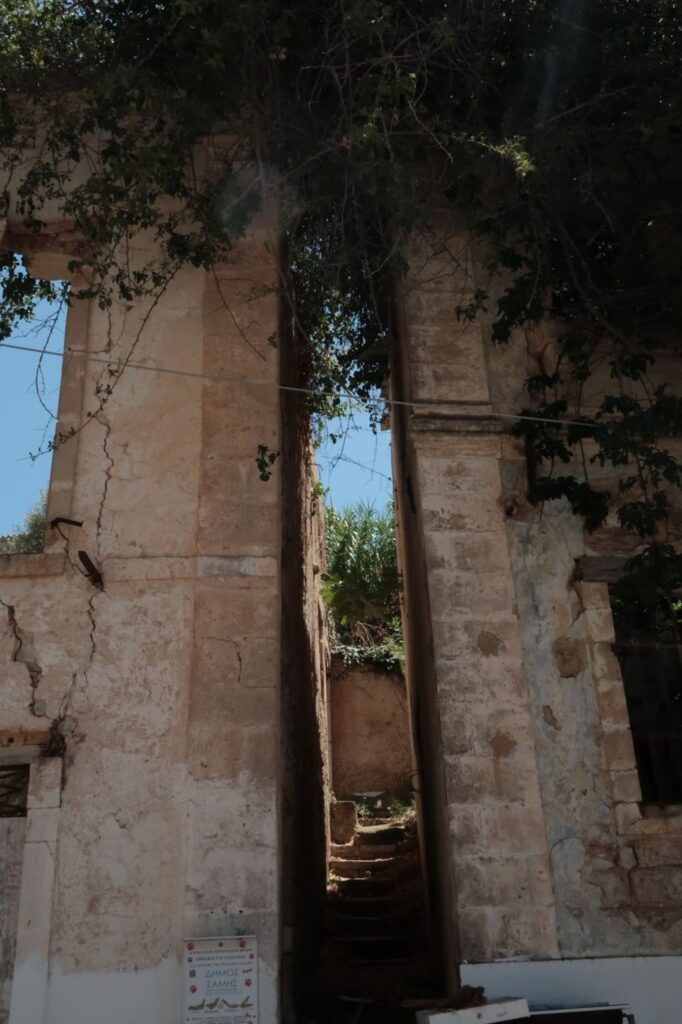
Lost or forgotten, the streets of Asos are a testimony that nature will always get back what is hers. What the humans left to decay, the climate sees an opportunity for revival and expansion. Ruins covered by ivy seem to be a habitual fix to the failure of human design.
Sicily, Italy
Anders Thøstesen (Architect and Photographer)
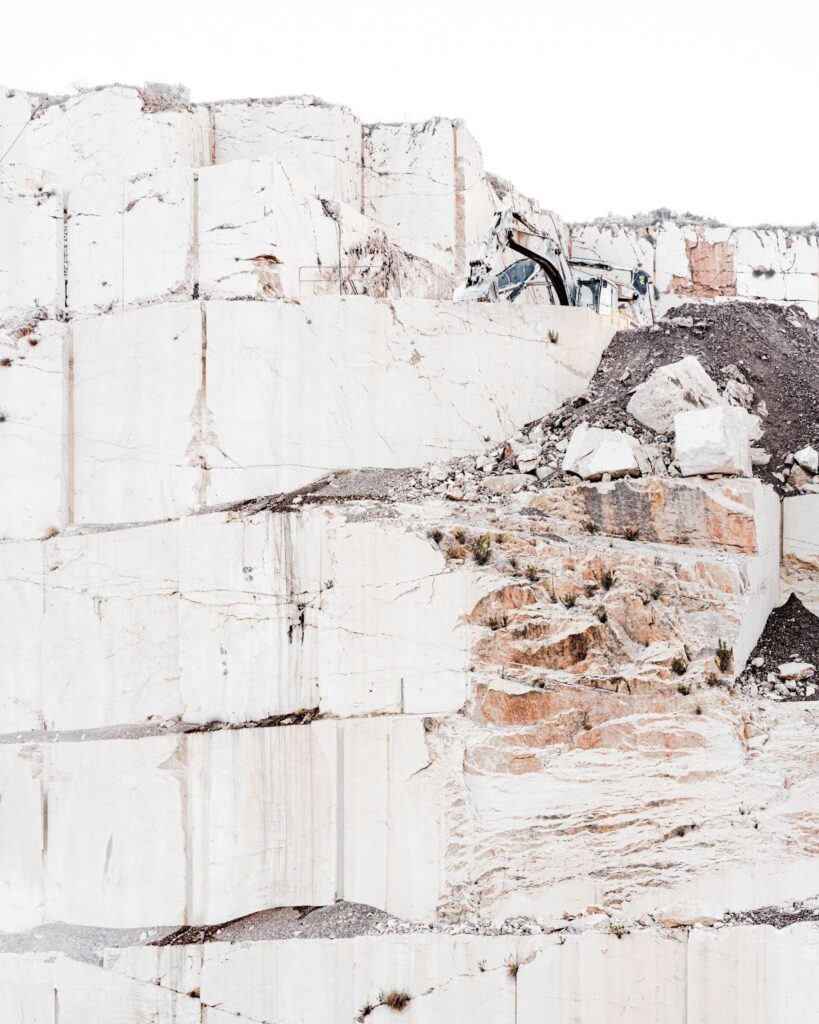
Stone is a relatively unprocessed material that, when used locally, can be part of a more sustainable building industry. But as any material, the extraction of the stone leaves a mark on the origin of the material. As the beginning of a supply chain, quarries are part of the built environment, too. Standing in a marble quarry, it is not clear whether this manmade landscape is a good or a bad thing. But it serves as a reminder that for everything we build, there will be left traces in our natural landscapes.