“Go outside and take a look. Do you want your kids to be able to enjoy that? Do you want them to fly fish, ski, hunt? All of this is going to disappear in a generation or two if we do not act.”
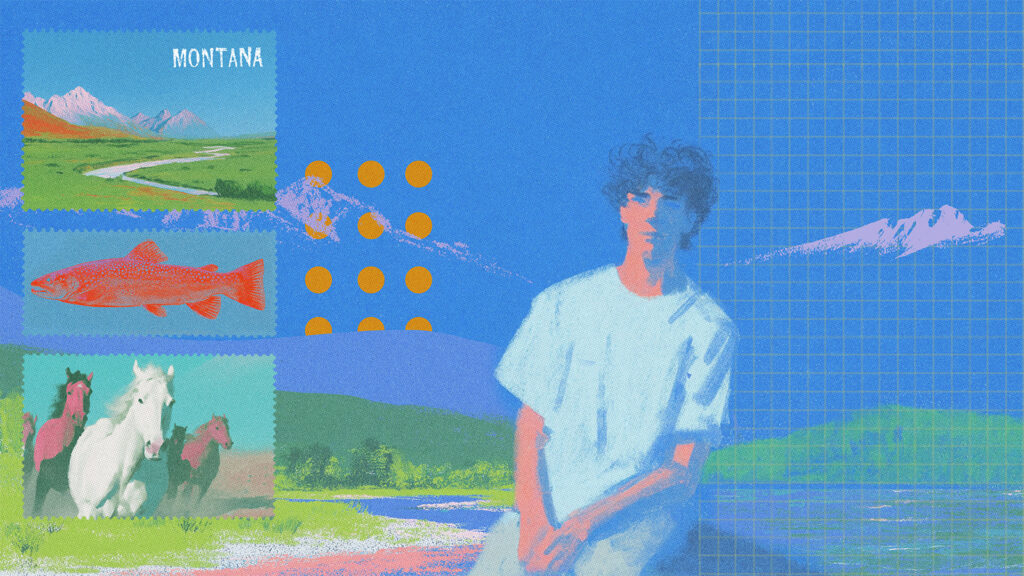
Kian Tanner was still a teenager when he joined Held v. Montana, the first constitutional climate trial of its kind in the United States; and now a landmark in climate litigation. Sixteen youth plaintiffs argued that Montana’s support for fossil fuels, and its refusal to weigh climate harms in energy permitting, violated their constitutional right to a clean and healthful environment. For Tanner, who grew up fly fishing Montana’s rivers and spending nearly every waking hour outdoors, joining the lawsuit was a matter of protecting what mattered most to him, and of making those around him see what they had to lose if they refused to act. In 2023, Judge Seeley ruled wholly in favor of the youth, enshrining into law science-based protections for children’s fundamental rights.Despite the ruling, however, the state has resisted meaningful implementation as key policies remain intact and emissions continue. Tanner is pressing forward, this time for enforcement. After years in court, he is clear on one thing: hope is not passive. It is built through action and through insisting that governments answer to the people whose futures they shape.
Icarus Complex researcher and writer Linda Förster sat down with Tanner to discuss youth-led climate litigation, the role of empathy in a polarised climate landscape, and what it means to keep fighting when a landmark win is only the beginning.
Linda Förster: In the summer of 2023, you became one of 16 youth plaintiffs in Held v. Montana, the first constitutional climate change case to go to trial. Can you tell me a bit about how you came to be a part of this lawsuit, and what those early stages entailed?
Kian Tanner: The idea of joining Held v. Montana was originally brought to my attention in January of 2020. My dad is very big on climate. He said, “Hey, Kian, this is a really good opportunity for you. I’m not going to push you on it, but if you want to do it, it’s a chance for you to really make an impact.” Originally I was like, eh, not my thing. Legal stuff, that’s sort of boring! Then I talked to the lawyer who started the case: Nate Bellinger, of Our Children’s Trust. Nate showed me that this was an opportunity to get my voice out there. That changed my mind, because I like to be on the activist side of things. I like connecting with people, changing people’s minds. Then things started to get rolling. I described the impacts of climate change on my life to the lawyers. With my background: fly fishing, playing soccer, and spending so much time outdoors, as well as the impacts I’d seen from climate change, they thought I could add decent value to the case. From then on, we had lots of conversations and worked on making my story more concise. After we finalised everything, the case was filed on March 13, 2020. The court shut down the day after due to COVID, so we waited three years before we got our day in court.
LF: You said in an interview that you’ve been in “a conservative community where some peers told you climate change wasn’t real and what you were doing was ‘idiotic,’” but you also noted that “You’ve also said Montana has an outdoor connection you don’t see elsewhere.” How do you talk about climate to someone who loves the land but distrusts climate politics?
KT: I’ve always been highly aware of Montana politics, but in my opinion, climate change isn’t a political issue, and it shouldn’t be. It’s a societal issue. If we do not address it, our world is going to burn. The way I’ve connected with other Montanans is just to ask them to go outside and take a look. Do you want your kids to be able to enjoy that? Do you want them to fly fish, ski, hunt? All of this is going to disappear in a generation or two if we do not act. Despite Montana’s conservative tendencies, the vast majority of people live there because they love nature. It was ingrained in my upbringing to truly appreciate my surroundings and the value that nature holds. A lot of people do not fully get that until they leave Montana, go to big cities, travel, and realise this is really special. But I had a decent amount of pushback when talking to people, which is not surprising because people view climate change as political. So the way I then connect with people is by finding something important to them. You are not going to win an argument if you do not have empathy, if you do not understand where the other person is coming from. Whether it is their job, their kids, their grandkids, there is always something they are passionate about. I guarantee I can find a connection between that and climate change. When you establish that link, it becomes a conversation instead of an argument. It creates open dialogue where people are willing to listen. A lot of people in Montana are closed off to the idea that climate change is a threat because they are afraid of losing nature. If you deny it, then it will not happen, which is hypocritical.
You are not going to win an argument if you do not have empathy, if you do not understand where the other person is coming from. Whether it is their job, their kids, their grandkids, there is always something they are passionate about. I guarantee I can find a connection between that and climate change.
LF: So it was empathy you used, the most basic principle we have, but something that feels lacking in national and international politics. How did you bring that into the courtroom, where things are so bureaucratic?
KT: Our lawyers did an amazing job structuring our case. We had experts, the law, all the information. But I think what really weighed on the judge was the testimony of the plaintiffs. Being in that courtroom, listening to the other plaintiffs testify, the emotion at the threat of losing their future was tangible. I felt that the judge felt it. The entire courtroom felt it. When you bring in emotion and humanity, not just facts, you bring in the human impact climate change has on people. They could feel that things have become more real and more urgent.
The entire courtroom felt it. When you bring in emotion and humanity, not just facts, you bring in the human impact climate change has on people. They could feel that things have become more real and more urgent.
LF: You’ve said that you “didn’t want to have to deal with climate change” but that you’re “glad to have taken it onto [your] shoulders.” What was the moment you realised you could carry that weight and what gave you hope?
KT: I have realised that whether I want to or not, it is our responsibility. None of us wanted to bear the responsibility of addressing climate change. But it is a responsibility our generation has to take on. At the end of the day, I would not trust it to anyone else. I trust it to myself and to our generation because I know the value of what we can bring. It is like group projects in school. I am not going to leave it up to chance. I am not going to leave it to someone else to fix my problem. Other generations had the opportunity to address climate change and instead they screwed us. That is not the most eloquent way to put it, but it is true. The generations in power have failed, and they are going to leave us a world that is on fire. So it is our responsibility to take the lead. And I definitely get down. It would not be realistic not to be afraid of the future. We live in a tumultuous time. But if I do not do something, who will? That is my thought process. I do not see enough people stepping up. I use this example with conservative friends who say, “What about India and China?” If we claim to be leaders of the free world, then we should lead on climate. We should lead on renewables. I see it the same way for myself. A lot of change comes from grassroots movements, from the courts, from holding people in power accountable. We do not serve the government. They serve us. It is their responsibility to protect our future. That is what Held v. Montana is doing.
LF: In December 2024, the Montana Supreme Court held that the constitutional right to a clean and healthful environment includes “a stable climate system.” What does “stable” mean and how can fossil fuel corporations be held accountable to climatic stability?
KT: One of the key statutes in the Montana Constitution is the right to a clean and healthful environment, and that includes the rights of youth. That is why we, as minors, became plaintiffs in this case. We argued that part of the Montana Energy Policy Act was not sufficiently considering the impacts of fossil fuels on climate. We said that was unconstitutional based on the clean and healthful environment provision. We asked the court to require Montana to actually look into the impacts of carbon emissions from fossil fuel projects they were permitting. The courts ruled in our favor, but the state has since disregarded the ruling, so now we are going back to court to enforce it. When Nate called me and said Montana was violating Judge Seeley’s ruling, and that they were thinking about filing again, I did not even let him finish. I said, “Yeah. Sign me up, coach.”
LF: You’ve also been part of this system for years now – there are lots of young people who feel cynical and hopeless about their future and about the possibility of a liveable future. Do you think this case has empowered other young people, and what would you tell them as someone who knows the legal system and climate in and out
KT: I think we have set a precedent. But more than that, it shows young people that their future matters. What they value, what they care about, they can speak up for it. They can fight for it. And there can be tangible change. One of the coolest experiences was getting to college and having someone say, “I was talking to my grandpa about this case. It is so cool that you are on it.” I have had a lot of dialogue about climate change with people my age. It is really cool to have those conversations, not just with people who know exactly what they want to do, but also with people who do not. I have been in that boat. And I tell them you can have an impact in ways you never thought possible. I spoke on a panel in San Francisco once and said, “It is crazy that a kid from Bigfork, Montana, is out here talking to 250 people.” At 18 or 19, I was doing that. Anything is possible. And when people listen to youth, you can see perspectives shift. I understand feeling hopeless. Social media makes it feel like you have to do something huge, impact hundreds of thousands of people at once. That can be overwhelming. But when you boil it down, all you can really do is make a positive impact on the people around you. If I change the minds of five people in one day, and those five each change five more, eventually that grows. It gains momentum. Then it is not just a small town in Montana. It is a national movement. An international movement. And I would also say, there is hope. You are the hope. If you want something done, do it. If you want to create change, you have the power to. Do not let anyone tell you you do not. Why not believe in yourself? Why not believe in the world? When you give up, that is when life loses meaning. That is when you lose purpose. If there is something you are passionate about, something you find motivation in, there are others who feel the same way. You can connect with them and create real change.
I think we have set a precedent. But more than that, it shows young people that their future matters. What they value, what they care about, they can speak up for it. They can fight for it. And there can be tangible change.