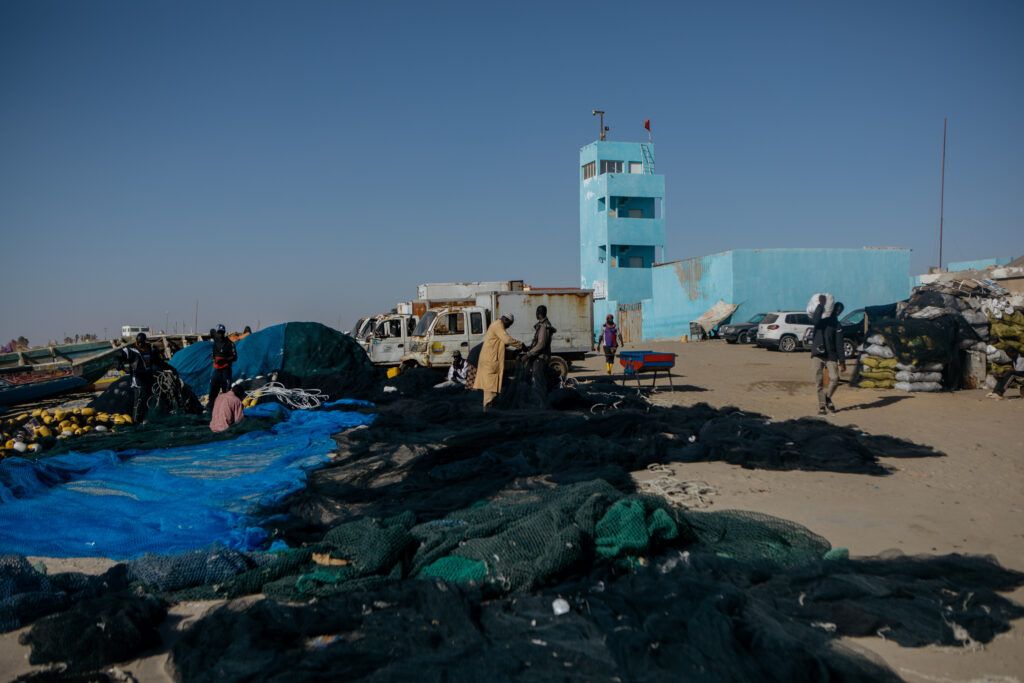
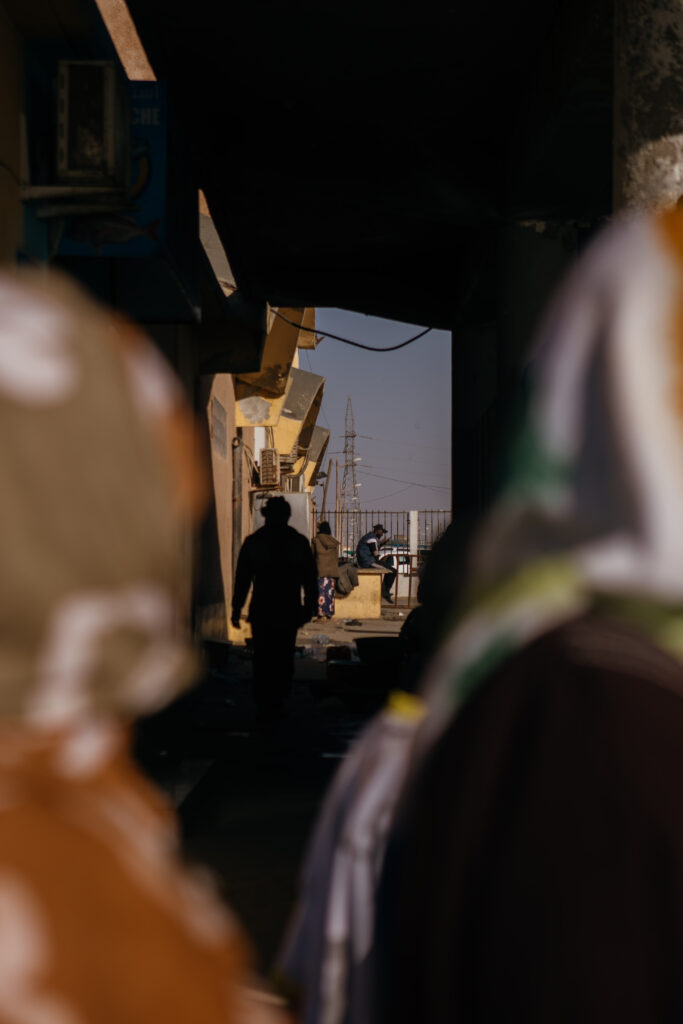
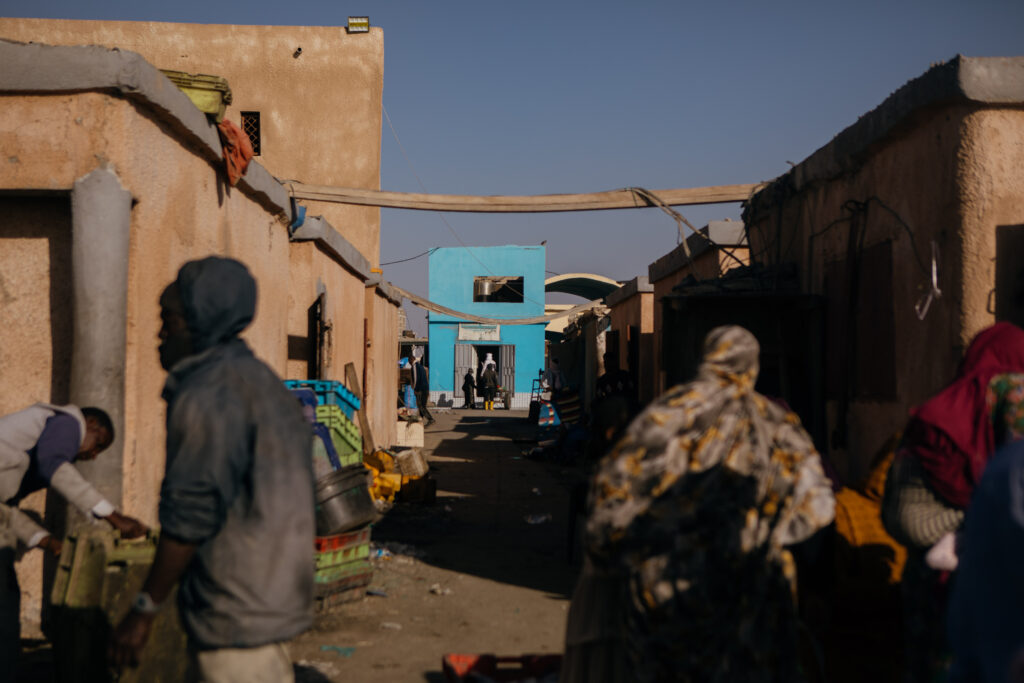
Matallah Ould Ahmed spends his days along the beaches of Port de Pêche in Nouakchott, the capital city of Mauritania, helping to dock and offload the heavy pirogue fishing boats that are traditional to the region, braving the relentless burn from the desert sun. At times, he assists with catching calamari and fish at sea, taking on whatever opportunities are available for him to make cash.
For a decade in his twenties, Ahmed––now age 44–– worked as a driver in the military. He recalls long patrols through the relentless sand dunes, the barrenness of remote desert villages, how his unit encountered a number of intense clashes along the Malian and Algerian borders. “Sometimes we encountered Al Qaeda, sometimes it was stable,” he says from the shade of a pirogue, scratching out a crude drawing of the geography he once traversed in the sand.
A little-known Muslim country in West Africa, sandwiched between the occupied territory of Western Sahara and Senegal, Mauritania is one of the five core nations of the Sahel––a biogeographical band linking North Africa to the sub-Saharan portion of the country, connecting the Sahara Desert with the tropical savannas further south.
Although Ahmed prefers working as a driver to fishing, the military salary was so low he had little choice but to seek other job prospects. Extremists killed his friends in 2005, then again in 2008. Although his tasks at Port de Pêche require far less interfacing with enemy forces or jihadists, there are still extreme physical risks that come with working on the open sea.
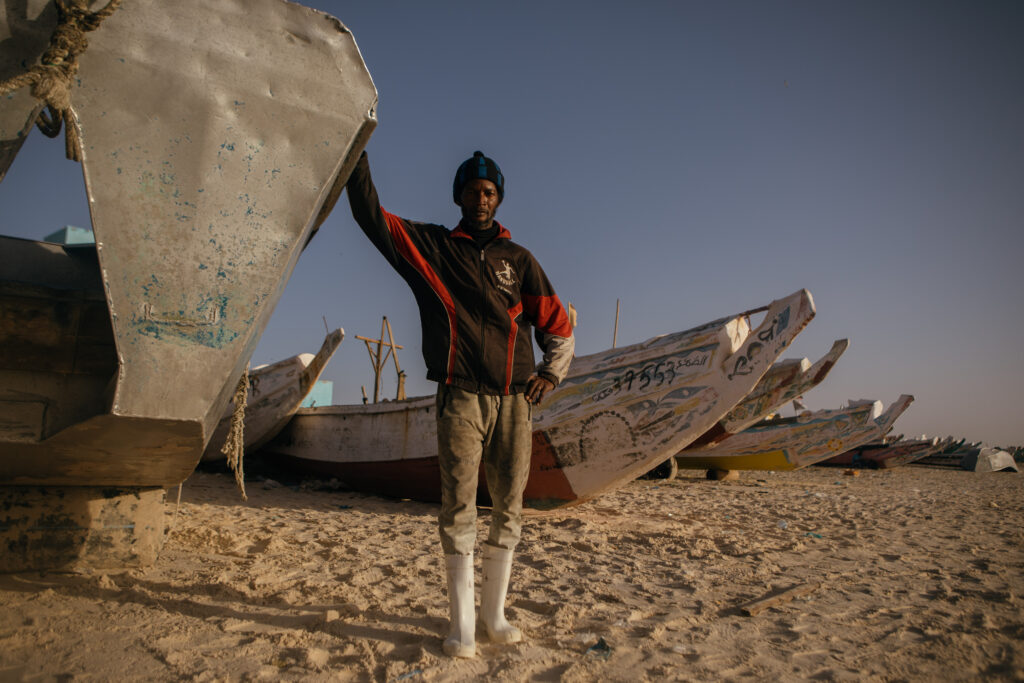
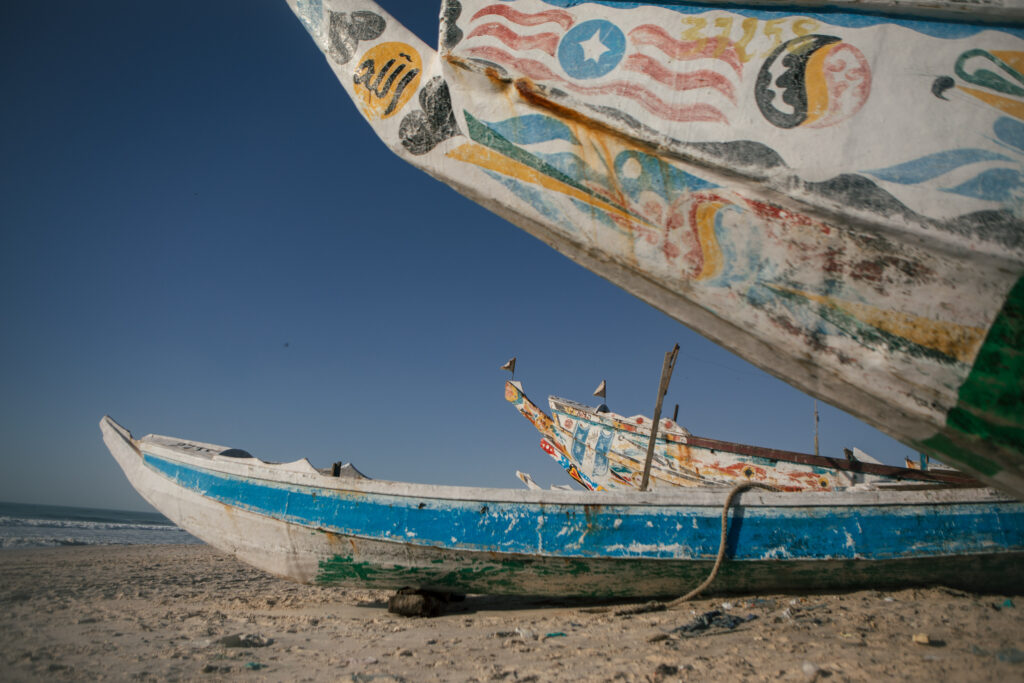
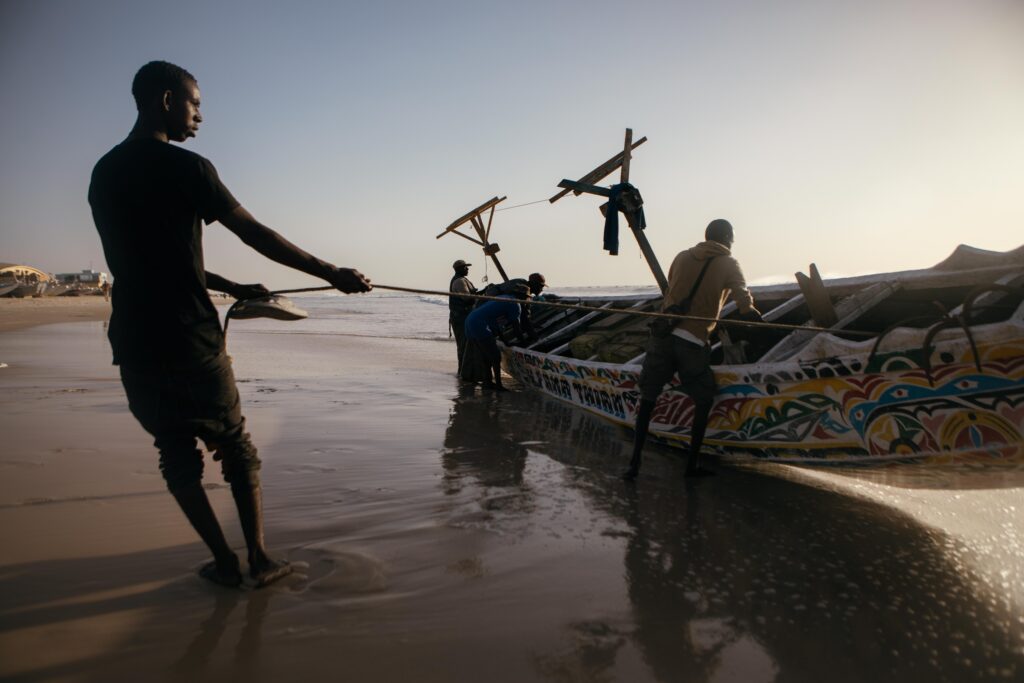
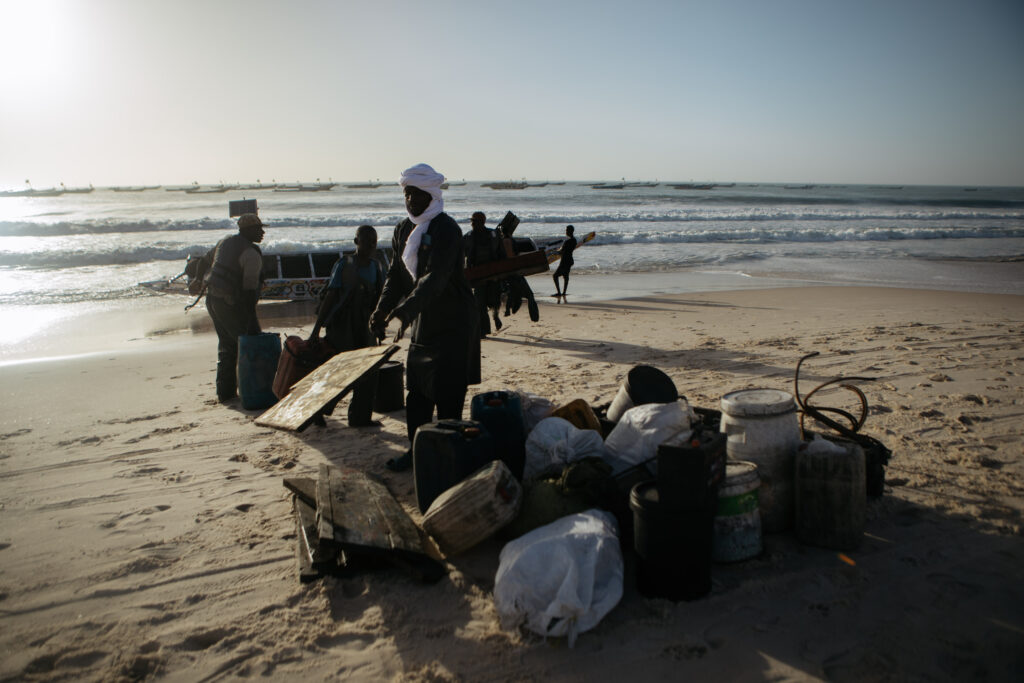
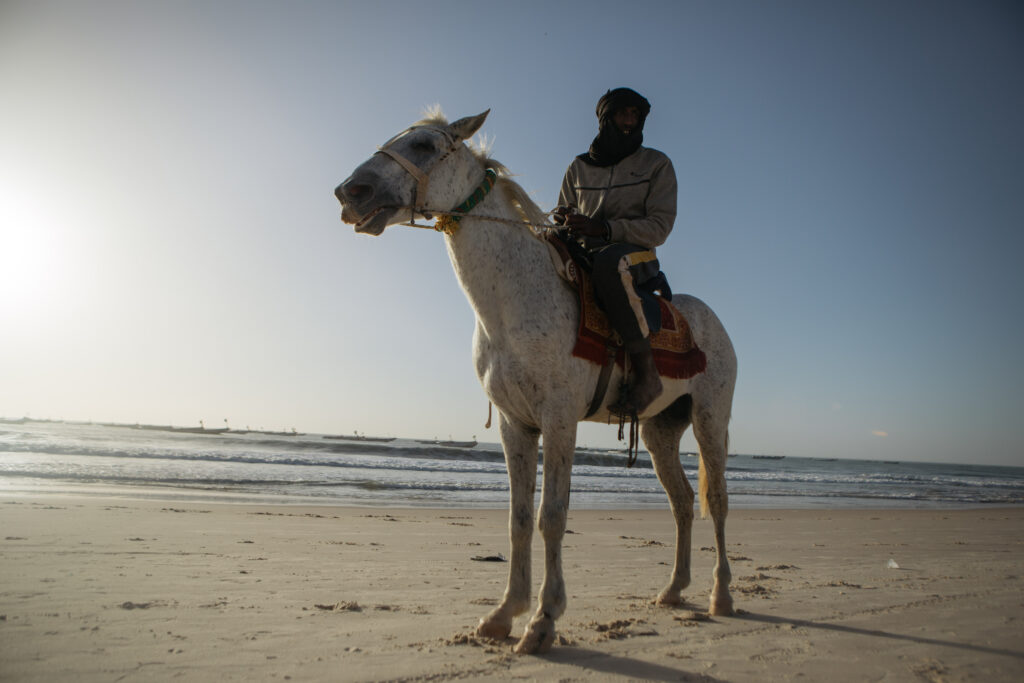
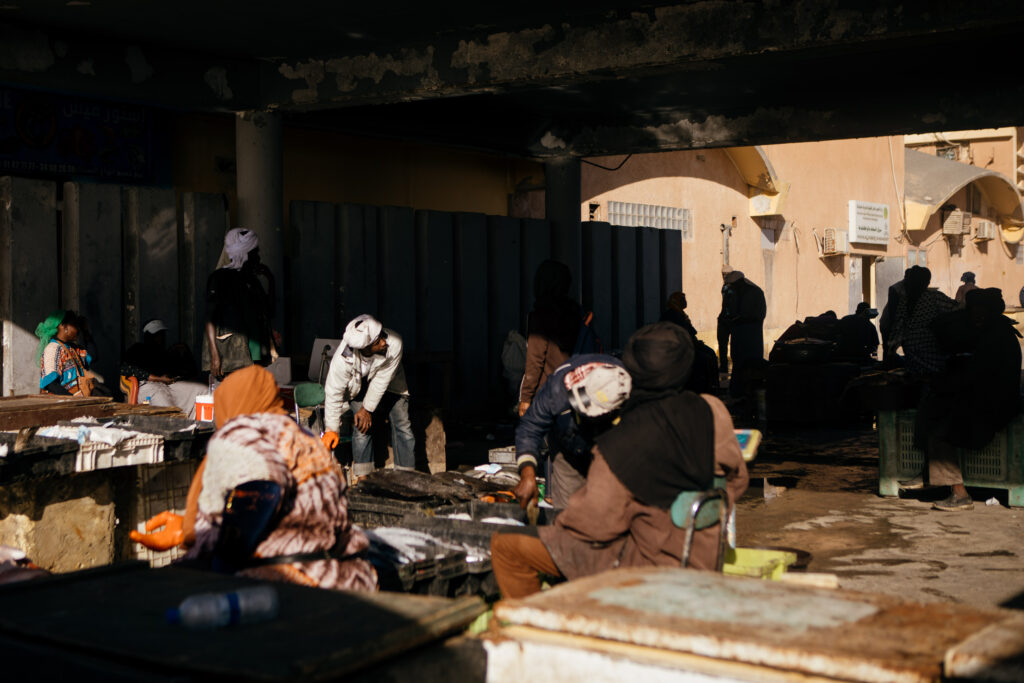
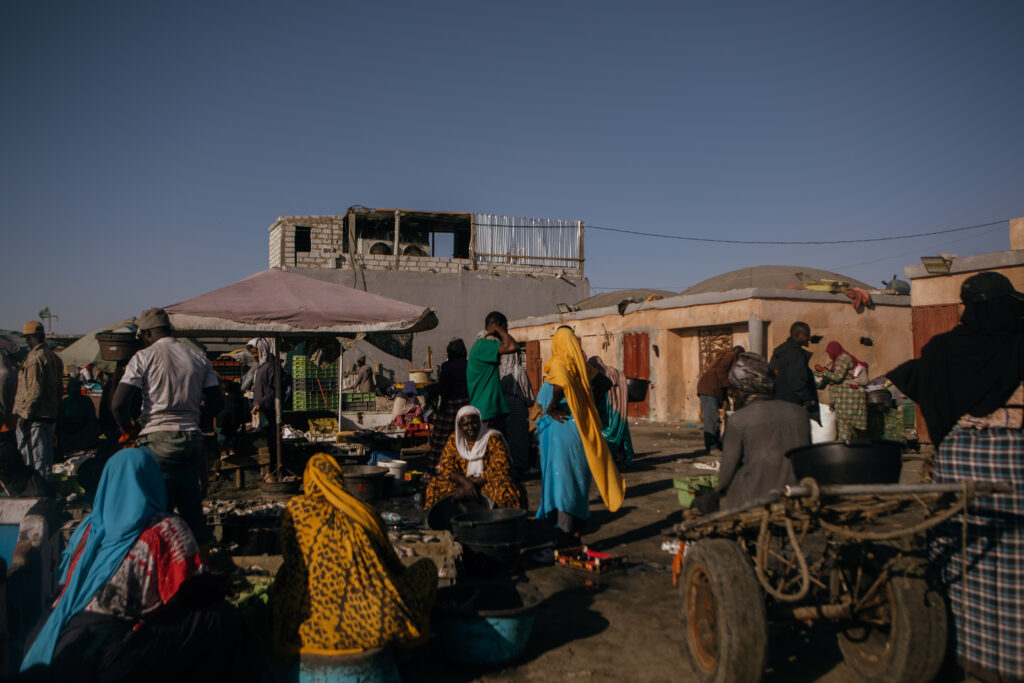
Mauritania’s artisanal fishing sector constitutes 40% of the nation’s total annual catch. “More than half of young boys in Nouakchott and Nouadhibou (a port city further north) work in the fishing sector,” Ahmed observes. An estimated 180,000 people of the 1.10 million workforce are engaged in the fisheries industry, according to the United Nations’ Food and Agriculture Organization.
Getting a job for a young man [in the fisheries sector] is easier than not,” says Daniel Pauly, a marine biologist and the principal investigator of the University of British Columbia’s Sea Around Us Initiative. “Employment also calms things down, in contrast with [bordering] Senegal, where many livelihoods have been completely destroyed by overfishing.”
Although nearly 90% of Mauritania is comprised of unforgiving desert, it boasts a rich, 754-kilometre-long Atlantic coastline––home to an upwelling system that remains one of the world’s most biologically productive ocean regions. Its ocean is home to one of West Africa’s most critical fish nurseries: more than 3000 square kilometers of sea grass, the building blocks for aquatic life and carbon sequestration.
Coastal upwelling is a phenomenon when temperatures on land increase much faster than the ocean, thus creating a temperature gradient that generates local winds––rather than trade ones––stirring up deep, cold water that transfers nutrients to the sun-lit surface ocean and stimulating phytoplankton growth.
The Sahel is one of the places in the world most vulnerable to climate change, according to the Intergovernmental Panel on Climate Change (IPCC): temperatures may rise at a rate 1.5 times faster than the global average. Upwelling is a small product of climate change that is managing to insulate Mauritania from other forthcoming, climate-driven disaster situations thus far, says Pauly.
The 5-million strong population is the African continent’s second-largest producer and exporter of fish products, contributing more than a tenth of total exports in 2025 and 10% of the nation’s GDP. Researchers have found that Mauritania’s economy heavily depends on the fishing industry, which ‘fulfills all the necessary conditions to ensure its prosperity.’
Dyhia Belhabib is a maritime criminal investigator and the principal investigator at Ecotrust Canada, an organization working with rural and Indigenous communities on building sustainable economies. Her fieldwork has brought her across West Africa and the Sahel to speak to fishermen to understand the challenges and conditions they face in their work.
Belhabib’s investigations have found practically no nexus between Mauritania’s fishing industry and terror, unlike its other Sahelian neighbors, like Niger. But like any other coastal nation, Mauritania has been sensing destabilizing climate change impacts on its fishing industry, from changing wave patterns to both declining stocks and shifts in fish species and quality.
Pauly has previously studied rises in the ‘mean temperature of the catch,’ an indicator of the tropicalization of fisheries catches. “When the [ocean] temperature rises, the fish cannot adapt. They must move toward a different pole, Antarctic or Arctic.” This is a very strong process, he continues––one that is irreversible.
The northbound migration of fish schools, toward colder waters, is not lost on Senegalese fishermen. “The fish are moving to Mauritania––let’s catch them before they get there,” he remembers someone saying.
Mauritanian fisheries also face pressures and pollution from regional phosphate mining––a huge motivation and point of contention in Morocco’s occupation of Western Sahara. The few remaining coastal identities, notably that of Imraguens––an ethnic group living on the edge of the Sahara who are traditional fishers––continue facing losses, says Belhabib.
“The massive recreational fishing culture in Nouadhibou is eroding,” she continues, referring to Mauritania’s second largest city, home to a major port. She recalls learning about Nouadhibou’s ‘golden book’ where fishermen there would proudly score their biggest catches. This is a practice going extinct with all the disruptive changes in the ocean.
Ussif Rashid Sumaila, a professor of ocean and fisheries economics at the University of British Columbia, is concerned about the combination of climate change, overfishing, pollution, and perverse government subsidies at play in Mauritania. “I unfortunately don’t think the country’s fisheries are stable and the future is quite disturbing given how many Mauritanians depend on fisheries for their livelihoods,” he tells Icarus Complex.
“I think the current Mauritanian fishing sector is skewed toward industrial fleets, partly due to harmful subsidies provided not just by the Mauritanian government but also by foreign entities such as the EU and China,” Sumaila continues.
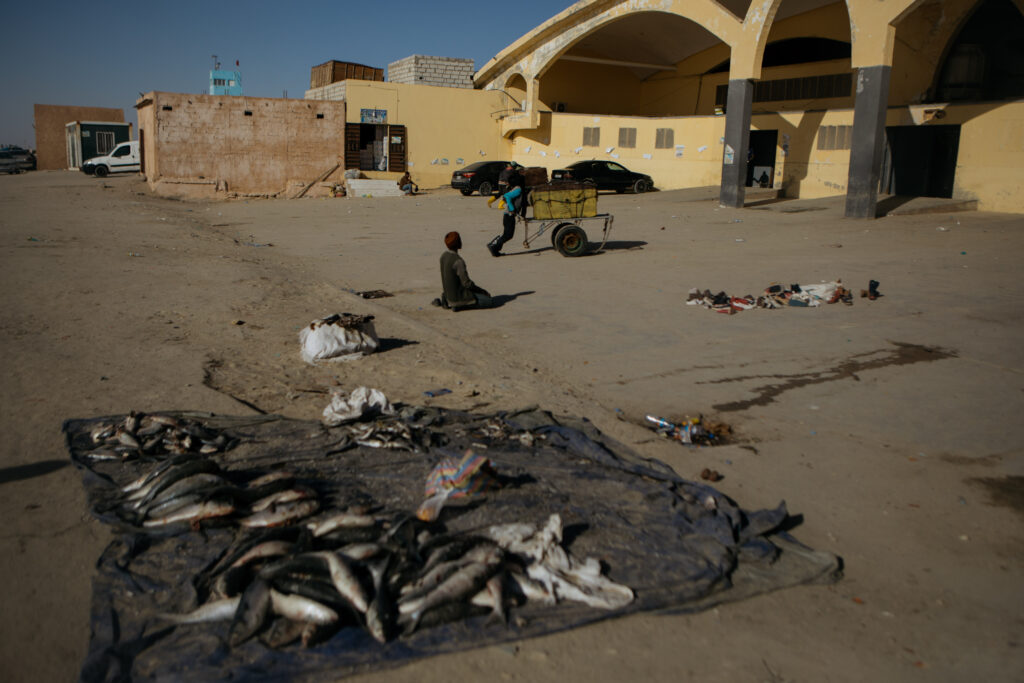
Nevertheless, Mauritania’s fishing industry is robust enough to anchor society for the time being. This sets the nation apart from the rest of the Sahel, which has become the global epicenter for terrorism and Salafi-jihadi activity: at present, more than half of all global terrorist attacks occur in the region, an alarming spike from the 1% less than two decades ago. Since 2019, terrorism-related deaths across the Sahel have increased tenfold.
Lucia Bird, the Director of the Observatory of Illicit Economies in West Africa at the Global Initiative Against Transnational Organized Crime, believes that the link between Illegal, Unreported and Unregulated (IUU) fishing and security is critical yet underreported across West Africa as a whole. “It may not be a direct linkage, where lots of fish means no [human] smuggling, or no fish means a rise in smuggling,” she says. “But it’s clear that the fishing industry is critical to livelihoods in [the West Africa] coastal belt, and therefore plays a role in shaping instability.
“IUU fishing, and the damage it causes to artisanal fishing livelihoods, has been identified as just one of many drivers of increases in instability, and in illicit economies, such as maritime migrant smuggling from Senegal, or increases in piracy incidents off the coast of Nigeria,” Bird explains.
Salafism is a fundamentalist Islamic movement that typically renounces religious innovation, instead supporting the implementation of sharia (Islamic canonical law). On the other hand, Sufism––the dominant Islamic interpretation across Mauritania––focuses on the spiritual path to achieving a mystical union with Allah. As my Mauritanian fixer explained, Salafists focus on the external: laws regarding societal Islamic practices, and the prosecution of those who do not adhere, while Sufists devote their attention internally, on their personal relationship with Allah.
Since Mauritanians are mainly Sufis, they are perhaps more reasonable and better in business, Pauly observes.
The Sahel’s security architecture is complicated by the proliferation of non-state actors (e.g. politically-motivated armed groups, self-defense militias, state-sponsored local security outfits, brutal extremist groups) and the messy withdrawal of French military presence from its former colonial territories. The Mauritanian government’s official position is one of absolute denial. “Everything is fine, we have absolutely no issues,” a researcher recounts from limited interactions with governmental officials.
“Mauritania is a real rock when it comes to ensuring stability at sea,” according to Belhabib. “Of course there’s work to be done in terms of licensing transparency, although they are very good at monitoring the seas and have a pretty good control and surveillance system [on illicit vessels].”
Pauly believes that since Mauritanian culture as a whole is not oriented to the sea––with the exception of the small Imraguen community––considering its origin in nomadic and pastoral traditions, this relative non-attachment helps them handle the business of fishing rationally. “Mauritania was made aware of fishing by Japan in the 1950s––one of their first foreign fishing ventures was there,” he explains,
Belhabib agrees, saying that Mauritanians are the best in the region when it comes to negotiating trade agreements with the European Union. “It must be the Arab blood,” she says. “They bring in the numbers and get what they want.”
She also cites the lack of overlap into what Mauritanian populations are consuming and what the nation exports. Further south in Senegal, the culture of women processing fish by traditional means––mullets and whitefish in particular––is far stronger than in Mauritania. “[Fishermen] may be very invested in their work and fishing conditions, but since people consume a certain type of fish, it doesn’t bother them to see products like fishmeal or oil going somewhere else.”
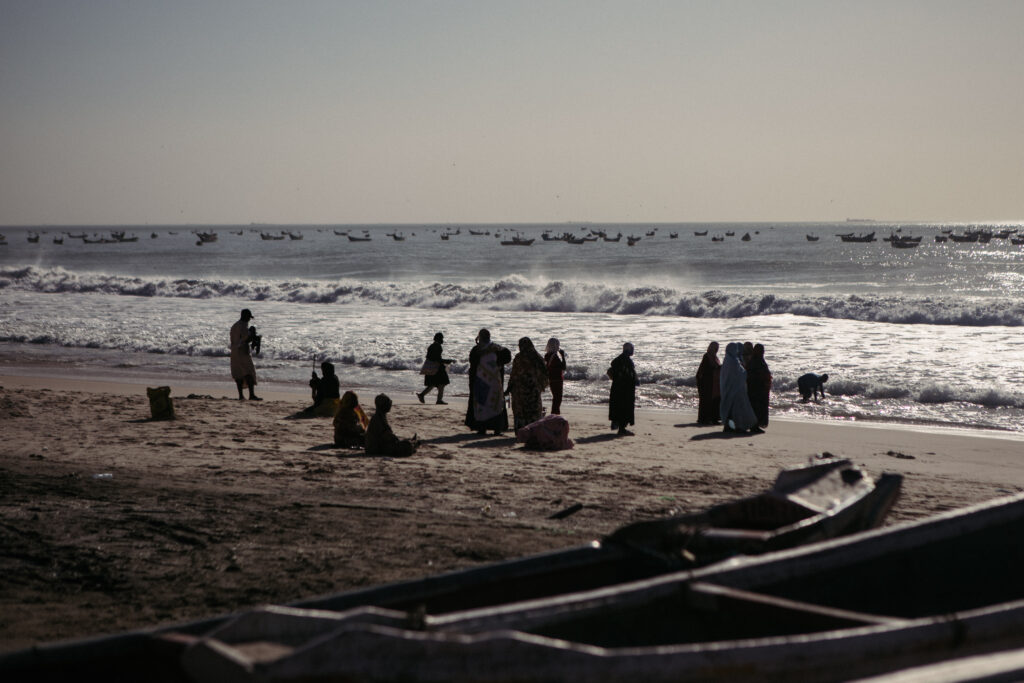
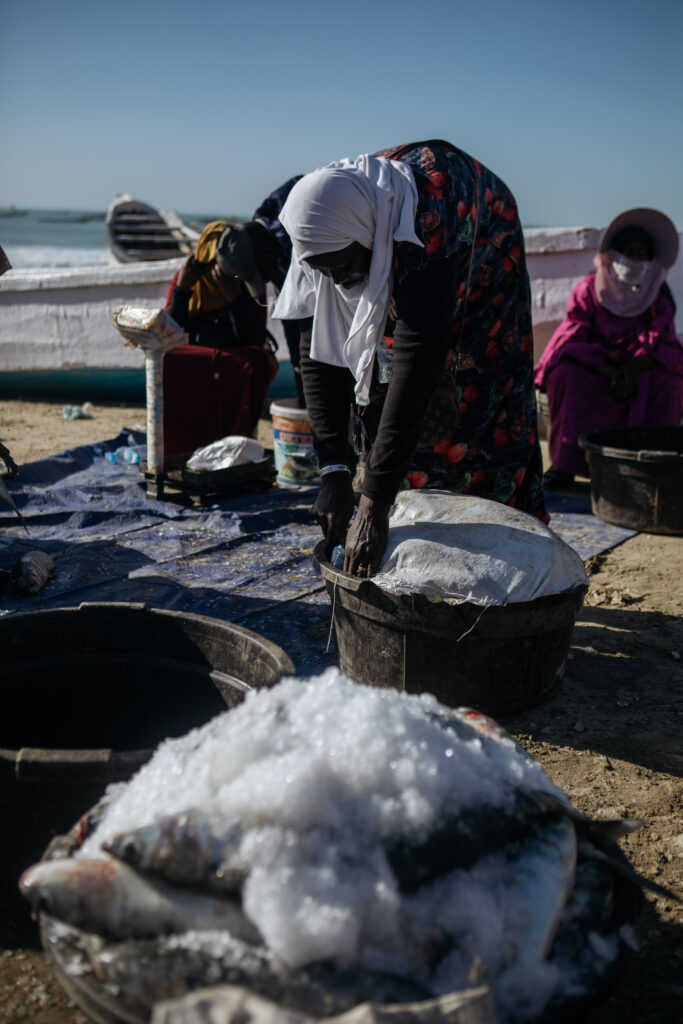
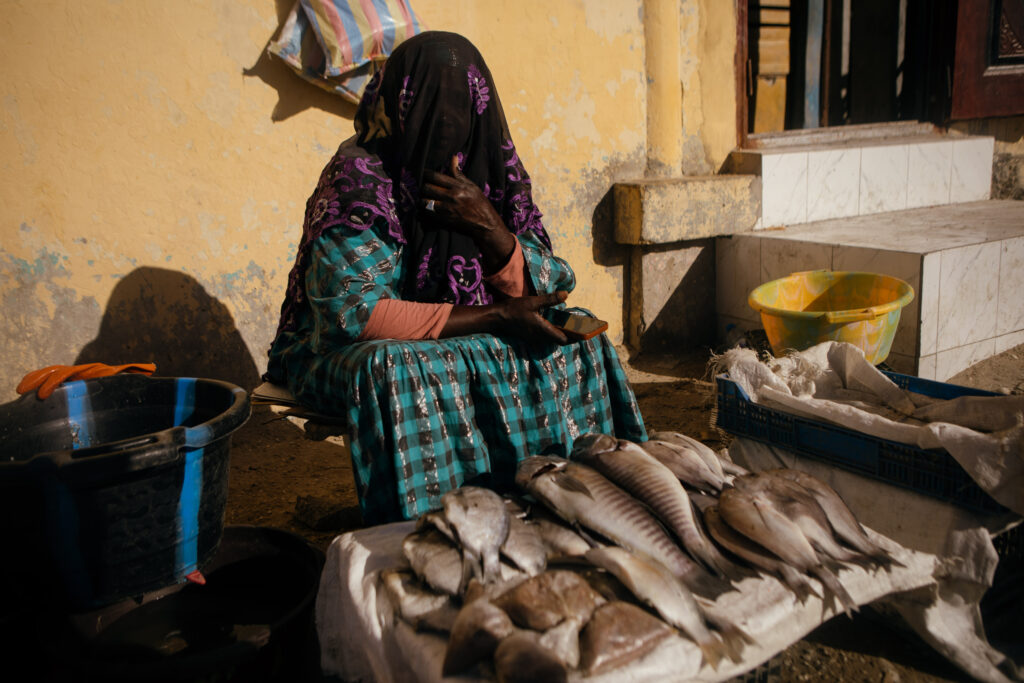
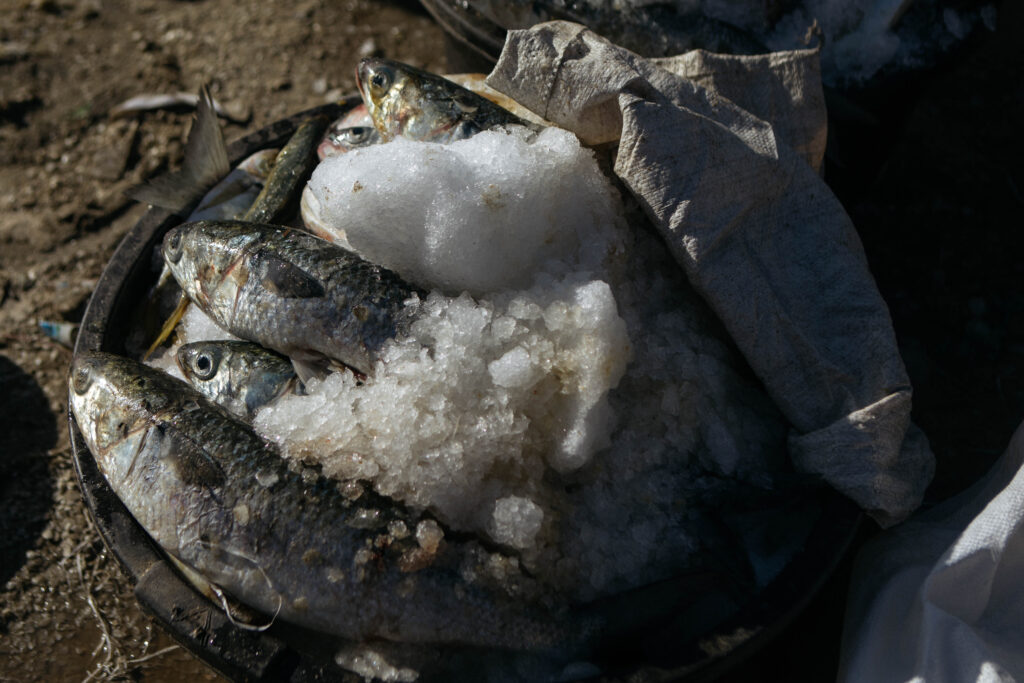
While official data maintains that fish consumption in Mauritania fluctuates between 3 and 17 kilograms per year, depending on the area of interest, surveys show that fish consumption may be as high as 80 kilograms per person annually for the Imraguen and those residing in N’Diago, an urban commune in the southwestern Traza Region. “And there are Bedouins in the desert who consume canned fish, some of their only access to protein,” she adds. “Just because [westerners] don’t know much about the traditional protein intake, doesn’t mean it doesn’t exist.”
“We are a state of peace. Yes, the majority of Mauritanians may be very poor—sometimes we can go 1 to 2 weeks without good money,” Ahmed the fisherman shares. All the fishermen we spoke to mentioned the unpredictability of the sea and the catches they depend on to feed their families.
Although Ahmed is aware that Mauritania holds some of the best fish stocks in the world––with over 90% of production destined for exports––he and his colleagues do not see the fruits from that. It’s nearly 6 in the evening; the edge from the scathing heat is finally taking a turn. A pirogue is docking, the crew hurrying to offload their catch to buyers waiting on the beach. We look toward the bright-white horizon, at ceaseless, mercurial waves bringing in both hope and burdens. “But the ocean does contribute to our stability.”
Ely Cheikh Mohamed Vadel contributed to this reporting.