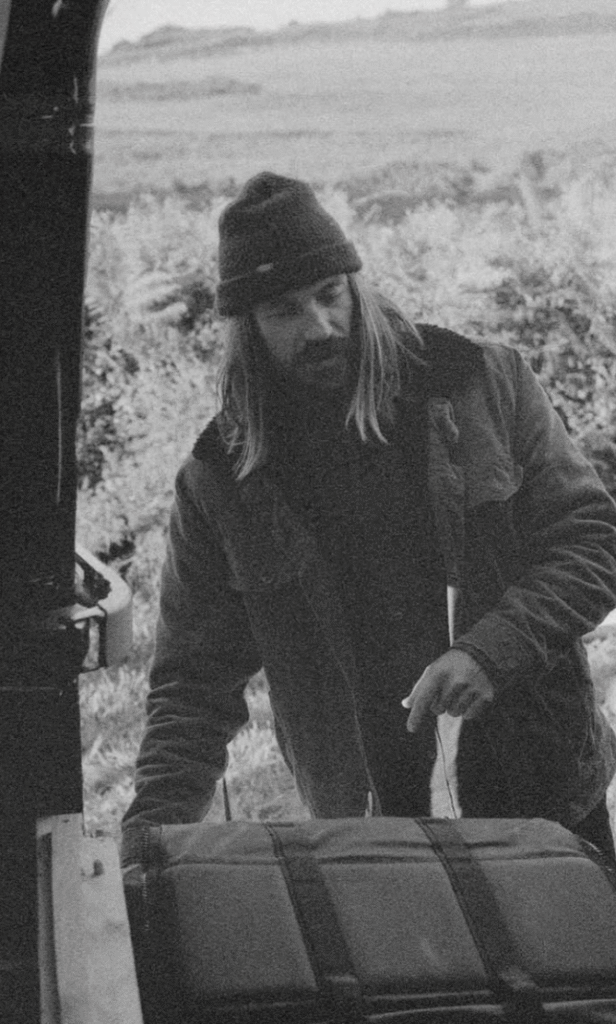
Dylan Graves on protecting his home break, and how it takes community to protect what you love.
Dylan Graves is an influential surfer and storyteller. His quest for Weird Waves is rooted in his childhood in Puerto Rico, where his adventurous parents—surfers and nature lovers—settled after sailing the Caribbean in search of unridden waves.
Through his YouTube series, Dylan explores unusual surf spots around the world. But his stories go beyond waves, amplifying marginalised voices in global surf communities and advocating for threatened coastlines.
In our conversation, Dylan shares what surfing stewardship means: knowing your local break, reading every current, recognising local species, and spotting threats to precious ecosystems early. We grapple with our responsibility, role, and options as surfers in protecting the waters we love amid the challenges of an uncertain future.
LB: So, Dylan, let’s start from the beginning. Tell me about your early connections to the ocean, and introduction to surfing.
DG: Both my parents were surfers, so the love is generational. My brother and I were always at the beach with them by default. The water stays warm all year round in Puerto Rico, so it was the perfect scenario to fall in love with the ocean.
Of course, you have your own journey with the ocean and find your own reasons to love it. But for me, that love stemmed from my parents’ passion for the sea and from looking up to my brother, watching what he did out in the water.
We grew up at Hobo’s Beach, our home spot. There are some crazy currents around there—an eddy that goes around in a circle where a lot of beachgoers end up getting sucked out. So by just knowing how to swim and surf and understanding those currents well, you end up helping people, even at a very young age. That’s what the ocean and Puerto Rico taught me growing up. Having that local ocean knowledge and being able to surf meant that my brother and I naturally became ocean stewards.
I loved surfing so much that pursuing a career wasn’t far off. Doing competitions for a while eventually turned into the career I have today. Growing up in Puerto Rico and having all those different aspects of nature and the ocean, I was incredibly fortunate. Hats off to my parents for moving to Puerto Rico—it’s had such a profound effect on my life.
LB: You strike me as a successful pro and free surfer, but maybe first and foremost, an epic storyteller. The stories you share online, the different topics you cover—that’s something I really enjoy, and a lot of other people do as well.
But it wasn’t until your Weird Waves episode, Surfing Wedging Slabs in Puerto Rico about the wave called Secret Spot, that I started to see you as an environmentalist. You used your platform and voice to advocate for that place and its protection. Is that what you mean when you mention being a steward of the ocean?
DG: I don’t know. Don’t you feel like as a surfer, just by doing what we do, that you kind of end up being somewhat of an activist or ocean advocate?
LB: Honestly, I would love for that to be the case, but I do think surfing is very individualistic at times. Of course this individual experience is part of surfing’s beauty, but I feel like surfers and the surf community can be a bit passive when it comes to being ocean advocates. I feel like we struggle with getting active or pulling together on one string for ocean advocacy to protect the ecosystems and places that are such an integral part of our lives.
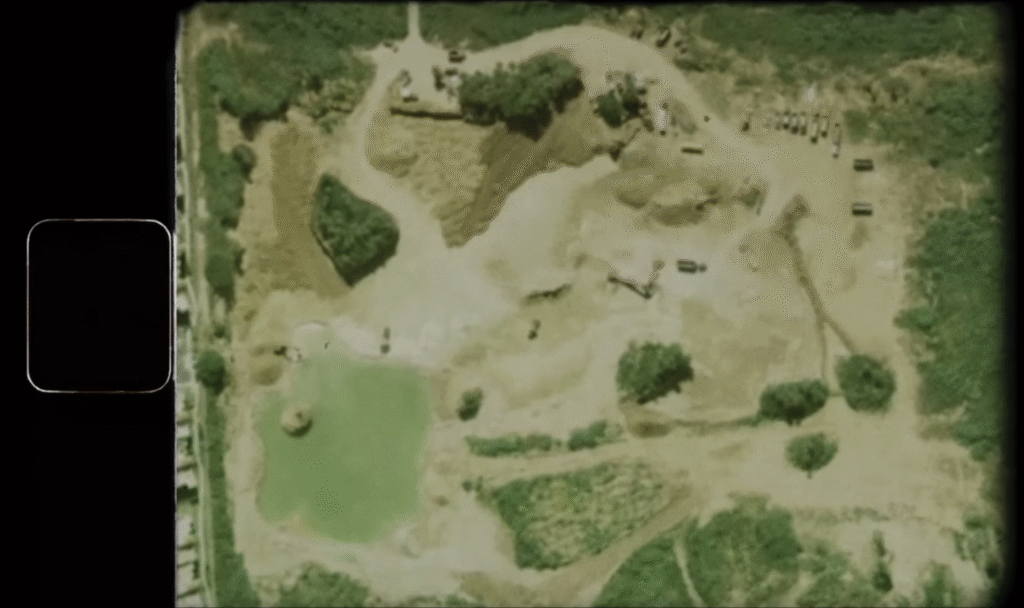
DG: Surfing is and it isn’t individualistic in my opinion. I guess it depends on the community you’re in. For example, in Puerto Rico, I feel like most of the surfers are very much connected to the ocean there. To touch on that specific episode you brought up—if it wasn’t for my friends who surfed the specific wave I covered in the episode, that wave and the stretch of coastline could have had a huge resort or apartment complex on it by now.
LB: That speaks to how surfers can be the first to wave the flag about threats faced by a coastline. Can you tell me more about the tensions that took place there?
DG: Someone had bought this land that was meant to be protected by the government. I don’t know how it slipped through the cracks, but essentially my friend was down there one day checking the waves when he saw a bulldozer heading toward the mangroves right behind the beach.
He knew immediately what was happening because that’s something that occurs around the island a lot. There are many zones that are meant to be protected by the government, but developers will hire someone to basically flatten the place. It’s not legal, but the moment a zone is destroyed and it’s no longer an intact natural resource, it becomes easier to get the permits to develop it.
There have been a lot of cases in the past where people have just come in and ruined these zones, then said, “Well, that sucks. How about we develop it now?” The government’s response is often, “Well, I guess we could because it’s already ruined.” It’s definitely a well-known tactic on the island.
My friend has been involved with different environmental projects over the years, fighting and opposing projects like this, so he knew exactly what was going on. He drove his car in front of the bulldozer and blocked the way. Later we found out that the privatisation of that stretch was also part of the proposed plan, making the beach and wave only accessible to guests of the resort.
Puerto Rico is such a biodiverse place on so many different levels, and especially this specific spot with mangroves growing behind the beach. Mangroves are endangered on the island, and they’re home to so many different creatures. It’s not just nice land—you take that away and the whole area and ecosystem changes.
“The moment a zone is destroyed and it’s no longer an intact natural resource, it becomes easier to get the permits to develop it.”
LB: Was that episode and that moment when your home break was under attack, your first time participating in local environmental action?
DG: No, it wasn’t, there were several times. I’ve been supportive of protecting a place called Plajuela. They were trying to do the same thing there as at Secret Spot. Plajuela doesn’t have mangroves, but it has other resources like a subterranean aquifer.
The proposed plans were to install this mega resort called the Christopher Columbus Landing or Christopher Columbus Resort—which was so wrong on so many different levels, from the name itself to the planned construction. They wanted to channel their sewage system through the subterranean aquifer. I was shocked. I remember thinking to myself, “Wow, this is just so cooked.”
You see, you have this incredible resource there—the purest water in the world—and you’re going to literally put shit through it. I remember just being so mad about it. Why? There’s just no need for that.
LB: That’s so crazy. What ended up happening?
DG: There were marches, and they’re still fighting the same project even now. That’s been going on for almost 20 years. The land is owned by someone, so they’ve been trying to come back and do different versions of the project since then.
As far as I know, the mayor of the town is involved with the project as well—it feels like there’s corruption even before they put the first shovel in the ground. But there’s been a lot of support from the local community and the island at large. There are now many different entities in place that help fight these kinds of things.
LB: Surf communities often value keeping spots secret, but as you showed in Weird Waves, strategies surrounding environmental protection sometimes involve making a place known and appreciated by the public in order to be truly defended. How have you navigated this dichotomy—and what advice would you give others facing a similar dilemma in their local spots?
DG: I think it’s a case-by-case thing. As coastal communities grow and get more popular, and more and more people start to surf, I think these are conversations we’re going to have a lot more moving forward.
As far as the surfer’s code goes, I’m well aware that keeping places secret has always been part of the sport in the past, and I think that still applies for the most part. There’s no blanket answer for all waves—it’s really complex.
But for this specific wave, with the destruction and privatisation it faced, there was a tipping point for me. I realised, I would rather share this wave and my favourite spot with the rest of the world than lose it forever.
It’s the unfortunate future for us as surfers, and it’s up to us to educate people moving forward, whether we like it or not.
LB: Right. So, how important is education in your work as a storyteller?
DG: Education is a major driving force in the videos I create and all the media I’m trying to put out. One of the main things that made me want to start doing media and have a voice was after a Category 5 hurricane hit Puerto Rico.
The island and the surrounding region got hit with two hurricanes back-to-back. It was very intense. I was volunteering for Waves for Water—we were setting up water filters around Puerto Rico, making sure people had clean drinking water.
After that whole experience, I just felt the need to create a platform. There was a need to spread information like this and other stories to more people.
That specific scenario really made me want to sharpen my skills on how to get a clear message out and educate myself on topics like that.
What naturally comes with my trips and the stories is a lot of learning on my part. I get to know all these different surf communities, I’m able to understand how to connect with all these different people and see different perspectives. My journey as a storyteller has been a really cool learning process for myself.
LB: So from your perspective, what role can or should surfing have in environmentalism and ocean conservation?
DG: In my opinion—and I know this is very simplistic and maybe utopian—but I think we need world leaders, people making the decisions, out in the water. We need them to nourish the perspective we as surfers naturally gain from being out in the ocean and nature, experiencing the physical, emotional, spiritual effects of being out there. We have this practice of interfacing directly with nature on a daily basis, feeling hugged by our planet, essentially. I think getting world leaders, decision makers, out into the ocean would make the world a better place.
We’re all just existing on this planet. What a blessing. We’re just standing, floating on this planet in space. That’s fucking unreal. We don’t have to do anything. We’re just riding this rock through space.
People are looking to change the world and there are so many things we can’t control. But we can control ourselves, how we feel, how we think, and maybe most importantly, how we individually can connect with nature. I think if we all started doing that, interfacing with nature directly, it would put us in a pretty powerful place as a world.
LB: Ocean conservation is complex, with issues ranging from overfishing to ocean acidification, coral reef destruction and plastic pollution. How do you think surfers can tap into the connections they have to the ocean to engage with the, oftentimes overwhelming challenges involved in ocean protection?
DG: Marine conservation is something that’s really important for us as a planet moving forward.
Right now we’re mainly land-focused—all attention is on land, policies on land, human rights. It does feel a little overwhelming to bring the ocean into that conversation, but I think that’s what we’re going to need to do to make sure we aren’t doing any irreparable damage as a species.
It starts getting really complex, and that’s when I feel like it isn’t necessarily a worldwide blanket decision for everybody. I think it does come down to communities, something that would be cool to really understand, is how to have your waterways and your immediate coastline be part of your community so you can look after that. The ocean is so nebulous and there are no borders—that’s why it’s just the wild west out there.
Watch the full episode of “Surfing Wedging Slabs in Puerto Rice with Dylan Graves” on YouTube