Migration unsettles fixed ideas of ownership and belonging, creating space for collective practices of regeneration.
From her high-street flat in East London, Dalia Al-Dujaili reflects on the irony of feeling suffocated by sky. With no trees visible from her window she heads to nearby Victoria Park, finding solace among oaks, poplars, London plane trees, and the seasonal bloom of roses and figs in the cordoned English Garden. This rich diversity of species forms the basis of Dalia’s connection to Britain’s lands.
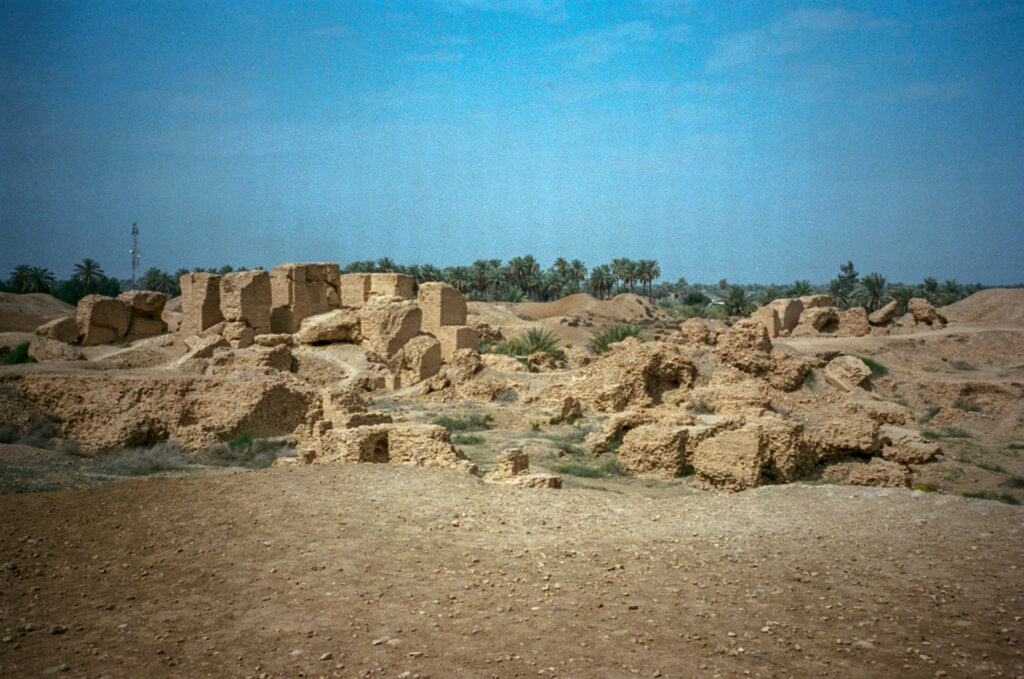
Her debut book, Babylon, Albion, described as a nature-memoir, traces her relationship to land “through the lens of the natural world, always grounded in an ecological perspective.” An Iraqi woman born and raised in the UK, she stirs transcontinental mythologies, family history, and personal memory to explore what it means to forge a homeland in a new land. Dalia’s creative and community work—from serving as Online Editor at the British Journal of Photography, to founding the magazine Road to Nowhere, and establishing the Iraqi archival library Hikma—extends this inquiry on ecological belonging across multiple mediums. Her work points to the ancient stories and contemporary politics that shape the systems through which we relate to land, even as migration reconfigures our belonging.
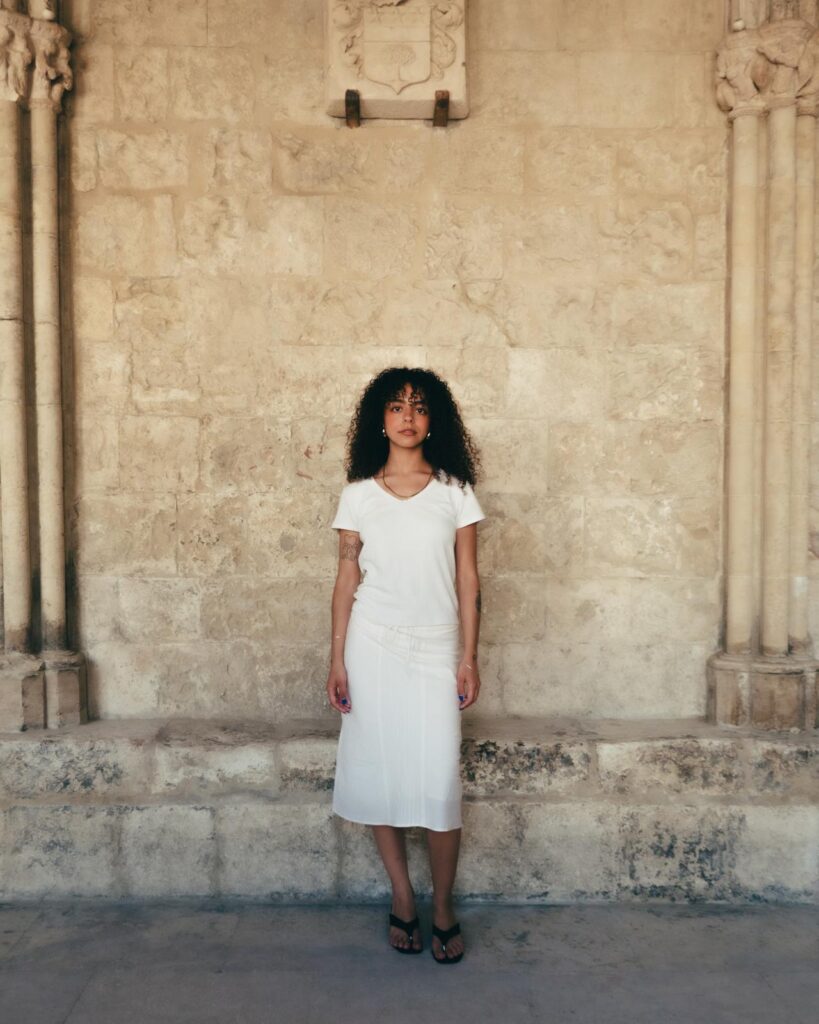
Yatou Sallah: Dalia, in Babylon, Albion you express a dual yearning: to remain rooted in your ancestral history in Iraq and Mesopotamia, but also to connect the ecologies where you grew up in the UK. Has balancing these two desires always come naturally?
Dalia Al-Dujaili: I would say that it probably does come really naturally. I think many diasporic people are very adept at shape shifting or code switching. Modern politics has this obsession, and often pressures us to settle on a fixed identity, but historically, culture and identity have always been fluid.
YS: I’m really glad you brought up shape-shifting and code switching. I feel like that in itself becomes a form of communication that we, as diasporic people, craft. How did the nature-memoir as a form of communication allow you to express both personal experiences as well as broader systemic stories of ecological loss?
DA: I grew up in a semi-rural area in Southern England, and the natural world has always been an anchor in my life—in how I relate to the world, people, my culture, and my identity. It felt like the only way to do the story justice. I also wanted to show that our cultures and identities are deeply built around the natural world and different species.
For example, the oak tree and the date palm are the starting point of the book. The oak is a symbol of British culture and identity—even from Celtic and pre-Christian pagan identity. While the date palm is an iconic symbol of Iraqi and Islamic heritage. Recognising these symbols shows how intertwined our identities are with trees, plants, and rivers, making it impossible to exploit them without impacting ourselves.
I’m not an expert in climate change or ecology, but as a human living here, I care just as much.
In Iraq, palm trees are being cut at an industrial scale for development, which undeniably supports infrastructure and the economy, but often with no respect for the cultural significance of what is lost. Making this point was vital for me, because we can all see the degradation of the natural world. I’m not an expert in climate change or ecology, but as a human living here, I care just as much.
YS: Yes, you provide so many examples of the ancient rootedness of plants and ecology in Iraq and the UK! It was especially interesting to think about how memory and remembrance of this rootedness can guide both belonging and the revival of traditional land-based practices for ecological repair.
At the same time, as I was reading I was thinking about how memory can be manipulated through fear, to shape new narratives of hostility. Anti-immigrant rhetoric today often leans on myths of scarcity or loss, suggesting people’s access to resources—or national identity itself—is threatened by migrants. How do you see these forces of fear and rhetoric interacting amidst our current political tensions?
DA: A few things come to mind. Recently, far-right marches in the UK have used the St George’s flag as a symbol of “unchanging, authentic Englishness.” Yet, St George—the saint behind the flag—was born [in Cappadocia under the Roman Empire] in modern-day Turkey, to Syrian and Palestinian parents and never set foot in England. So, this “quintessential English” symbol is actually tied to the very people that some protestors fear coming to their country.
Other symbols tell a similar story, and it’s ironic that these symbols, meant to define British identity, aren’t authentically British, while the country’s own natural heritage—its species, landscapes, and ecological diversity—has often been forgotten. A central aim of the book is to remind readers of this heritage and encourage connection to the more ancient, authentic parts of ourselves, rather than the problematised symbols used in hostile rhetoric, which in my view, are narratives largely manufactured by political elites.
Similarly, narratives of land scarcity feed anti-immigrant sentiment. There’s this perception that the UK is overcrowded and resources are limited. But, as Jon Moses of the Right to Roam campaign notes, only about 1% of land is publicly accessible here, with so much held by private estates or the military. Scarcity as it relates to land, then, is less an accurate reality and more a function of who controls access—showing how hostile narratives of fear and loss are constructed ones.
YS: Right, in the book you explore the historical forces that shaped the UK’s land ownership and access—from the Highland clearances, to the criminalisation of Roma travelers, and land seizures by aristocratic or imperial elites. I think it’s really important to recognise how many systems of land ownership are underpinned by the forced removal of people from land, at the same time as restrictions of people’s movement across land. However, you also caution that “ownership itself isn’t inherently harmful.”
How might unsettling the way our modern systems frame migration, open the door to a practice of land ownership that’s rooted in stewardship and responsibility rather than extraction?
DA: Yes, I mean, migration is a vital, natural phenomenon, in both human and ecological worlds. I think that migration enables this kind of “objective” perspective, in the sense that you relate to land in a less biased, less materialistic way. When your heritage isn’t bound to a particular place, you can appreciate its beauty without thinking of land as exclusively yours. Saying “this is mine” often creates a mindset where formal ownership serves as the permission one needs to exploit and extract. Meanwhile, other lands that one doesn’t own are considered irrelevant and disconnected. But this is inaccurate, because the Earth is one interconnected ecosystem. Migration can open up that understanding of the links and connections. This is much like how political elites try to frame social issues as separate and unrelated—capitalism as separate from climate change, or racism separate from feminism—when in truth they’re all connected.
“Saying ‘this is mine’ often creates a mindset where formal ownership serves as the permission one needs to exploit and extract.”
On ownership, not all of it is inherently harmful. Ownership can also be about responsibility: managing and maintaining land so that it remains healthy for future generations. Nature Iraq, for example, proposes to purchase land to protect endangered species like the Persian leopard of the Qarah Dagh mountains in Kurdistan, from poaching and deforestation—essentially creating a sanctuary through intentional stewardship. There are also people like Miriam Rose, of Hardwick Estate, who is opening her inherited estate to public ownership for the first time in the UK, exploring what community stewardship can look like in practice.
It comes down to the intention behind ownership—how you see your relationship to the land you hold. As we’ve learned from Palestinians in recent years, there’s a crucial distinction between a coloniser who describes the land as belonging to them, and Indigenous people who describe themselves as belonging to the land.
YS: Throughout the book you really show how these regenerative relationships to land are cultivated and navigated.
On the other hand, in the chapter “Holy Water”, you describe Saddam Hussein’s draining of the Iraqi marshlands, which marks the weaponisation of those relationships. Could you explain what happened there, and the similar patterns of ecocide that are unfolding in the region?
DA: It’s the ultimate form of subversion—using a people’s land against them. It’s so perverse because land is supposed to be a source of nourishment and life. For the Marsh Arabs, whose relationship with the wetlands was deeply symbiotic, this was especially true: they supported the marsh ecosystem, and the marsh supported them in return.
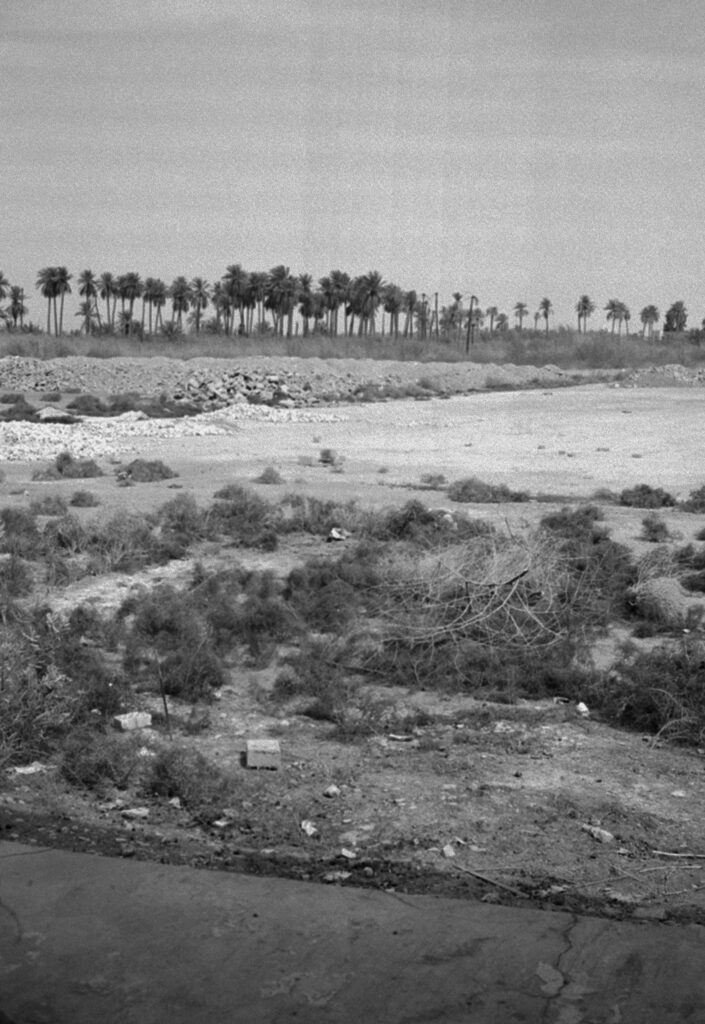
Saddam Hussein’s draining of the marshes weaponised that relationship. It happened after the Gulf War in the nineties, when Shiite rebels—opponents of the Ba’ath Party—were using the marshes as a hiding place and tried to overthrow the government. The high reeds and wet terrain made the area hard to traverse, giving rebels a natural advantage. Draining the marshes allowed Saddam’s forces to move easily through the region and acted as a form of collective punishment, cutting the Marsh Arabs off from water and livelihoods. Many were forced to leave for cities, and the long-term cultural and ecological damage was huge. This tactic wasn’t isolated. I tell the story in the book of my father’s village—Dujail, where I get my name—where in 1982 after a failed assassination attempt on Saddam, he massacred the men and boys and ordered the surrounding palm trees to be cut down.
Some incredible people later worked to reflood the Iraqi marshes—one of them was our family friend, Azzam Alwash—but the marshes never fully recovered. In Iraq, the marshes themselves are extraordinary—arguably the most important place in Iraq, and among the most important ecosystems in the world—yet they receive so little global attention or support. And their current struggles aren’t only the legacy of Saddam. Reflooding never restored them to their original state, and now climate change, combined with the impact of dams built by Turkey and Iran—that reduce the flow of the Tigris and Euphrates—means far less water reaches the wetlands today. Iraq as a whole is facing severe water scarcity.
This logic and pattern is something we still see today in Palestine, where settlers and the IDF routinely destroy olive trees and livestock to turn the land against its own community. Yet, what we do see is that trauma often transforms into resistance. You see this especially among Palestinians who are steadfast in their commitment to maintaining and nourishing the olive trees and keeping cultural practice alive through things like creating olive oil.
A lot of the book is really about sitting with that heartbreak and asking what it means to love a place that has been damaged beyond repair, and how one carries that forward.
YS: That idea of trauma and heartbreak transforming into resistance feels quite foundational to so much grassroots action on environmental justice. What initiatives around you have helped kindle hope amidst the global tensions unfolding on land?
DA: There are so many incredible initiatives and movements. The one that comes to mind first is the Right to Roam movement which started about ten years ago and has since gained a lot of traction. They were successful in stewarding areas like Dartmoor and protecting it as a public space where people can legally roam freely. I think what’s powerful about it is the idea that local action can have wider reverberations—it shows how something happening in one place connects to broader struggles over freedom of movement. I think they say think global, act local.
Globally, we’re seeing borders being tightly policed: ICE raids in the US, boats turned back in the Channel to France, people stranded and left to die in the Mediterranean. In that context, something like Right to Roam—that focuses on legal rights to move freely on land locally—resonates as part of a wider need to protect movement more generally.
Another thing that excites me is how people carry pieces of their homelands into the landscapes where they live currently. I remember speaking with Layla Feghali, who wrote The Land in Our Bones—she’s Lebanese and grew up in California—and we bonded over how we both adore the landscapes we grew up in, even though they are so different from our ancestral homes. She spoke beautifully about carrying a piece of her homeland wherever she is, and I feel the same about Iraq. People translate rituals, heritage, and ancestral knowledge into their stewardship of the lands where they live.
Friends like Tayshan Haden-Smith, who runs Grow to Know, and Ollie Olanipekun from Flock Together, run projects grounded in their care for British species and their communities. They both really challenge the status quo about who “belongs” where, and the notion that care for British lands, species, and soil is dependent on being native. Their work shows that care for land is about intention and the connections we choose to make.
Especially when the ecological future can feel bleak, or even barren, in places like the Iraqi marshes, these examples, among so many others, fill me with hope.