The closer we are to the eastern front, the harder it is to pretend that anything in Ukraine is normal, the way that cute bars or cafes further west might fool one into thinking. We are nearing Sloviansk, a city in the southeastern region of Donbas (short for Donets Coal Basin), a rich historical, economic, and cultural region on the Russia-Ukraine border comprising Donetsk and Luhansk Oblasts.
According to data from DeepStateMap, an open-source intelligence interactive online map of Russian and Ukrainian army military operations, 99.6% of Luhansk and 79.6% of Donetsk are occupied at present. Donbas is where much of the heavy fighting is concentrated. We drive through long stretches of ghostly anti-drone nets, dirt trenches with relentless swirls of barbed wire, burnt frames of cars and tanks in front of empty homes and barren fields.
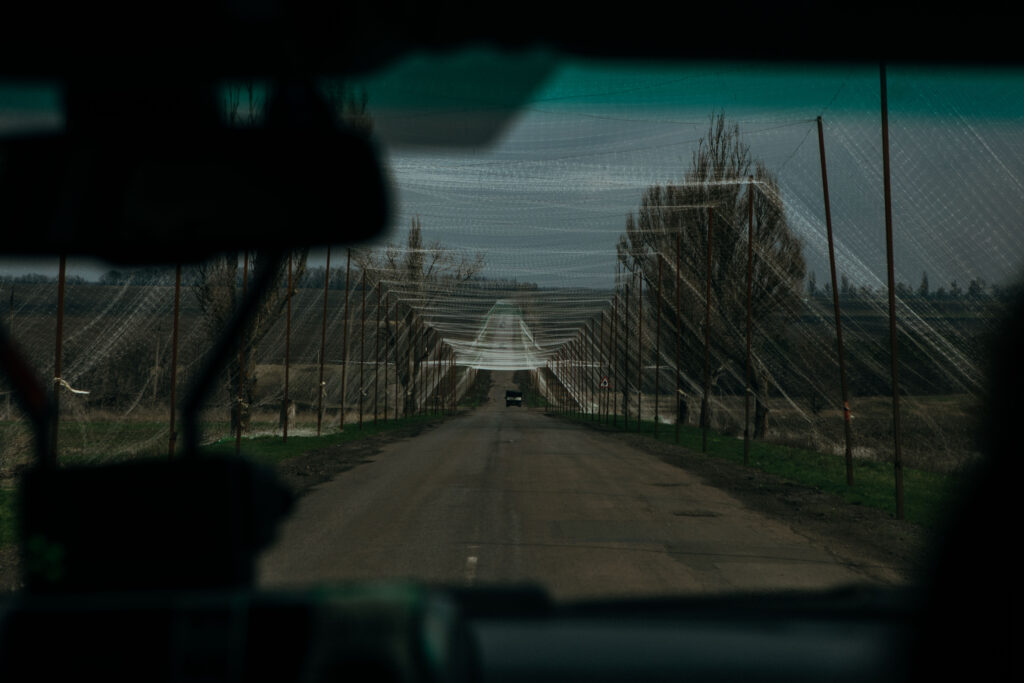
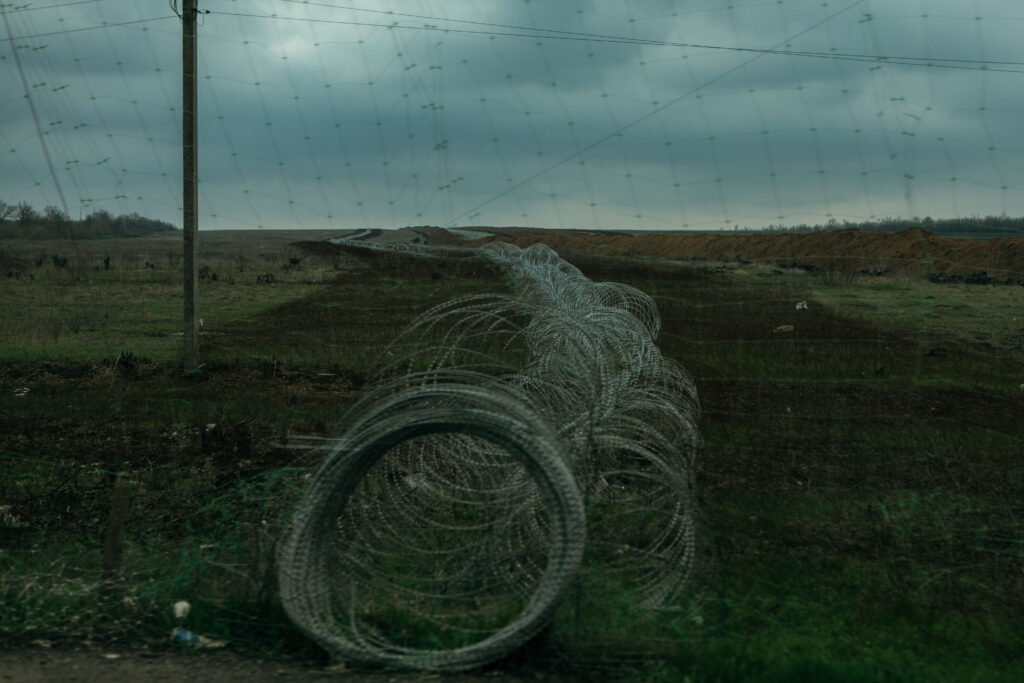
Sloviansk was occupied by Russians in 2014 for a few months––although it remains under Ukrainian control at present, it is heavily targeted as one of Donbas’s ‘fortress belt’ cities.
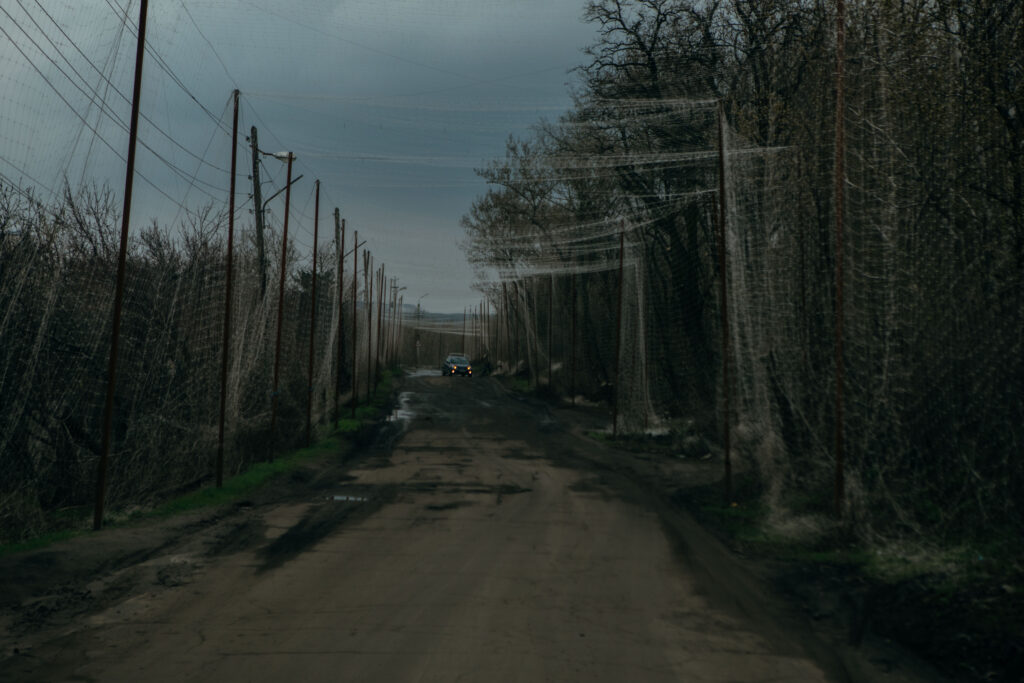
Although most villages are deserted or occupied by military personnel, there are always civilians who stay despite governmental orders to evacuate in places where the frontline has arrived at their doorstep. Such is the surreal reality of military grey zones incrementally engulfing sections of Ukrainian territory, caught in the crosshairs of Europe’s deadliest war since World War II.
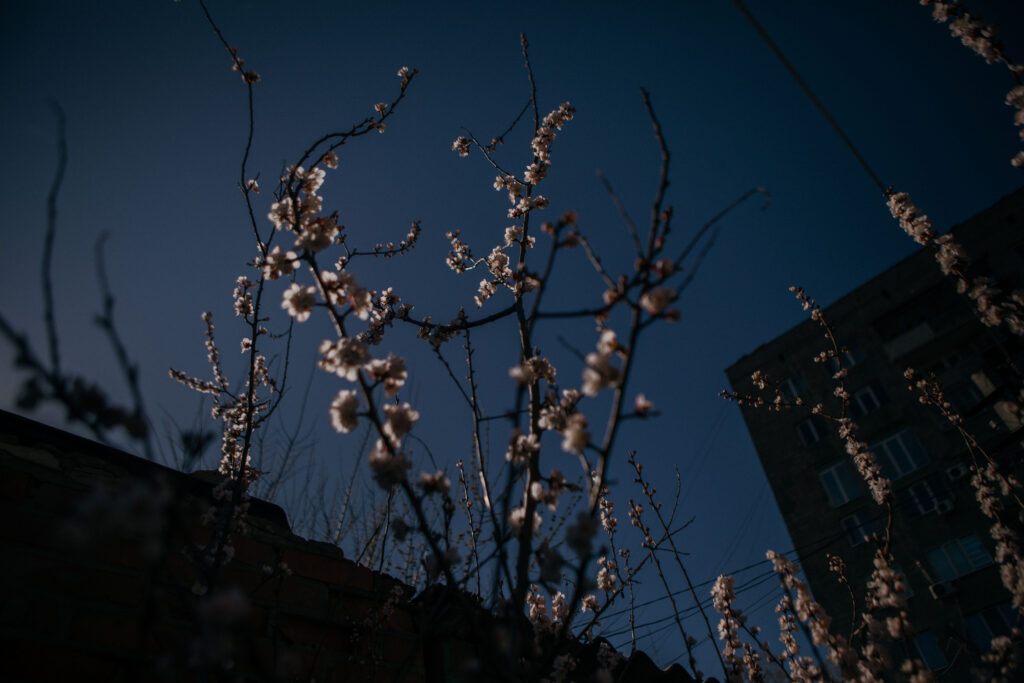
The train to Kramatorsk ceased service indefinitely last November due to intensifying fighting and spikes in attacks on passenger trains. So we must go by car. As of early April, the time of this reporting, traffic on the road to Sloviansk was moving at a supernatural pace. Donbas is not a place to linger these days. Ambulances, 4x4s, and military trucks with various camouflage and anti-drone trappings barrel wildly down the road, potholes and other vehicles be damned.
Vladimir Putin, a former intelligence officer and president of the Russian Federation since 2012, has been specifically targeting Donbas for months. This campaign is part of Putin’s most recent obsession to occupy the region’s remaining cities under Ukrainian control, to annex all of Donetsk Oblast. In a classic David and Goliath scenario, Ukraine has been staving off the attacks far more stolidly than anyone could have imagined, considering their palpable disadvantage in manpower and resources.
Reports from the Russian government on territorial victories may be misleading. Take the footage of kamikaze missions of Russian soldiers sent to plant flags in Ukrainian territory, only to be killed moments later.
“Russian forces keep pushing across the frontline, but their movement is very slow, highly destructive, and comes with a heavy price,” says Olha Polishchuk, the Eastern Europe Research Manager of Armed Conflict Location and Event Data (ACLED), a leading global violence monitoring organisation. “Clashes for some relatively small towns in the Donetsk region have dragged out for months or even years and left those places in ruin. Estimates for Russian military casualties vary but are widely believed to overshadow Ukrainian military losses. In the meantime, a lot of Russian resources are spent on terrorising the local population, rather than achieving a tangible military advantage.”
“Historically, really terrible things had to happen to a lot of countries for any significant institutional change to happen, like [the establishment of] the League of Nations,” she continues.
We’ve seen a lot of wars since [WWII]––many of which are more contained. Other states have found it easy to close their eyes and pray the system will work before it comes to them.
One hopes that a sense of humanity can help change courses of action before the conflict comes to them, Polishchuk continues: “It’s not beneficial to have a system that rewards aggression, such as giving up territory conquered in an illegal way.” She’s referring to the disturbing normalisation of Trump’s brokered peace deal between Russia and Ukraine that seriously considers territorial concessions to Russia, which would set a dangerous global precedent.
But states think about themselves.
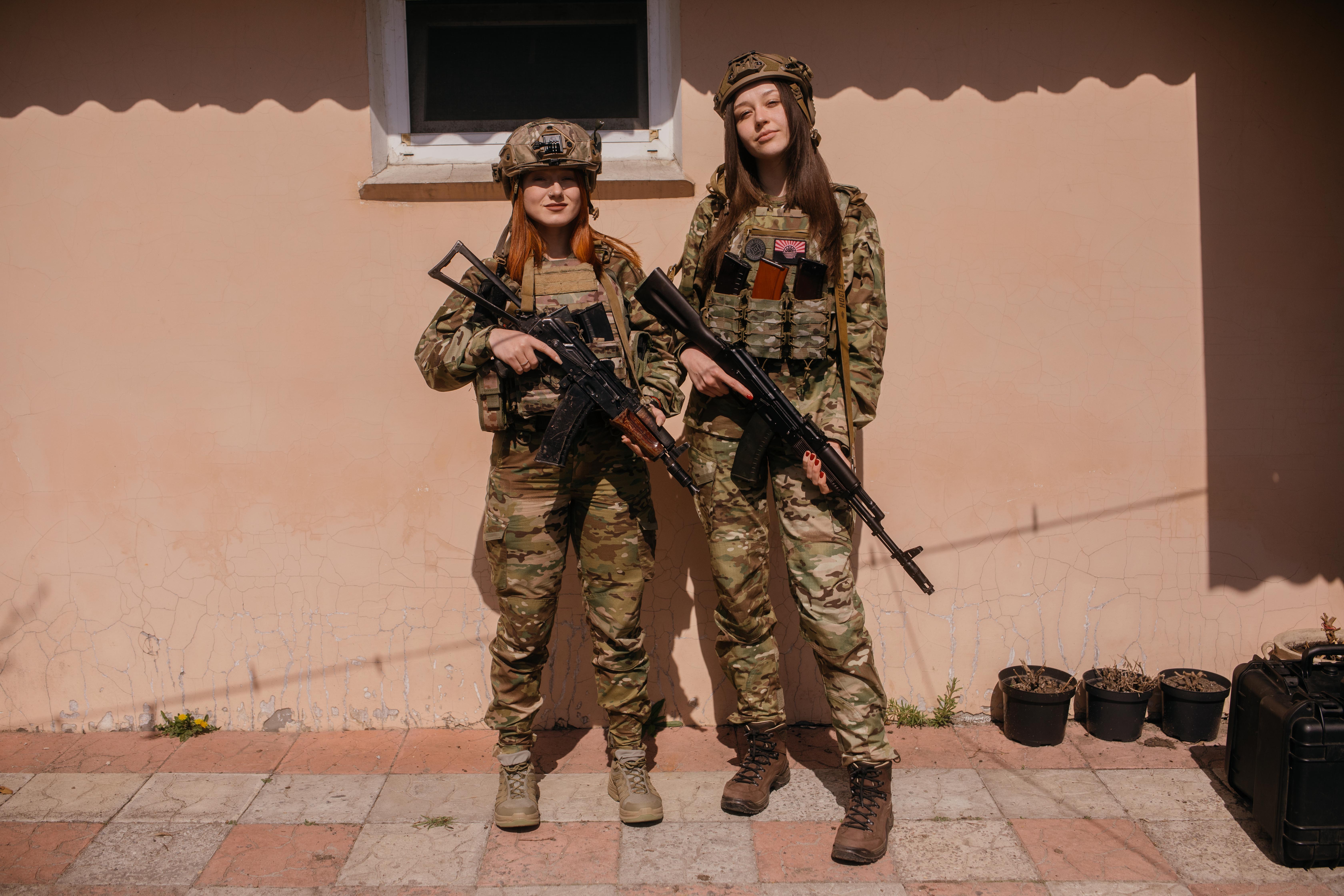
I had requested interviews with female soldiers of the 3rd Battalion 60th Brigade of 3rd Corps. Through my producer’s connections dating back to Euromaidan, the unit acquiesced, allowing me to speak to and photograph a few of them off rotation. Sloviansk was waiting.
5 years into the war in Ukraine, towns and cities on and near the encroaching frontlines, battered day and night by drones, missiles, and glide bombs, are skeletons of their former selves. “Wherever Russia occupies or is intent on capturing, it’s like the life is sucked out of the place,” sources told me during official access through the Armed Forces of Ukraine.
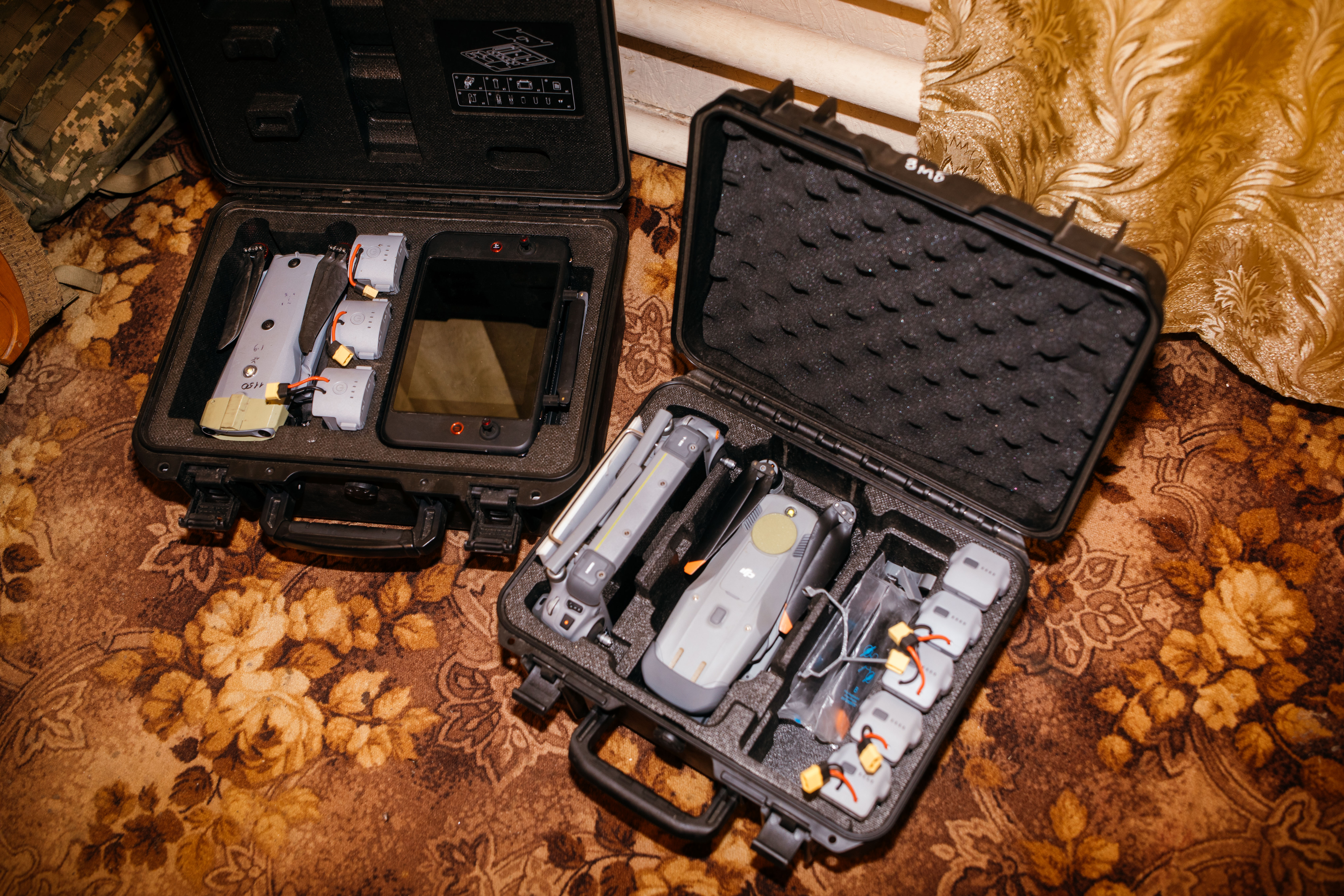
By late 2023, the stakes of the war in Ukraine morphed into a vicious dependency on how cleverly and skillfully drones are wielded. Prior to that, drones were mainly used for reconnaissance. Now, they have become the war’s pulsing lifeblood. Self-destructing, long-range, jet, thermal-vision, fiber-optic (resistant to electronic ‘jamming’ or interception), sleeper (which lie dormant on the roadside, triggered by a passing vehicle), drones tasked to intercept other drones, and increasingly, swarms of drones guided by artificial intelligence. All these resources and innovation poured into finding increasingly clever and brutal ways to kill.
The war in Ukraine has forever altered the contours of modern warfare. Insufficient international backing––due to both attention span spasms from concurrent wars and strategic blocking of European Union funding by Russian allies (e.g. former Hungarian president Viktor Orban vetoing a critical $103 billion loan to Ukraine in March, to the anger of others in the 27-member bloc)––forced the nation to think outside of the box. Civilian tech contributed to unprecedented military technology adaptations, staving off the big existential questions.
While Ukraine’s battle for identity and survival no doubt suffers from waning western attention, the world’s response to the Ukrainian cause was overwhelming in warmth and generosity with the advent of Russia’s full-scale invasion on February 24, 2022. When USAID funding was slashed last January, Ukraine felt the reverberations sorely as the single biggest recipient of American aid, receiving $16.6 billion in fiscal 2023. Interest in the conflicts, wars, and genocides in Palestine, Sudan, Syria, the Democratic Republic of Congo––non-white, non-Christian Global South nations––do not nearly match Ukraine’s reception and support.
The omnipresence of drones has bloomed a litany of horrors. Gangrene has reappeared in trenches across Ukraine’s eastern front––pathology unseen since World War II. One Ukrainian soldier had a tourniquet on for 36 days; his unit had 6 failed evacuations with all the drones overhead, waiting to strike (this was the longest a tourniquet has ever been used––an unimaginable period of time, as a properly applied tourniquet keeps one from bleeding to death). There is documentation of Russia using banned chemical weapons that trap Ukrainians in their trenches. Should they come up for air, hovering drones await.
As the world enters a new era of forever wars, juggling both fresh conflicts and resurging grievances, Ukraine struggles to maintain the global attention and accompanying support requisite to keep Russian aggression at bay.
Most recently, escalation of the US-Israeli war in the Middle East has added new layers. Although the war in Ukraine has largely revolved around drones since 2023, there has been a renewed wave of attention to its underdog defense system.
25-year-old Valeria, who goes by the callsign Karnasha, has been in the military since 2024. Hailing from the central Poltava region, she studied to become a teacher, but the combination of the low salaries and her desire to defend her country led her to voluntarily mobilize in 2023. It took Karnasha some time to find the right unit to join. “We have issues that arise from gender,” she says about the perpetuation of macho culture in the military, when we met her in an undisclosed location outside Sloviansk. Later that afternoon, she would pack to prepare to return to the trenches. She had recently switched from the 77th Brigade to the 3rd Battalion 60th Brigade of 3rd Corps, and was hopeful that her comrades here would be better team players––less than 5% of the unit is female.
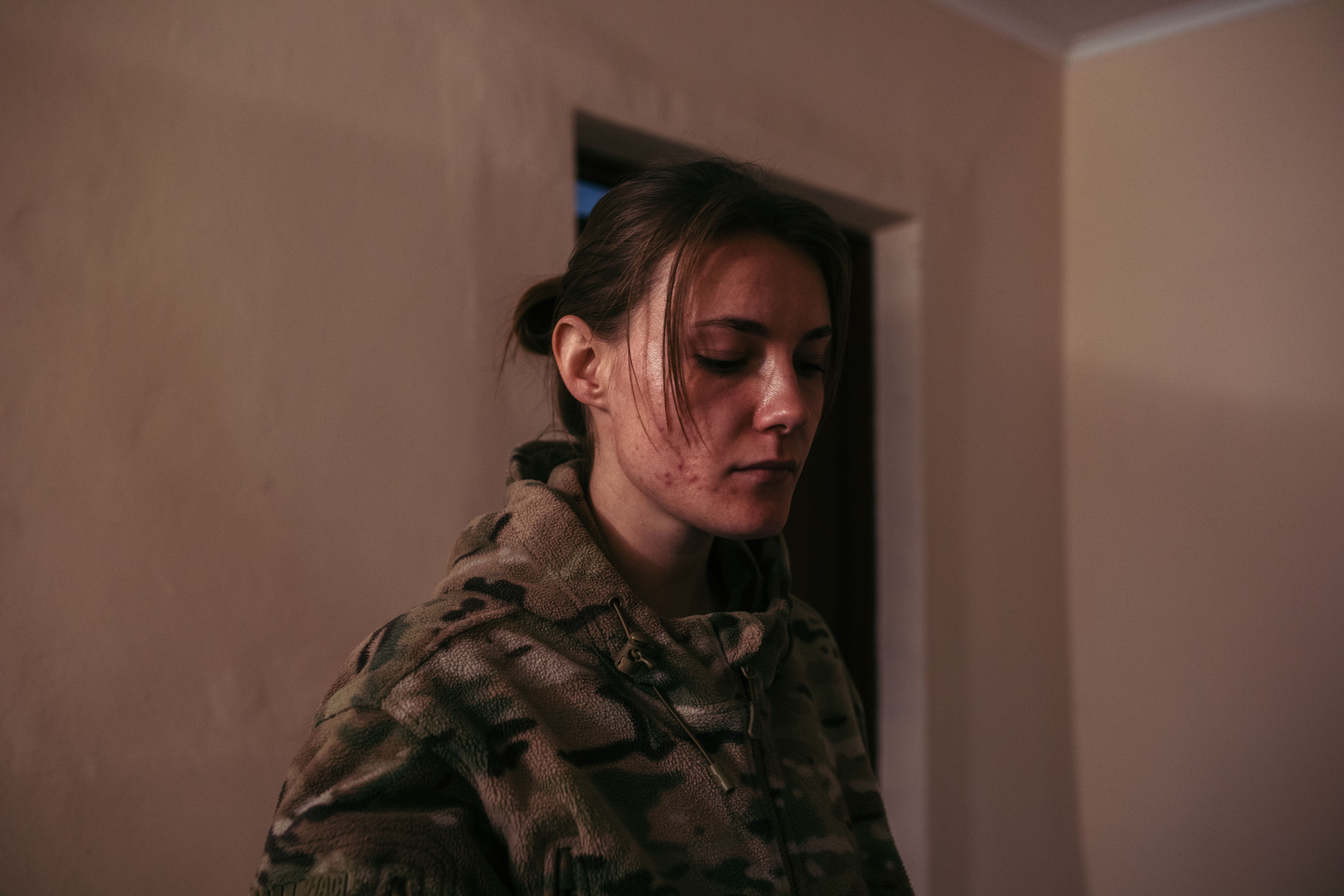
Karnasha is a specialist in electronic warfare (EW), working to jam enemy drones––the deliberate blocking of satellite signals for navigation, requiring high concentration––and reconnaissance, gathering information about Russian movements and terrain. Her bosses had wanted to promote her to more managerial positions in her unit, but she prefers to serve in combat.
Key air defense radars for the U.S. THAAD (Terminal High Altitude Area Defense) system in the Middle East, a sophisticated anti-ballistic missile interceptor system costing $12-15 million each––plus its accompanying half-billion dollar radar system––were quickly damaged by Iranian attacks early in the Iran war.
In mid-March, Ukraine sent more than 200 military experts to protect American military bases and counter drone attacks in the Gulf. 11 countries have sought support from Kyiv to counter Iranian-designed Shahed drones as the US-Israeli war in the Middle East intensifies. It did not take long for the United Arab Emirates, Qatar, and Saudi Arabia to see that using Patriot missiles (with a $3.7 million price tag) to shoot down Iranian drones (at $20-50,000 a pop) was unsustainable.
Ukrainian president Volodymyr Zelensky has once again been called to navigate precarious diplomacy, caught between investing in global security and earning goodwill while prioritising his own nation.
Concurrently, the Iran war is diverting investments and resources vital to Ukraine’s survival. Russia has been gaining an economic upper hand with rocketing oil sales after Trump’s waiver for Russia to sell oil; western sanctions and the freezing of assets with the full-scale invasion in February 2022 have isolated Russia from the global economy, making it reliant on its war machine. In light of the most dire energy crisis in recent history, after Iran shut the Strait of Hormuz––a route for 20% of the world’s oil and liquified natural gas flows–– revenue has doubled to $9 billion in April.
The dispatching of drone experts has been a major investment, considering how the war-torn nation’s manpower is at a critical low. But it also could be an opportunity to turn fresh attention to the eastern European country that has been battling Russian aggression for so long that it has, in a way, solidified in the world’s collective conscience as another far-off country perpetually at war.
“This is good advertisement of the Ukrainian army and expertise,” says Karnasha regarding Ukraine intervention in the Gulf. “Now, other countries can have a better understanding of how Russia has been keeping this war going, what we’ve had to do to survive. People interested in fighting [for us] will come to Ukraine.”
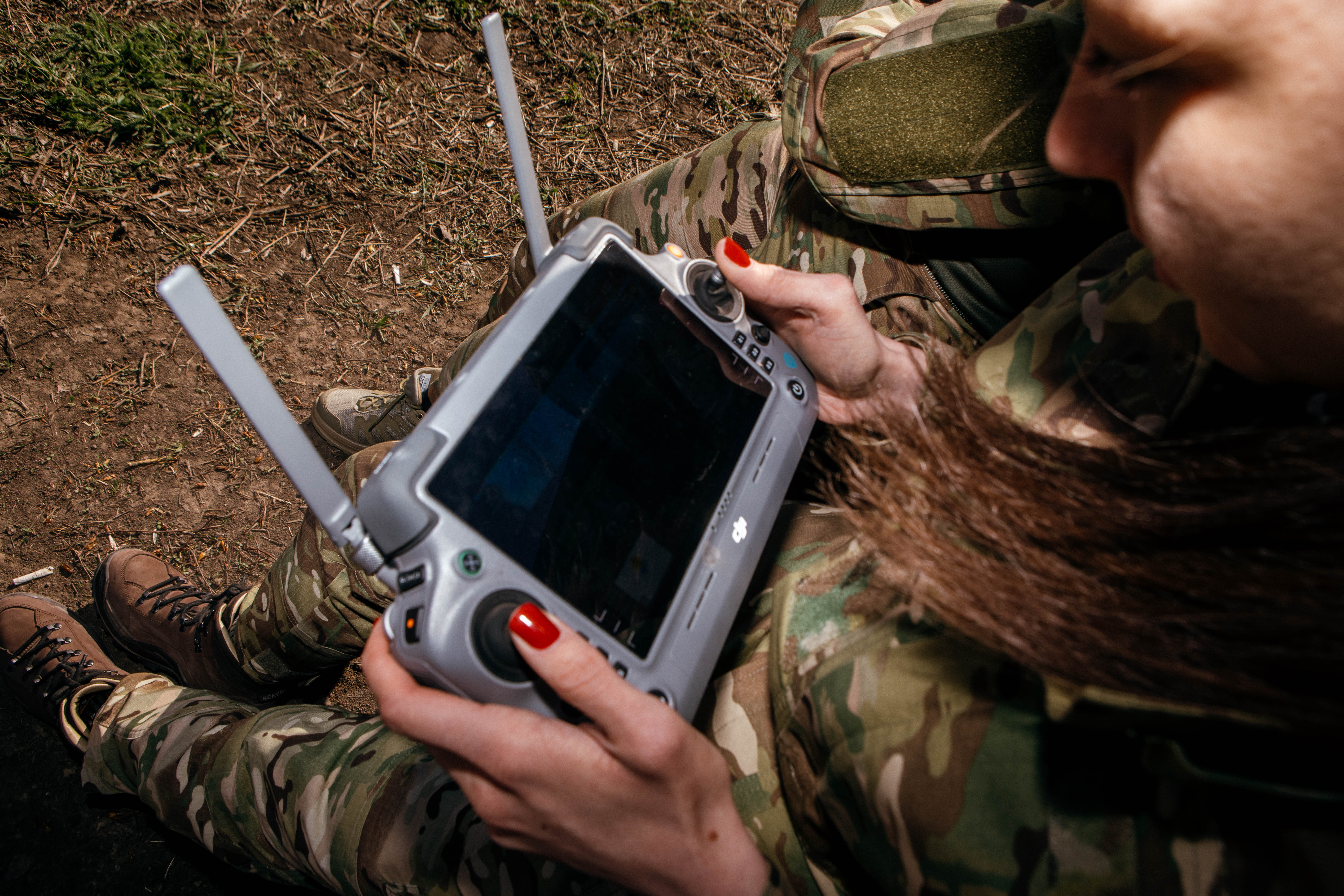
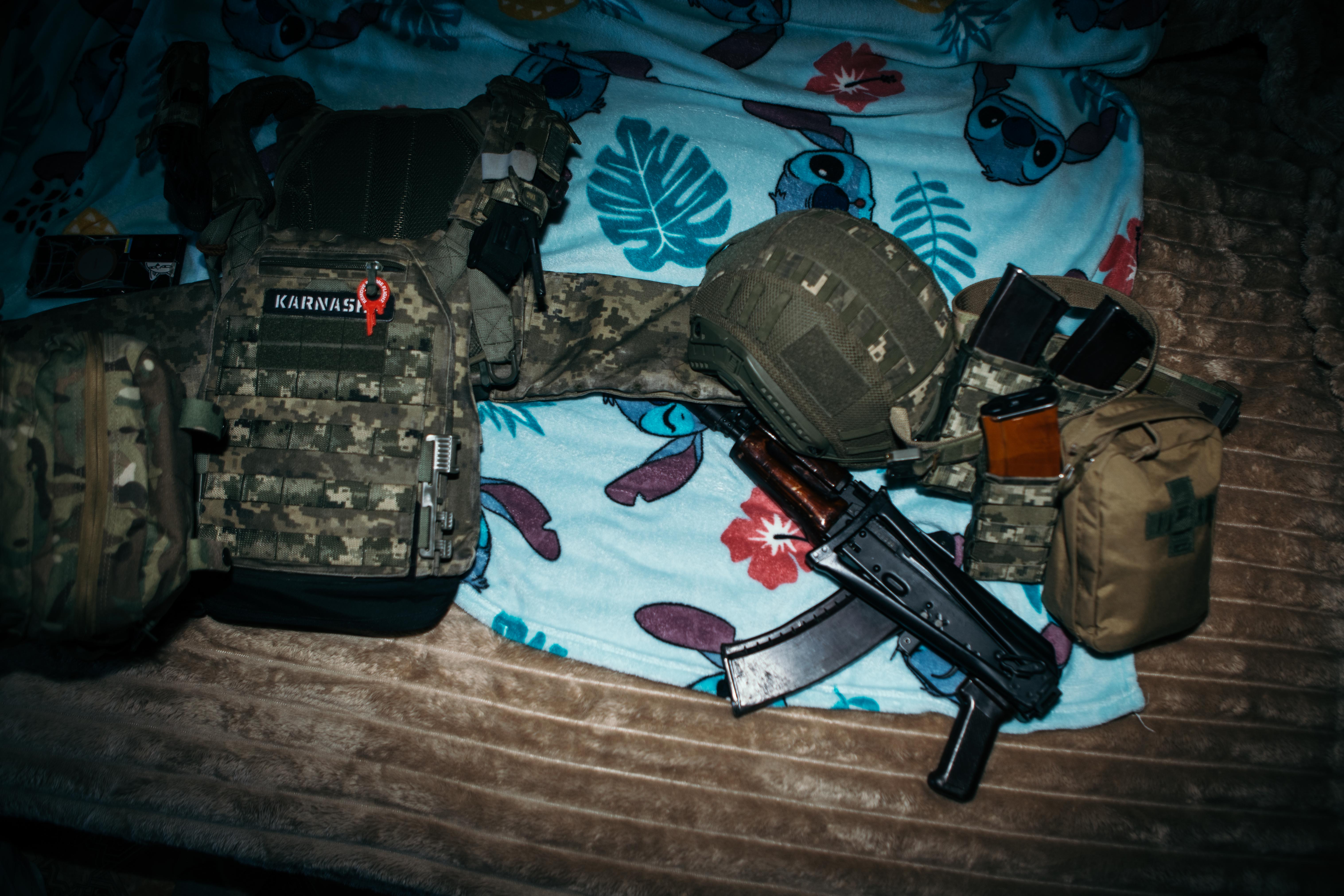
“Not that long ago, no one understood EW––people thought it was just electronic equipment on the roof of a car. When I first started, FPVs were very easily jammed–switching on noise (high radio frequency signals) was enough,” she continues. “The pace of military technology is changing very fast. This war feels like ‘weapons testing’ at a training ground. If this is the future of my country, then we must involve others to not disappear as a nation.”
“The more soldiers––not only Ukrainians––who understand ‘modern warfare,’ the higher the chances of victory,” Karnasha believes, hoping that other countries can have more lead time to prepare their armies while they have the opportunity––which Ukraine did not have.
History is cyclical, and right now we are in the stage of an ‘arms race.’ Victory will not belong to the strongest, but the smartest.
Although attention to the urgency of the war––onto which Ukrainian identity and fate are hinged––with time, both at home and abroad, there’s a wave of young people who have been waiting for the right brigade and time to join the army.
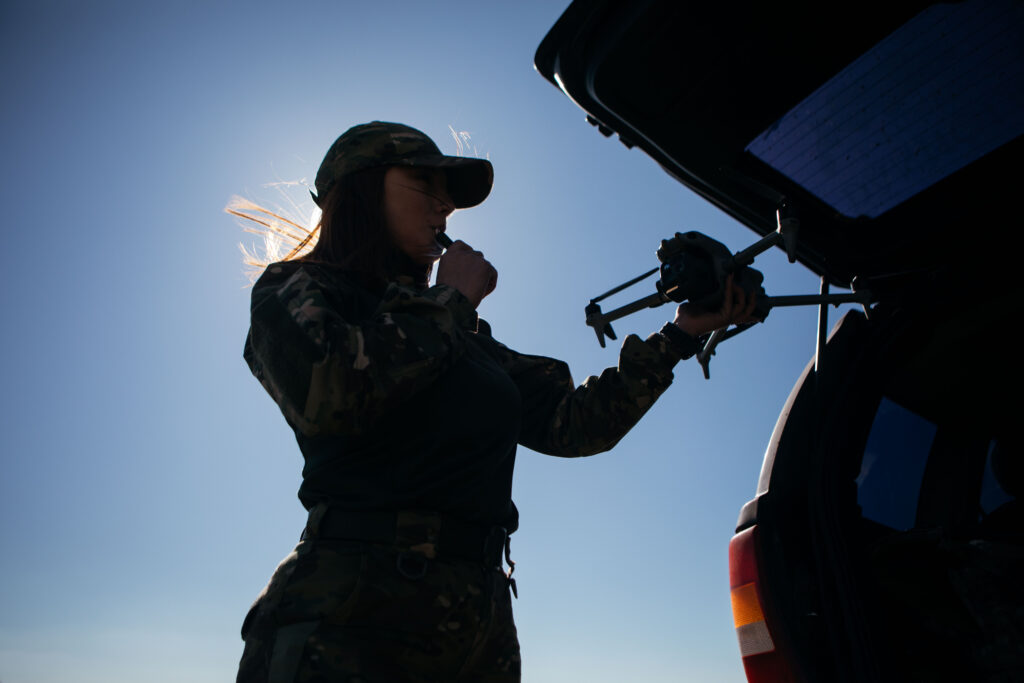
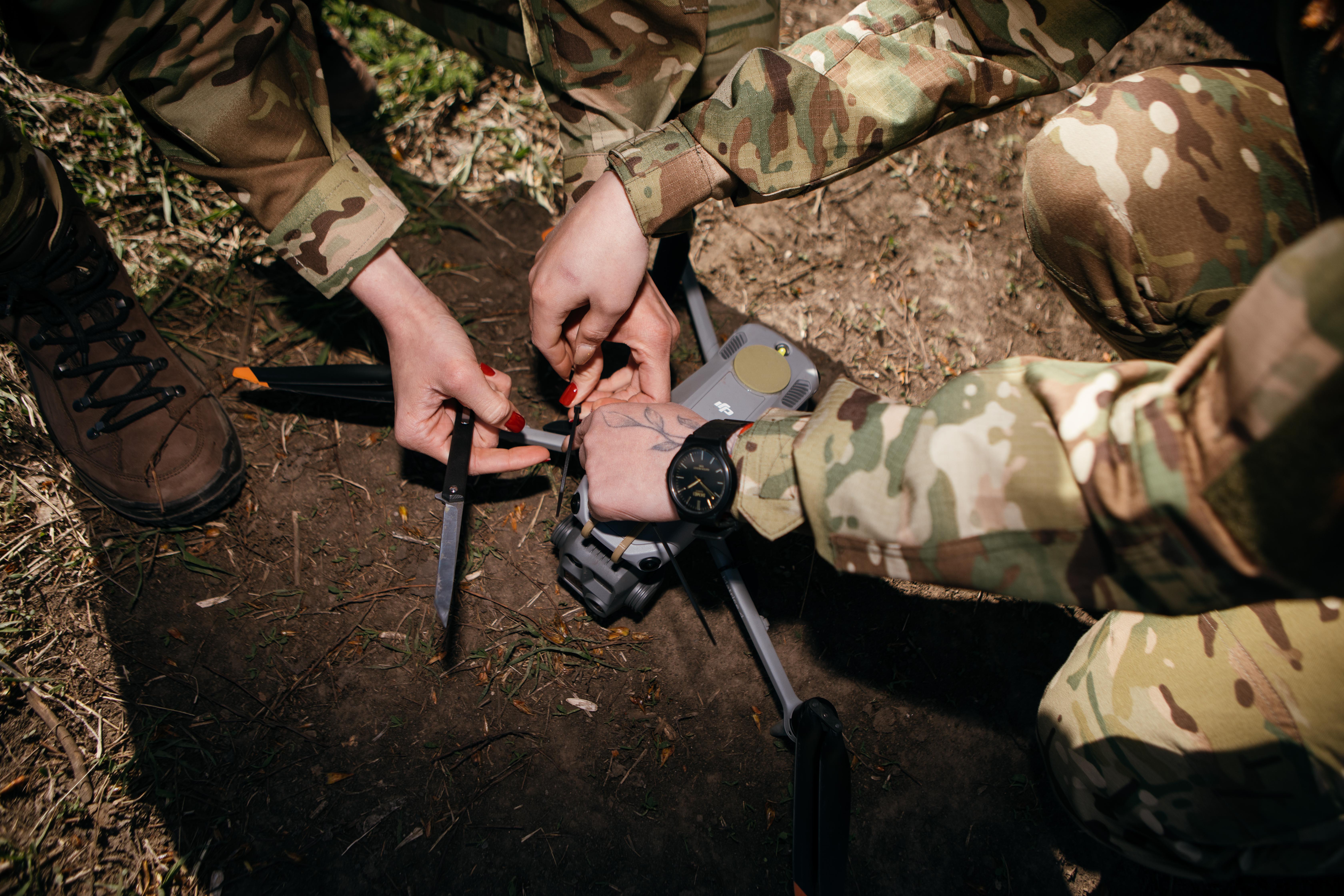
21-year-old Veronika, who goes by the call sign Knopka, is training and serving as a DJI Mavic drone pilot in Sloviansk, northern Donbas, with the 3rd Battalion 60th Brigade of 3rd Corps.
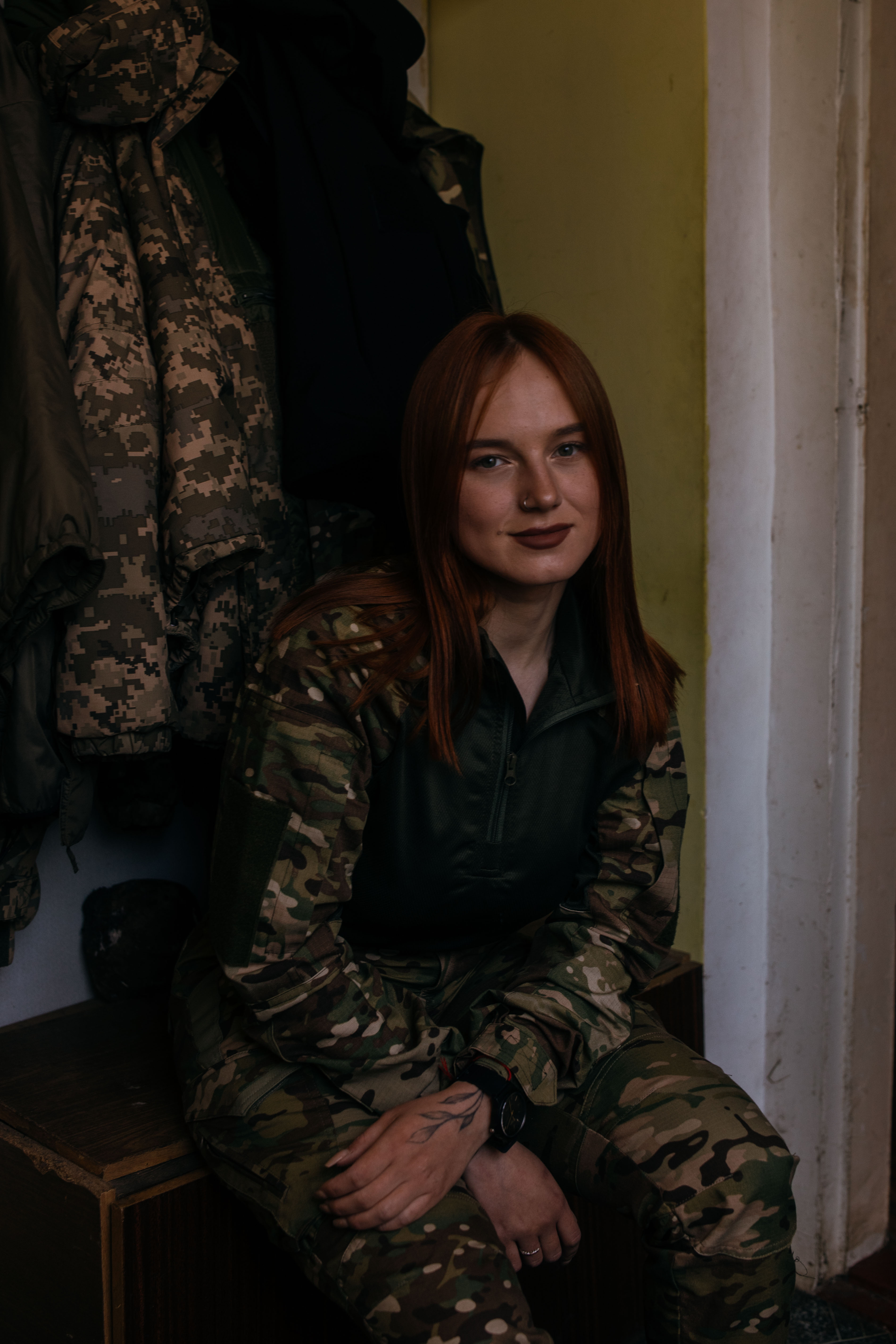
She had wanted to join the military in response to the full-scale invasion, but was only 17 at the time. Knopka’s own family mobilised: her father signed up to serve in the armed forces; less than a year later, she met her husband, a soldier. Accelerated timelines are common in wartime Ukraine; they got married within three months.
Knopka hopped from job to job, working as a car sales agent, then serving in the police after graduating from its academy in the capital city of Kyiv. None of these roles felt fulfilling to her.
On Christmas Day last year, she signed a contract to enlist with the 3rd Battalion 60th Brigade of 3rd Corps, attracted by its quality reputation. “In my life, I want to serve, be of maximal use,” she says in one of the undisclosed bases belonging to the 3rd Battalion 60th Brigade of 3rd Corps in one of Sloviansk’s outskirts.
Knopka is still training and learning how to fly UAVs (unmanned aerial vehicles) DJI Mavic drones, mainly used for reconnaissance––the strategic observation and gathering of information about terrain, enemy movements, and operational environments. When we met her at one of their small bases, she was 5 days fresh from her first rotation. The spring rains had flooded their trench and the unit spent time bailing out water. The entire experience, particularly the act of arriving at the relative safety of the trench, was terrifying.
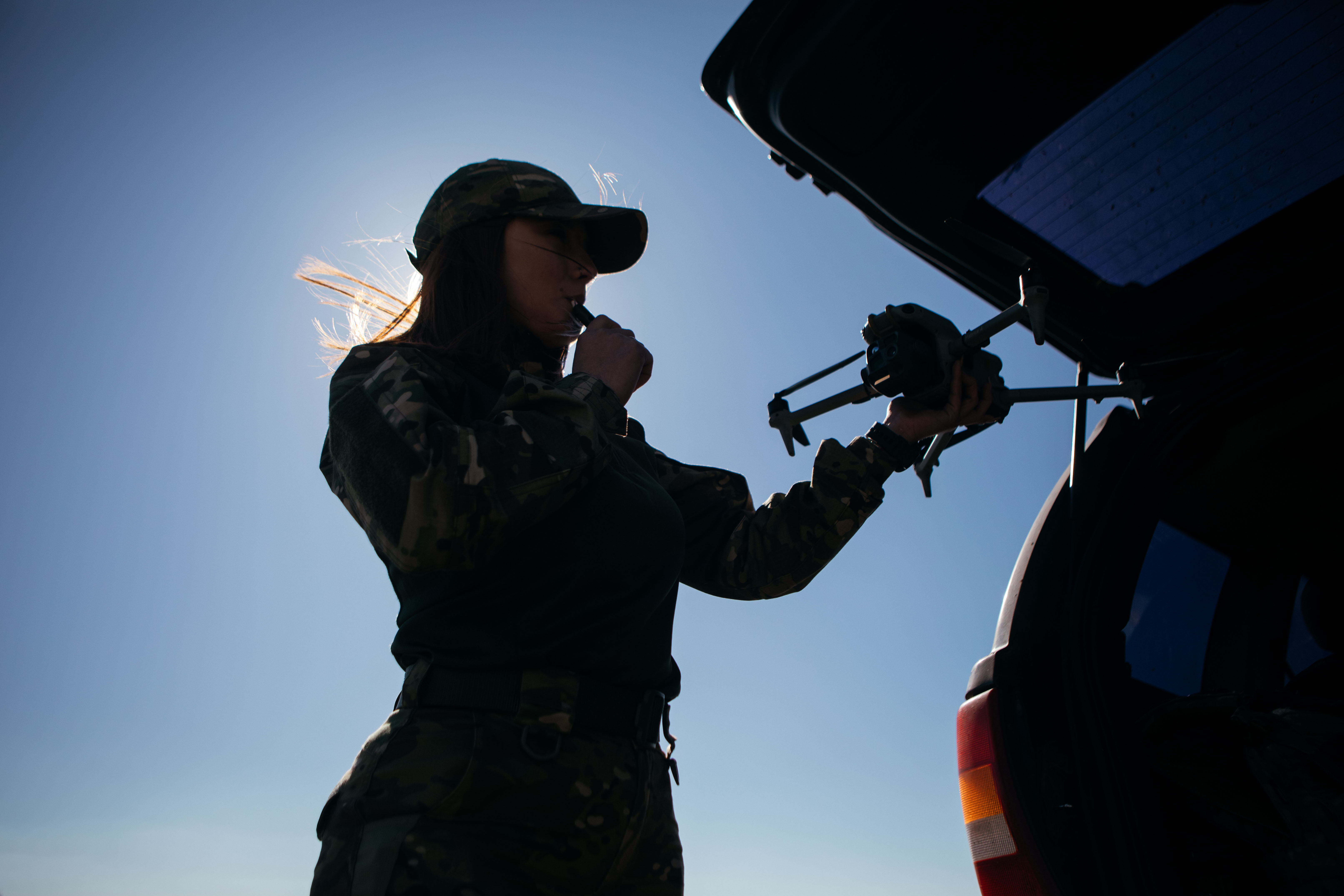
“The road was the most scary part,” she recounts. “You don’t understand where you’re going, the sky isn’t clear––there might be enemy FPVs.” The weather had also been a setback. “I had emotionally prepared to be on rotation for 2 days with the commander, but so many things happened. The car broke down, there was flooding. We ended up being in the trenches for 5 days.”
Yet, with her family’s military background, she feels great support and protection. “With my husband in particular, I feel safe, knowing that he will protect me,” she shares. He has helped her choose and buy ammunition––better quality equipment than what the brigade provides. “I used to be the one sending him [care] packages, now he’s sending me packages,” she says with a smile.
“Ukraine is the best [in the world] in drone expertise and security,” Knopka says from an undisclosed location in Sloviansk. Ukrainian knowledge is based on experience from a protracted war, Knopka continues. “Everyone can learn from us.”
“The technology is still growing very fast. The world can use drones ––if not in war, but securing the borders.”
22-year-old Alina, who chose her own callsign of Freya, is also new to military life. She comes from the central Cherkasy region and is in her fourth year of university studies, with a focus on international economic relations. Growing up, she had trained with Sokil, a national patriotic organisation akin to Girl Scouts in America. The meetings and marches helped solidify her sense of identity and nationalism.
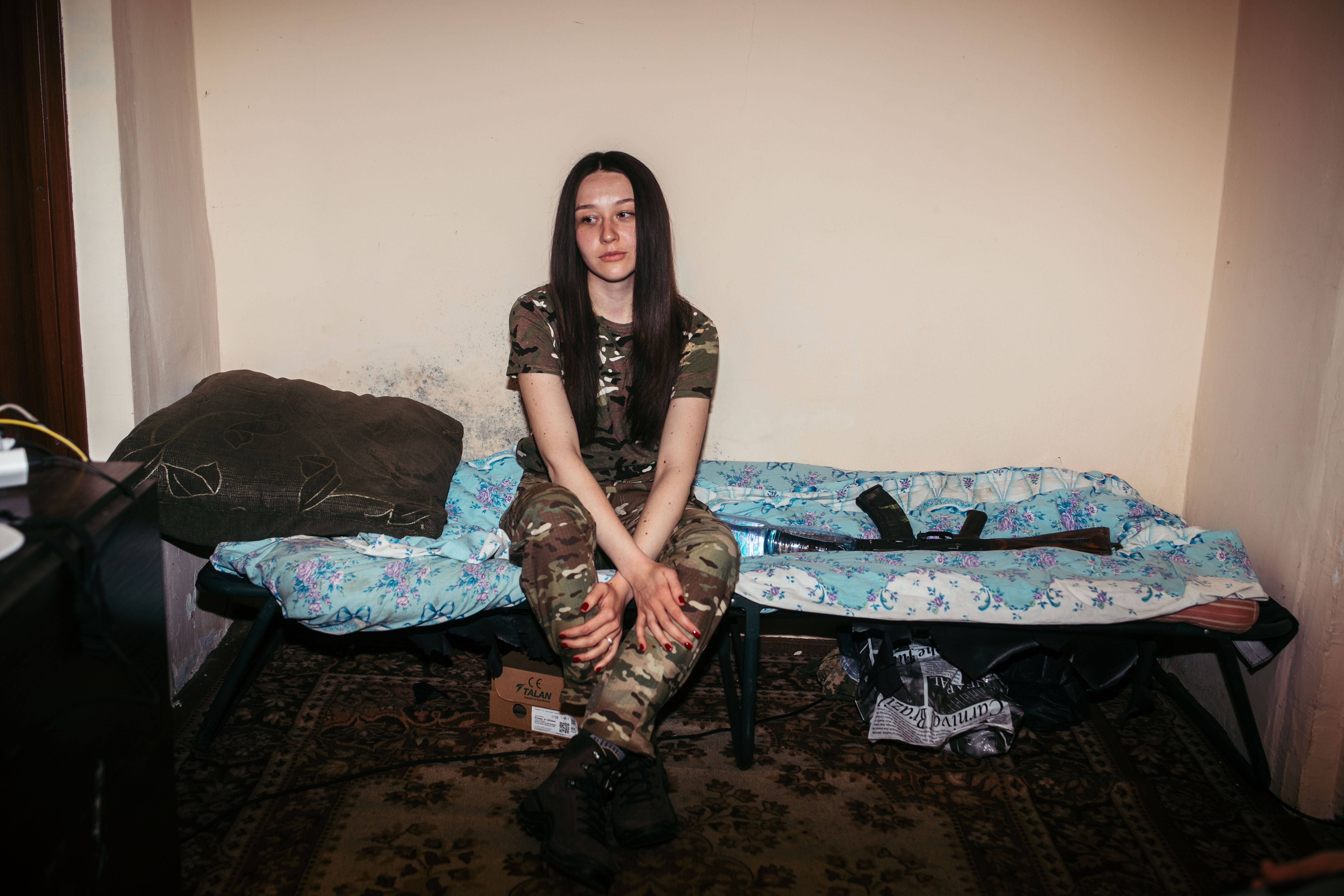
In 2022, people woke up, according to Freya. “No one was expecting the full-scale invasion. We were united with a sense of purpose to defend ourselves from the enemy.” But the drawn-out nature of the war has diluted the populace’s attention, perhaps even aggravated fault lines extant in Ukrainian society, particularly in the east where concepts of identity have long been muddled by Russia’s propaganda and disinformation machine, amongst the most powerful in the world. “Right now, so many people aren’t aware of what’s going on.”
She plans to serve in the military until the end of this war. “I don’t know what my abilities are yet,” Freya explains. “Right now, my job is to learn and do, learn and do. I will show up here to grow and do the work.”
Her parents did not respond well to her signing up to serve. “My mom was crying,” says Freya. But they had to respect her decision. “Those who aren’t near the frontlines, they don’t understand anything. Even if you have family, a husband in the military, people don’t necessarily understand what’s at stake.”
I asked how she is coping with the transition to military life. “Right over there is my support,” she says with a giggle, nodding over at Knopka.
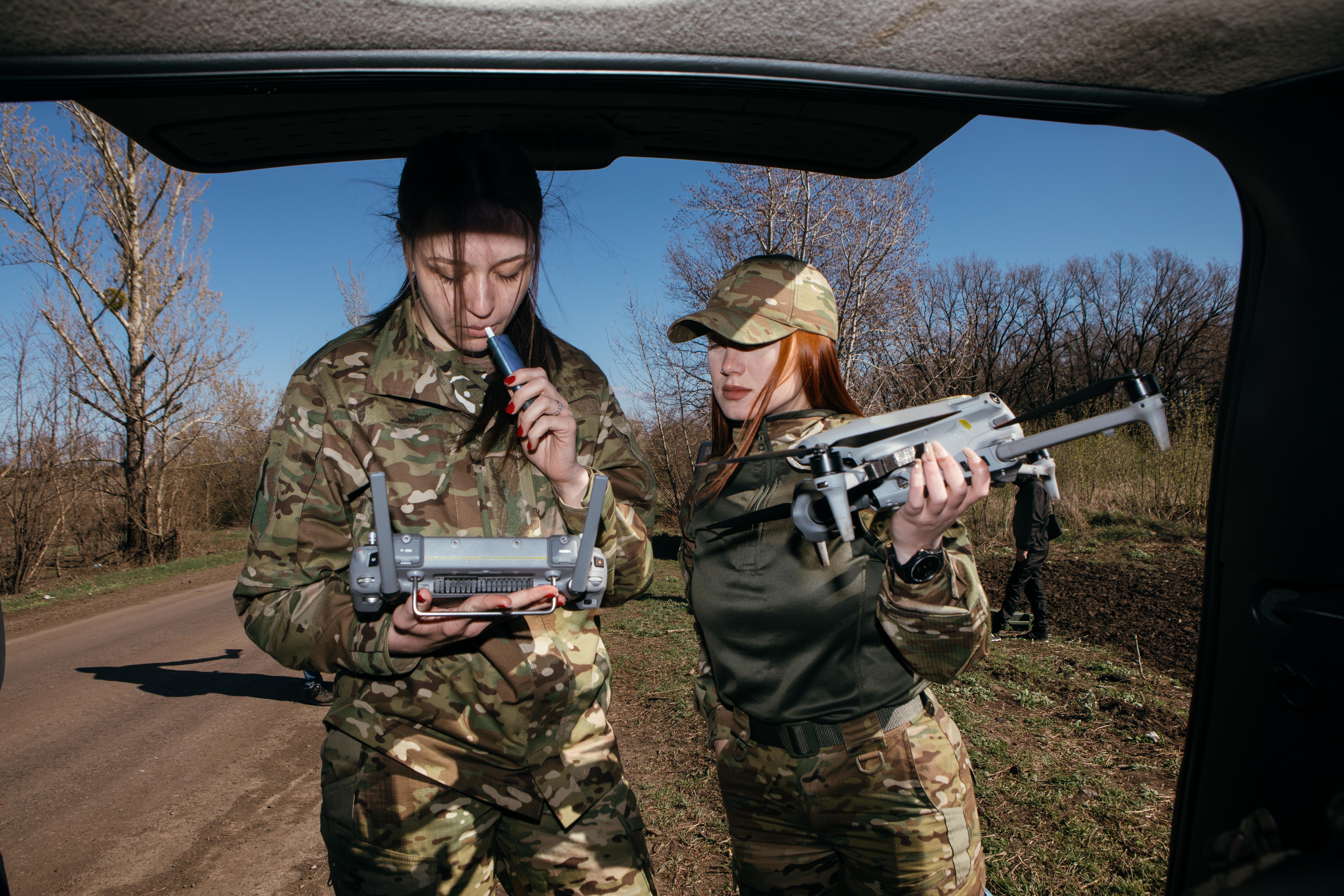
When I am in the field, I don’t care what I look like. I pack as little clothes as I can get away with to simplify decision-making and focus on the logistics and reporting process itself. But for these female soldiers, working under pressures and circumstances unimaginable to me, even though I get a small taste of their lives, they still look immaculate, with full make-up, hair and nails done nicely. It makes sense to me. In a war, there is only so much you can control, and self-assurance is one of them.
When you are in the military, the number one priority is the mission, says one of the commanders of the 3rd Battalion 60th Brigade of 3rd Corps.
You go in knowing this. Your safety, how you feel, everything else is secondary.
Note: only soldiers’ first names and call signs are shared, in accordance with the Ukrainian military’s security protocols
Tetiana Burianova contributed to this reporting.