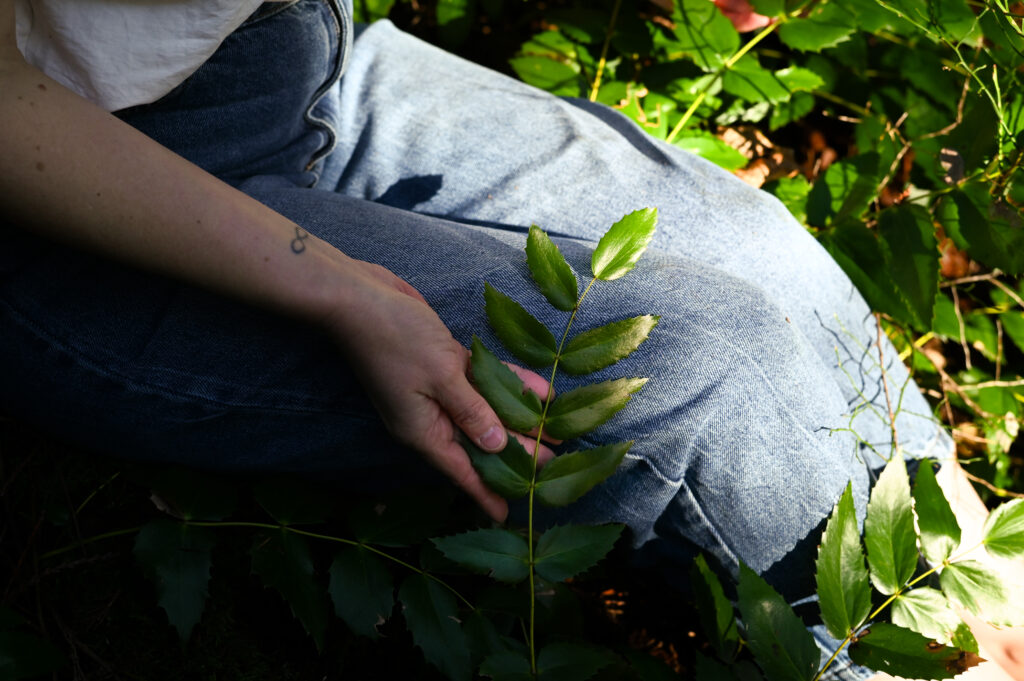
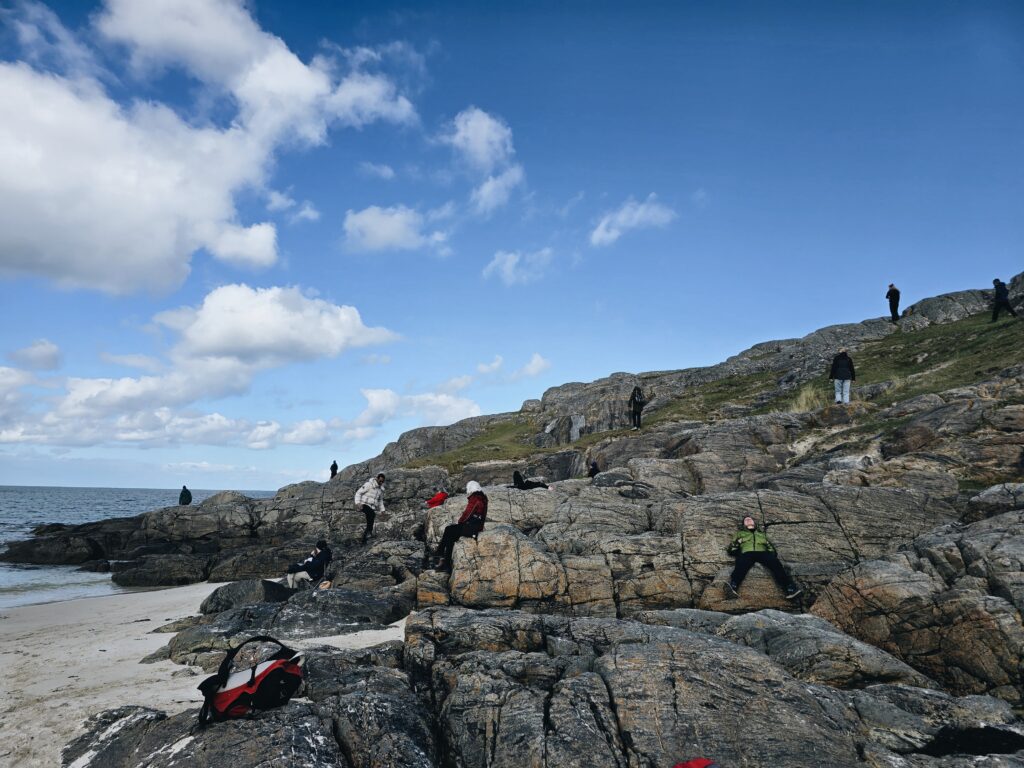
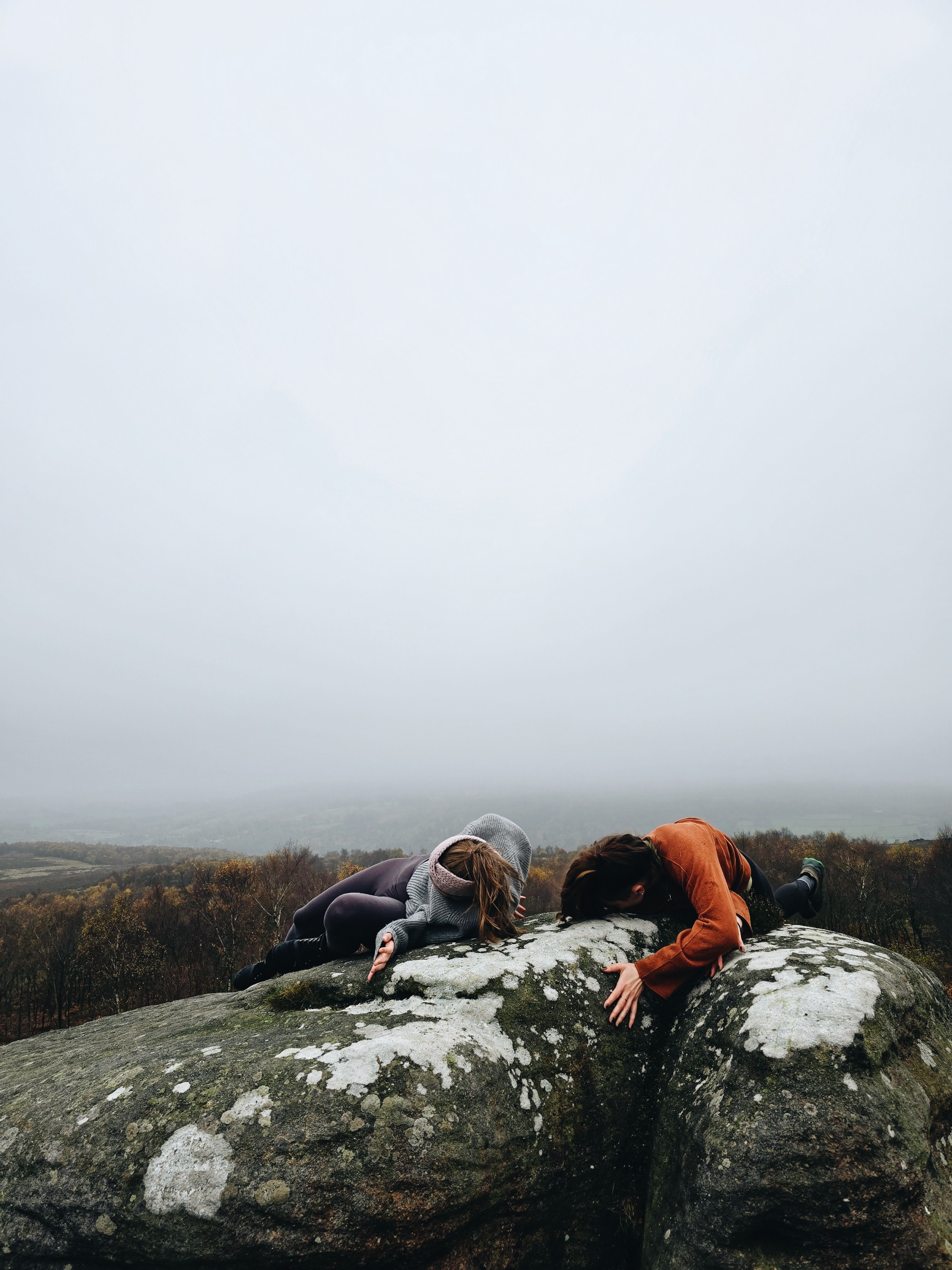
In the North West Highlands of Scotland, twelve people spread themselves out along rocks approximately 3 billion years old – Lewisian gneiss, the oldest rock in Britain and among the most ancient exposed geology on Earth. Guiding their “rock bathing” session is Ruth Allen, a geologist and therapist whose practice engages in deep listening and resonance with rocky landscapes. Ruth encourages the group to take their time and sink in, touching, sensing and attuning to what it means to be two material bodies together – their warm, soft hands trace the surface of the cool, coarse rock.
This approach is part of an emerging field of practice called ecosomatics, which explores the relationship between the environment (the eco) and the body (the soma). It is an interdisciplinary field, combining ecology and embodiment, with somatics at its core. Somatics – defined by Thomas Hanna in 1976 as “the body as perceived from within”– cultivates an awareness of felt sensations in the body through movement, breath, and the senses. Somatic approaches are used in a wide range of applications, from physical and psychological therapies, to mindfulness and greater self-awareness.
The focus on perceiving from within resists the separation of mind and body, thinking and feeling, that were consolidated in the Enlightenment during the seventeenth and eighteenth centuries. Hanna’s idea that we perceive the world from within, rather than without, echoes ecological thought that emphasises the importance of relational and systems thinking. In acknowledging the role of embodied perception in creating worlds, ecosomatics takes a different approach to understanding our relationship with nature.
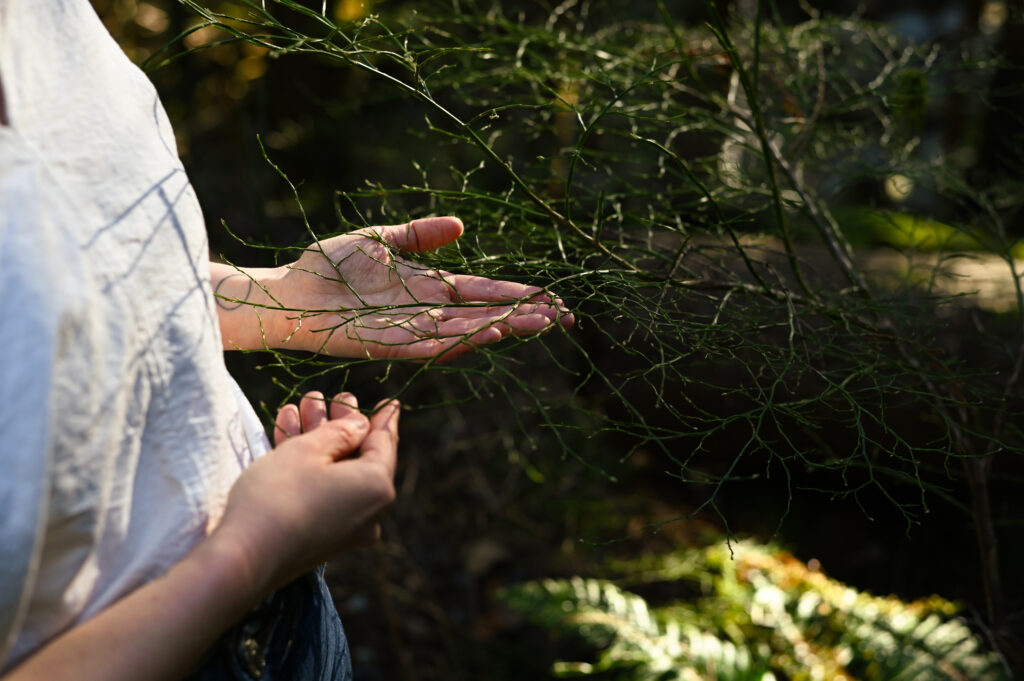
Robyn Watt, ecosomatic practitioner and founder of Innate Ecology, puts it simply: “We’re turning our presence and our attention to the natural world, but then we’re also using our interoceptive faculty to turn our attention to what’s happening in the body. So, what’s happening in the body, what’s happening in nature, and how is the body responding to nature?”
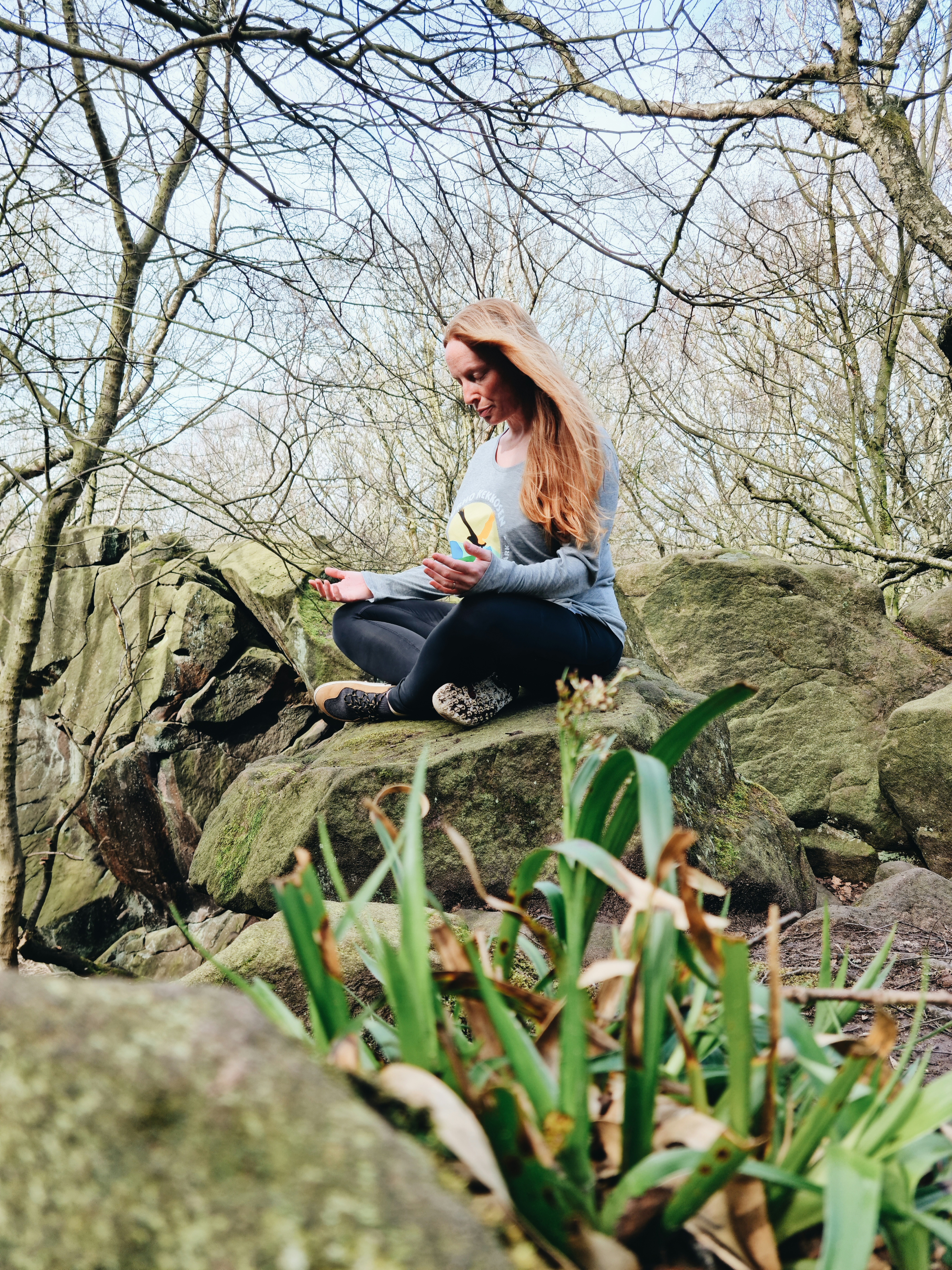
Whilst somatics has emerged to help people develop their interoceptive faculty – the ability to sense the body’s internal state, such as hunger, heart rate and emotions – there has been a steady decline in our ability to perceive the outside world. According to a 2025 study led by Miles Richardson at the University of Derby, human connection to nature has declined 60% in 200 years. The World Economic Forum reports that in the UK, only 1 in 5 children can identify a bumblebee. These declines indicate a loss of connection, but they also mirror the loss of biodiversity, which has halved in the UK since the start of the industrial revolution. The growing rift between nature and humans is shaped by a framing of the environment as an inanimate resource, rather than a living, vital, ecosystem. Looking at the bigger picture of the climate crisis shows us that it is as much about culture as it is about nature.
Speaking from British Columbia, Canada, Robyn reflects on the systemic issues that ecosomatics addresses: “I’d be keen to position it as a uniquely industrial West problem because there are so many systems and so many cultures in the world. Of course, it has affected the whole world, but systemically its Western industrial culture. ”Her approach, named Innate Ecology, challenges the relationship with nature that has emerged from the industrial West, foregrounding “a regular practice of deep kinship with nature”.
Such ecological thinking takes inspiration from many Traditional Knowledge Systems, and begins from a premise of relation: that humans exist within networks of kinship that extend across species and landscapes. In this view, the world is animate and how we choose to pay attention to it matters. As Robin Wall Kimmerer, Potawatomi botanist and author, suggests, “paying attention is a form of reciprocity with the living world. ”Noticing is an action, an acknowledgment of a relationship built on mutual exchange.
By engaging the body and the environment, ecosomatics creates opportunities to negotiate internal and external landscapes, blurring boundaries and exploring how human and earth processes are “mapped together”, says Ruth. She proposes geosomatics, a rock-oriented form of ecosomatics, as a form of “relational mapping”, that challenges the remove of traditional cartography and the flattening of the world we inhabit. Reflecting critically on cartography, she asks: “How am I shaped by the landscape and how do I sense my participation in it? What’s the opposite of flattening? A fattening – an expansion, an enlargement and an entanglement.”
Mapping ourselves together with the Earth is a way of reconciling the eco and the soma, and perhaps this cultural rift between nature and humans. Ruth describes ecosomatics as a simple, quiet, yet radical practice that requires us to slow down and rest. She remarks: “What it takes to create those conditions is, by its very nature, a pushback against the systemic issues, particularly around growth, endless growth.” To make space to pause, notice, and perceive blurs the borders that separate humans and living systems that sustain them. As Ruth suggests, this practice is not always restful; it can “wildly agitate”, disrupt and demand something of us. Ecosomatic practices allow us to connect to the fact that the climate crisis is an embodied crisis. As our planet heats, so do we.
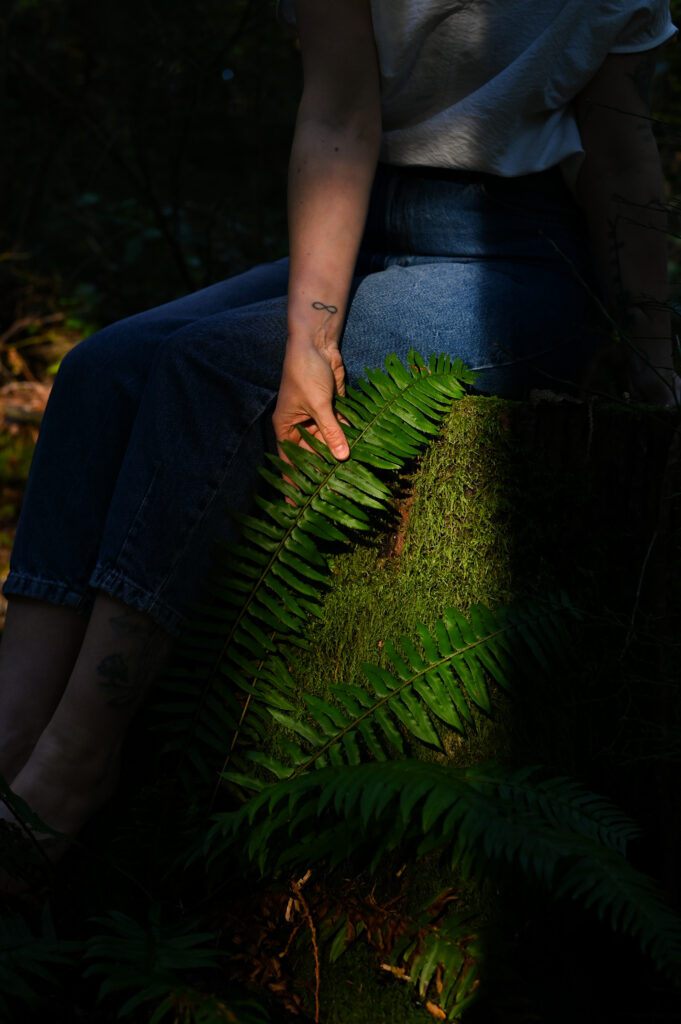
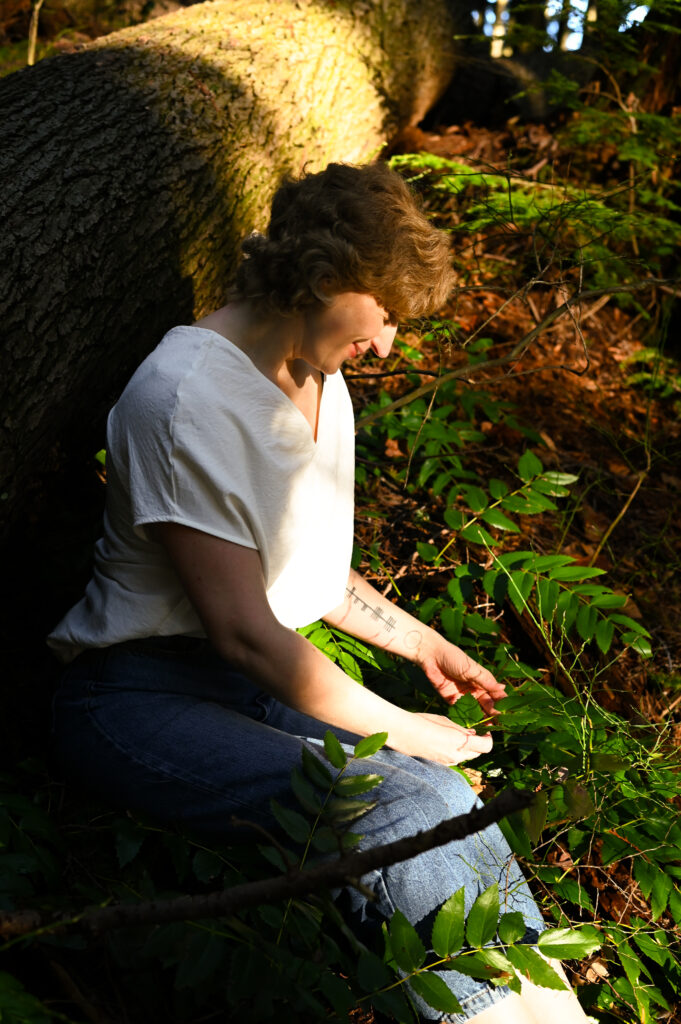
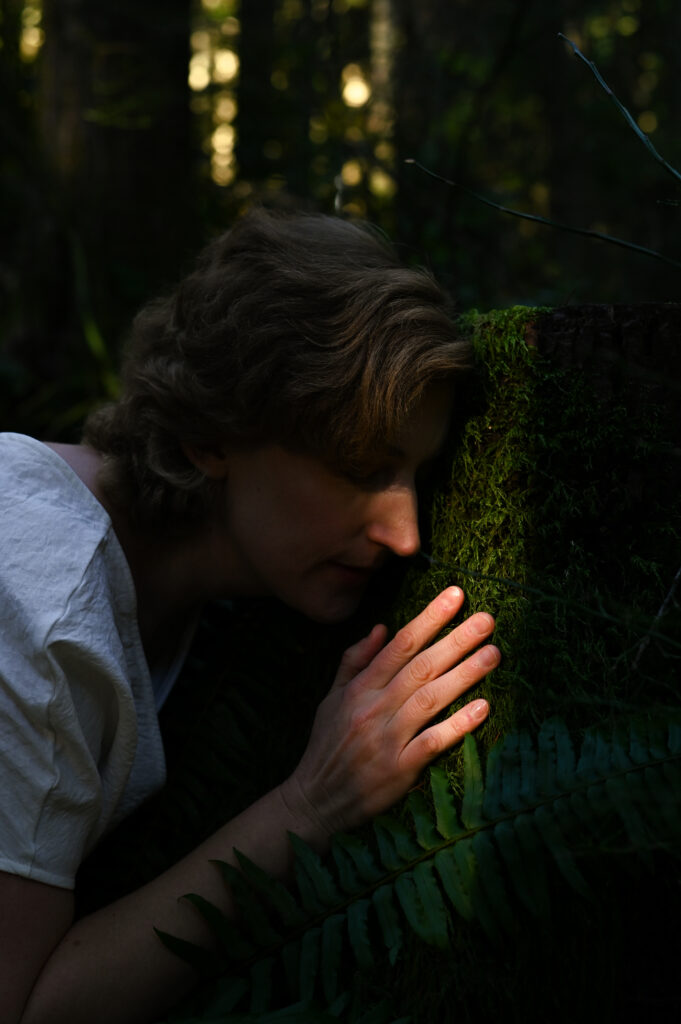
Trying to sense our place in the world, this practice offers a way of cultivating hope and resilience in the face of the climate crisis. Robyn reframes this shift as a movement away from a somatic focus on regulation and towards resilience: “It makes sense that we would be dysregulated in the face of everything that’s happening,” she suggests. Rather than striving for regulation, as is common in somatic practices, ecosomatics invites us to retune our attention to what is happening within and around us, expanding our capacity to relate and respond. Somatic nature-connection practices, Ruth adds, are about increasing our resilience and our ability to “be with the major crises we’re facing”, she asks: “How can we become big enough to hold them?”
These practices of resilience are also acts of hope. They remind us that, through small-scale actions, we can participate in subtle yet meaningful shifts in how we perceive and engage with the world. Perhaps it’s time to take a break from reading, step away from the screen, and let something more-than-human draw you in: a tree in the park, a houseplant, or a pebble. Sit with it for five minutes. Notice its form, shape, and colours. Reach out and touch it, if you can, and feel yourself being touched in return. Notice your breath, your weight, your place in that moment.