Adam Sébire is an artist-filmmaker whose artworks explore climate change and the Anthropocene through lens-based art, especially multi-screen video. Icarus Complex’s Digital Producer, Madeleine Bazil, spoke with him about his work in the Norwegian Arctic, ‘iceberg cinema,’ and more.
Madeleine Bazil: Could you briefly introduce yourself and your practice, and in particular give a short introduction to Sikoqqinngisaannassooq and how it came about? What has been the journey to create this project?
Adam Sébire: Well, I’m trained as a filmmaker but I duck and weave between documentary and the visual art world. Australian born, I became a resident of the Norwegian Arctic by accident when my home country locked me out for 18 months during Covid. One moment I was researching a PhD about the visual representation of climate change in Svalbard; the next I became one of the Arctic’s four million human inhabitants, with a front row seat on those same changes!
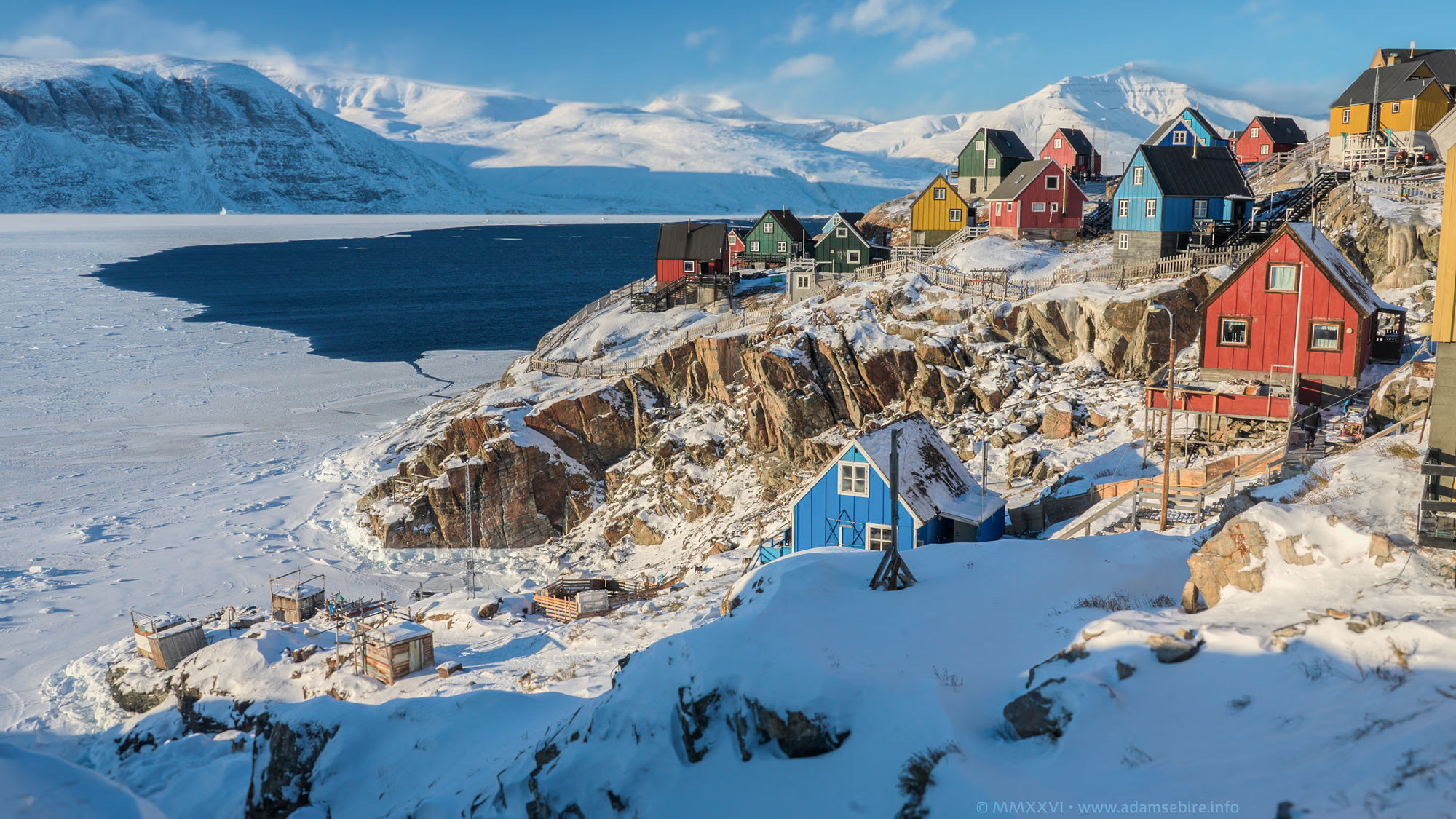
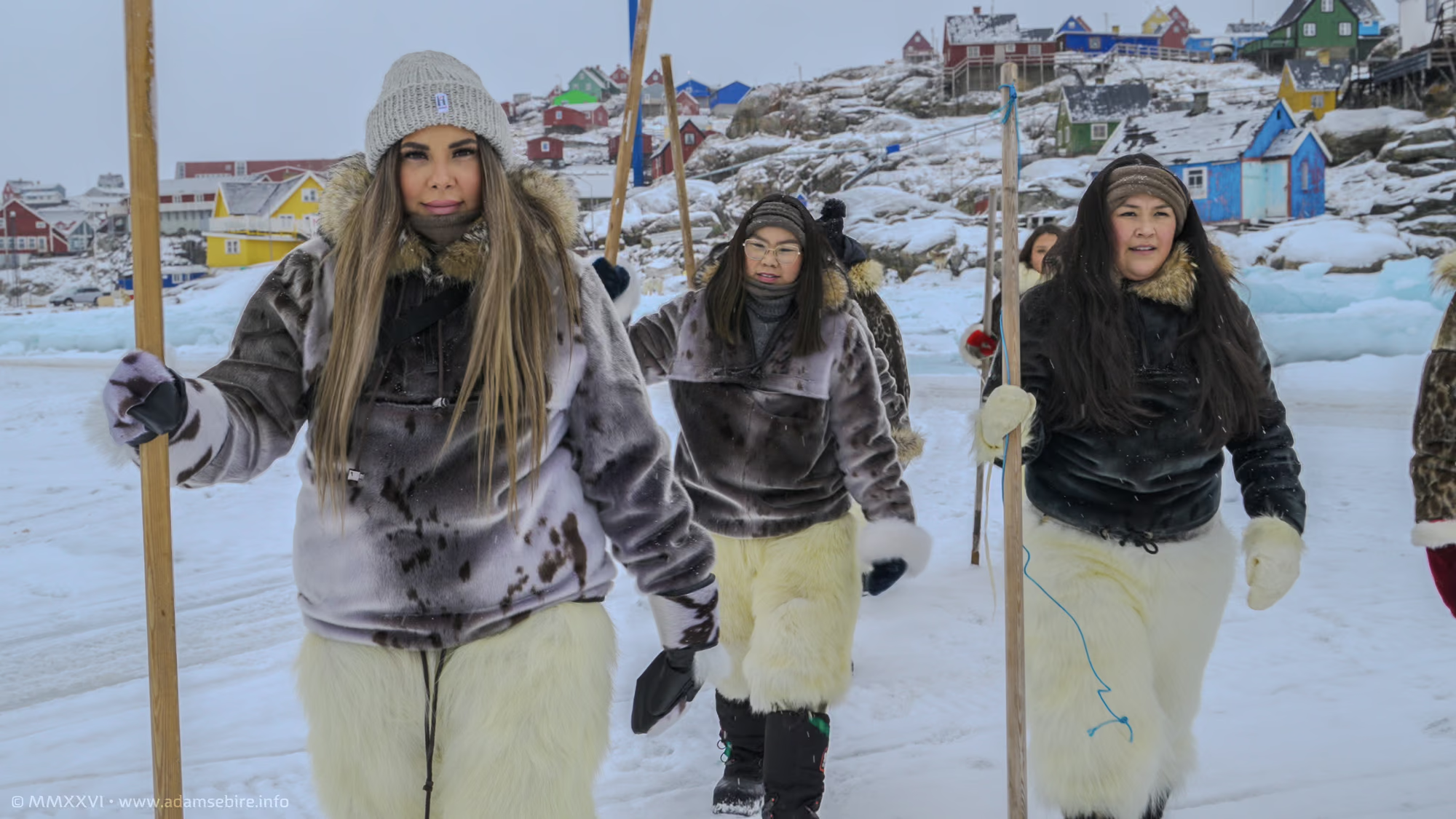
In fact it’s warming four times more rapidly than elsewhere. Our sea ice is thinning so fast that many of us are nervous to go out very far at all on it now. I started wondering what it must be like for communities accustomed to spending half their lives living, hunting, working and playing on it. I’d heard that one very remote northwest Greenlandic community was part of the renowned El Sistema music program for youth-at-risk. I thought: these might be the children who can help tell the story of their sea ice. In fact their singing was to become a motif of the film. Their island of just over 1000 Inuit is dealing with a lot of changes: globalisation, decolonisation, and now global heating. All of which have transformed former subsistence lifestyles extremely rapidly. And since it was so uncertain if and when the ice would stabilise, I couldn’t bring a crew; so I had to do all the technical roles, from drone to underwater shots, myself when I arrived in February 2024. My fingers haven’t forgiven me!
MB: Your work engages quite a lot with the spatiotemporal dimensions of the climate crisis – and on a technical level, you explore multi-channel video/polyptych, montage, etc: various means of placing images into affective and dialectical relationships. Can you speak further on this: in layman’s terms, what are you communicating through these techniques or modes?
AS: A few years ago in Belgium I was surprised to be swept away by early Renaissance multi-panel paintings. These were artists, 500 years ago, bringing cause and effect, here and there, self and other into juxtaposition across several moveable panels: polyptychs: think Hieronymus Bosch and others. It seemed like an amazing way to deal with problems that were ‘hyperobjects’ – too big, too unfathomable, too unrepresentable – by putting their elements into spatial relationships, sometimes connected, other times disjunctive. I decided to do that with LED panels, screens. So then the audience moves through concepts as they walk around. It’s hard to get such works exhibited to a wide audience though; so with Sikoqqinngisaannassooq I made a traditional single-screen documentary so it could be seen by people who might otherwise not know or care much about the Arctic.
But even in single-screen I still see a lot of those dialectics going on in this film. Outside influences like global heating and globalisation meeting local environments and traditions; worlds above and below the sea ice; perspectives of the youth whose future was melting before their eyes colliding with the benchmark memories of the elders who worked with the Children’s Home. One multi-screen video artwork I did shoot in Greenland is called Sikujumaataarpoq and it follows both humans and non-humans during polar night, where this enormous transition, from liquid landscapes to solid ones, keeps getting stuck in limbo. That was shown for the Perth Festival in Australia in 2024 in the middle of a record-breaking heatwave. I noticed a lot of visitors stayed for the whole 50 minutes, almost like they were sheltering from their own reality outside – but sheltering in a landscape that was also breaking down, just in a different direction! I don’t make multi-screen works as immersive escapism: I wanted people to feel really trapped and surrounded by this environment that was becoming unliveable in such a short time.
Because, you know, no matter how much scientific knowledge of climate change we might have, I think it’s not until we form an emotional connection with its changes that it can deeply move us towards climate action. So I hope that hearing directly from the people most affected about how they feel about what they’re witnessing might offer audiences an entry point.
MB: Sikoqqinngisaannassooq features multiple onscreen creative interventions that directly invoke the environment (the interviews’ ’iceberg cinema’ and inscribing of words, etc). Tell us about the impetus behind these processes.
AS: Well I’m glad you mention the iceberg cinema because so many people think I just used special effects! No, I actually plonked a projector, generator and laptop on a kick-sledge and rode it down the hill to the very dubious-looking sea ice, where it promptly all froze after less than 10 minutes (it was around -15º)! So the next night I was better prepared with insulation and – lo and behold – there was even a brief moment between the aurora coming out to watch and I could use the drone to film. The cold and dark made it tough!
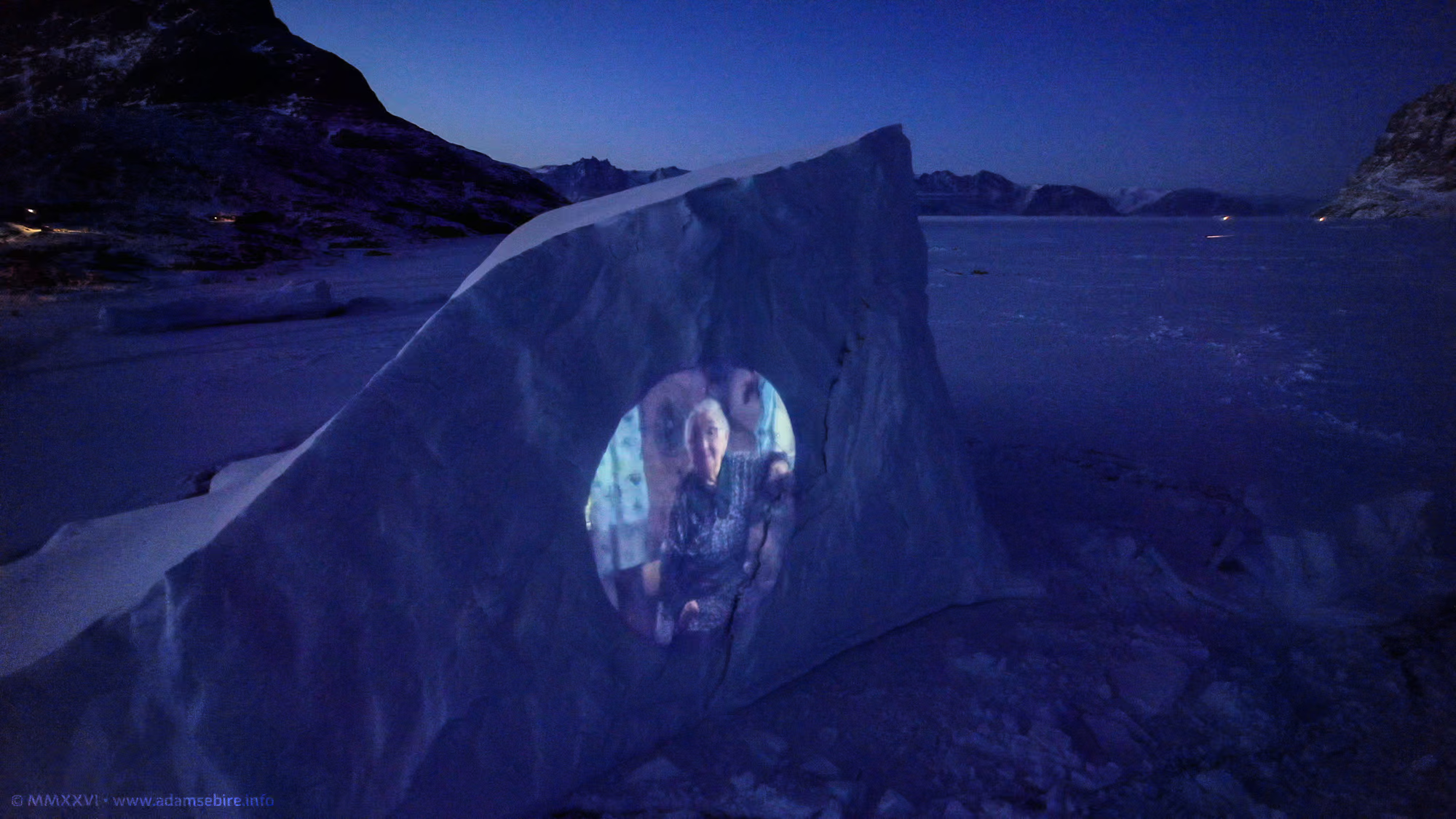
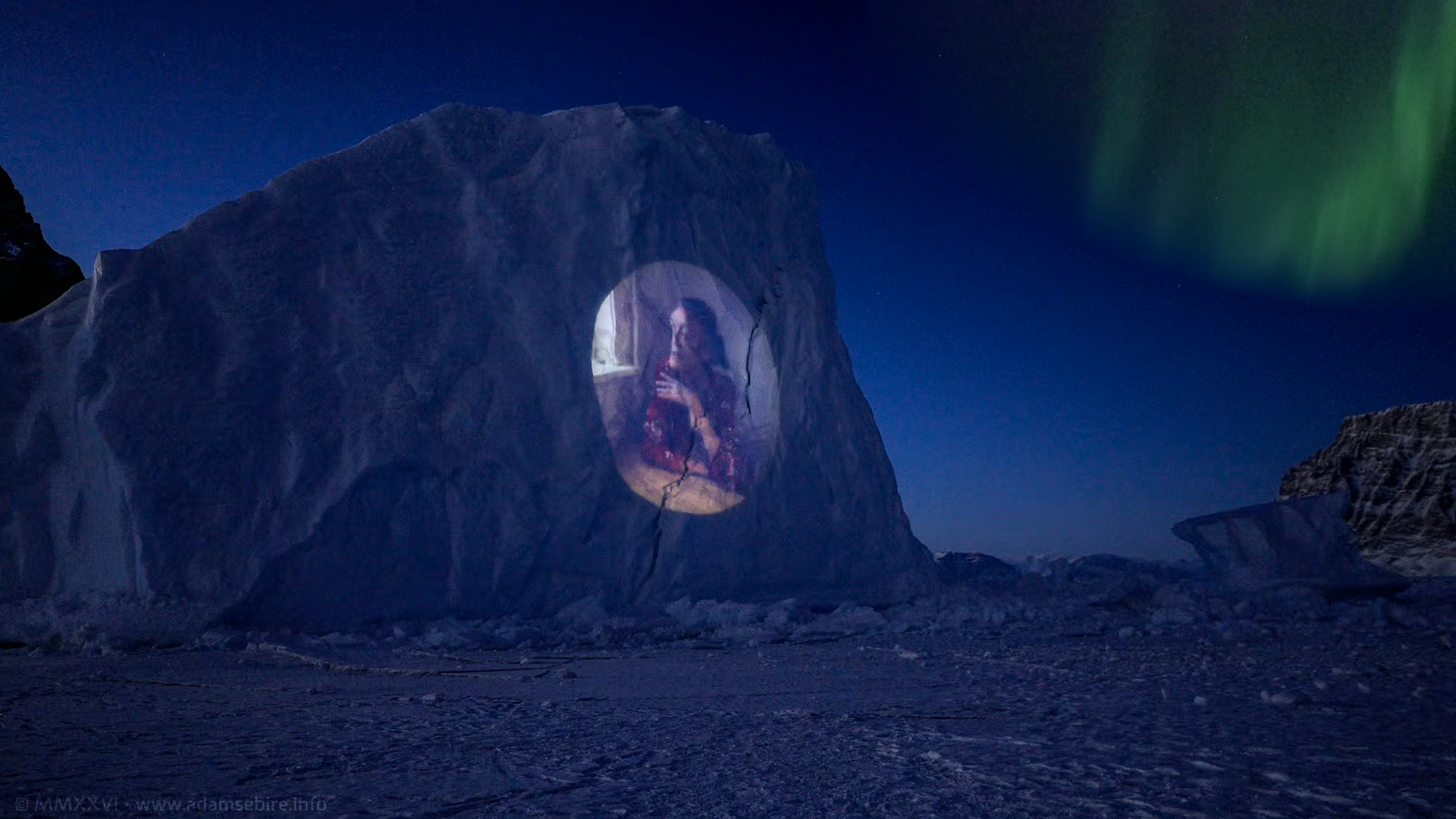
I hope to go back next year to work with the same children to make a mini festival of their own videos to project onto icebergs. And writing atop the sea ice was something I’d learnt could be done a while back when I made a film about a scientific formula that could calculate how much sea ice my flight to Greenland had destroyed, called Adrift (∆Asea-ice).
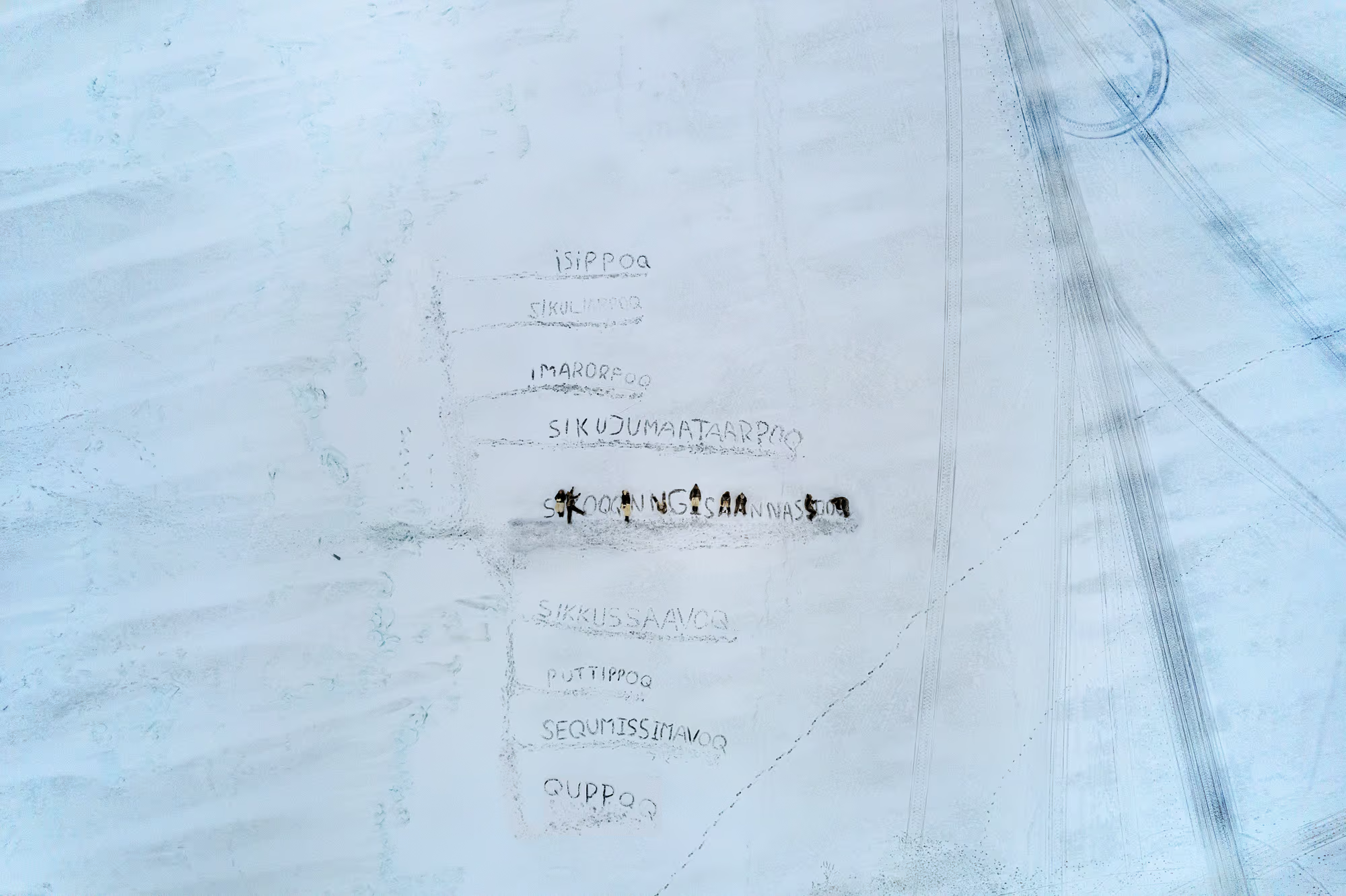
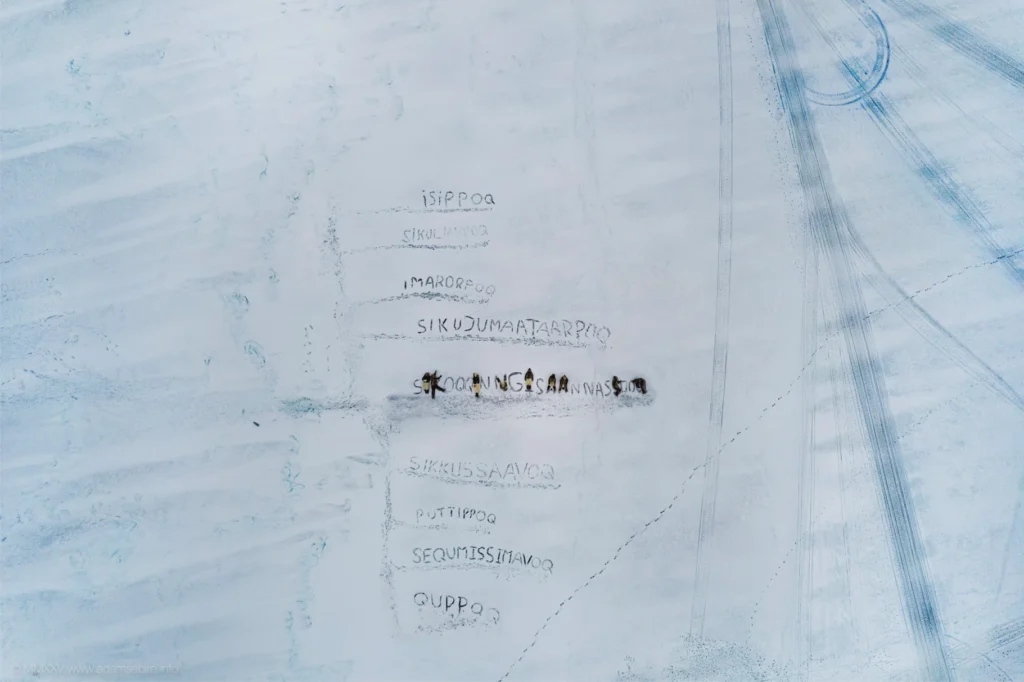
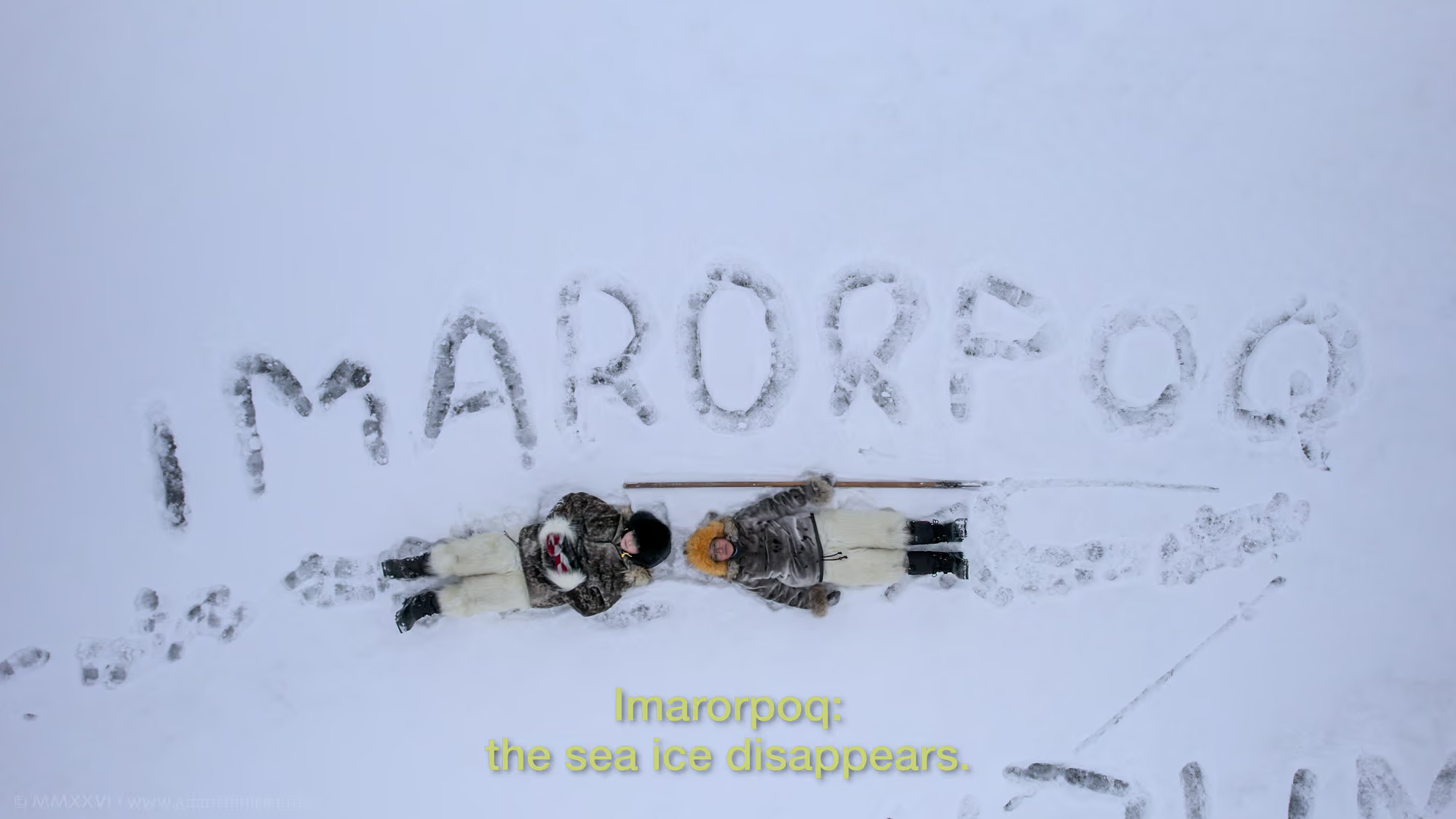
As for the dozen words the children and I collected, they’re words in the local Kalaallisut dialect that described the changing sea ice conditions. They chose one each and we decided how to film it. West Greenlandic is a polysynthetic language; you can build several concepts into one word, so I asked Rebi, one of the social workers you see in the film, to create a word that expressed the increasingly likely possibility of “a future without sea ice.” ‘Sikoqqinngisaannassooq’ was the result. It’s a nightmare when film festivals ask me to pronounce the title on stage during Q&As! And it took the children quite a while to inscribe all 22 characters in the snow with hunters’ tooqs.
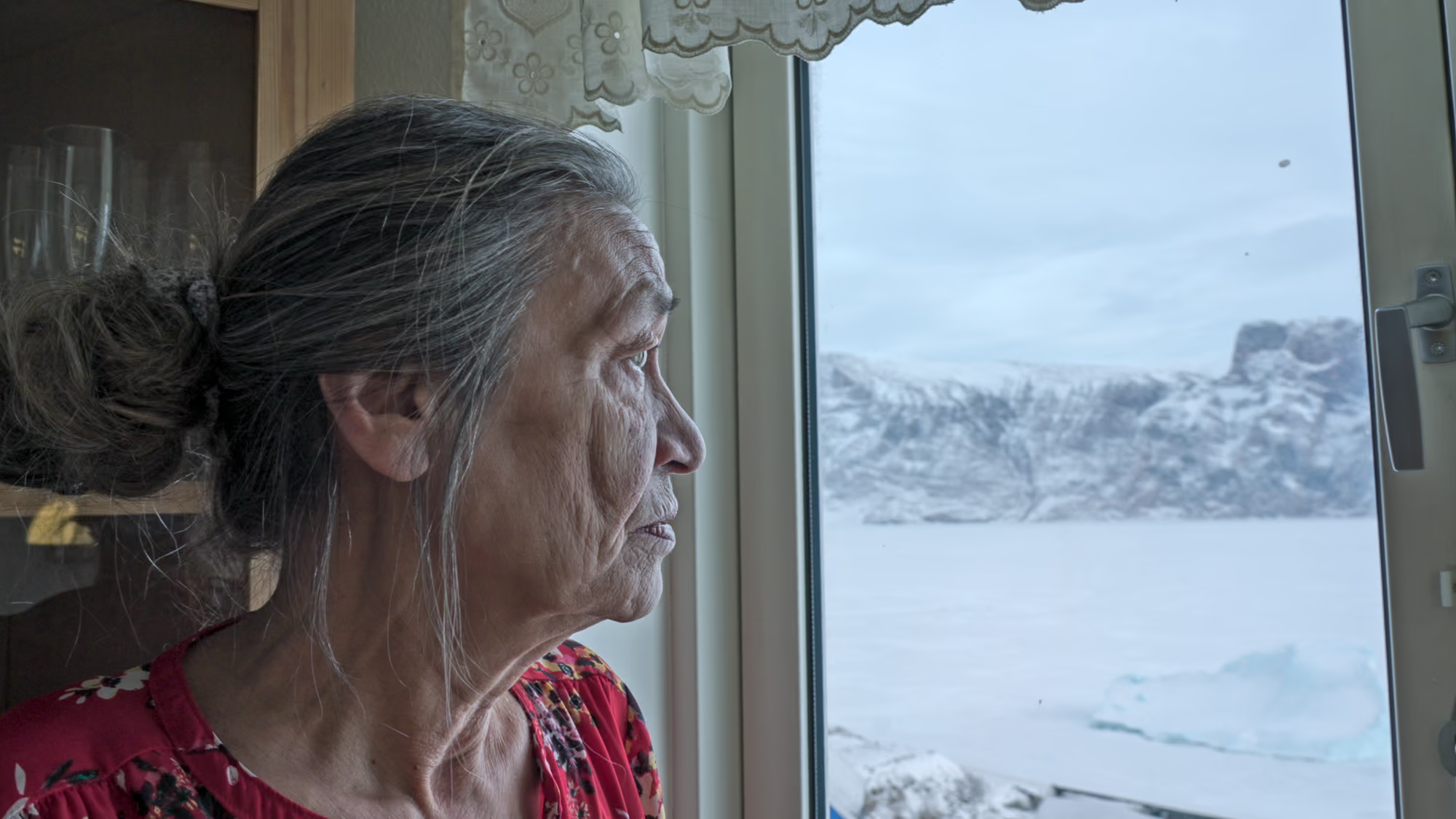
Unfortunately it proved prophetic: the next year, 2025, the community experienced no stable sea ice. One of my friends there wrote to me in spring: “No sea ice in Uummannaq. We haven’t been able to go out at all. Many tons of fish were not caught, so many have struggled.” And by that he means struggled psychologically, not just for food and livelihoods.
MB: What’s next for Sikoqqinngisaannassooq (and how can people watch it)?
AS: Sikoqqinngisaannassooq is starting to be shown to secondary-school children in some countries, which makes me very happy as it’s the audience that I’m most keen to reach. It’s also won some prizes that are retrospectively helping me to fund it! Just recently I took it back to Uummannaq to show everybody, though we couldn’t project it onto an iceberg as I’d hoped; stable sea ice was just too late and too thin – once again. But on this visit I also taught the same Inuit children to make their own 360º documentary – to view in the VR headsets they already use for gaming. It’s all their own music in the film they made and it looks just amazing so now we’re trying to fund its distribution. Again to allow young audiences to empathise with what it’s like to live in this rapidly changing Arctic environment.
Stepping off the island onto their increasingly fragile sea ice is an extraordinary moment fewer and fewer people will have, but an immersive experience of it, with the locals as your guides – maybe it’s the next best thing?
In between working with the Inuit kids I also made a piece of what might be loosely termed ‘climate change performance art’, a work called anthropoScene XII: Iceberg Care, where I clean the snow off sublime, dying glacial icebergs. That work’s living a life in art exhibitions rather than in cinemas! But unlike sea ice, icebergs are, for now at least, increasing. Interesting fact: we’re probably now at ‘peak iceberg’ as glaciers retreat and calve off so many bergs around Greenland. Before long it’s thought the glaciers will retreat so far that they’ll be fracturing onto dry land, which would be the end of the road for icebergs, at least for the Arctic. Sea ice is a much more immediate problem though: the Arctic Ocean will likely be sea-ice-free for the first time one summer between 2030 and 2050, perhaps even earlier: it’s “the first major component of the Earth system that we are going to lose because of global warming.”
But there’s still a chance to retain some of the coastal winter sea ice that humans and non-humans rely upon, if we take strong action to reduce greenhouse gas emissions right now.
Find out more about Adam Sebire’s work at https://www.adamsebire.info/the-works/visual-art/