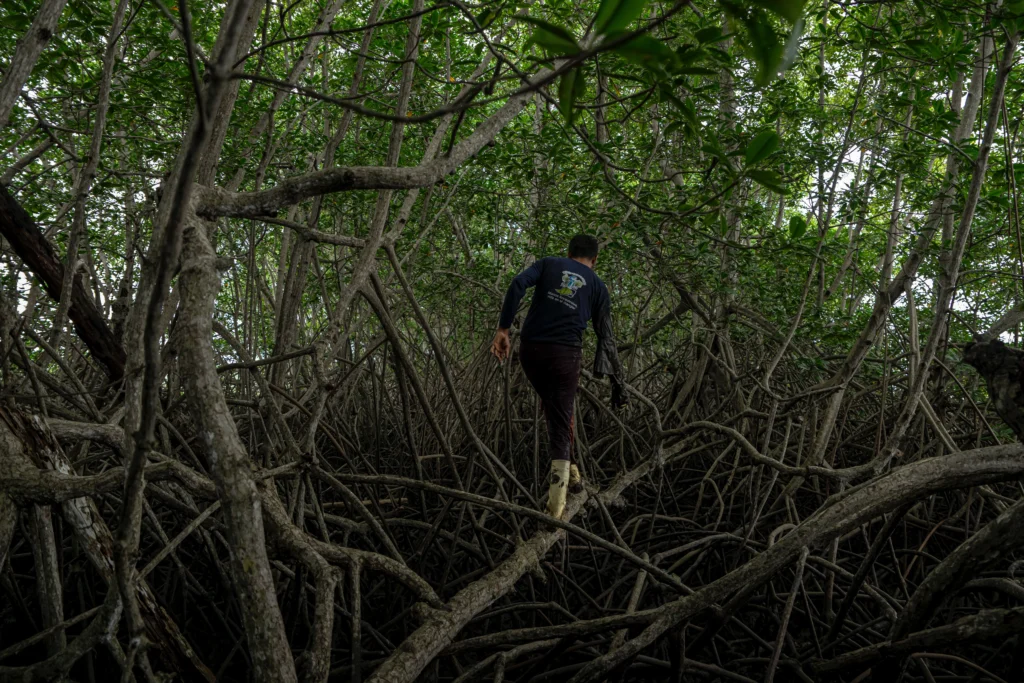
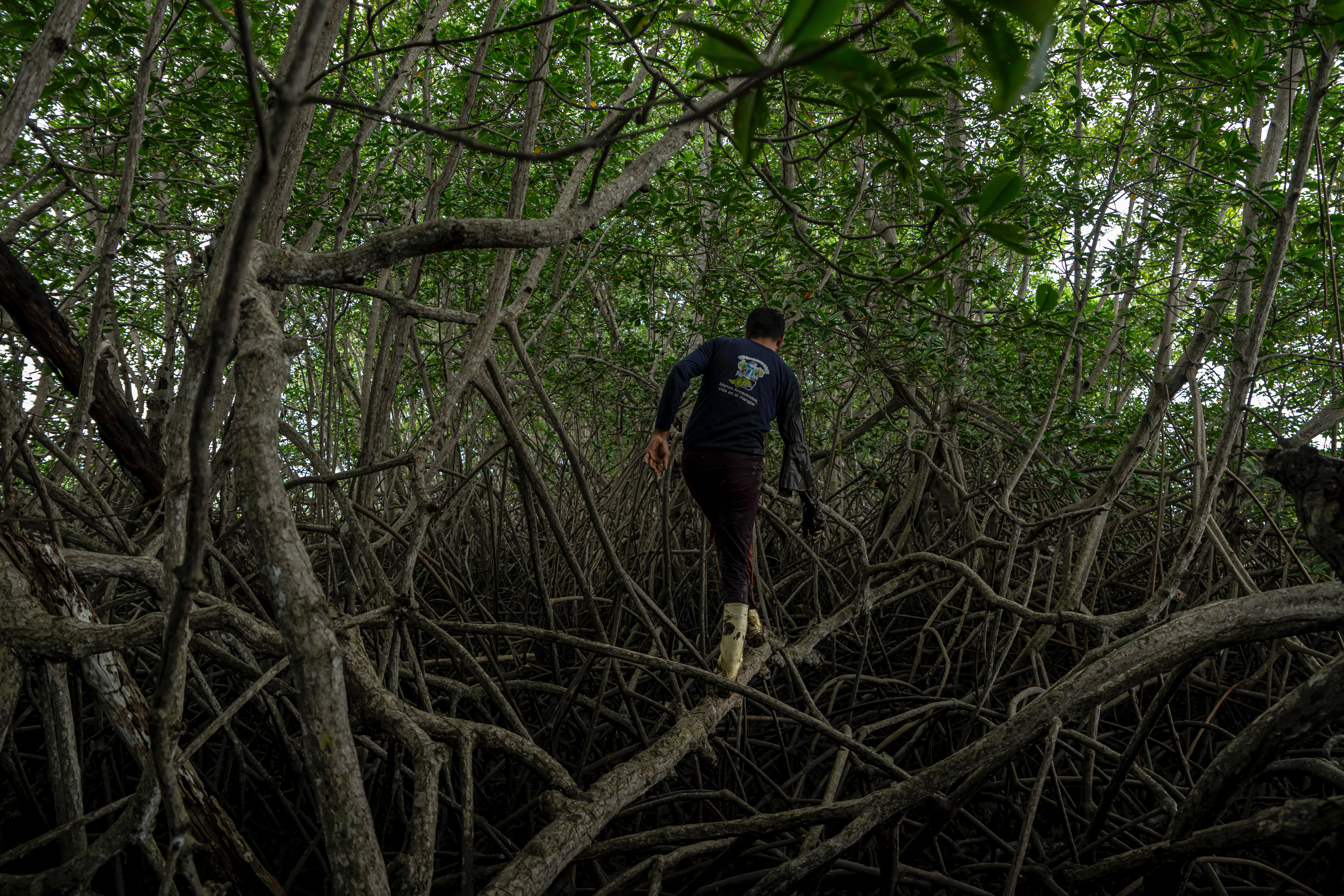
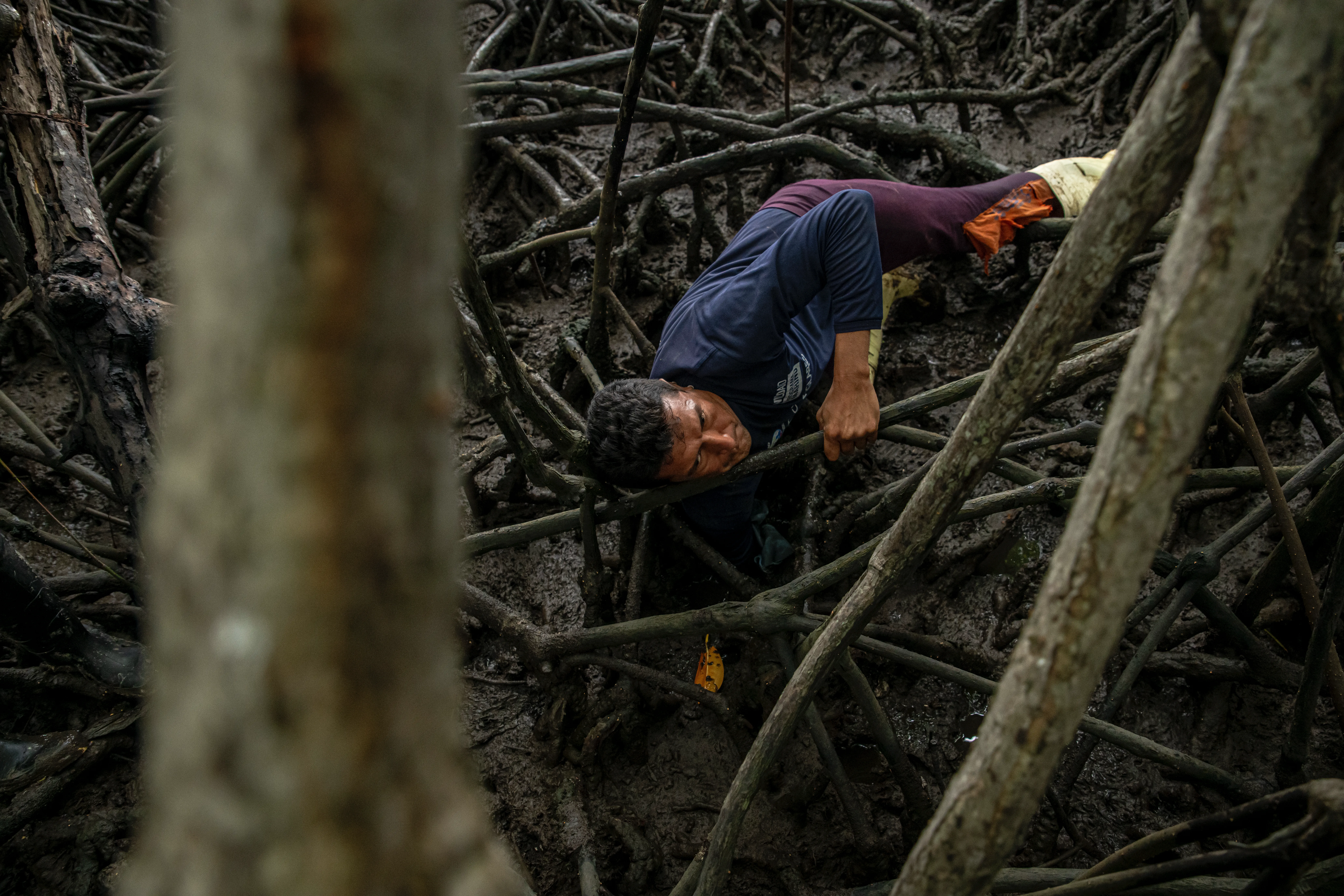
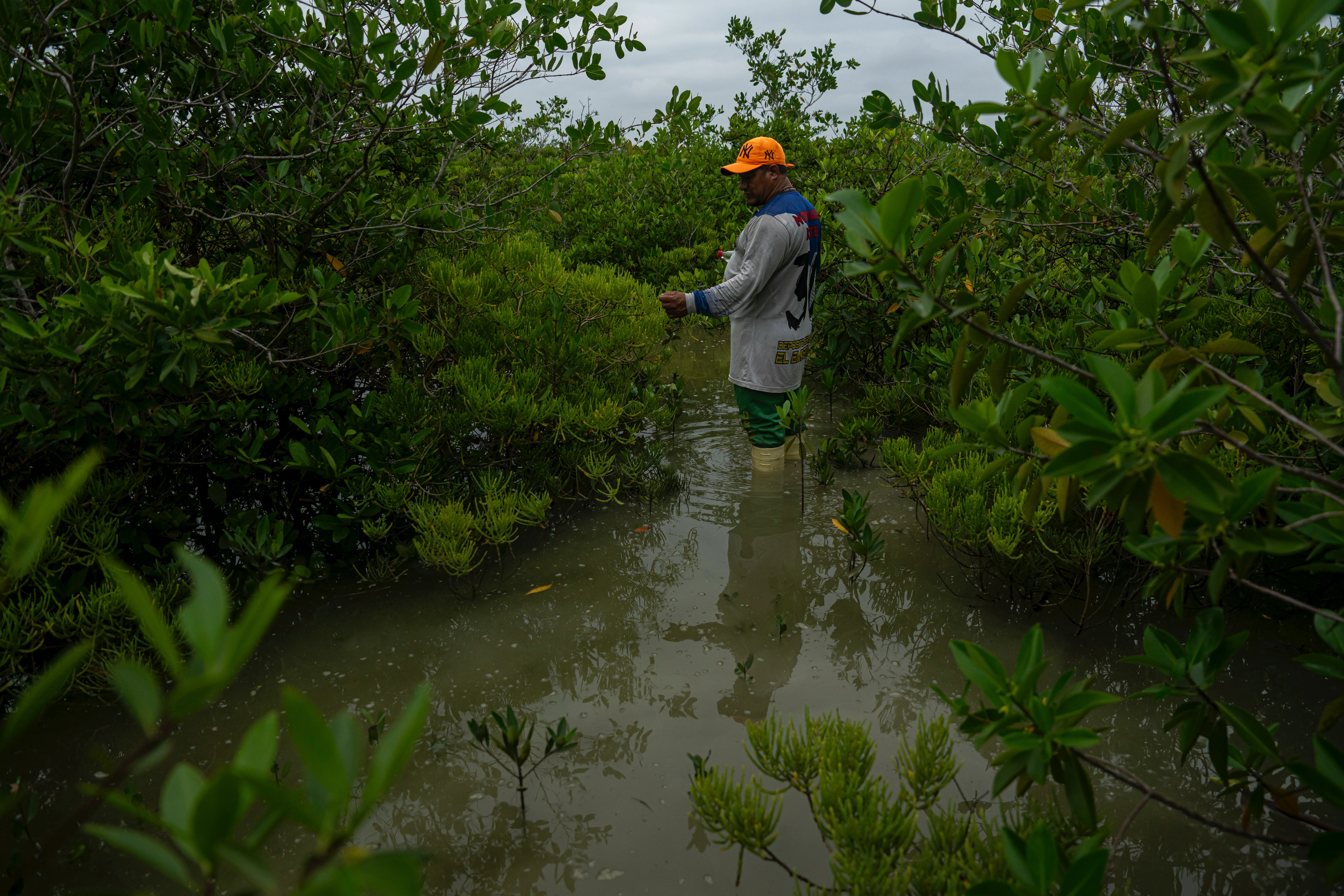
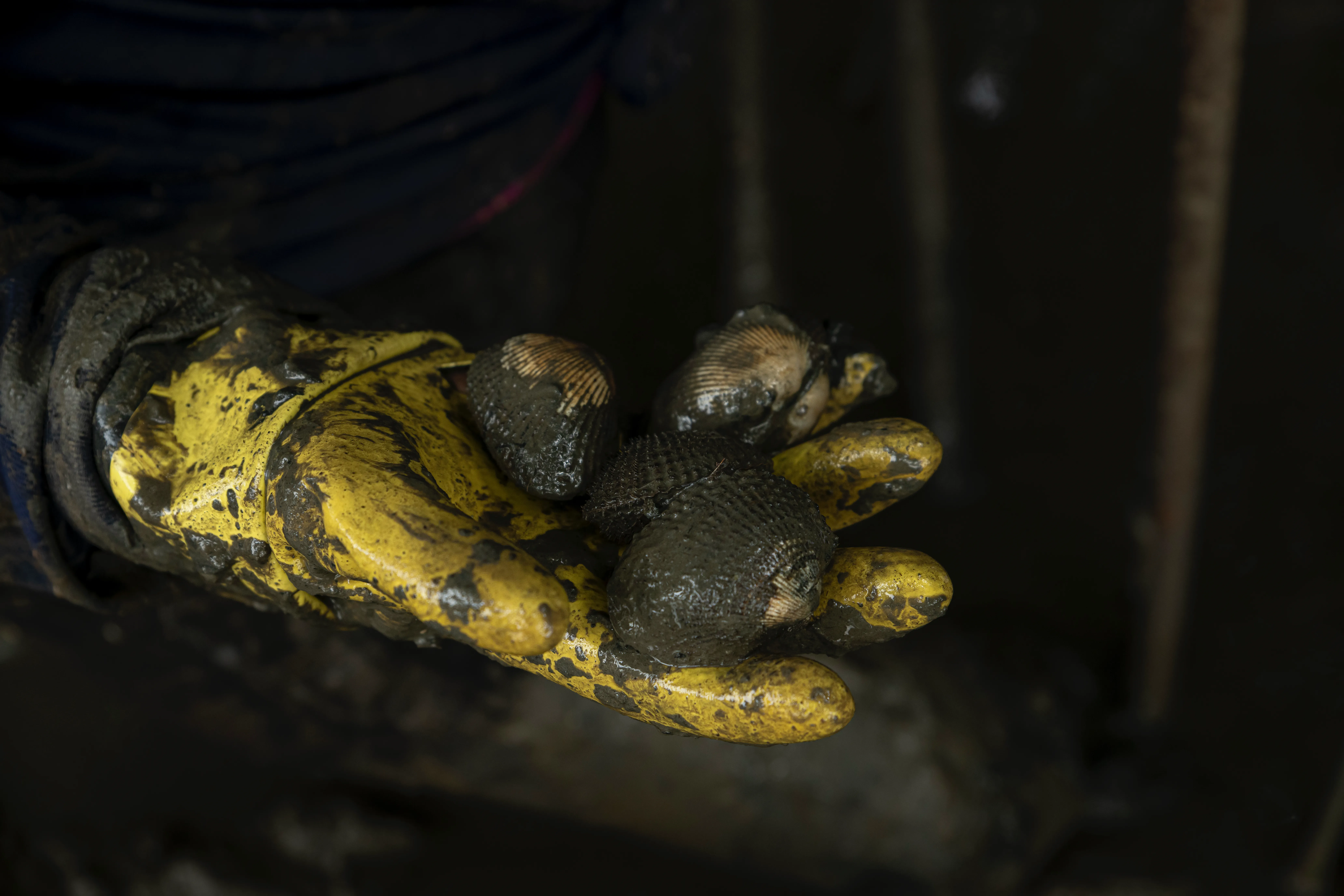
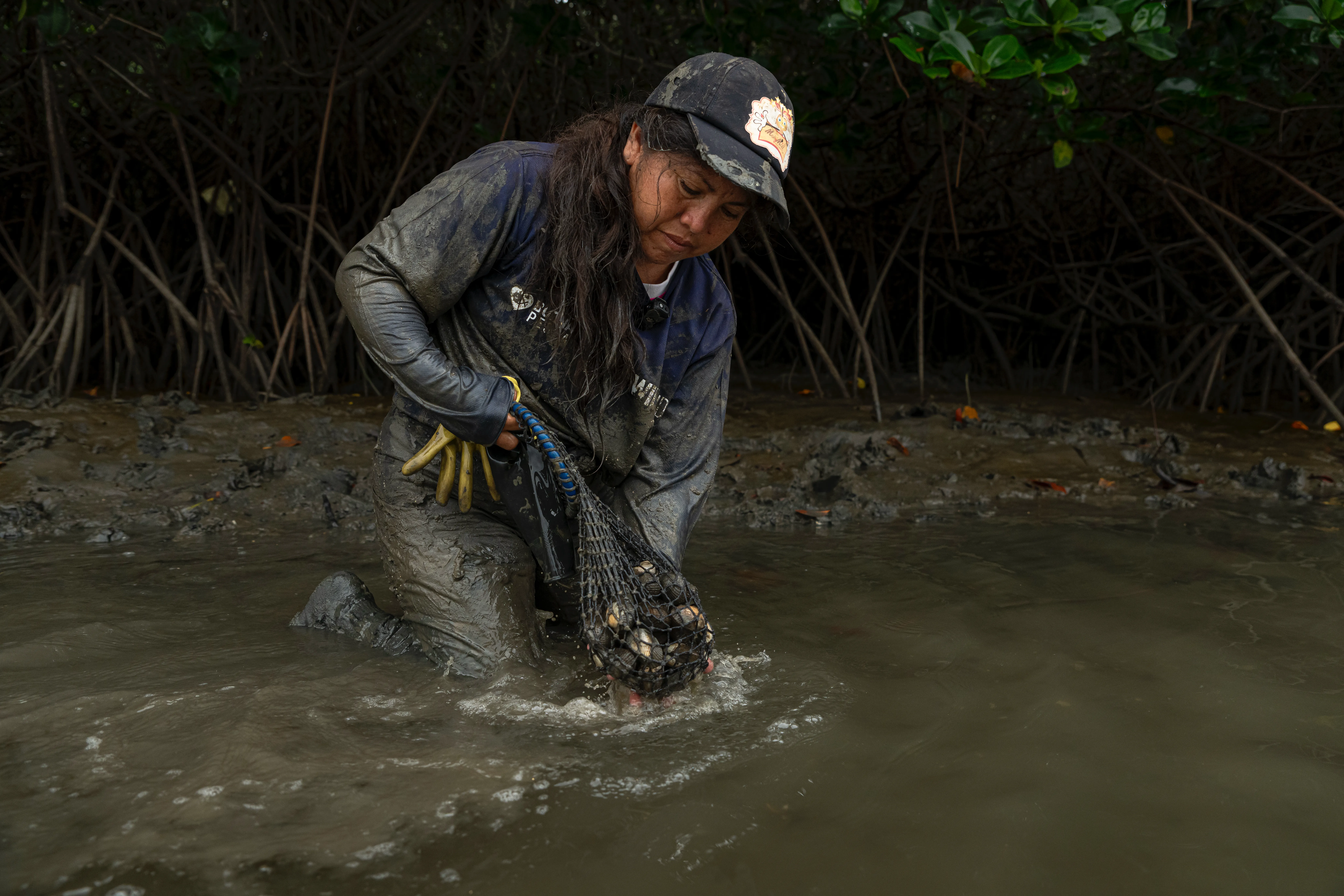
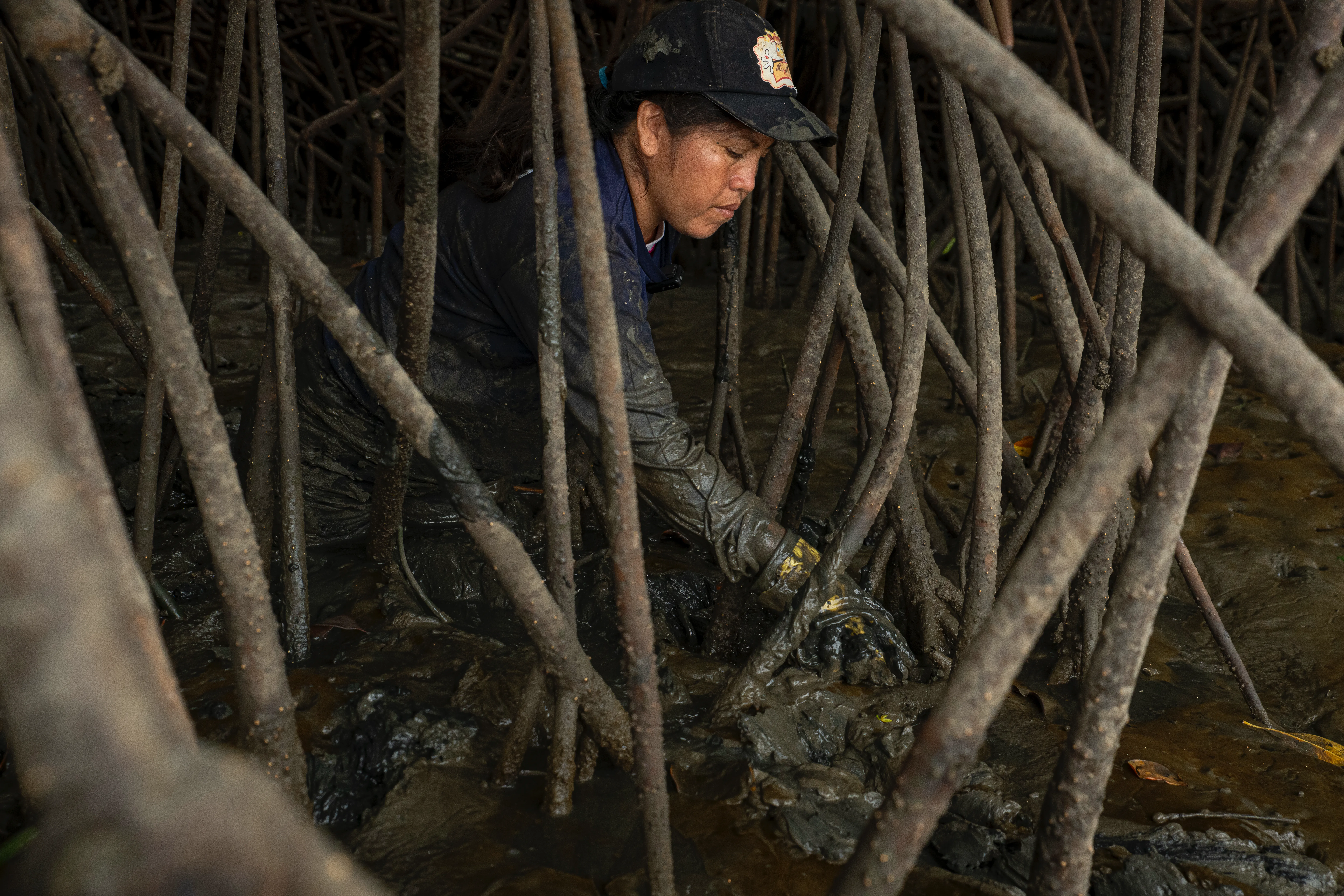
As the tide pulls back from the shoreline along Isla Costa Rica, in Ecuador’s Jambelí Archipelago, Alexander Alvarado Reyes steps into a mangrove patch and plunges his hands deep into the silt, searching among the roots for concha negra, the black-shelled cockles that burrow below. Now 37, Alvarado was ten when her mother first sent him into the mangroves to collect shellfish that could be sold to help support the household. Today, the same work helps sustain his own family.
But Alvarado Reyes does more than harvest from the mangrove. He also helps defend it through a legal framework called Acuerdo de Uso Sustentable y Custodia del Manglar, or AUSCM. Created by the government in 2000, the system grants traditional and Indigenous communities the right to use and manage specific areas of public mangrove, on the condition that they also protect them. About 100,000 hectares, roughly two-thirds of Ecuador’s mangrove forests, are now covered by such accords, up from just over 67,000 hectares in 2016.
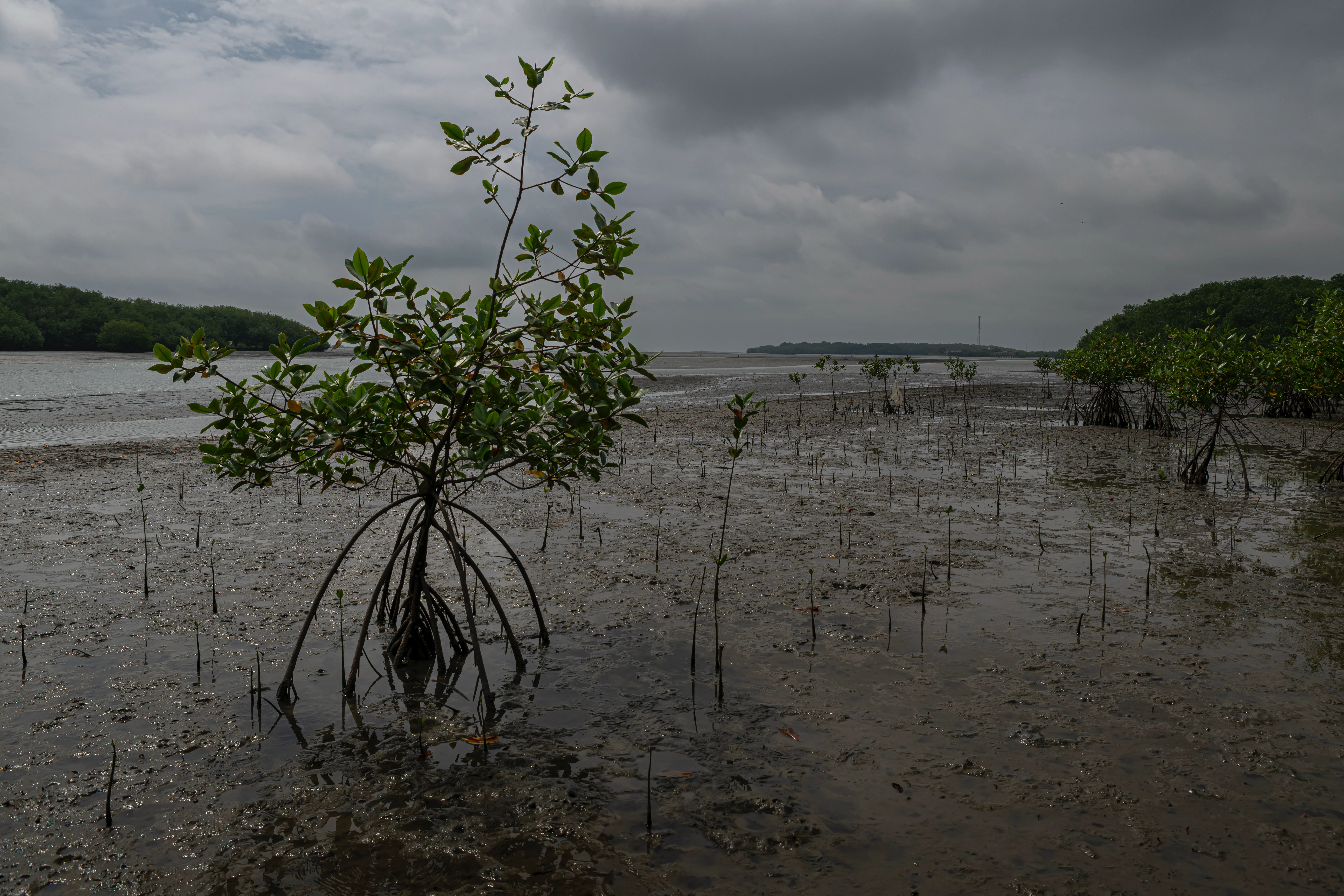
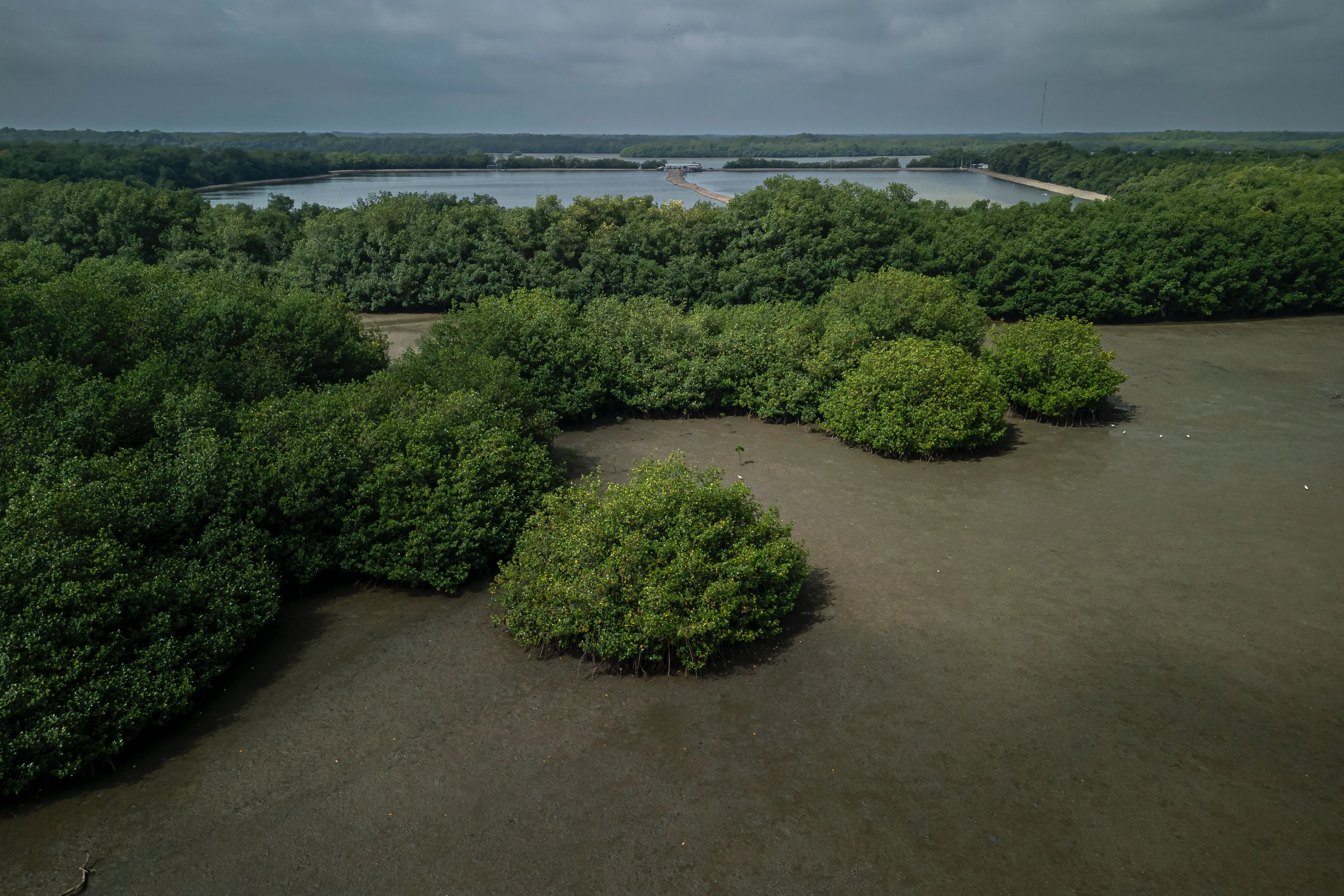
Mangroves are salt-tolerant trees and shrubs that thrive in the narrow zone where land and sea meet Their roots slow the tide, trap sediment and hold the shoreline together. They soften the force of waves and storms, filter water moving through the estuary and create sheltered nurseries for fish. They also store large amounts of carbon in waterlogged soils, where organic matter can remain buried for long periods.
For decades, communities along Ecuador’s Pacific coast have watched shrimp farmers encroaching further into estuaries, razing mangrove patches to make room for shrimp ponds. Since 1970s, the country lost up to 43% of its mangrove cover. Clearing is now illegal, and the shrimp industry insists the era of large-scale deforestation is over. But residents and scientists say the pressure of these ecosystems has not ended. “People think mangrove destruction is a thing of the past,” says Eduardo Rebolledo Monsalve, a researcher at the Catholic University in Esmeraldas. “That’s not true.”
Over the past decade, shrimp production has nearly quadrupled, turning the crustacean into Ecuador’s top export ahead of oil. Most of it goes to China, now the country’s biggest shrimp buyer, as well as to Europe and the United States. As the industry has expanded, farms have pushed deeper into coastal landscapes already scarred by decades of deforestation.
Data from Trase, a supply-chain transparency initiative, shows that 427 hectares of mangrove forest were converted into shrimp ponds between 2014 and 2018, mainly in Guayas, Ecuador’s leading shrimp-farming province. Another study based on remote sensed images found that a further 2,900 hectares disappeared in the following four years, with nearly half of the loss occurring inside legally protected areas. In January 2024, a navy operation searching for clandestine airstrips reportedly detected a 10-hectare clearing inside Manglares Don Goyo, a Ramsar-designated wetland in the inner Gulf of Guayaquil.
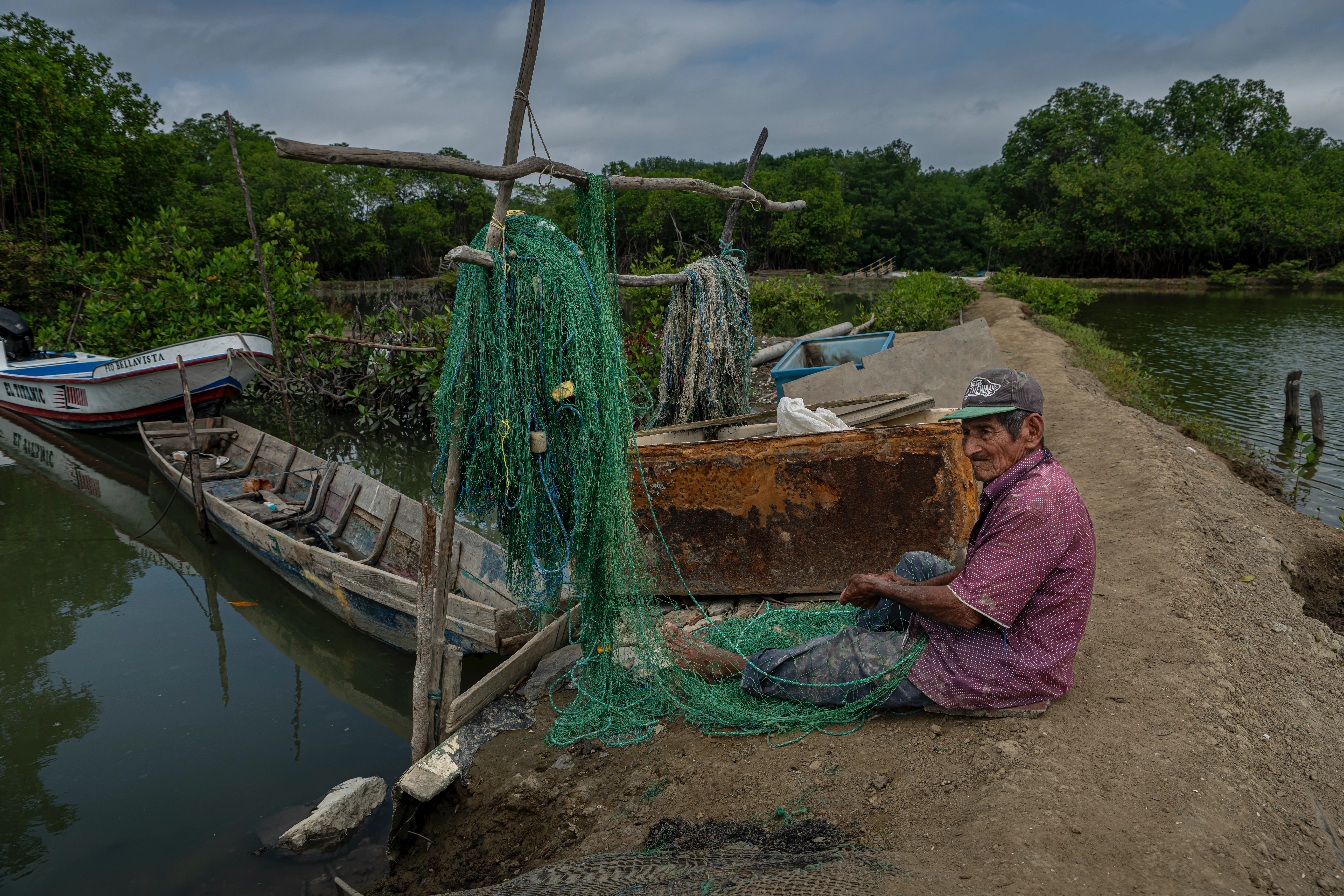
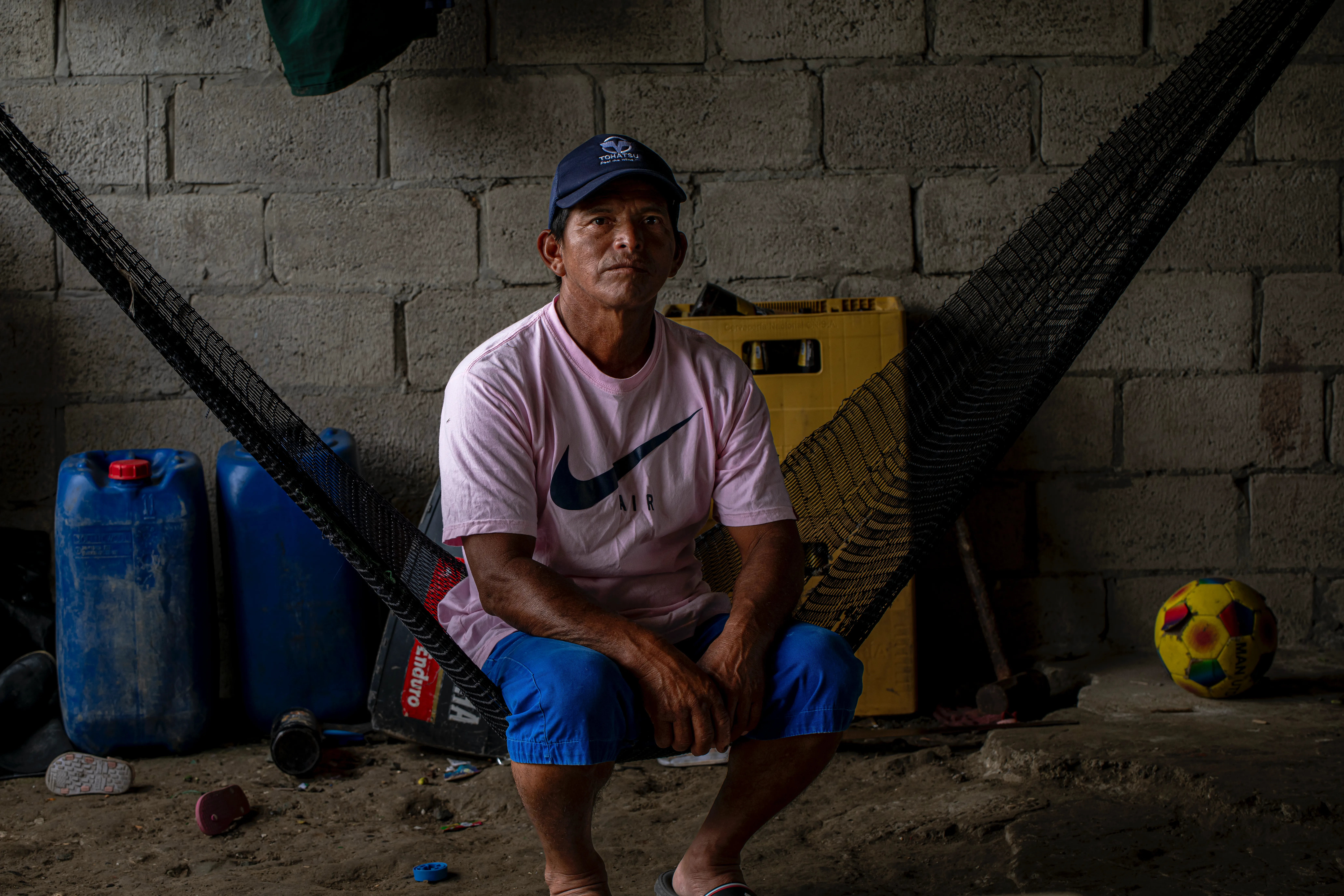
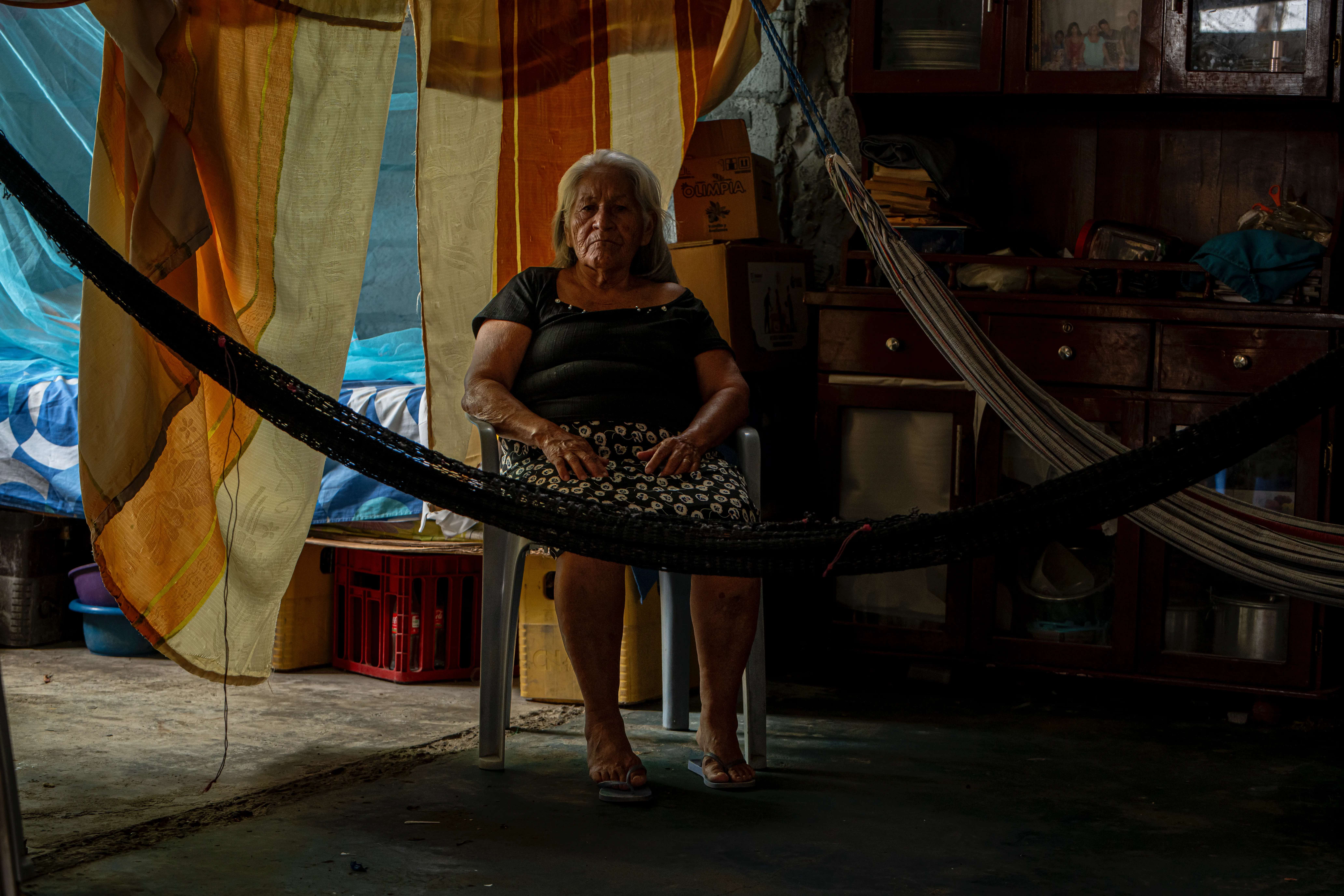
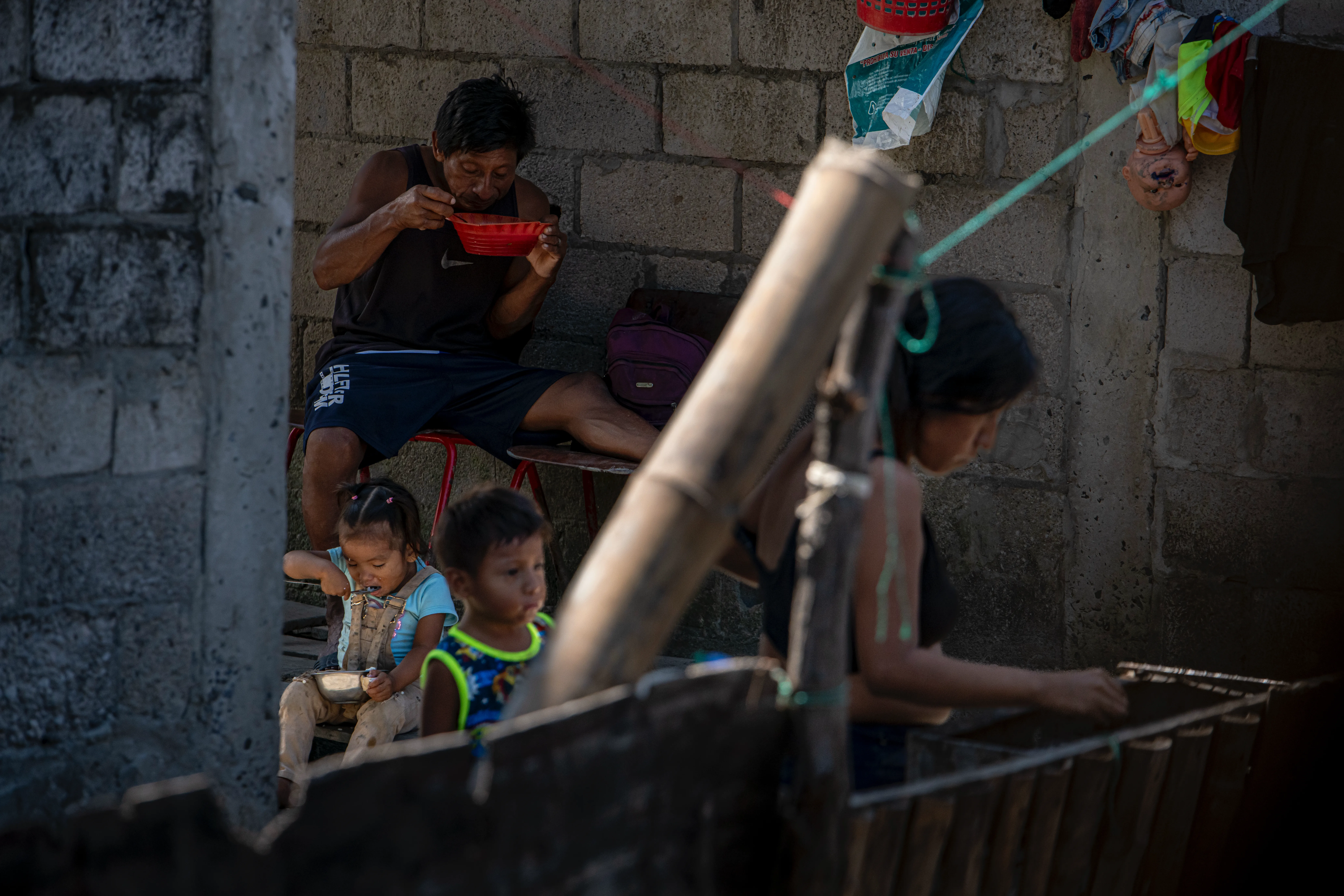
Luis Ángel Flores Ramírez, a crab harvester in El Oro, where Ecuador’s shrimp industry first took root, says farmers have changed tactics. Instead of cutting large blocks all at once, he says, they remove smaller patches “under the pretext that they are only pruning them, or that they need to dig a canal or build dikes.”
Further north in the rural fishing parish of San José de Chamanga, Pablo Roberto Demera tells a similar story. “Every time they repair a pond wall, they clear two more meters, two more meters, and so on,” says Demera, who chairs Asopesanjocha the local artisanal fishers’ association. Residents, he adds, often discover the damage only later, when patrols find a newly widened wall or a fresh strip of mangrove gone.
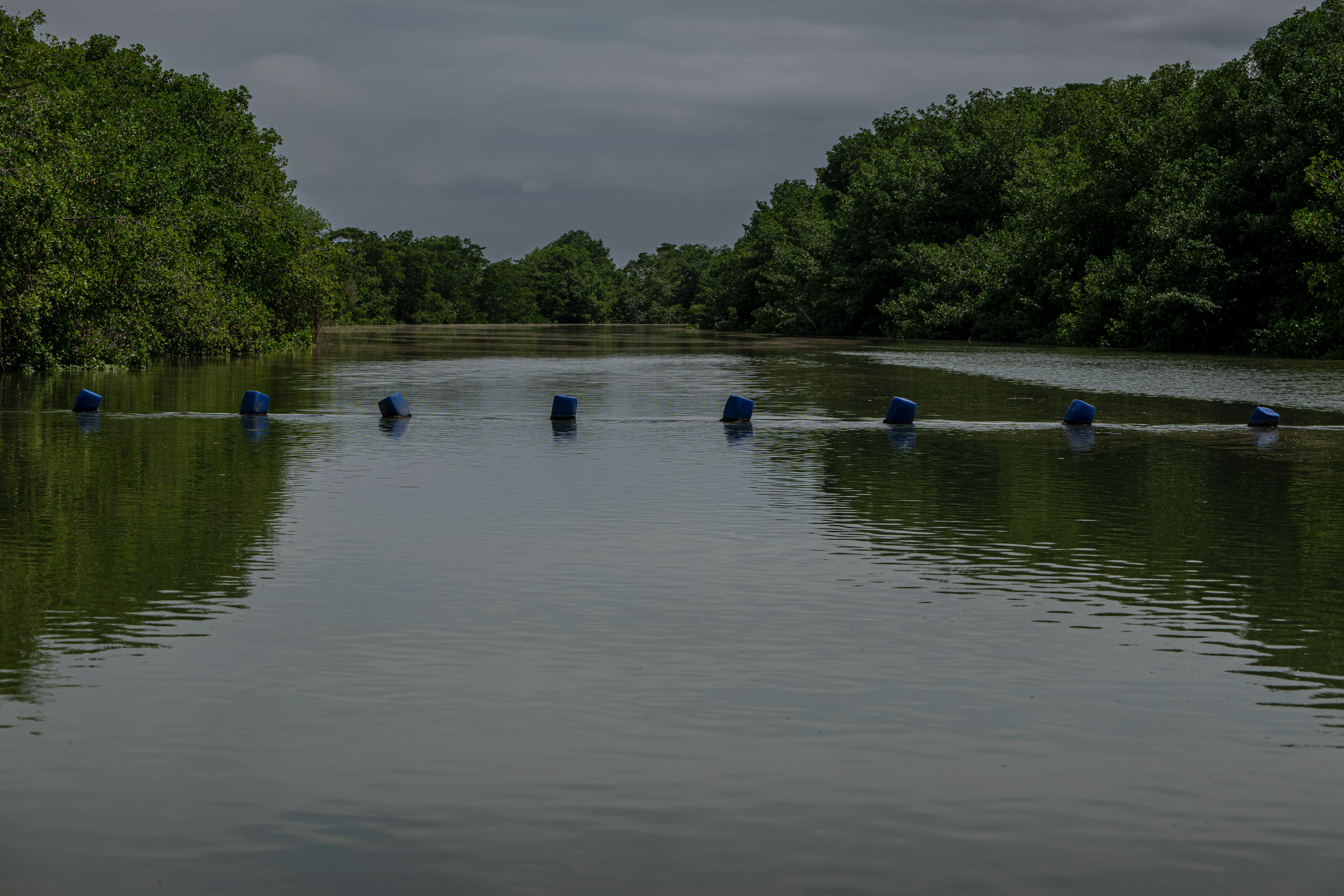
The harm does not stop at the treeline. Shrimp farms pump water into their ponds, then discharge it back into estuaries. Ecuadorian law forbids farms to release untreated pond waste directly into waterways. But a 2023 study found that water in mangrove systems containing shrimp farms in Esmeraldas had roughly two and a half times more ammonium and phosphorus than water in mangroves without farms. An earlier assessment by the Monterey Bay Aquarium’s Seafood Watch programme estimated that more than half of the waste generated by Ecuadorian shrimp farms is released directly into the environment.

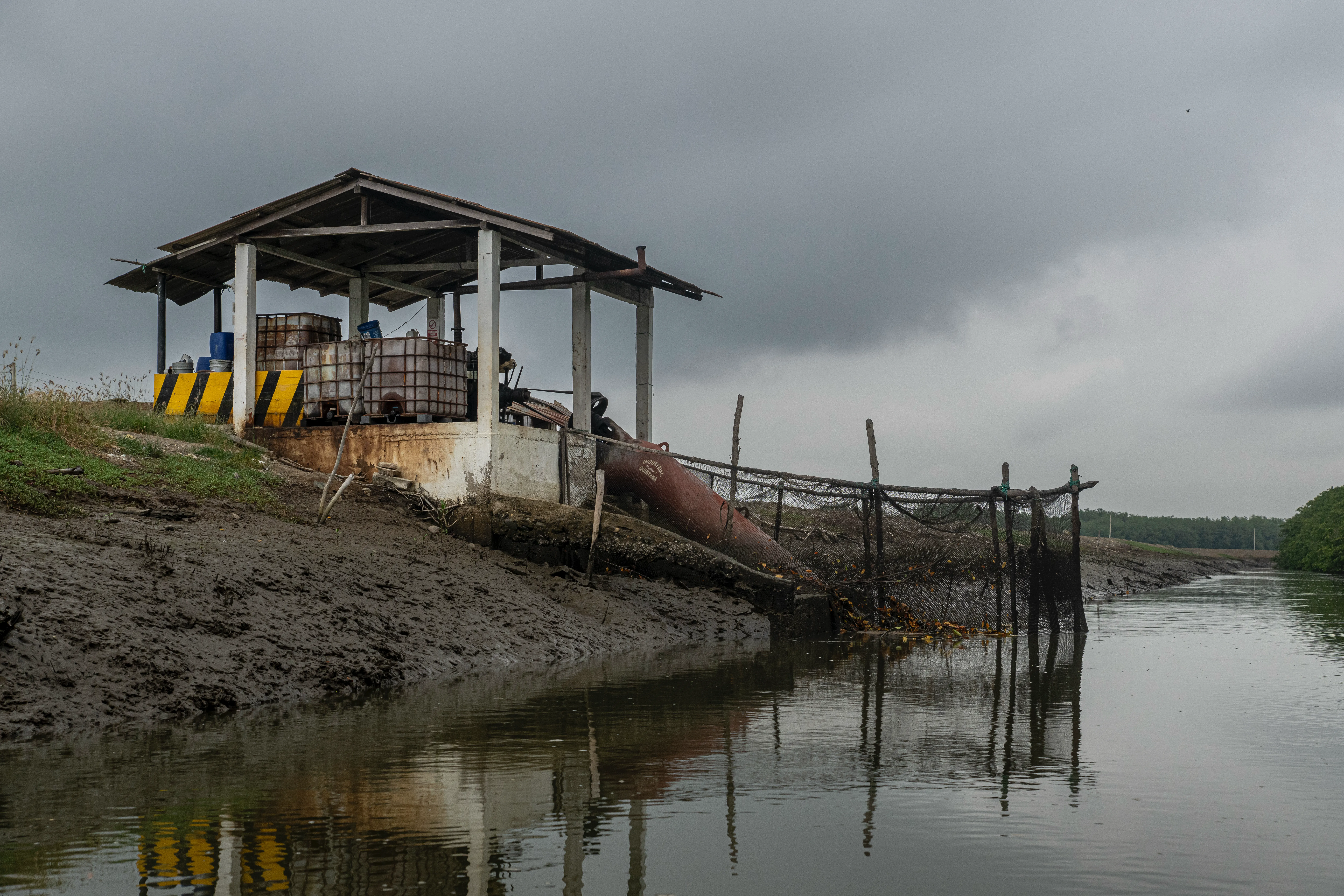
One former shrimp worker from Puerto Libertad, in Santa Elena, who wished to stay anonymous says he was instructed to release used pond water directly into the estuary without treatment. Máximo Jordán, president of an artisanal crabbers and fishers association in Puerto Roma, a village surrounded by more than 150 shrimp ponds in the Gulf of Guayaquil, says he has seen pipes allegedly carrying dredged sediment from a nearby farm into the mangroves where crabs burrow.
Communities also worry about chemicals used during harvesting. One common substance is sodium metabisulfite, which farmers add to the tanks or bins where freshly harvested shrimp are kept to prevent them from spoiling before they reach the processing plant. For Mauricio Cruz, a crabber in Huaquillas, near the Peruvian border, the chemical adds to broader concerns about pollution from shrimp farms, especially when ponds are flushed during water exchanges. During harvests, he says, it is not uncommon to find dead fish around the ponds.
Despite the evidence, the issue largely flies under the radar. “There is very little funding to investigate these impacts properly,” says Wendy Chávez-Páez, an environmental researcher with the German Institute of Development and Sustainability. “And there’s not much political appetite either, because shrimp is economically important.” Enforcement is also weak. In Esmeraldas, where more than 200 farms operate, there is only one aquaculture inspector for the whole province, and he lacks transport.
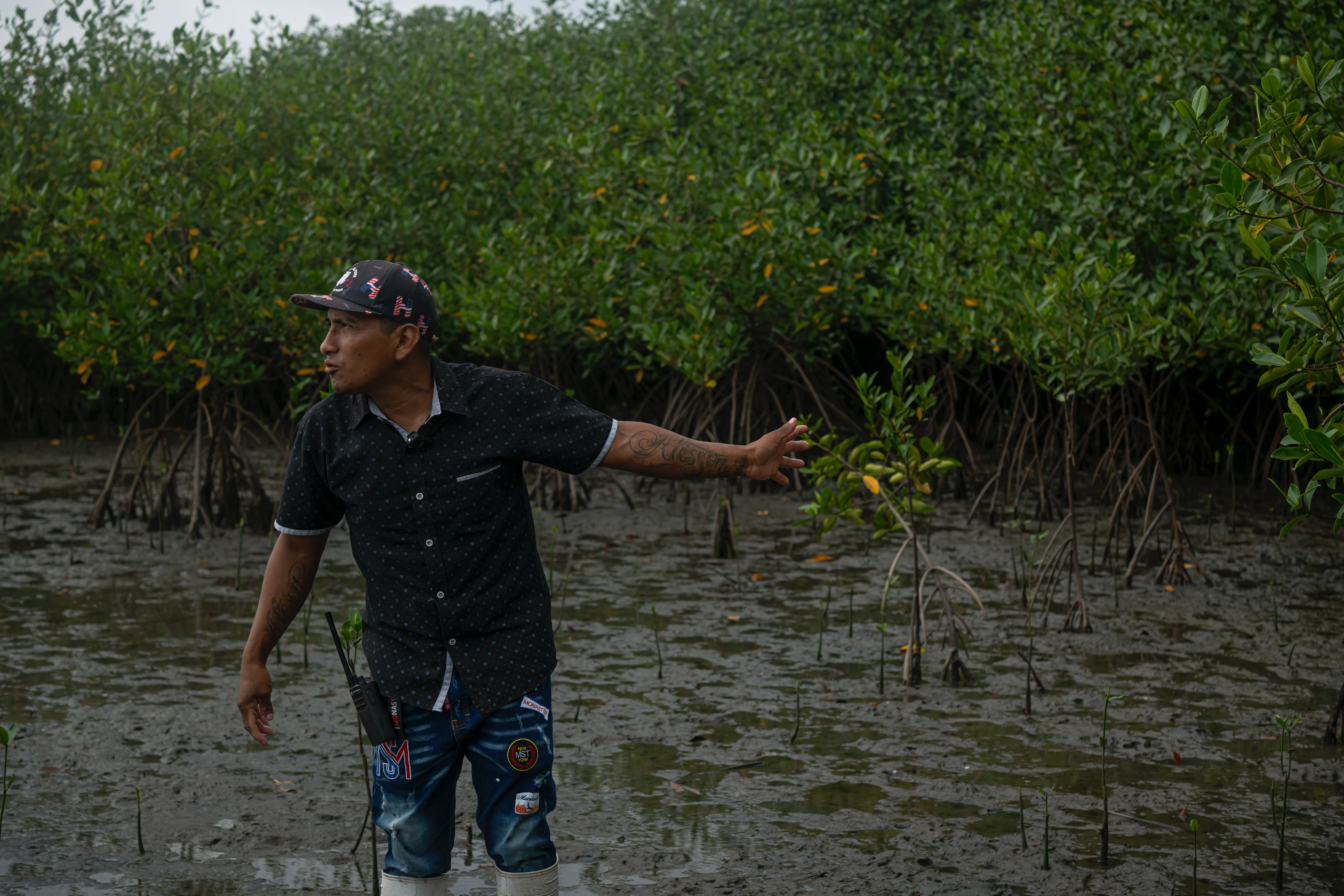
Against this backdrop, community custody agreements have become the only way to protect the ecosystems that still put food on their tables. “We are the guardians of the mangrove here, if we were not here taking care of the mangrove, there would be none left.” says Alvarado Reyes, who leads Asociación Costa Rica, a group of about 60 members that oversees the mangroves surrounding Isla Costa Rica. The group organises regular mingas — communal workdays — to clear paths and make sure no one enters protected areas without permission. They have also planted young mangroves in an area known as Los Chanchos, hoping to revive shellfish grounds that had grown barren.
In nearby Puerto Hualtaco, 44-year-old crabber Gilberto Terán remembers the years before his community obtained the custody agreement in 2017. Back then, residents fought back on their own: damaging machinery, burning excavators, breaking shrimp-pond walls to let the tide return. “We’re not proud of that,” says Terán, who leads Asociación 15 de Enero in El Oro. “But that is why the few mangroves you see today are still there.”
For Demera, in Esmeraldas, the AUSCM agreements are a way to draw a line on the map. Before the agreement, he says, shrimp farmers could enter freely, cut mangroves and expand their ponds with almost no warning. His association now combines patrols with satellite monitoring to track changes in mangrove cover. “The agreement doesn’t prevent every encroachment,” Demera says. “But it makes destruction harder to hide and gives people legal grounds to complain.”
Further north, in San Lorenzo, Ingenio Castillo Cortés, president of the local federation of artisanal mangrove collectors, says communities organised because they had already seen what shrimp farming had done in the south. “When the industry began moving north, we mobilised to stop the same destruction from happening there,” he says. They pushed for protected status, set up patrols and later worked to reforest abandoned shrimp-farm areas so they could not easily be reclaimed for aquaculture. That resistance helped lead to the creation of the Reserva Ecológica Manglares Cayapas-Mataje, a protected area of roughly 65,000 hectares in northern Esmeraldas, along the Colombian border.
Chávez-Páez says custody agreements have quietly transformed the way many communities understand their role in the mangrove. “People no longer see themselves as just using the land informally. They see themselves as custodians now,” she says. But that recognition, she adds, has not been matched by support. In most cases, local associations pay for patrol fuel, boat repairs and monitoring work out of their own pockets. “This is the biggest limitation,” she says. “The responsibility should also fall on the state and on the companies operating around them.”
Custody agreements allow villagers to report damage to relevant authorities, but complaints rarely lead to sanctions. Asociación 15 de Enero, which oversees 3,330 hectares of mangrove forest, has filed 17 complaints with the Ministry of Environment since 2019 over alleged deforestation and water pollution by shrimp farms. “Unfortunately, we know that they reach the ministry’s legal department, and that’s where it all ends,” says Flores Ramírez, the association’s former president.
The ministry has handled 44 complaints over damage to mangrove forest in El Oro since 2019, but did not respond when asked what penalties had been imposed,
Jordán says his association in Guayas filed a complaint over the dredge allegedly dumping sediment from shrimp-farm areas into the mangroves. Authorities inspected the site, he says, but the community is still waiting for a formal response. Filing a complaint can also expose complainants to threats. “When you file a complaint, they see your face,” Flores Ramírez says. “You can put your life at risk.” One crabber in El Oro echoes his concern. “They’ll come to your house to threaten you,” he says. “But if we don’t speak out, we also risk having the ministry take away the fishing area we’re allowed to work in.”
For now, those risks have not stopped communities from holding the line.
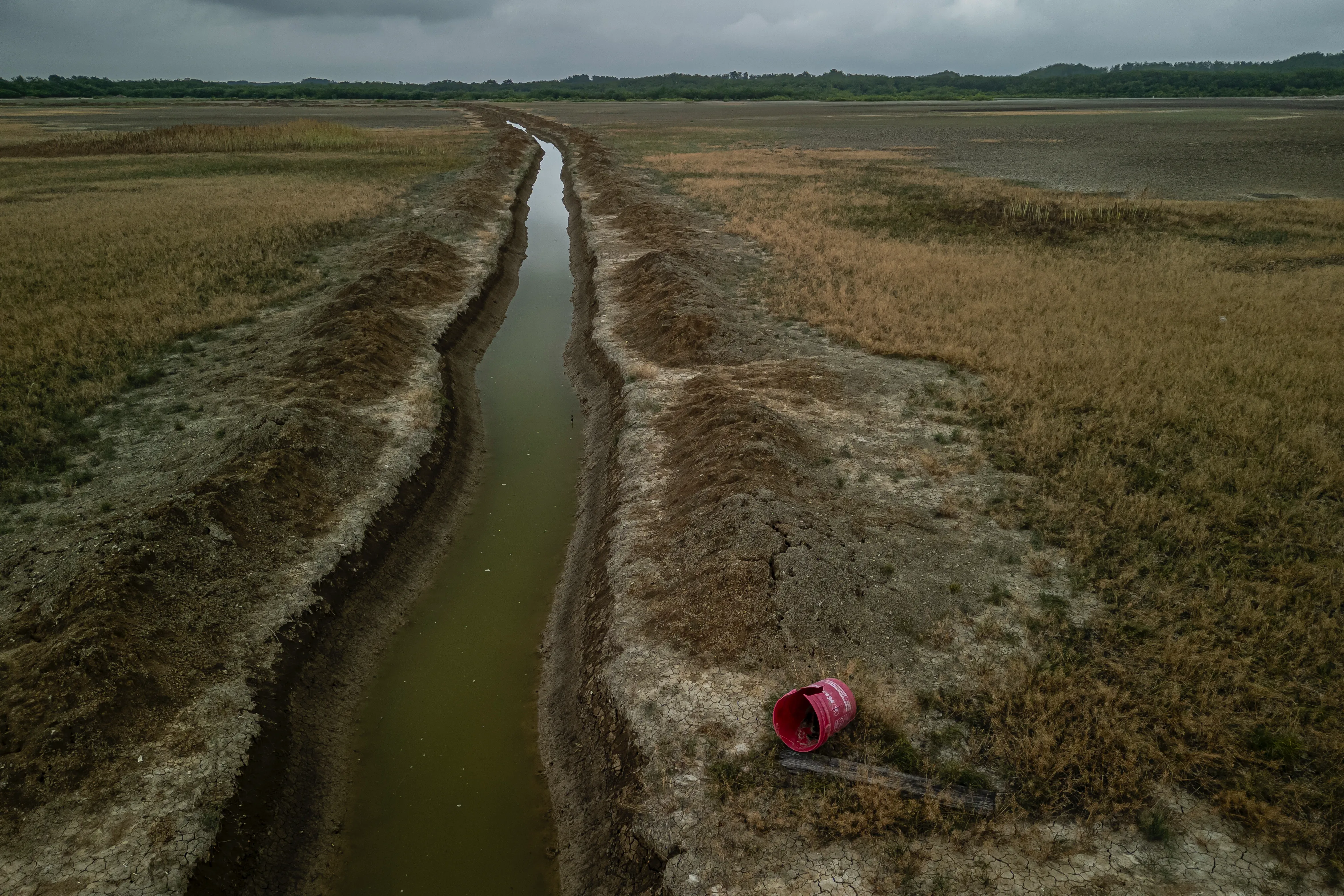
In Puerto Hualtaco, Flores Ramírez walks across a dry pampa where mangroves once grew. Here, residents have opened channels so the sea can return, washing away accumulated sediment and reoxygenating the soil. In the first areas where water began moving again, young white mangroves appeared on their own. “The idea is to let the ecosystem do its work,” Flores Ramírez says.
Back on Isla Costa Rica, some of the seedlings members of Asociación Costa Rica planted were carried away by the current. Others were eaten by snails. But where the trees survived, says Alvarado Reyes, the mud began to soften again. He hopes that, one day, the returning roots will again shelter the conchas that help feed the community.
This article was developed with the support of Journalismfund Europe