How Baramah folk songs preserve generations of ecological knowledge in the Pir Panjal mountains of Kashmir, India.
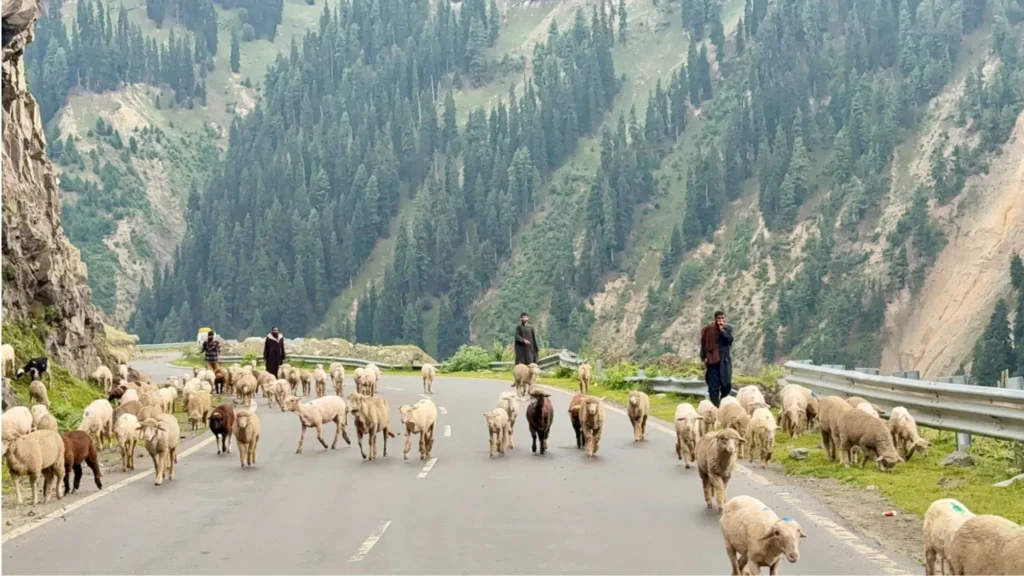
The Pir Panjal range of the Western Himalayas cuts across the landscape as a formidable, mist-draped barrier of steep alpine ridges and high-altitude pastures locally known as dhoks. Within this unforgiving vertical geography, mountain passes like Pir Ki Gali serve as hotspots where Gujjar and Bakarwal communities navigate an ancient transhumance. For generations, survival for this community relied on a synchronisation with the earth’s rhythms.
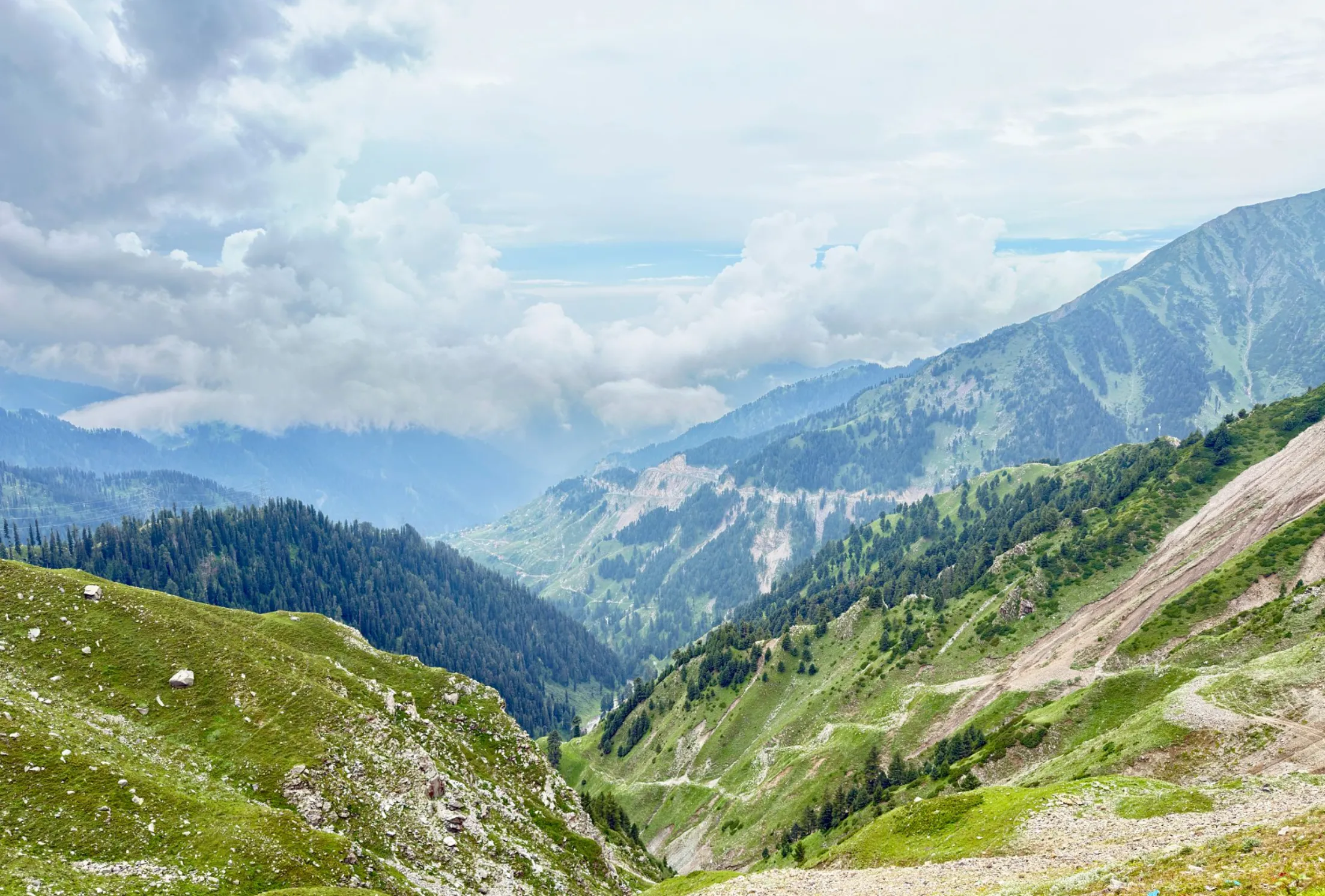
To live within this rhythm is to inhabit a world measured by the subtle language of slopes, trails and, a local, traditional desi inventory of 12 months that is far from the Gregorian Calendar. For generations, elders from the community transmitted the empirical knowledge of ecology through folk songs like “Baramah”, a kalam by Khuda Baksh Zaar, which functions as a living climatic data set. Baramah encompasses this local calendar, providing a structural flow that captures lived observations from the elders over generations. Whether living nomadic, semi-nomadic, or sedentary lives, community members continue to shape their existence around these indigenous datasets.
Today, this timeless rhythm faces a severe, invisible threat: a destabilised climate where erratic snowmelts and unseasonal weather patterns fracture the environmental cues of theBaramah. When climate volatility scrambles these “time tested datasets”, it threatens far more than a migration schedule, severing a community from its foundational survival science, which touches on an important question: what happens when mountain stewards lose the capacity to read the earth as fractures emerge within their indigenous knowledge?
Baseline Rhythm & Indigenous Science of the Community
While the Baramah is celebrated for its poetic depth and its evocative nature, its operational purpose lies in what it demands of its listeners. Community members do not merely memorise a song of emotional yearning, but commit an entire environmental dataset to memory. Each verse functions as an oral navigational manual for a specific month, encoding complex ecological indicators into rhythm and rhyme so that the community can read the changing face of the Pir Panjal like an open book.
To decode this indigenous science, mapping ecological indicators and micro-climatic markers versed for each month within the Baramah reveals a precise structural rhythm:
| Traditional Month | Ecological Indicator & Micro-Climatic Marker |
| Chet | Marks spring’s arrival while external blooms lag behind the thaw; settlements feel desolated (“ujaar gayo”) amid psychological dissonance as preparation for seasonal migration is central. |
| Baisakh | Characterised by peak vegetative growth and the term itself used for harvest brightness (“sajna ne layo rang ke zari libas”); material culture shifts to festive attire (“zawer-layo navo”) alongside internal somatic chills (“hijar ka thand go ahsas”) |
| Jeth | Peak pre-monsoon thermal stress and scorching glare; midday heat intensifies domestic social friction while herders push livestock upward into dense alpine forests (“deero jangal”). |
| Haarh | Erratic, four-way gusty winds (“dhogha gi chaar tarfi hawa”) signal atmospheric instability; high-altitude pastoral movement peaks toward distant summer pastures (“dhogh”). |
| Sawan | Peak monsoon downpours and soil saturation; communities exercise emotional restraint (“surkheya rakh na rol”) while navigating muddy trails and shifting focus to public reputation. |
| Bhadro | High ambient humidity and water-logged terrain create oppressive late-monsoon conditions (“judaiyan na hain tanhaiyan”); isolation forces indoor sheltering (“gosha”) where physical proximity provides biological warmth (“sina naal aa ge seeno jodae”) with damp of late-monsoon atmospheric conditions. |
| Assu | Crisp autumn air replaces humidity alongside changing foliage and harvest attire; clearing weather increases public scrutiny and social commentary, while stripped foliage mirrors lost shelter. |
| Katak | Late autumn marks the primary sowing season for rabi crops; historically referenced via wheat cultivation (kanak) cues. |
| Mangar | Sub-zero frost clears seasonal ambiguities (“mera amar nal nahi chadto”); dry, leafless winter landscapes bring atmospheric clarity and necessitate heavy insulation. |
| Poh | Absolute peak of winter cold, heavy frost, and deep snow accumulation obscuring mountain tracks (“paira tera chhi marpakron”); cold forces indoor contraction and psychological immobility, anchored by daily prayer (“subh te sham dua”) |
| Magh | Maximum winter cold stress tests pastoral endurance; absolute submission to environmental limits seals homesteads against winds while yearning for internal stability (“sino thar”) |
| Phagun | Definitive end of the winter frost and biological awakening of flora and fauna (“phulan gi rut aai”, “phouran kara bulbul”); celebrates the transition to fertile, blooming ecosystems (“takht basant lavo”), sealing the annual loop (“puro saal”). |
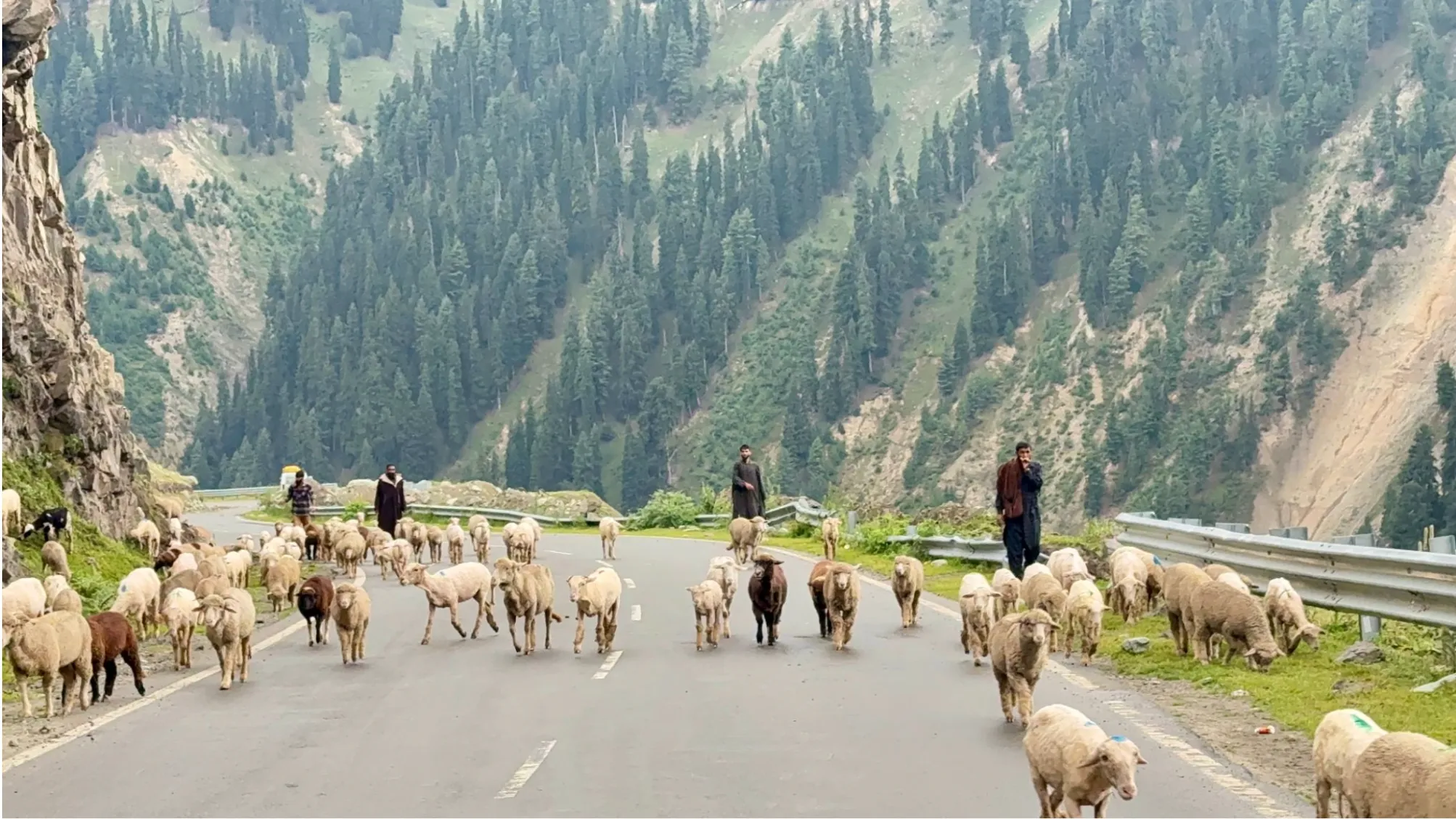
Every ecological indicator functions as an empirical trigger. A shift in the budding of alpine flora or the freezing of overnight frost dictates exact tactical adjustments, from testing trail readiness and pacing the upward push towards summer dhoks, to securing livestock against damp ailments during Bhadro. The community’s movement across the landscape is governed entirely by these micro-climatic validations. When the soil breathes, the herd moves; when the frost hardens, the homestead contracts. This lifeworld proves that the song’s endurance relies not on nostalgia, but on its unyielding accuracy as a navigational science.
To fully recognise that the folk song Baramah is ultimately an act of environmental literacy, one must look directly to the verses. As the oral archive demonstrates, reading the earth is not a choice, but a fundamental condition of mountain existence:
“The mountain speaks in the shifting of frost and the blooming of the stem; he who listens reads the trail before his feet even touch the stone (Baramah).”
Through this precise, generational harmonisation with the Pir Panjal, the Gujjar and Bakarwal transform ecological observation into a repeatable, unfailing science of movement thereby establishing a baseline rhythm that has sustained human life across the vertical landscape for centuries.
The Fractured Calendar
Yet, the brilliance of an oral baseline lies in its vulnerability to a shifting world. When the synchronised rhythms of the Baramah meet contemporary climate disruption, the archive begins to fracture. The crisis of the modern Pir Panjal is that the baseline has become a moving target.
This breakdown is felt most acutely in the high-altitude transit corridors like Pir Ki Gali. Traditionally, the melting of winter snowpacks and the appearance of specific flora and fauna signalled the exact window for hitting the trail towards meadows in Pir Ki Gali from their winter camps. The community typically move upward during Chet and Baisakh, pushing toward summer pastures, and descent during Assu and Katakh. Choudhary Mohd Lodhi, a community elder from Pir Marg of Pir Ki Gali, points out severe systematic disruptions. Unpredicted snowmelt before Baisakh, alongside unannounced snowfall during Baisakh, triggers an acute crisis of forage availability. Unutilised forage due to premature melt and non-availability of forage due to unseasonal snowfall are constant anxieties for the Gujjar and Bakarwals. The phenological synchronisation that once defined months like Chet and Phagan is unraveling. Where rising temperatures traditionally aligned in lockstep with floral blooming (“phulan gi rut”) and the return of migratory wildlife and pollinators (such as bulbul, koonj and kuku), premature winter warming or lingering cold spells now trigger severe phenological mismatches. As such plants bloom weeks ahead of schedule, and the expected cadence of migratory bird song are missed along the trails.
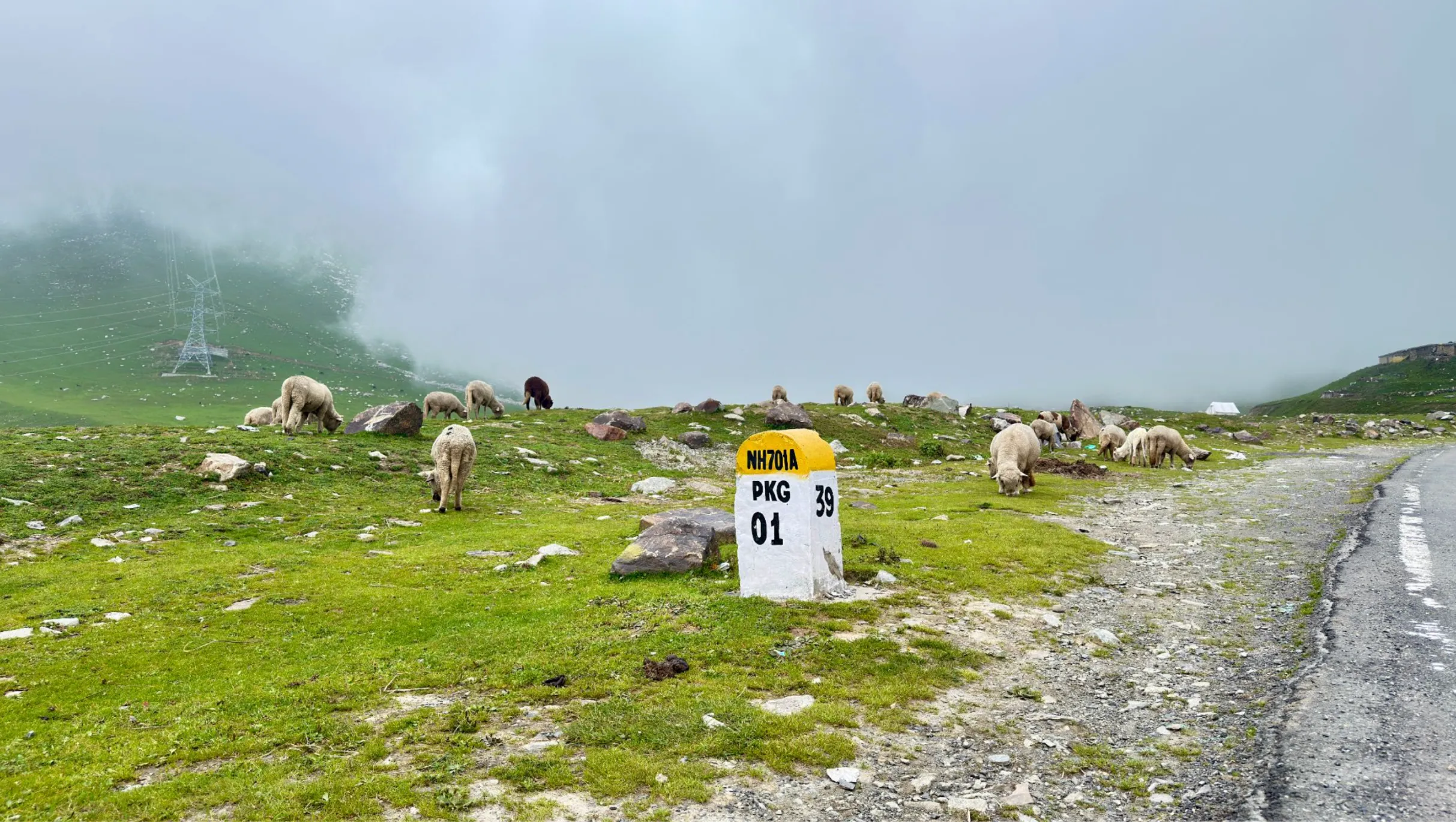
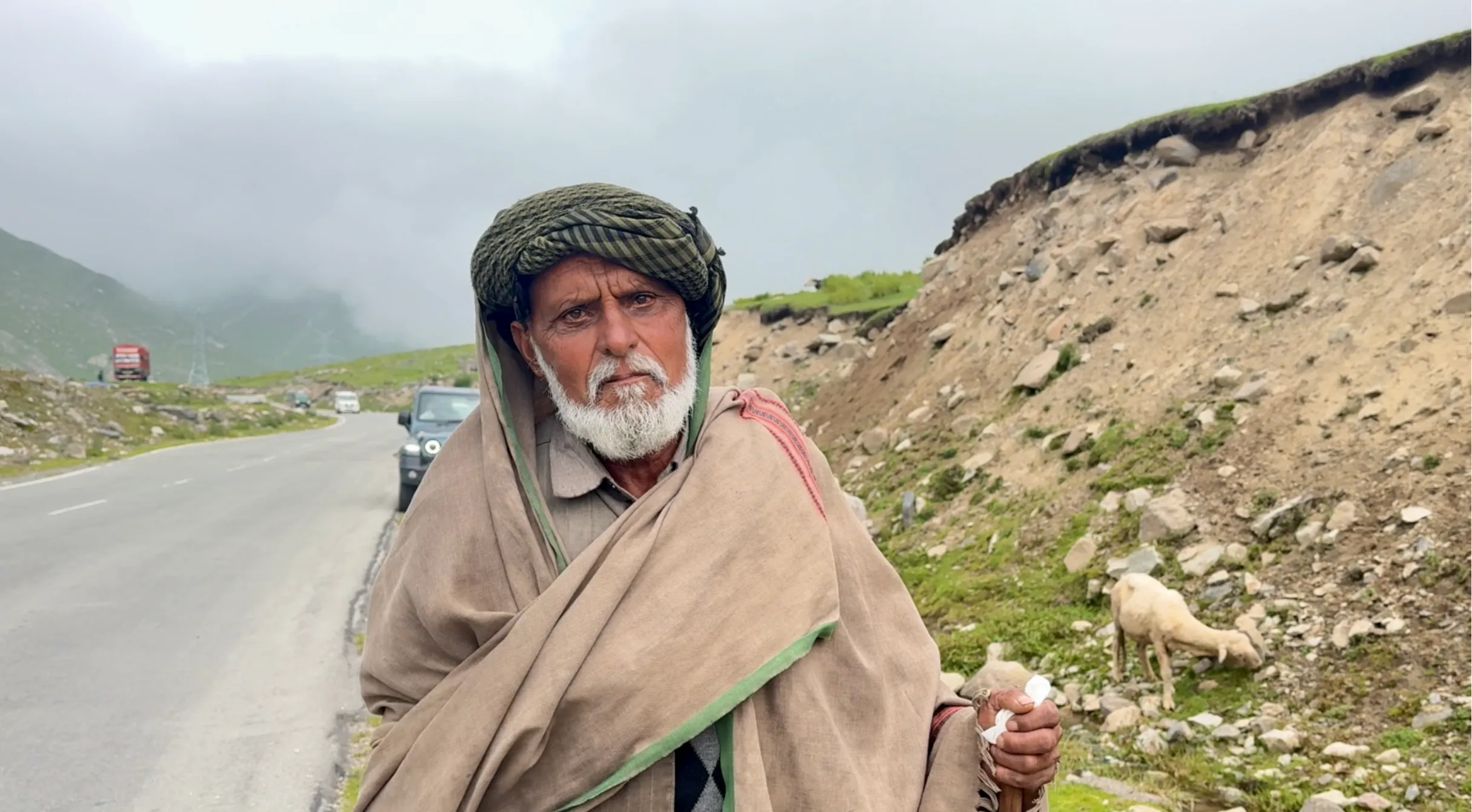
These ecological fractures are echoed down to the micro-level. In conversation with Showkat, an elder of the community in Dongi Marg of Pir Ki Gali, the crisis is read through ethnobotanical memory. Showkat recalls that when he herded goats alongside his father across the barren, rocky alpine meadows locally termed Chattyal, indigenous herbs like Pamarchari (Himalayan Rhubarb) and Jogi Phool (Saussurea Simpsoniana) grew in dense abundance. Over the course of his lifetime, however, shifting climatic baselines have made them increasingly scarce; erasing a vital empirical cue historically used to calibrate departures towards winter camps.
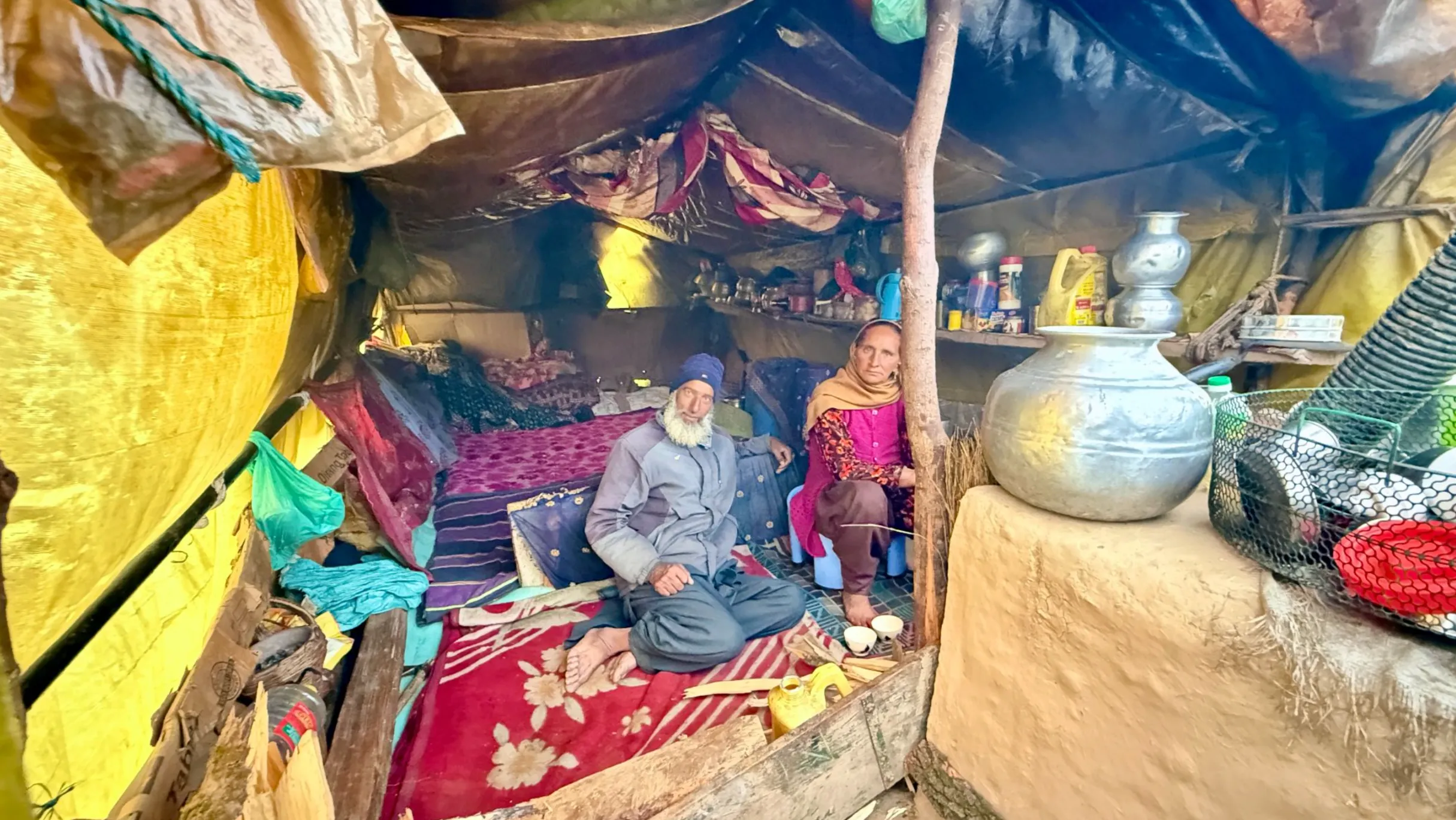
The disruption from the calendar extends deep into semi-nomadic agricultural cycles. Elders note that sowing and harvest, once tightly bound to predictable seasonal markers, are constantly misfiring. Unpredictable rainfall and prolonged autumn dry episodes dry out the soil during Katak, making the sowing of wheat (Kanak) extraordinarily difficult, while unseasonal winter rains and sudden hot spells during Baisakh shrivel grain heads before harvest. Even the internal lexicon of the months is shifting as Haarh, a term that announces the natural ripening of apricot (Prunus armeniaca), now fluctuates wildly, with ripening frequently accelerating into Jeth or lagging into Sawan.
The weight of this shifting epoch was captured as Yousaf, a middle-aged community member in the Dubjan area near Pir Ki Gali, stood besides his herd, reciting an old community adage: “Gujjar gi mass Pir tak te bakarwal gi bargoti chadar gi lakeer tak”, meaning the Buffalos of Gujjar herd up to Pir Ki Gali, while the Bakarwal’s goat touch the line of alpine glacier’s sheet. Pointing towards those alpine peaks, he remarked:
“Chadti chitti chadar badalta mosam gi peshi ha, ta mane yeah chadar umar puri chate hi dakhi ha”
(The receding white snow sheet on the mountains is undeniable evidence of changing climate, and we have witnessed this sheet shrink right before our eyes during our lifetimes.)
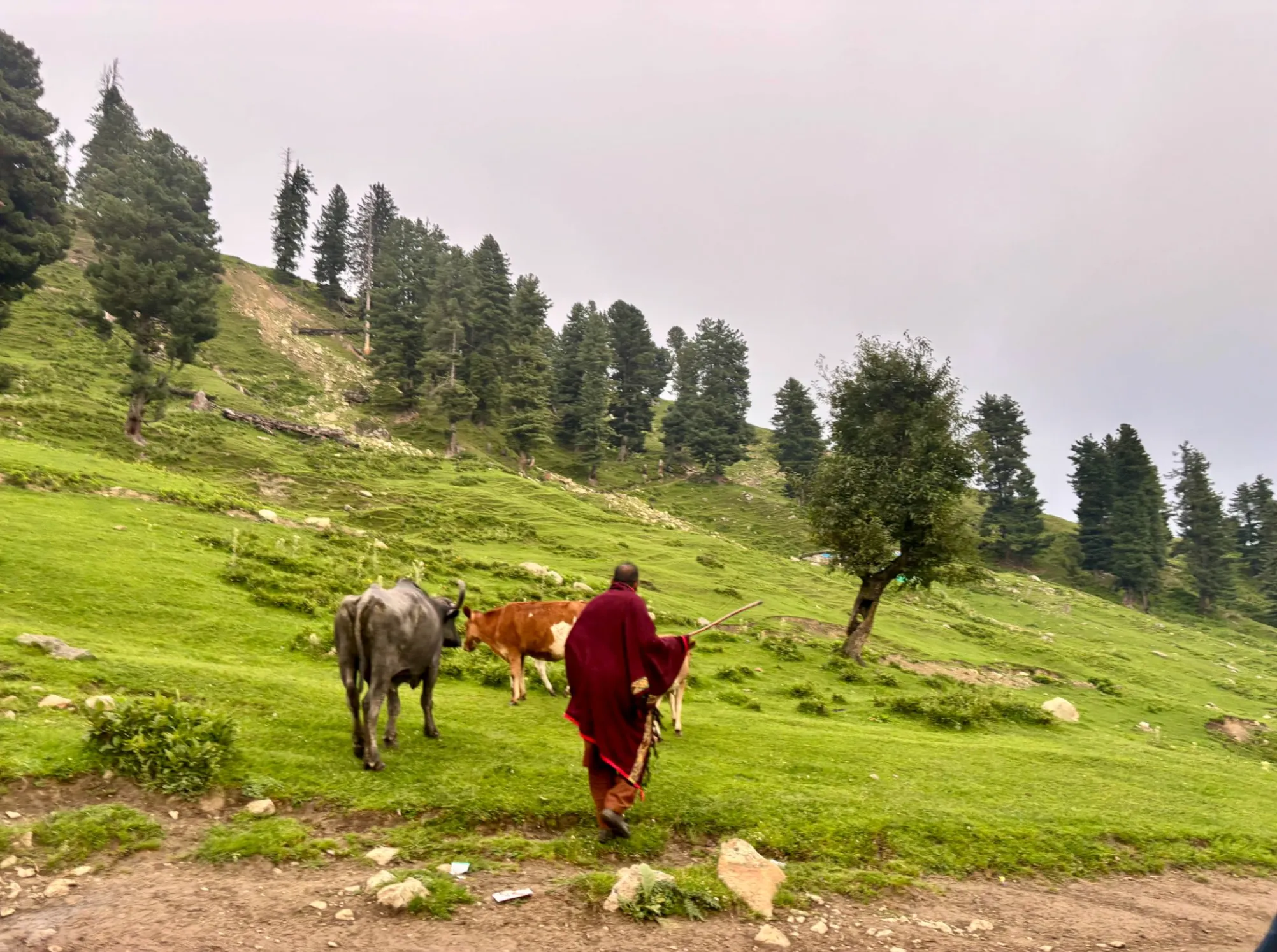
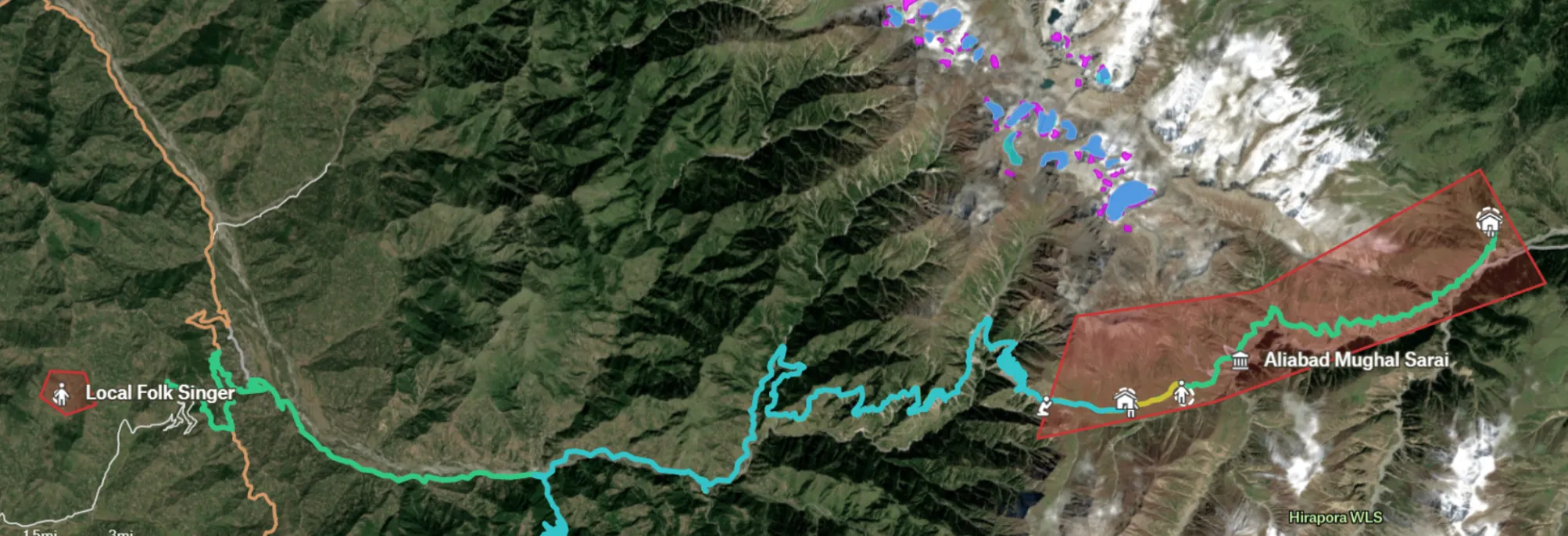
This historic retreat has opened up high tracts for goats and sheep that elders never imagined traversing, pushing the members of the community into uncharted, perilous territory where old map no longer matches the ground beneath their feet. Such environmental erasure often escapes macro-level scientific tracking: standard global glacial databases, such as early versions of the Randolph Glacier inventory (version 6), historically struggled to map the fragmented ice bodies of the Pir Panjal with micro-scale precision. While newer iterations like version 7 expand coverage, remote-sensing data still fails to register the acute, generational velocity of recession that is laid bare to the naked eyes of the Gujjar and Bakarwal, a lived cartography of climate change that far outpaces institutional mapping (Refer to the Map below).
When an oral archive fractures, the loss extends far beyond changing weather as it strikes at the core of indigenous scientific literacy. What is truly at risk is not merely a song of longing, but an entire intergenerational framework of environmental stewardship and survival. As the predictable markers of the Baramah blur under modern climatic pressures, the community faces an unprecedented cultural squeeze, pushed between a destabilising nomadic trail and the pressures of sedentary assimilation.
Yet the Gujjar and Bakarwal are not passive victims of ecological erasure; they remain rigorous observers of a rapidly transforming vertical world. The fractures are explicit in their local calendar, but the indigenous ecological knowledge continues to sustain and navigate transhumance.
Gojari Folk singer Manzoor Ahmed Khatana’s pragmatism towards survival of indigenous ecological knowledge of Gujjar and Bakarwal communities only if folk songs like Baramah are mainstreamed and preserved. Preserving the Baramah is no longer just a matter of safeguarding cultural heritage, it is about acknowledging indigenous ecological knowledge as legitimate, highly sophisticated science of climate resilience.
This story was developed as part of the Himalayan Climate Watch Network’s inaugural Indigenous Climate Knowledge Fellowship (2026), supporting Indigenous and community-rooted practitioners to document environmental change and local knowledge across the Himalaya. HCWN is a Mudland Climate Lab initiative.