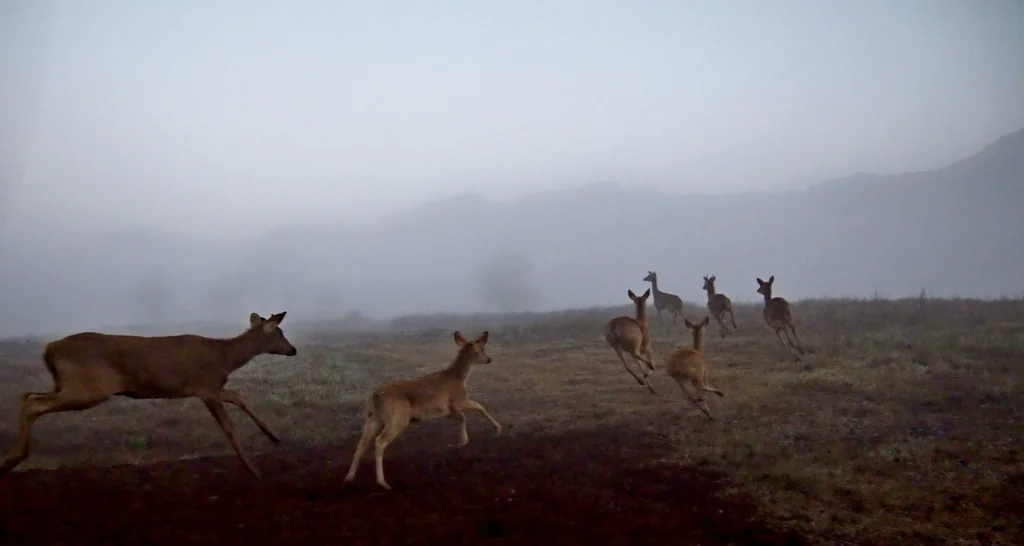
In 2014, time stood still for the adivasi settlements nestled deep within the core zone of the Satpura Tiger Reserve. The Forest Department had begun releasing a series of registers listing the families entitled to relocation compensation. For M (initials used), whose family had tilled this soil for three generations, the moment was terrifying: his name was entirely missing from the lists.
M was not alone. That same year, the Forest Department finalised a plan to move eight entire villages – rehabilitating around 16 families to save the hard-ground swamp deer from the brink of extinction.
Scientists warned that the last remaining population of 1,100 deer was isolated in Kanha Tiger Reserve, making them highly vulnerable to a single catastrophic disease outbreak. Moving them to Satpura – their historical home a century ago – was a proactive survival strategy.
Overnight, this decision turned the lives of the villagers upside down. P (Initials used), a 42-year-old farmer from the panchayat, watched his family lose 25 acres of fertile ancestral land.
“All the farmers in our panchayat were mostly dependent upon horticulture,” P recalls. “We owned orchards of mango, guava, and oranges. We collected mahua, tendu, and resins throughout the year. It provided a lot of employment and everything we needed to live.”
P remains unsure whether his ancestors officially received these lands under the Forest Rights Act or were simply allowed to till encroached land across generations. But while officials labeled the entire exercise a “voluntary village relocation,” P’s account reveals a different story.
“The Forest Department deployed staff across the villages,” P explains. “They blocked the roads and broke our hand-made earthen canals, cutting off the water supply to the agricultural fields. For a full year, we were banned from sowing our staple crops of wheat and gram on government-controlled land.”
Ashish Kothari, the founder of the environmental action group Kalpavriksh, pushes back strongly against the state’s narrative.
“The term ‘voluntary relocation’ is a misnomer; mostly, these moves are forced or induced,” Kothari says. “An initiative can only be called voluntary when the option of coexisting with wild animals in the forest – providing access to essential services – as per the Forest Rights Act is available to the communities.”
The Mediators
On the ground, NGO Satpuda Foundation bridges the gap. Representatives – Hameed, a Field Assistant, and his colleague Rasta Bhai, a Project Officer – travelled through these villages. They live in neighboring villages just outside the reserve boundaries, and understand the local climate and way of life.
When the duo learned that M’s name was left out because he had spent five years working outside the reserve, Hameed stepped in to help him gather the identity documents needed to secure his compensation.
Yet, the community was absorbed in a deep anxiety. “They would ask us, ‘What are the disadvantages of staying within the reserve? If we relocate, what will we get, and how will we survive?’” Hameed remembers.
They screened movies and held village meetings, explaining that the core forest area had to be completely emptied so that wild animals could move freely without human disturbance.
At the request of the local administration, the foundation provided livelihood training to the displaced youth like tailoring and driving.
Meanwhile, the Forest Department presented the villagers with two options: a cash compensation of Rs 15 lakh per family, or an equivalent plot of land outside the forest.
“They even took us there a couple of times in a car to show us the land,” P says, “but they never actually gave it to us. Instead, they just gave us money.”
While a few managed to purchase small plots of one or two acres, P claims that many ended up as daily wage labourers. Today, he and his family live on the outskirts of a town 50 kilometers away from their ancestral home. For years, he couldn’t find steady work, and neighboring communities were reluctant to lend money to the displaced outsiders.
In their new settlement, Jai’s wife works grueling hours at a brick kiln for meager wages.
“We had social respect and cultural respect inside the forest,” P says. “The financial security we used to get inside is simply not available to us now.”
The villagers finally agreed to resettle, keeping the younger generation in mind. But these villages lacked basic facilities. “The newly resettled village has no school. Children must walk two to three kilometres to a neighbouring village just for primary education. For higher education, their children have no choice but to leave for distant cities,” P says.
Moving these villages wasn’t just a footnote to Satpura’s success—it was the foundation of it. The thriving, ‘wild’ ecosystem we see today was built directly on top of destroyed human homes.
Remembering the Lifeline
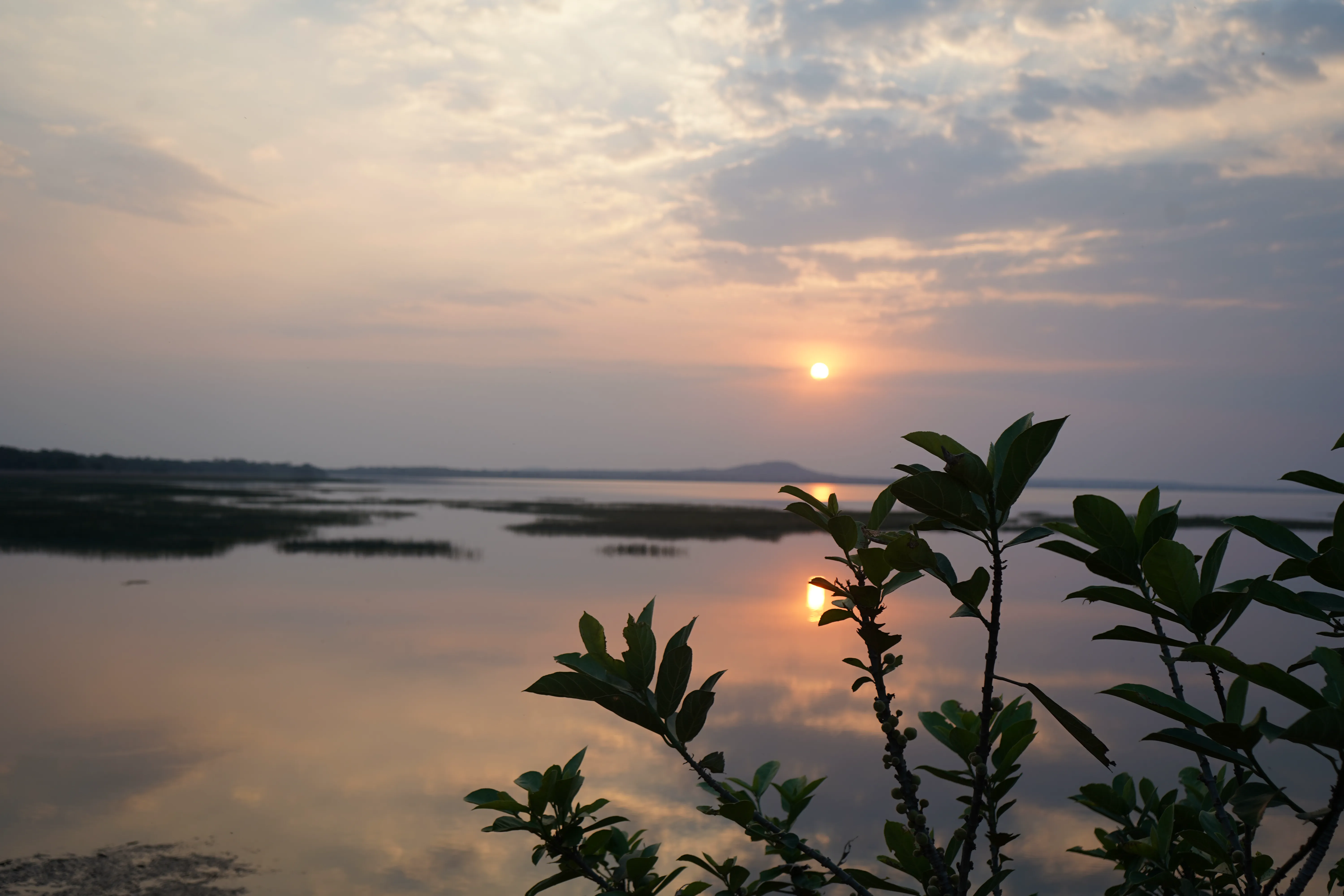
P still has fresh memories of his life in the reserve. “The forest looked lush and beautiful. Farming was thriving. There were wild achar, mahua, tendu, koha, and Amaltas trees everywhere. And the rivers used to flow so fast.”
Three major perennial rivers—the Denwa, Tawa, and Sonbhadra—run through the Satpura Tiger Reserve. The Denwa river was the community’s lifeline. Every year, 150 to 200 villagers would volunteer together to clean the riverbeds and manually build small stone dams and weirs to retain water for drinking and irrigation. They brought water directly to their doorsteps for free, using hand-dug canals that required zero electricity.
“The truth is that life was good there,” P says. “Here, if I get daily wages sometimes, it’s fine. Otherwise, I am left surprised and broken.”
In the midway, the Satpuda Foundation wound up its resettlement projects to limit its operations in Madhya Pradesh. “So our communication with the people was completely cut off,” Hameed admits.
The Hand-Made Grassland
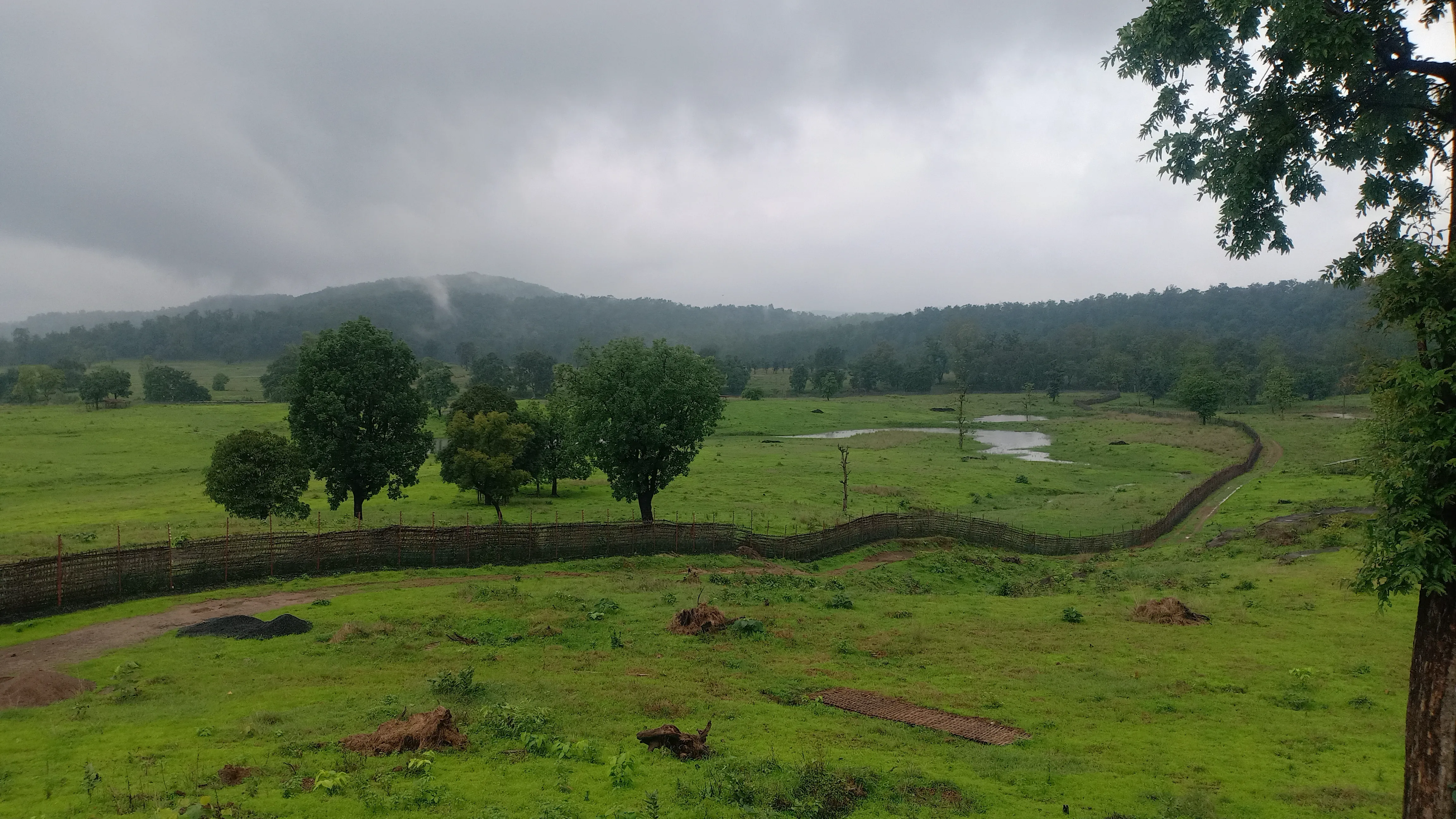
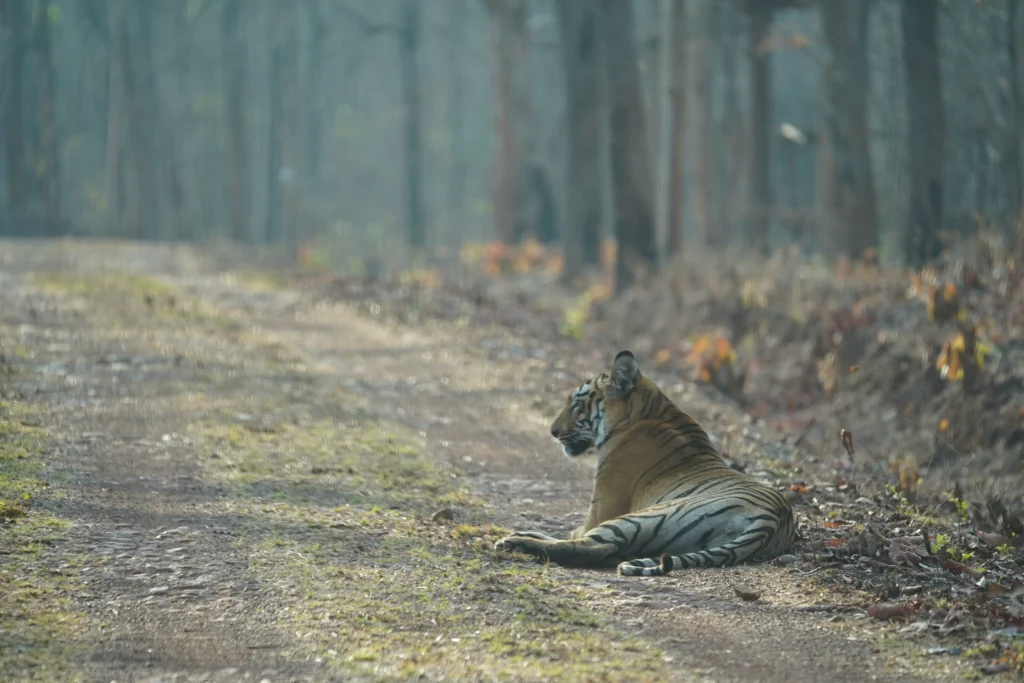
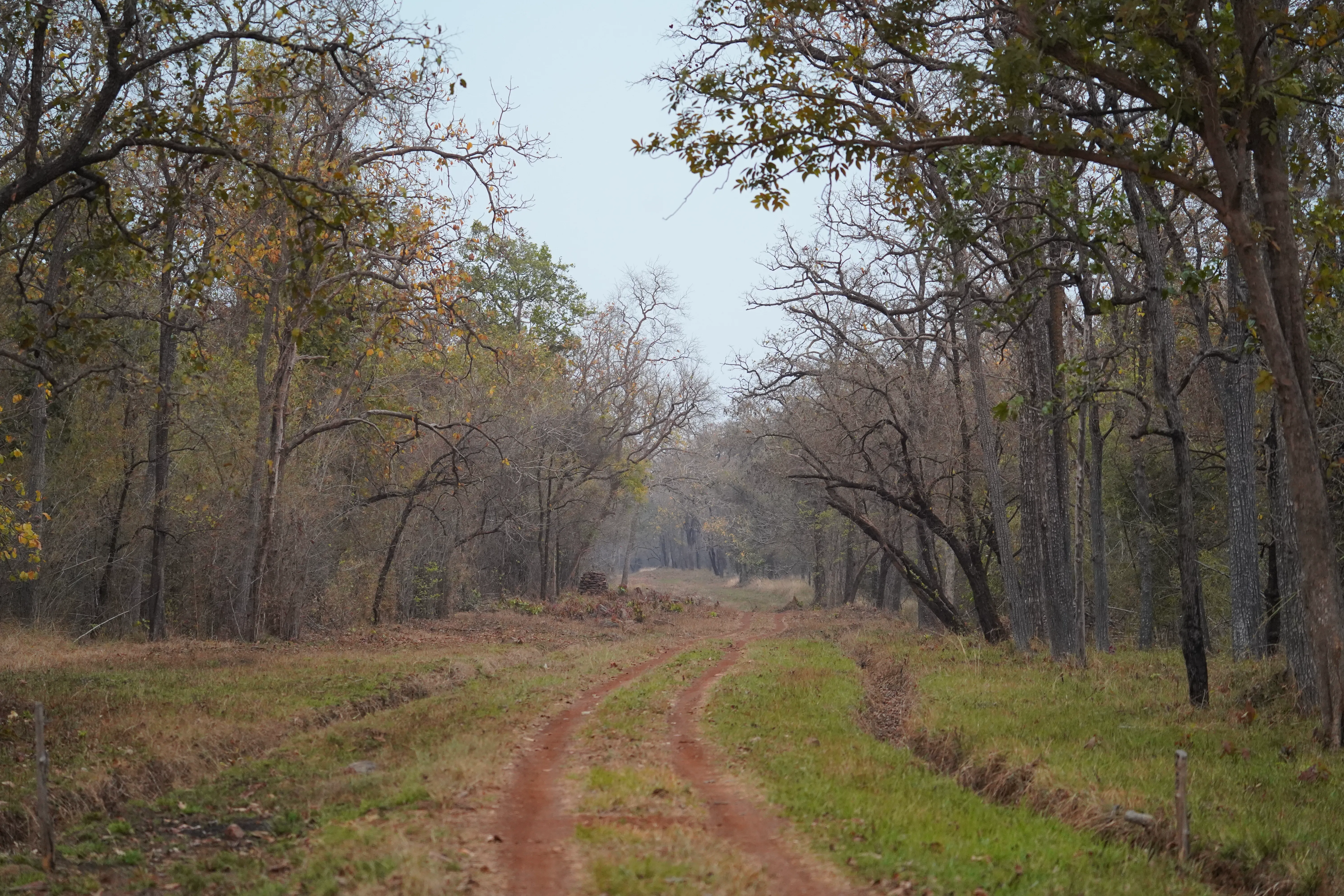
Today, the spaces where M and P’s families once lived have been completely transformed. Because Satpura is primarily a dense, moist deciduous forest, it does not naturally feature the expansive open meadows that swamp deer require. However, the climate is favourable, with an annual rainfall averaging around 1,200 mm, which supports the robust grass growth critical for the species.
To prepare the land, the Forest Department turned these spaces into managed grasslands. Since 2002, the state has relocated a total of 49 villages, opening up over 10,000 hectares of human-free terrain.
Forest staff manually nurtured these expansive man-made grasslands. During the monsoons, when the soil is soft, workers uproot invasive weeds like Lantana. In their place, they actively plant palatable tall grass species, like wild sugarcane, keeping them protected within temporary fences until they are ready for grazing.
Between 2015 and 2023, conservationists translocated 98 swamp deer from Kanha to Satpura. Two specific grassland sites, Bori and Malini – vacated following the village relocations of 2004 and 2017 – were identified as release zones.
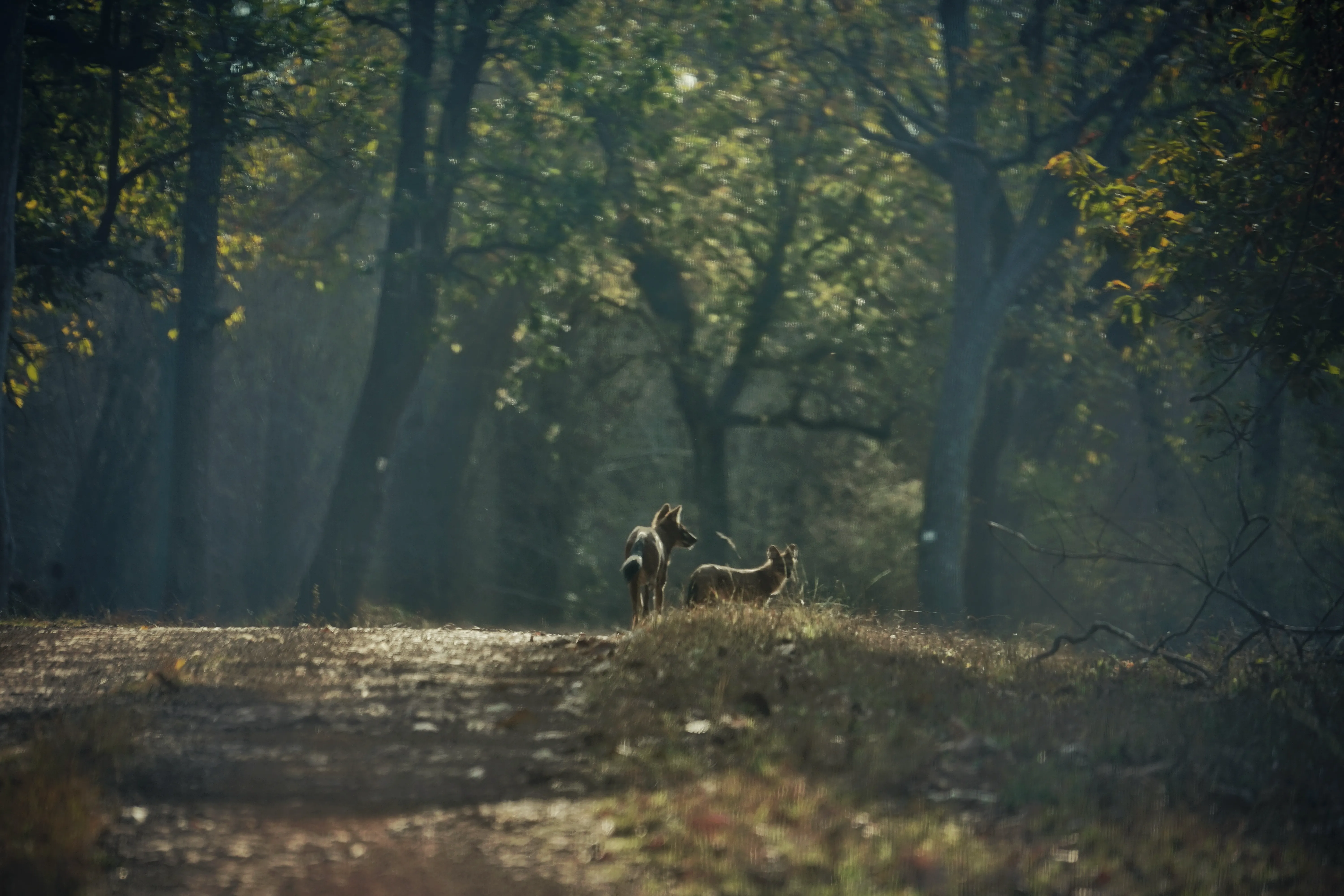
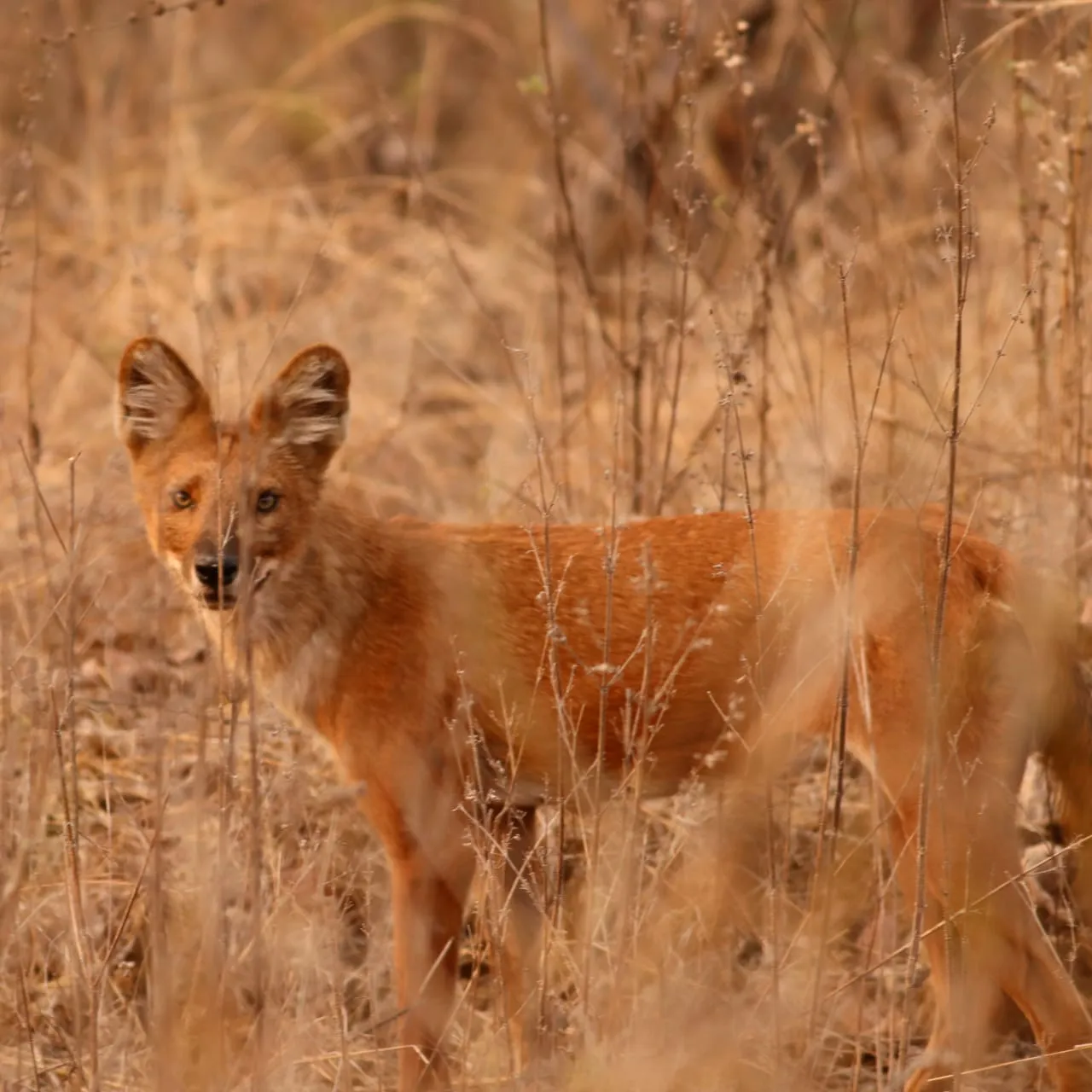
To ensure the herd’s initial safety, managers built a massive, 50-hectare predator-proof enclosure in the Bori range, equipped with python-proof fencing and 24-hour solar power to keep leopards and wild dogs out. A team of six to eight forest guards and frontline staff conducted visual counts year-round.
Out of 50 spots cleared by village relocations, only six or seven were directly earmarked for the swamp deer. The rest were designed as support meadows for massive herds of common herbivores: Spotted Deer, Sambar, and Bison.
A recent study found that the intensity of habitat use by all five major ungulates was significantly higher within the relocated village sites than in the surrounding forests. Because these villages were traditionally located in fertile valleys close to perennial streams, clearing them out provided wild herbivores with a perfect mix of fodder, water, and flat terrain.
According to L. Krishnamoorthy, the Field Director of the reserve, these common herbivores act as “ecosystem engineers.” Their heavy bulk-grazing stomps down the tough, tall grass, keeping it short and tender enough for the delicate swamp deer to digest.
This is perhaps the most significant detail of the Satpura model. It represents a radical departure from conventional, single-species conservation logic which historically focused on simply putting a fence around an endangered animal and removing direct threats.To save the swamp deer, managers had to reconstruct the functional relationships between species, utilising bulk-grazing ungulates to engineer the grass structure while carefully tracking predator-to-prey ratios.”
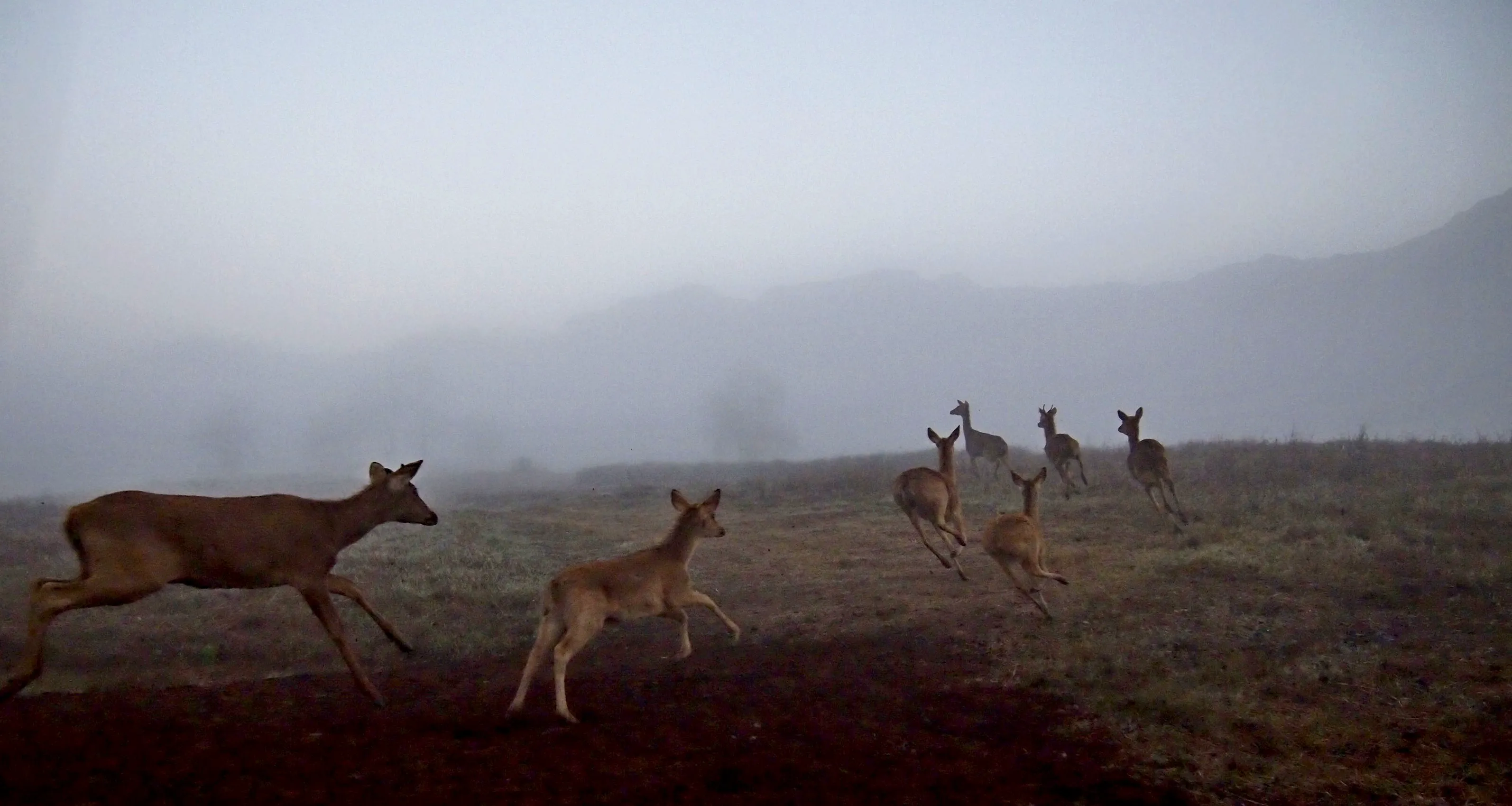
To keep this predator-prey system balanced, the state even translocated 1,567 common Chital from Pench Tiger Reserve between 2016 and 2022 to act as a “prey buffer.” This massive influx of common deer distributes predation pressure across species, preventing Satpura’s growing tiger population which jumped from 26 in 2014 to 80 by 2023 from focusing entirely on the rare swamp deer.
The Academic Consensus
By 2023, the total number of individual swamp deer in Satpura stood at 172. While 29 deer died over nine years due to natural causes and predation, several wild-born fawns have been recorded annually, confirming that the deer have successfully adapted and that the engineered habitat provides enough resources for population growth.
During the early post-release phase, researchers observed a few instances where dispersing deer used heterogeneous terrain and dense edge habitats – challenging the long-held assumption that these deer are strictly bound to open meadows. However, Dr. Neha Awasthi, the Lead Researcher of the study, warns against misinterpreting this data to assume the deer can survive in thick forests.
“We must distinguish between temporary movement and long-term habitat use,” cautions Dr. Neha Awasthi. “During the early dispersal phase, the deer transiently moved through unfamiliar, wooded terrain to establish ranges, which temporarily made them more vulnerable to predators. However, their survival in these areas does not prove they can persist in forested habitats; they were simply passing through before settling back into the grassland patches they fundamentally depend on for survival.”
Is this model replicable?
To the scientific community, the Satpura experiment is a triumph of careful planning. Dr. Awasthi notes that voluntary relocation itself is not the defining feature of the project’s success. Instead, she emphasises that the primary requirement is a sufficiently large, secure habitat. In her view, what can be exported to other regions are the underlying principles: ensuring habitat readiness before release, reducing risks during the initial establishment phase, and maintaining strict, long-term monitoring.
Ashish Kothari, however, remains deeply skeptical of this model, even as he appreciates the physical restoration of the habitat.
“This conservation model which is based on emptying land of indigenous people while allowing researchers and tourists inside is an old Western approach,” Kothari argues. “True wilderness thrives when we take our hands off and let nature care for itself. If a landscape must be managed, it should be done through a combination of local people and scientists co-managing the land together. True sustainability comes from shared governance.”
Kothari points to alternative global models, such as Europe’s GrassLIFE project in Latvia where restoration occurred with the help of grazing communities.
In the end, when asked if P has ever gone back to visit the valley where his ancestral home once stood, he says, “There is nothing left at the village site. The department has just cleaned it up and planted grass. It’s been ten to fifteen years now since we left. But even after being cast out, we have no idea about the swamp deer. We have never seen a single swamp deer in our entire lives.”