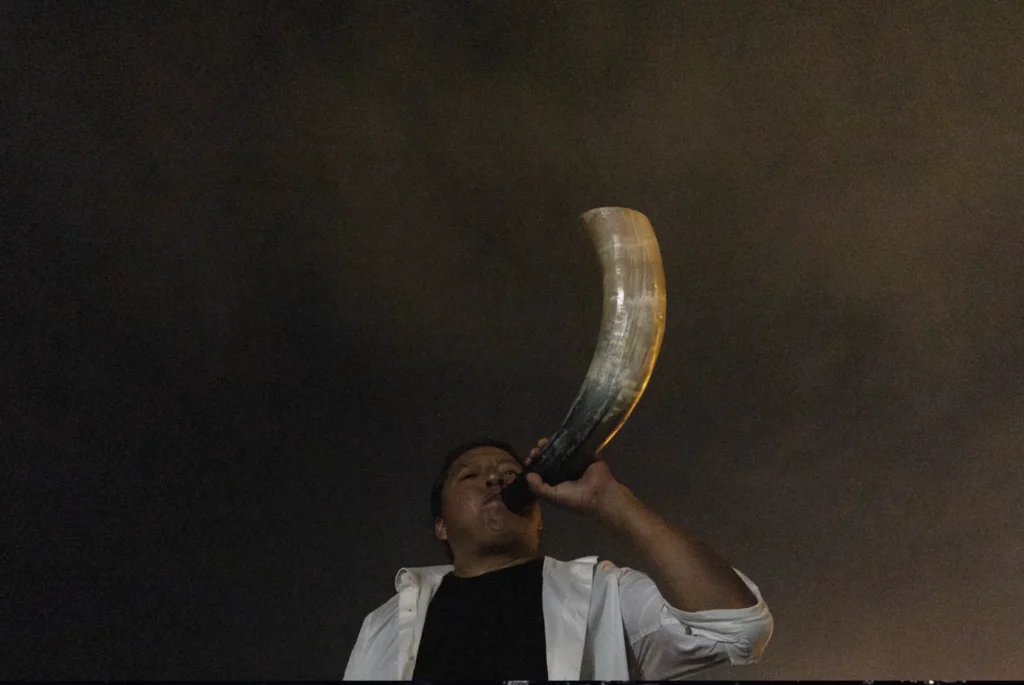
Runakay, from the Kichwa words runa (person) and kay (to be, to exist), is a way of thinking that reaffirms the consciousness of “being a person” as a way of life, and as a commitment to valuing, appreciating, and strengthening identity and worldview through ritual practices, festivities, and music that embody our spirituality and connection with the natural environment. It is a concept that affirms the thoughts, emotions, principles, values, ideas, and beliefs of a human being and their culture.
The reaffirmation of Runakay is, at the same time, an affirmation of others, a reminder of what it means to be human.
For over five decades, Kichwa Otavalo people from the Ecuadorian Andes have built migratory routes between Ecuador and Europe. Early mobility was closely connected to the trade of textiles, handicrafts, and a strong European interest towards their music. By the end of the twentieth century, amid Ecuador’s severe economic crisis, migration increasingly became a pathway toward sustaining a better future.
As families settled in Catalonia, however, people were not the only ones to cross the ocean. Rituals, music, food, and values have travelled along with them. Through the ongoing efforts of elders to share their knowledge and practices, these forms of Indigenous memory and identity continue to be passed on to new generations growing up in a European context.
The Inti Raymi, which means the Festival of the Sun, is one of the most important celebrations of the year for Kichwa people, as it marks the beginning of a new cycle. Everything relates to the Earth and agriculture, and the Sun is the reason why we can cultivate food and live. The celebration begins at night with the Armay Tuta, which translates to bathing night, a ritual where the community gathers the previous night for a cleansing bath, traditionally in a river with a waterfall in the Andes, but adapted to be held at the Mediterranean sea, in Barcelona.
At the core of Kichwa cosmovision is the Ayni, a profound concept of reciprocity and solidarity, both with nature and one another. Like in every social gathering, each family brings the Kucabi, food prepared at home by women to share with the community. In all gatherings, everybody eats.
The sounds of the wind through the violin, the strumming of the guitar, the vibrant metallic ripple of the harmonica, the bandolin, the quena, and the drum, guide the bodies to the zapateo: feet striking the ground as if reminding the Earth: we are here. Circles of people turn one way and then the other, dancing through the night until the first Sun of a new cycle rises.
A few hundred meters away, another altar rises on the same Mediterranean shore. Indigenous communities from across Abya Yala gather before dawn around a recreation of the Puerta del Sol, inspired by the ancient Tiwanaku monument near Lake Titicaca. People with roots in Ecuador, Peru, Bolivia, Chile, Mexico and Colombia come together to receive the Sun.
As dawn arrives, the gatherings meet by the sea. Different peoples, territories and histories converge on the Mediterranean shore, carrying with them memories of land, displacement and resistance. They remember those who have lost their lives protecting their territories, those who are still missing, while the struggles against extraction and dispossession continue across lands in Abya Yala today.
And still, they sing. They dance. They pray. They greet the Sun.
Through music, ritual, reciprocity and community, memory is carried forward. Far from the lands where these practices began, and across centuries of colonial history, the first Sun of a new cycle rises and is celebrated on a pier on the shores of Barcelona.