In Nepal’s Upper Humla, where no hospital has ever been built, healing has always come from the mountain. Now the plants are retreating uphill, and the knowledge of how to use them is leaving with the young.
Amchi Penpa Tsering, 35, remembers when kutki grew on the slopes just above his village. The bitter alpine herb, which he uses to treat fevers, digestive problems and liver complaints, was once easy to find around Halji, in Nepal’s Limi Valley. On recent trips home, he says, he has climbed for nearly four hours before finding any.
“When I was a boy, we did not have to go so high,” he said over butter tea at a small Nepali and Tibetan eatery in Boudha, Kathmandu, where he now spends much of the year. “We could find it above the village, sometimes within an hour. Now I have to keep climbing. Sometimes I walk half a day and come back with almost nothing. The plants have not disappeared all at once. They have slowly moved away from us.”
The change he describes has happened over the course of his lifetime, in little more than two decades.
For most families in Upper Humla, an Amchi is the closest thing to a doctor.. The Amchi tradition, a Tibetan-influenced system of medicine known as Sowa Rigpa, has been practised in this part of the Himalaya for centuries. Its medicines are made almost entirely from plants gathered on the surrounding slopes and alpine meadows. As temperatures rise, glaciers retreat and pasture lines shift, many of these plants are growing higher up or disappearing from the places where they were once found.
At the same time, the people who would learn the practice are leaving. Many of the valley’s residents, typically those between 20 and 50, now work across the border in China. As a result, the valley’s only healthcare is losing both its medicine and the people who know how to make it.
Healthcare out of reach
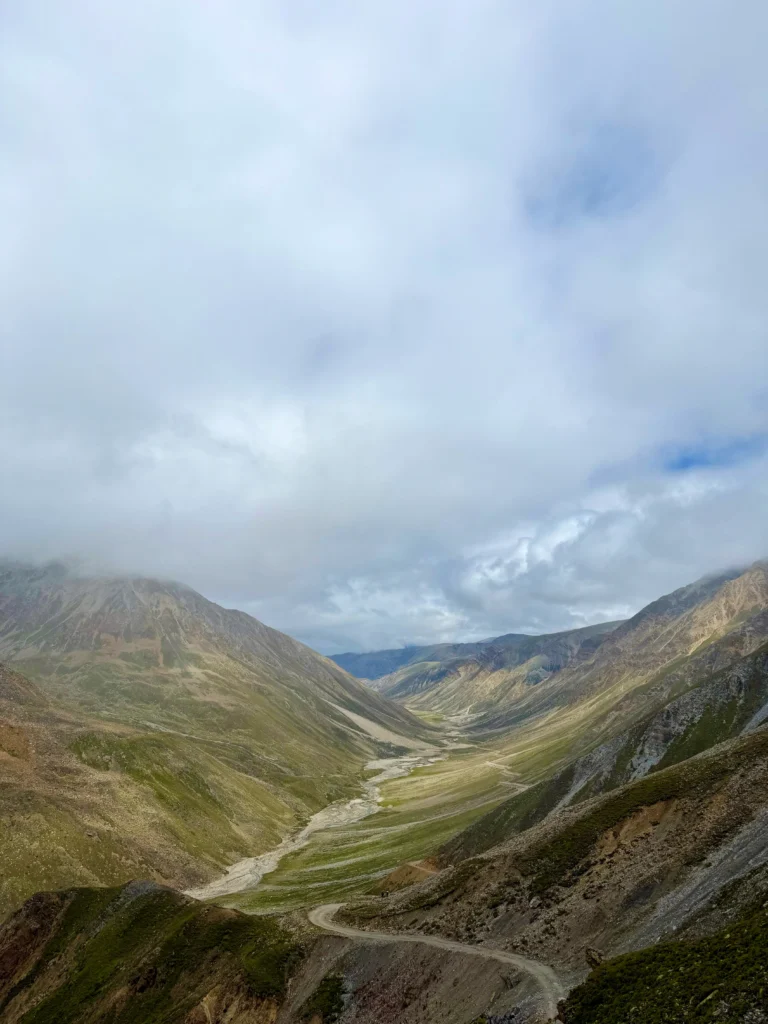
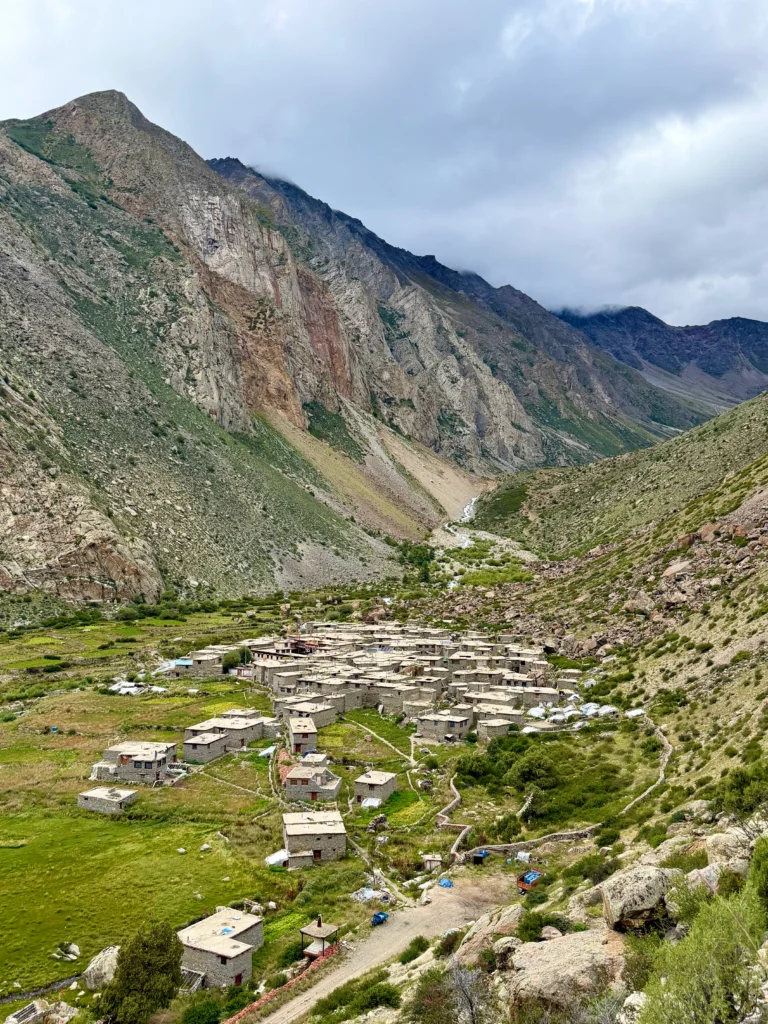
Humla is in Nepal’s far northwest, on the border with China. Upper Humla, home to the Limi Valley and Yelbang, is cut off from the rest of the district for much of the year. Reaching Limi means crossing a pass of nearly 5,000 metres, on a route served by only a handful of jeeps. Little of the road, health or communication infrastructure found elsewhere in Nepal has reached this far.
That isolation is often blamed on the terrain, but it owes at least as much to decades of limited state investment. There is no government hospital in Upper Humla. A 2022 study of healthcare in the district found that its only referral hospital, in the district headquarters of Simikot, is itself under-equipped. Fractures, surgical cases and complicated deliveries are routinely referred further on, and patients who cannot pay for the journey may not go.
For anyone in Upper Humla, that means Nepalgunj, three to four days away by road, on routes that are unreliable and often dangerous in bad weather. The flight from Simikot takes about an hour and 15 minutes, but tickets cost more than many families can afford, and flights are regularly grounded for days by weather.
Tashi Lama, 43, from Halji, made that journey after his younger brother suffered a serious leg injury while working above the village.
“We first thought the Amchi could treat him,” he said. “He gave him medicine and wrapped the leg, but after two days the swelling was worse. We knew then that we had to go. We took him down towards Simikot and then waited for the flight. By the time we reached Nepalgunj, we had already spent more than we had planned to spend for the whole month. If you do not have money, you have to decide whether the illness is serious enough to make the journey.”
In Limi, residents see the lack of a hospital as a sign of how little the state has invested in them. It is most visible in common problems that Amchi medicine does not treat: worn knees and joint pain after a lifetime of herding and climbing, and dental problems that go untreated because the nearest dentist is days away.
“When your tooth starts hurting, there is no place to go,” said Tsering Phuti, 61, of Halji. “You wait for the pain to stop. If it does not stop, you ask the Amchi for something. But he cannot pull a tooth. He cannot repair a knee. For these things, we have learned to live with the pain.”
The state has shown it can close this gap when it chooses to. In emergencies, a free air rescue programme flies pregnant and postpartum women out of 19 remote districts, including Humla, and health officials in Karnali Province credit it with reducing maternal and infant deaths. No equivalent exists for other patients.
“The referral system works when everything lines up,” said a health worker at a local health post, who asked to remain anonymous. “The problem is that in Upper Humla, everything does not always line up. The weather can stop a flight. The road can become impassable. A family may not have the money. By the time the patient reaches Simikot, the condition may already be much worse.”
The health post can treat basic infections, minor injuries and common illnesses, but it cannot offer surgery, dentistry or specialist care. “For anything serious, we are really only the first stop,” the health worker said. “After that, it becomes a question of transport.”
Medicinal plants under pressure
Almost every medicine an Amchi makes starts as a plant collected near the village. A single formula can combine dozens of ingredients, each gathered by hand at a particular altitude and in a particular season. In Humla alone, researchers have recorded 59 species used in local medicine, with Amchis and older residents among the main holders of that knowledge.
That system depends on plants growing where Amchis expect to find them, and climate change is altering that. Research in the Nepali Himalayas has found that warming is already changing where medicinal plants grow. A 2022 study of 29 widely used medicinal and aromatic plants in Nepal projected that two-thirds would lose suitable habitat as temperatures rise.
Limi faces several climate threats at once. The valley has been hit by multiple glacial lake outburst floods, alongside rising temperatures and shifting growing zones. When residents mapped the threats to the plants their medicine depends on, they marked retreating glaciers, pastures moving uphill and water sources that have changed or dried up.
Tsering Phuntsok, 66, has seen these changes over his lifetime.
“When I was young, the snow stayed longer,” he said. “We knew where the water would be and where the grass would come. The mountains had their own calendar. Now the seasons do not feel the same. The snow comes late, the water changes, and plants that we knew from one place are found somewhere else.”
Herders who take animals to the high pastures were often the first to notice which plants had moved. Tashi Lama, 53, has grazed animals on the upper pastures for more than 20 years.
“There are plants we used to see every time we took the animals up,” he said. “You knew the places without looking. Now some of them are higher. Others are there for a shorter time. We go to the same slope and the plant is not there, so we keep walking.”
For Penpa, the change affects which medicines he can make.
“Kutki is harder to find,” he said. “Jatamansi [Nardostachys jatamansi] is harder too. Wanglak [Dactylorhiza hatagirea] is another one. Before, you could collect enough in one trip and bring it back to the village. Now I have to think carefully before I use some medicines because I do not know when I will find the ingredients again.”
The problem is most serious when the missing plant is a main ingredient in a treatment.
Last summer, a woman in her fifties came to Penpa after several days of fever and severe stomach pain. He recognised the symptoms and knew the formula he would normally use, but he had run out of kutki, one of its main ingredients.
“I had the other plants,” Penpa said. “But medicine is like cooking. If you are missing something important, you cannot always say it is the same medicine. I had to use another preparation. I told her family that if she became worse they must take her to the health post. They asked me why I could not give her the medicine I usually gave. I had to tell them that I did not have the plant.”
Penpa and other Amchis are adapting where they can. They walk further to collect plants, store more after a good harvest and sometimes substitute one ingredient for another. Some ingredients now come through traders instead of local slopes. But substitution has limits.
“We can change some things, but we cannot change everything,” Penpa said. “If you replace every plant, at some point you are making a different medicine. We have to know what can be replaced and what cannot. That knowledge also takes time to learn.”
Who comes next
Becoming an Amchi takes years. Knowledge has traditionally passed through families and through long apprenticeships with a senior practitioner.
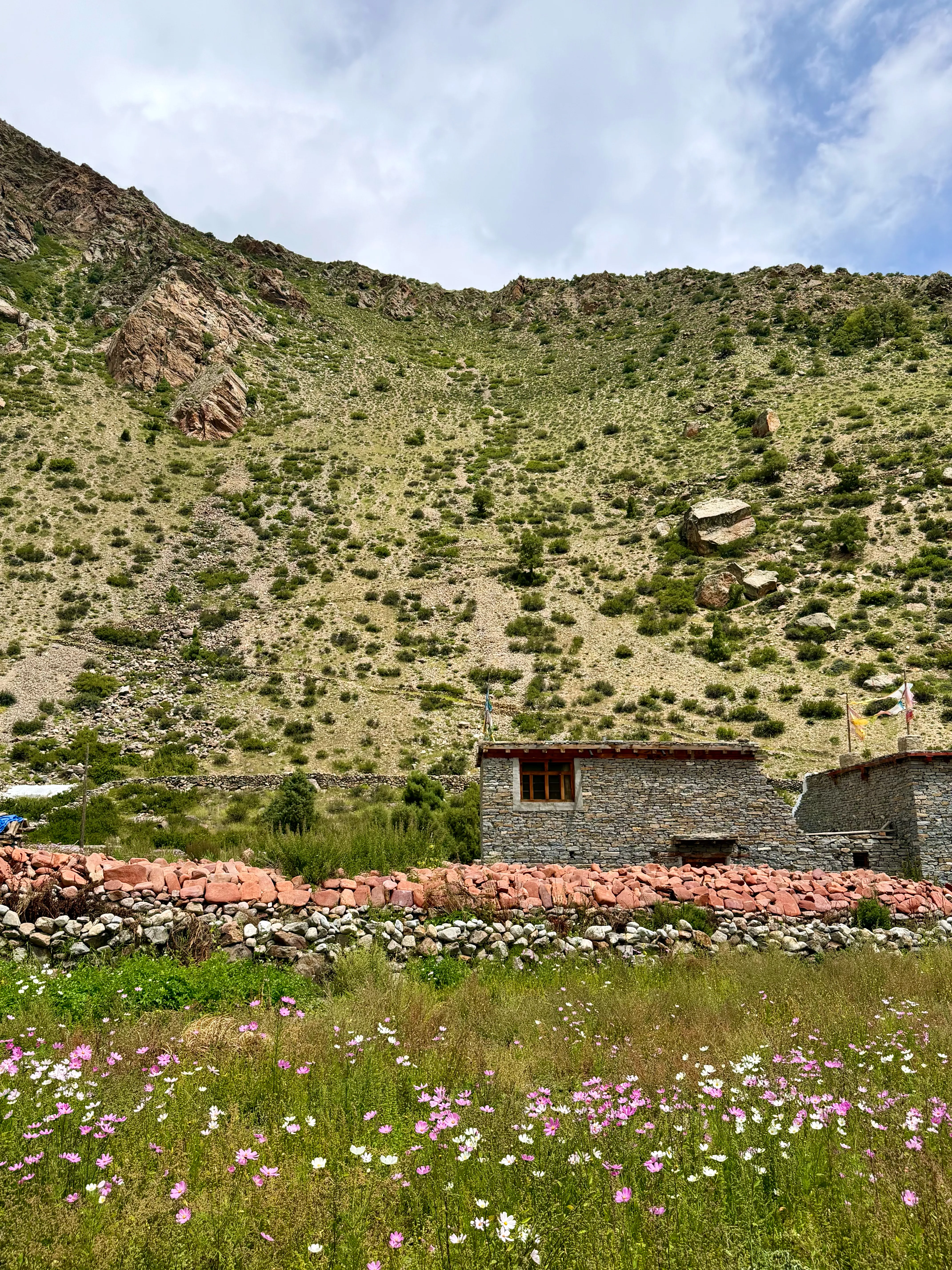
In Limi, that system is breaking down for a reason unrelated to climate. Most of those who left work in Purang, the Chinese town known in Nepal as Taklakot. Those who remain are mostly elders and children.
Only a handful of practising Amchis are left in the valley, most of them older men. At 35, Penpa is younger than most, but because he now spends much of the year in Kathmandu, the valley often has one fewer Amchi. He has no full-time apprentice and does not yet know who will take over from him.
Penpa trained formally, completing a degree in Sowa Rigpa at the Central Institute of Higher Tibetan Studies in Sarnath, near Varanasi in India, one of a handful of institutions that offer it. Texts and formulas can be taught in a classroom. But knowing where each plant grows in a particular valley, when to collect it and how to prepare it comes only from time spent on the slopes. “You cannot learn that from a book alone,” he said. “If nobody comes with me, what happens to that knowledge when I am gone?”
He paused before adding: “The medicine is not only the plant. It is knowing the mountain.”
Tsering Phuti has a son working in Purang.
“Of course I want my son to come home,” she said. “But what work is there for him here? He can earn money across the border. He can support the family. If I tell him to come back and learn Amchi medicine, I cannot promise him a livelihood.”
Outmigration and climate change are separate problems, but in Limi each makes the other worse. As plants move, the tradition needs practitioners who can adapt, who know which substitute to use when a herb cannot be found and where it now grows. That knowledge comes from years of practice in the same valley, and it cannot be taught to young people who have left.
Keeping the medicine alive
These pressures reinforce each other, and none can be solved alone. The people of Limi are also clear that they want two things: their own medicine preserved, and the basic modern healthcare that other Nepali citizens are promised.
On paper, the state has begun to act. In March 2025, Nepal reportedly recognised Sowa Rigpa as part of its national health and education systems, and the Nepal Health Professional Council has begun registering and licensing practitioners. Sowa Rigpa already has official status in India, China, Bhutan and Mongolia.
In Limi, recognition has so far changed little. Penpa holds a degree, but most of the valley’s older Amchis learned through apprenticeship and have no certificates to show.
“I have heard that the government wants to recognise Amchis,” Penpa said. “That is good. But I do not know what recognition means here.”
Researchers have warned that state recognition based on a biomedical model can push Himalayan Amchis to change their practice to fit official requirements.
Making recognition work in places like Upper Humla would require cooperation between the state and the monasteries and Amchis who have kept this medicine going. There are three ways this could work.
Train successors through the monasteries
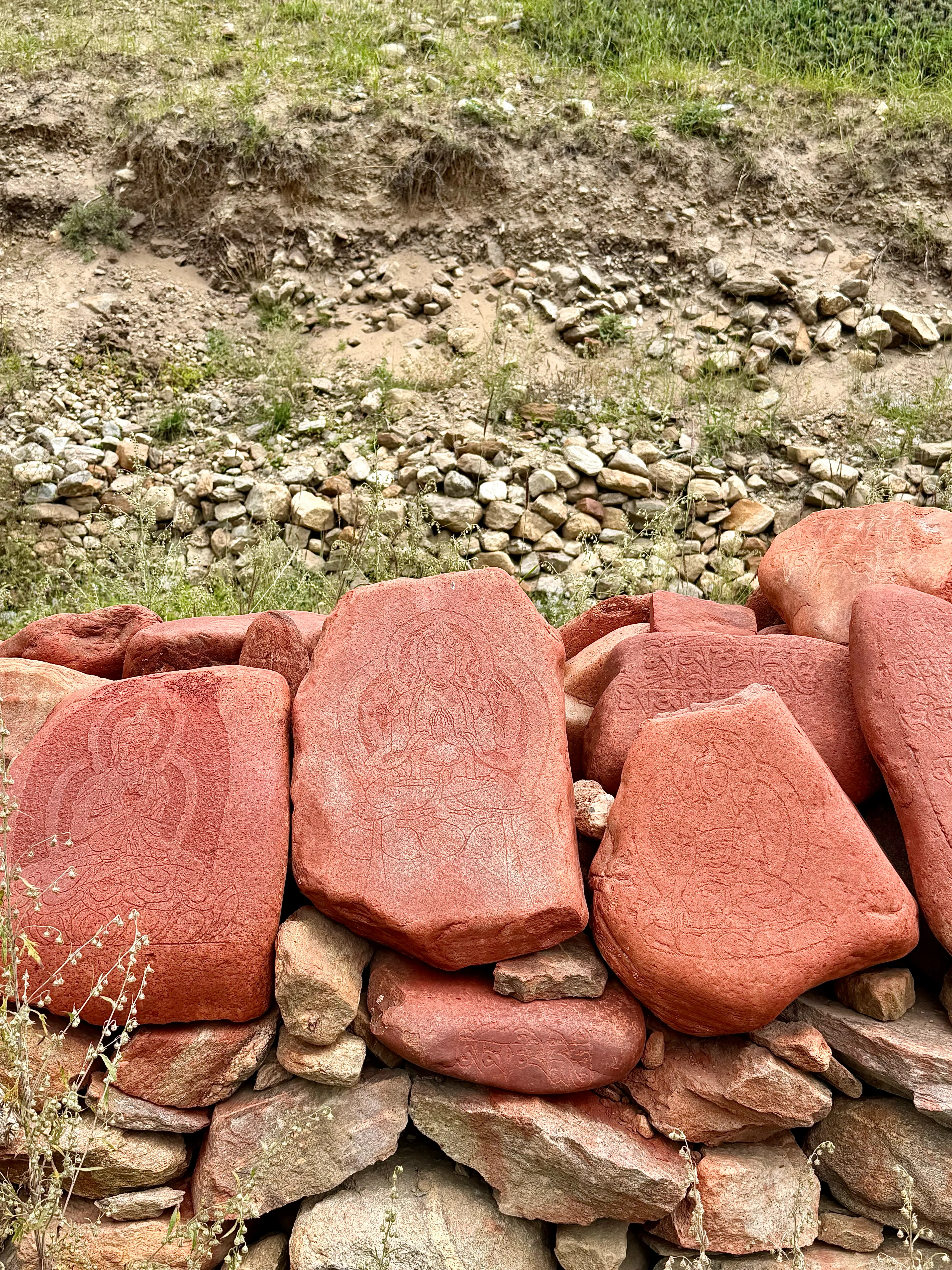
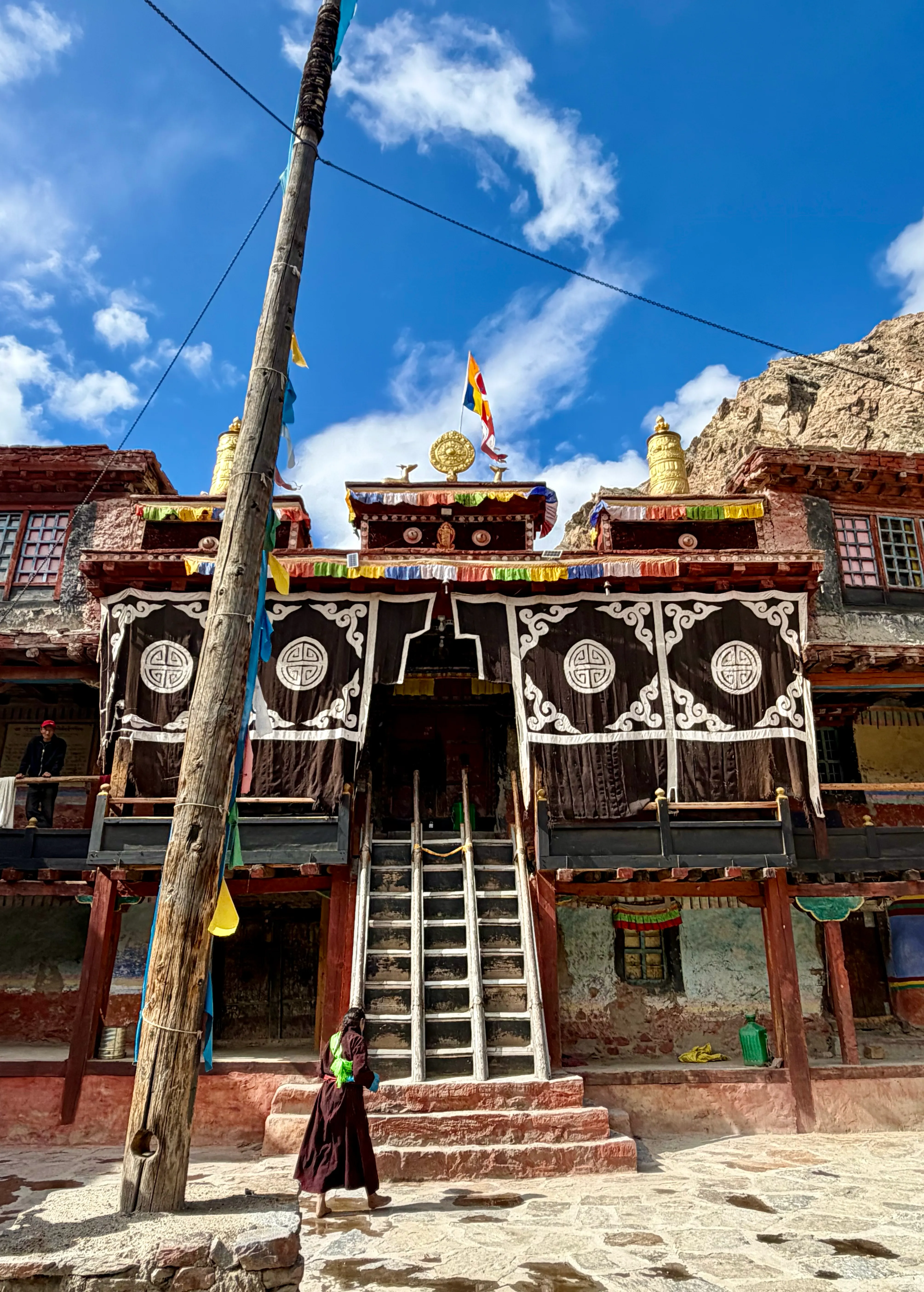
Monasteries have long been where Amchi knowledge was taught, stored and practised. Government funding channelled through them could pay stipends to young people training as Amchis in their own valleys, under senior practitioners who know the local area. A paid path in medicine could give some of those now leaving for Purang a reason to stay.
At Halji monastery, Lama Ugyen Tamang said the institution could take on that role with support.
“The monastery already has the space and the tradition,” he said. “What we do not have is the money to employ teachers and support students for several years. If the government wants this knowledge to continue, it cannot simply tell us to preserve it. Someone has to pay for the young people to learn.”
Link Amchis to the health system
Licensed Amchis could be formally linked to a staffed health post in the valley. Amchis would treat what traditional medicine can treat, while visiting dental and orthopaedic camps and a funded referral system would handle what it cannot. Paid Amchi positions within municipal health budgets would give practitioners a regular income instead of relying on donations.
“We do not want to replace modern medicine,” Penpa said. “When someone needs an operation, they need an operation. When someone breaks a bone badly, they need a hospital. But for the things we know how to treat, why should that knowledge disappear? We should be able to work beside the health post.”
A rural municipality health official, who also asked not to be named, said such a model was possible in principle but would need provincial and federal support.
“The municipality cannot solve everything by itself,” the official said. “We have limited health budgets already. But if the government recognises Amchis as health workers, then there is a basis for creating positions and connecting them to the existing system.”
Find alternatives to the missing plants
Amchis are already looking for substitutes. The Himalayan Amchi Association has identified more than 200 alternatives that could replace endangered plants in traditional formulas. Funding to test and share these substitutes, and to support reliable sourcing of ingredients that can no longer be found locally, would help Amchis keep making the medicines their patients depend on. The maps residents made of local climate threats could help identify which plants are most at risk. These measures could be included in local adaptation plans and funded as climate adaptation.
The same model could apply elsewhere. Dolpa, Mustang and other mountain districts along the Chinese border face similar problems: limited state services, a changing climate and fewer people training as healers.
Penpa has his own view of where it should start.
“First, the government has to come here and listen,” he said. “Not just come for one day and take photographs. Sit with the Amchis. Sit with the monks. Ask what we need. Then make a system that works here, not a system designed for Kathmandu and brought up the mountain.”
Asked what worries him most, Penpa said it was not his own future but the knowledge itself. He fears that one day “there will be nobody who knows what these plants are for.”
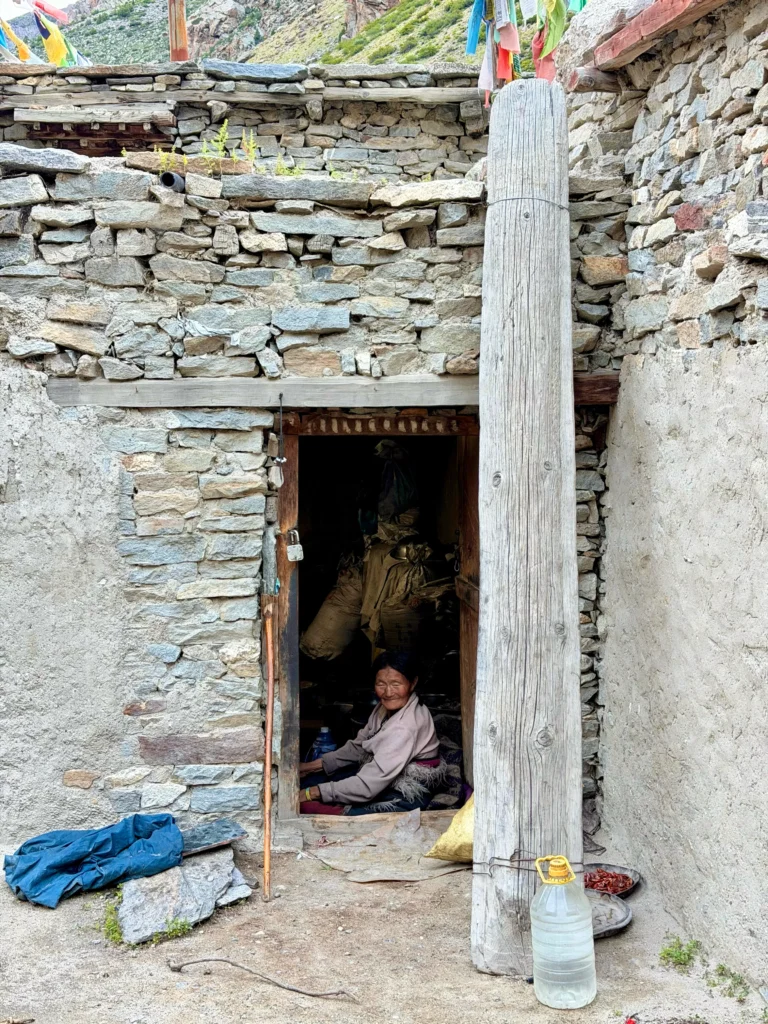
For now, the Amchi is still the first person most families in Upper Humla turn to. The local health post, barely staffed and closed for the winter, is for many residents a formality rather than a service. Amchis have served the valley through every season for generations, and that has built a trust no health post has yet earned. Much of what is needed to keep the practice alive is already in place: a monastery willing to teach, a community that has mapped the threats to its plants, and practitioners who still hold the knowledge. Nepal has begun to recognise Sowa Rigpa on paper. What is missing is the funding and political will to make that recognition reach Limi, while there is still someone there to pass the knowledge on.
This story was developed as part of the Himalayan Climate Watch Network’s inaugural Indigenous Climate Knowledge Fellowship (2026), supporting Indigenous and community-rooted practitioners to document environmental change and local knowledge across the Himalaya. HCWN is a Mudland Climate Lab initiative.