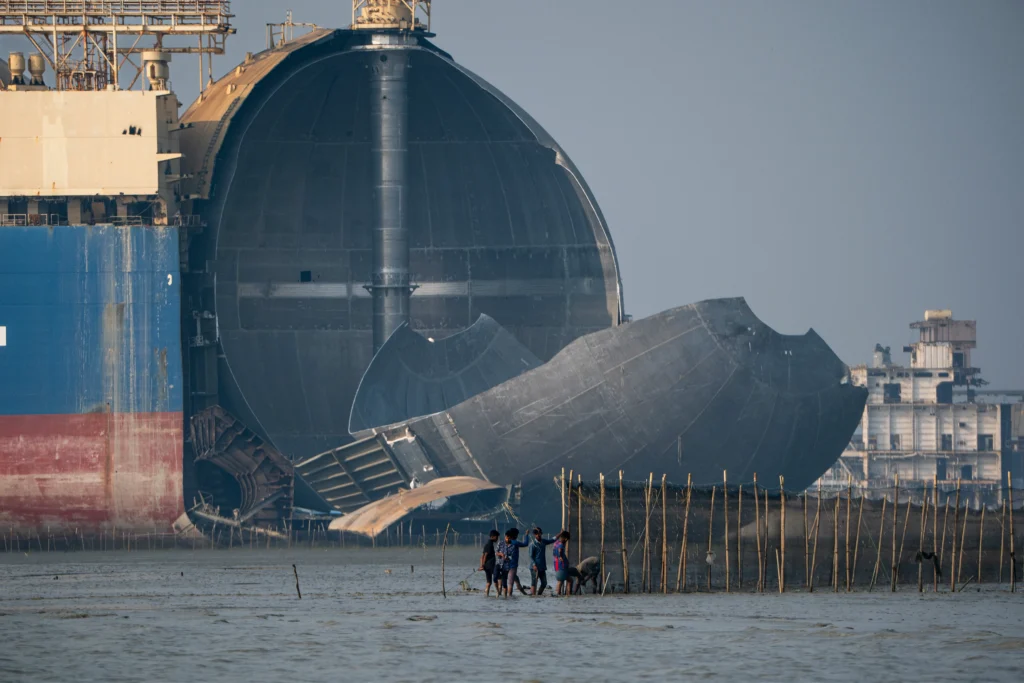
Ninety percent of everything the world consumes, from clothes, electronics, to food and energy, has crossed an ocean once. Ships are the true shapers and makers of the global economy; whose smooth, continuous passage keeps trade flowing and geopolitics calm. For all their hard work, once worn out, mighty ships are not disposed of in the way one would think, but by beaching them like whales. At low tide, their metal bodies are rammed into a sand bar and taken apart by hand in a process called “shipbreaking”. The International Labour Organisation calls this one of the most dangerous jobs on Earth.
Tankers, container ships, passenger ships, and cargo vessels are all built from materials which are toxic. Asbestos lines engine rooms and bulkheads as insulation, mercury sits inside gauges, oil fills fuel tanks and bilges, and there are heavy metals in paints and wiring. Because of this, old ships are considered “hazardous waste” under the 1989 Basel Convention; meaning they must be dismantled and disposed of properly. Basel has been ratified by 187 countries, introduced after wealthy nations were caught dumping toxic waste in developing ones. The International Maritime Organisation (IMO) and European Union have since introduced new legislation, with the latter’s Ship Recycling Regulation requiring EU-flagged ships to be recycled only at an approved facility. The EU calls this rigorous, policed through what a European Commission spokesperson calls “unannounced inspections […] that can lead to a removal from the list and foster improvements through corrective actions.”
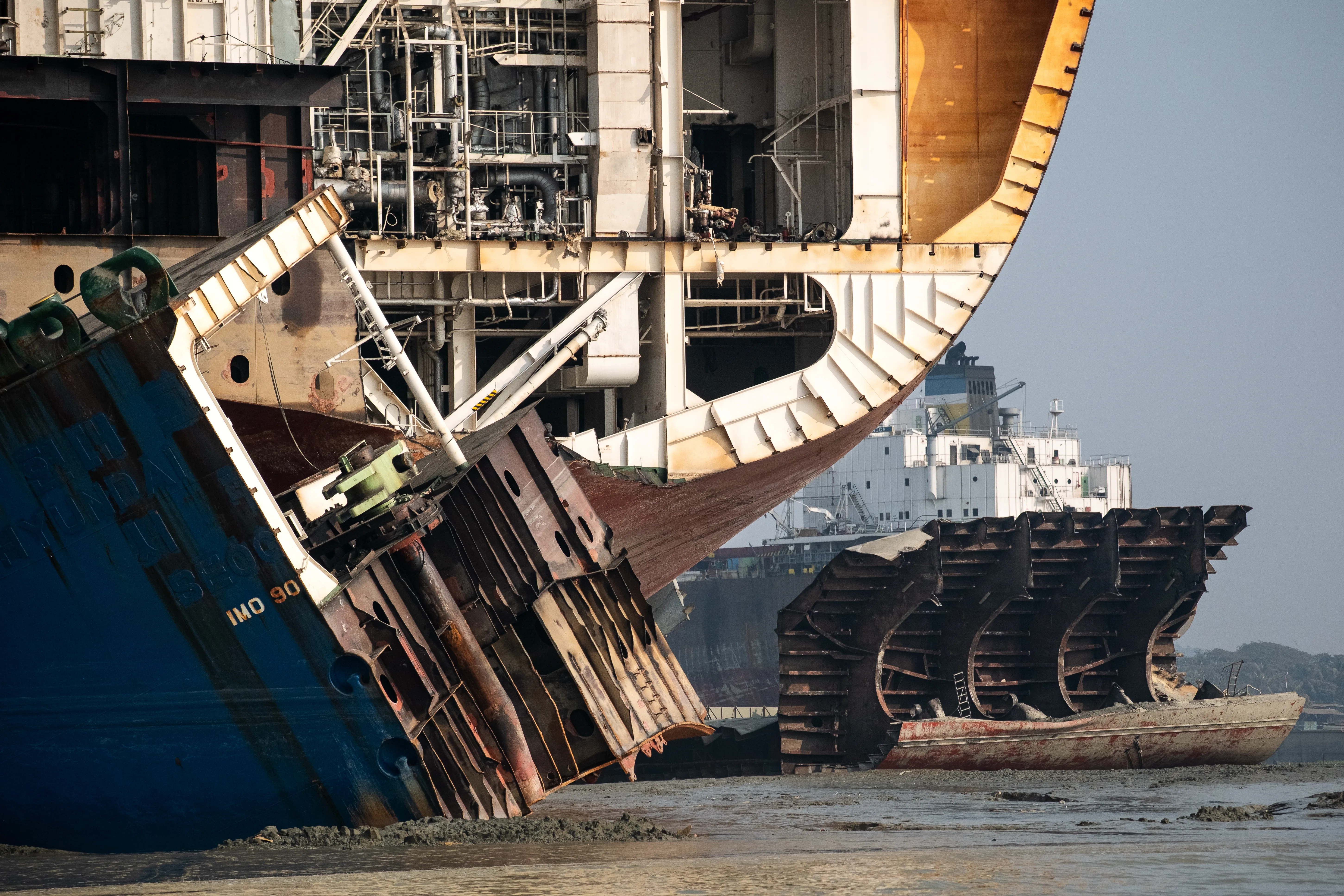
Yet most of the world’s ships will violate these laws, ending up on shipbreaking yards in South Asia. “In the industry, you often hear of old ships being turned into razor blades,” says Spencer Call, an officer of container ships for twelve years and part-time photographer. More than 70 percent are sailed to one of three beaches – Alang in India, Chattogram in Bangladesh, or Gadani in Pakistan – where shipbreaking yards litter the coastline. The largest in Alang has around 183 plots spread over 14 kilometres.
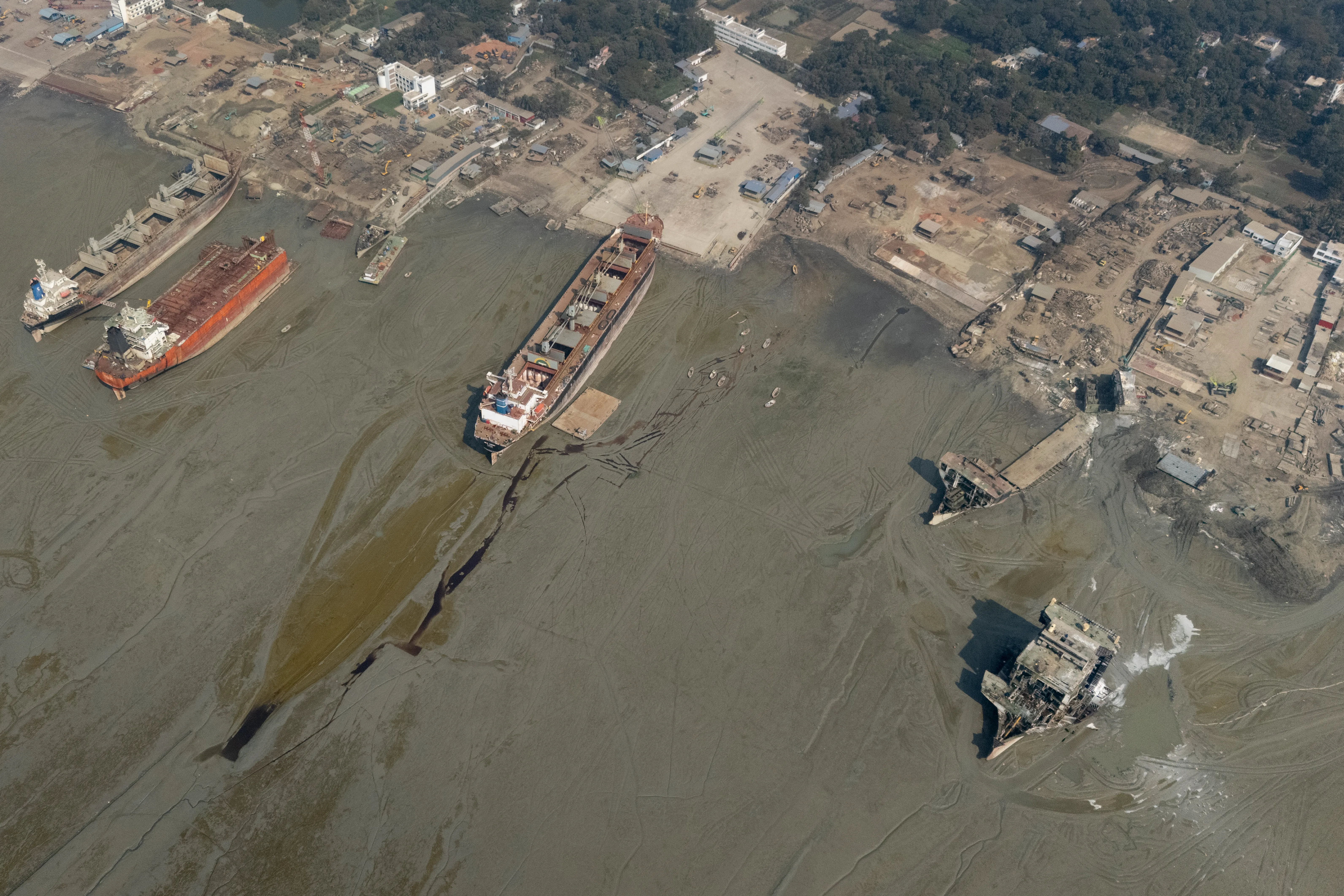
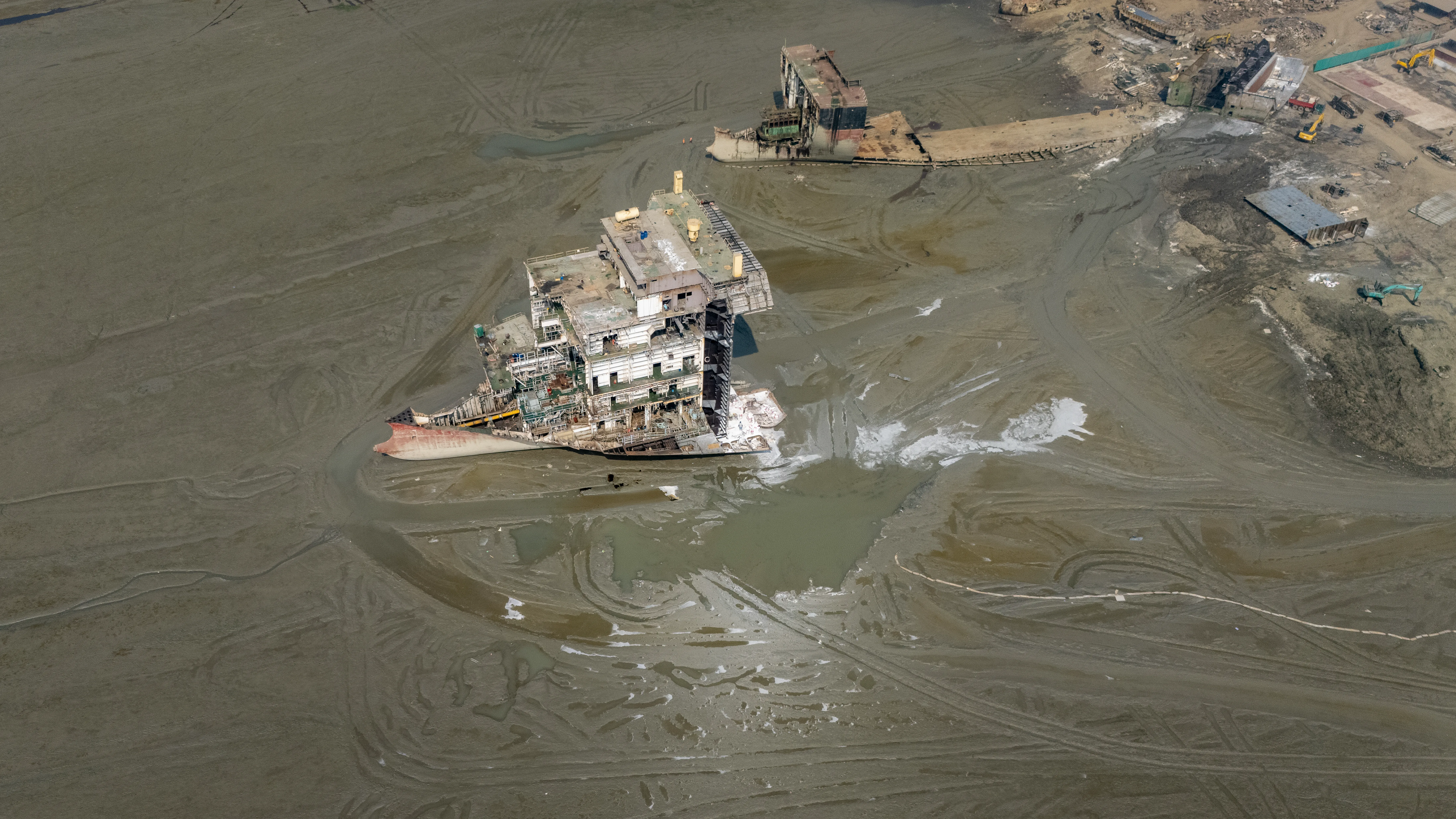
Why they end up there is purely down to profit. India, Bangladesh, and Pakistan currently offer the highest price for old ships. These lower-middle-income countries have large domestic steel industries that rely on shipbreaking for raw material. “There’s a big hunger for scrap steel used in construction. Since there’s a big demand, prices are higher,” explains Nicola Mulinaris, Senior Communication and Policy Advisor at the NGO Shipbreaking Platform – the only Civil Society Organisation in the world working specifically on this issue. Roughly 10 percent of India’s steel comes from scrapped ships; in Bangladesh, more than 20 percent. “These yards can offer $500 per light displacement tonne” according to Mulinaris; safer yards in places like Turkey can offer $200 to $250 and European recyclers around $100.
The other reason these yards can also outbid everyone else is because social and environmental costs are externalised, keeping operating costs low.
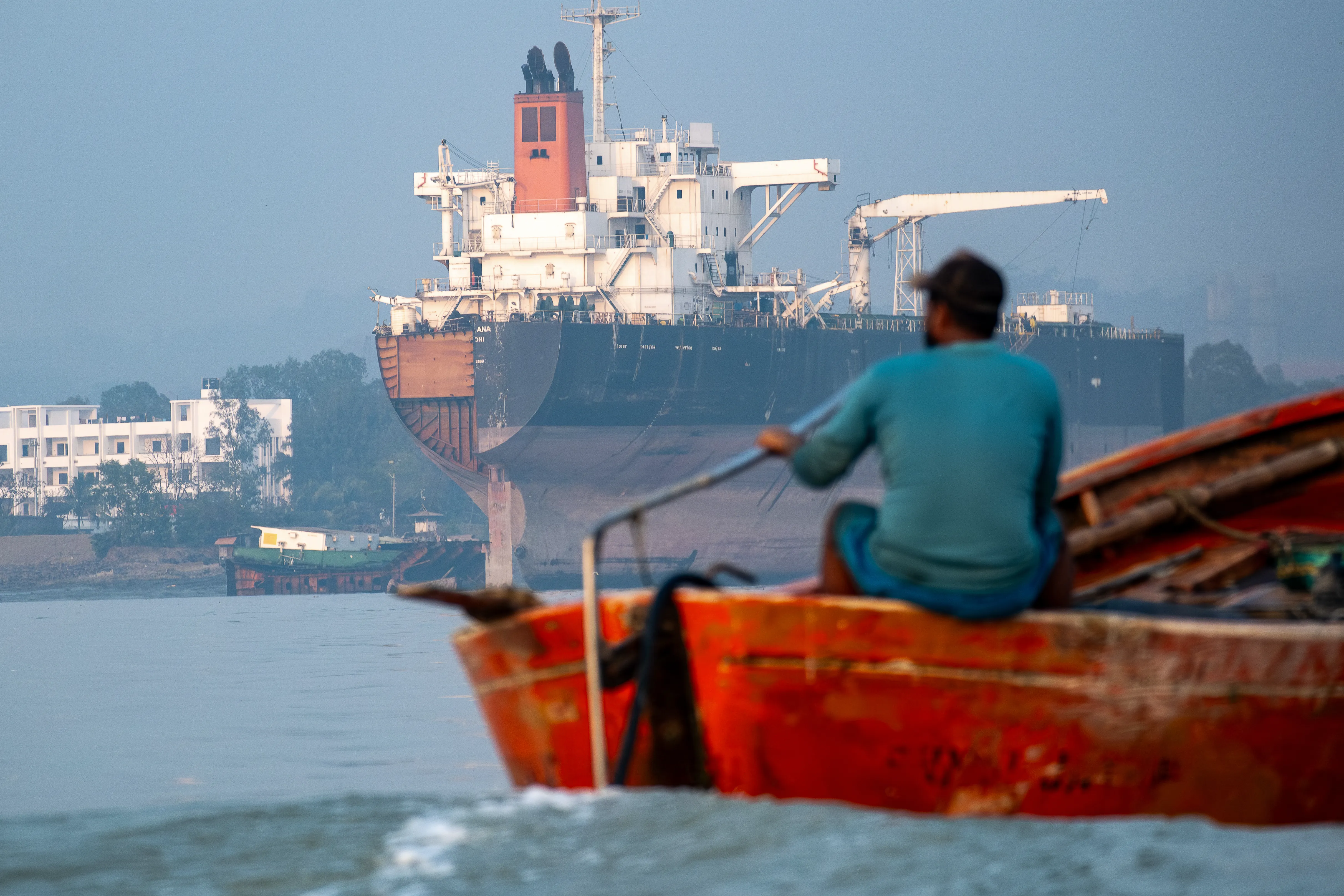

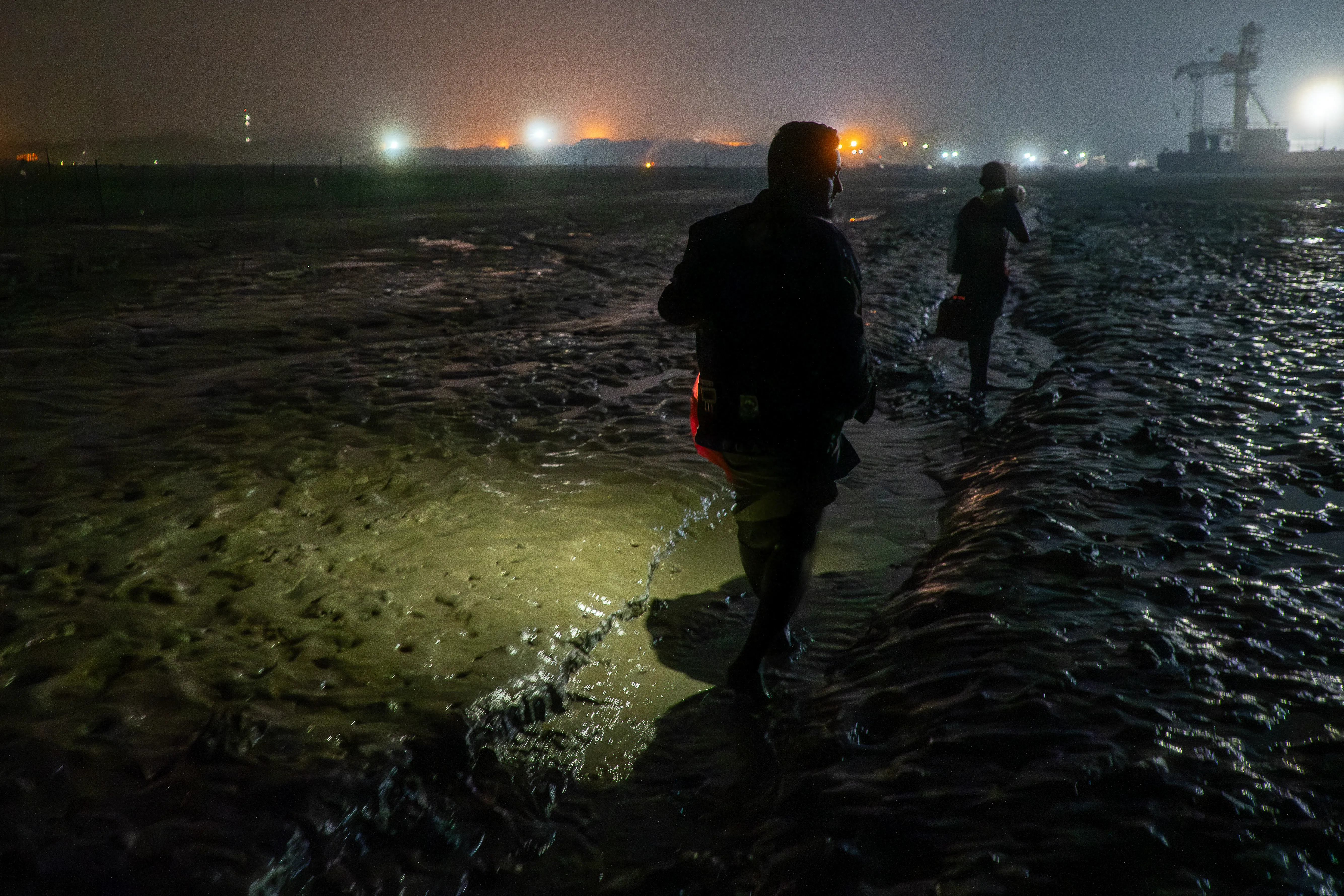
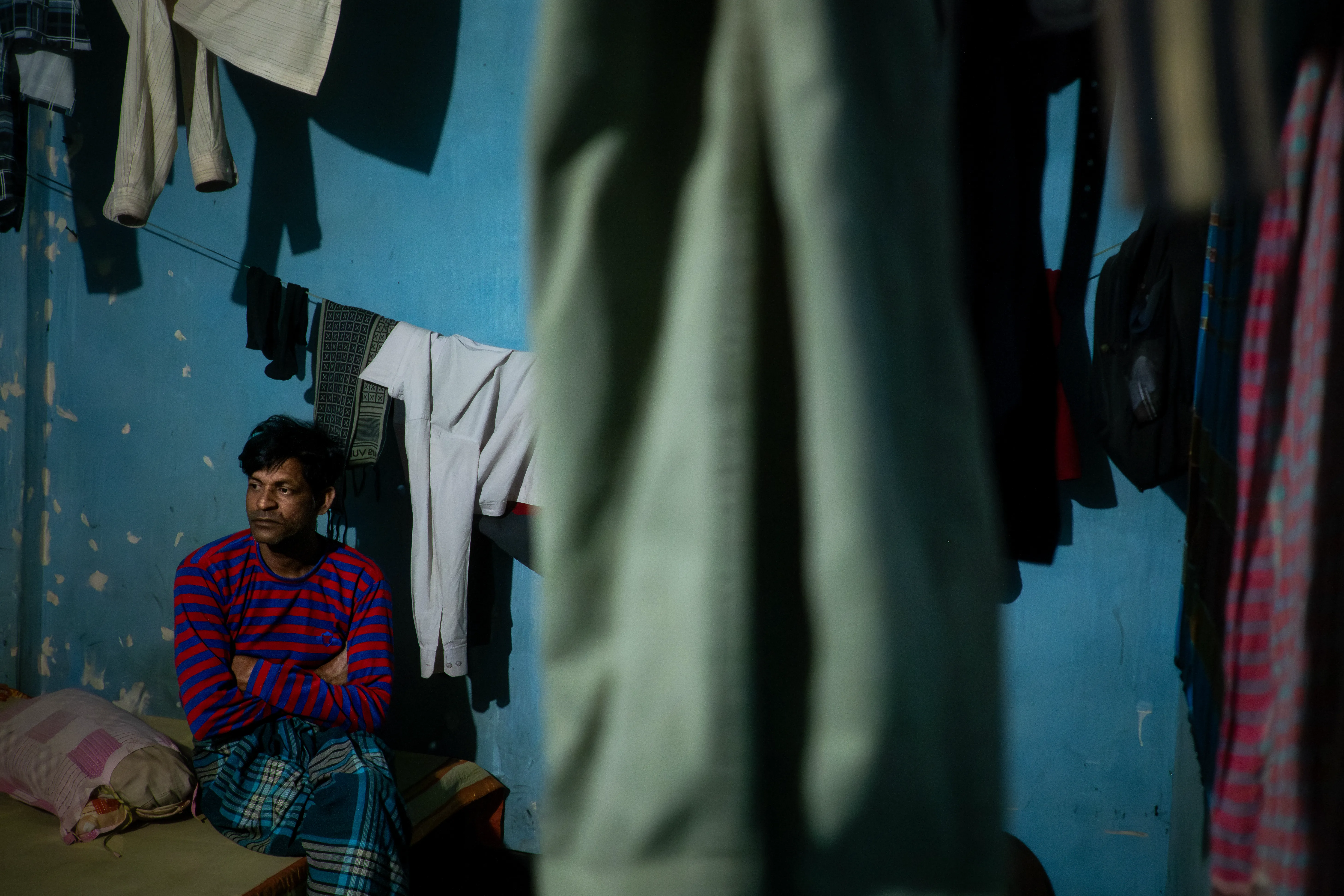
Despite shipbreaking employing an estimated 150,000 to 225,000 people directly across Alang, Chattogram, and Gadani, it is poorly regulated, with safety equipment and medical care substandard. Most workers are male internal migrants, drawn from villages by seasonal, easy-to-come-by work to send money home. The work is informal and low paid, with no unions or laws protecting workers’ rights.
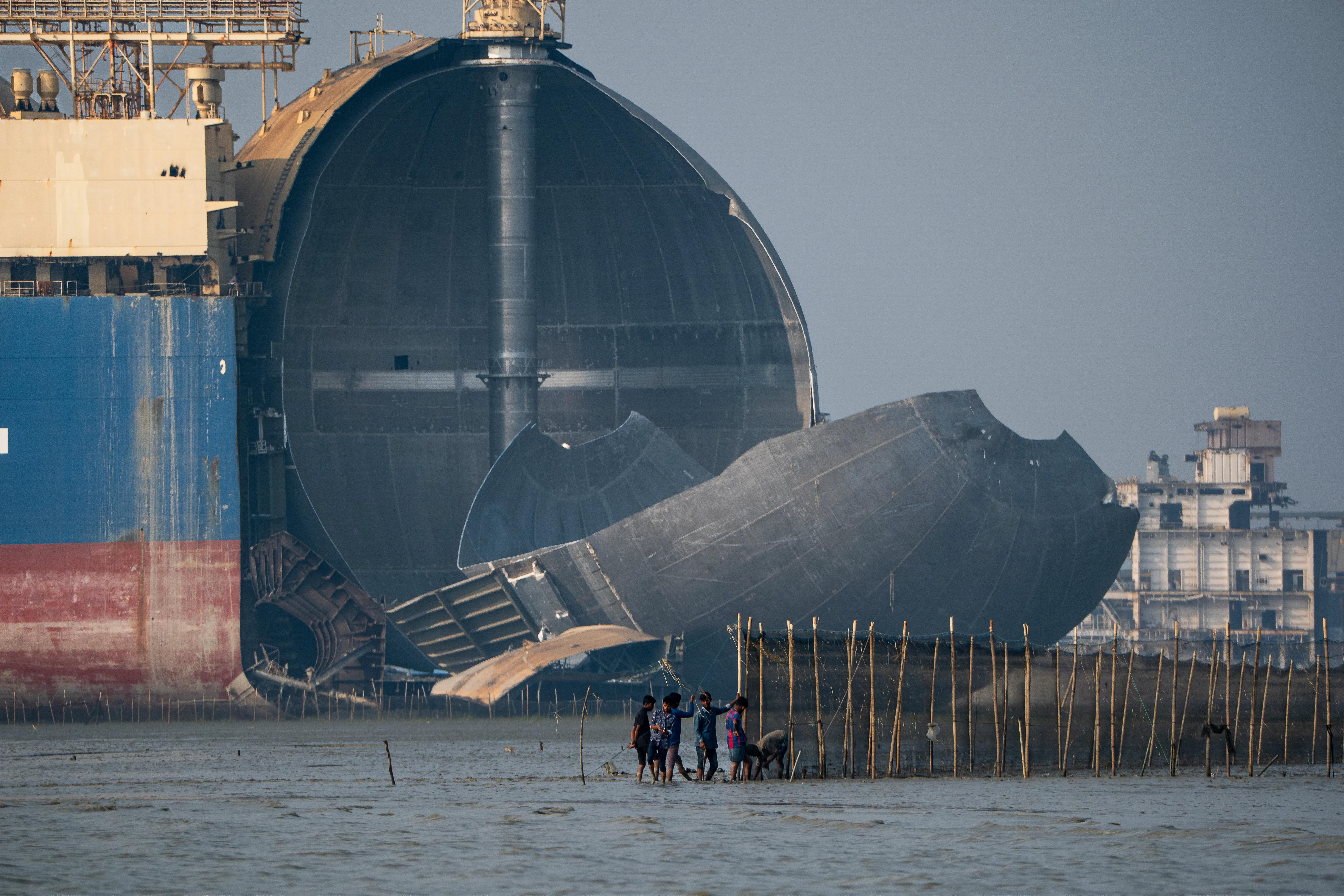
It involves mounting giant ship carcasses and dismantling them by hand: blowtorches cut through hulls, wires and pipes, furniture and machinery stripped out, all with little training or protective gear. In Bangladesh, some workers still do this barefoot.
“During government inspections a yard boss may distribute proper respirators masks with filters, but once inspectors leave, they are collected again” says Call, who spent months in Sitakunda, Bangladesh interviewing and documenting local communities working in the trade. As a result, workers are exposed to toxic gasses, fires and accidents. “One worker fell roughly 40 feet into a ship’s hull and walked away with only a broken leg; his brother was also injured and unable to work for five years.” Shipbreaking Platform recorded 11 workers killed in South Asia’s yards in 2025, and at least 62 injured.
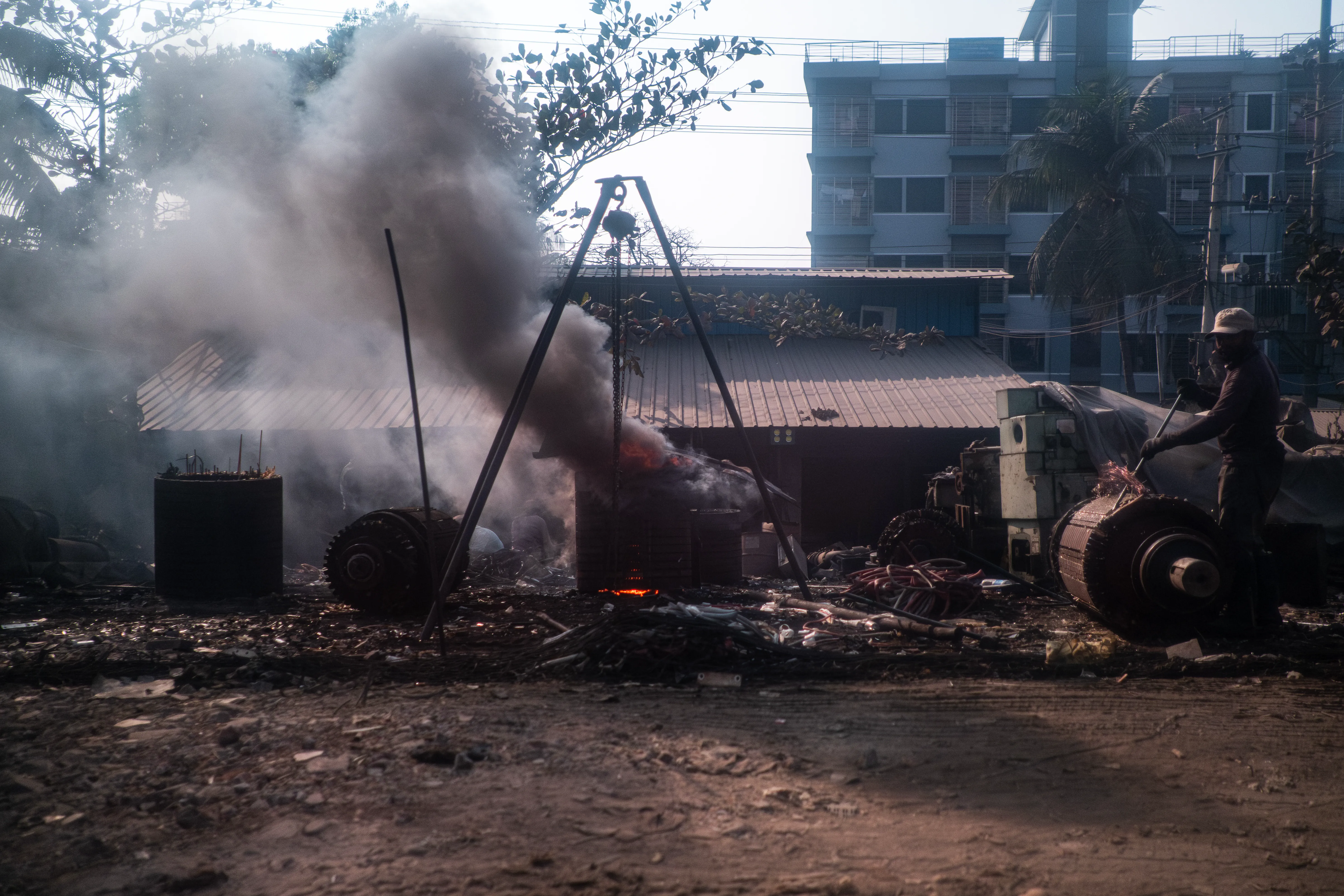
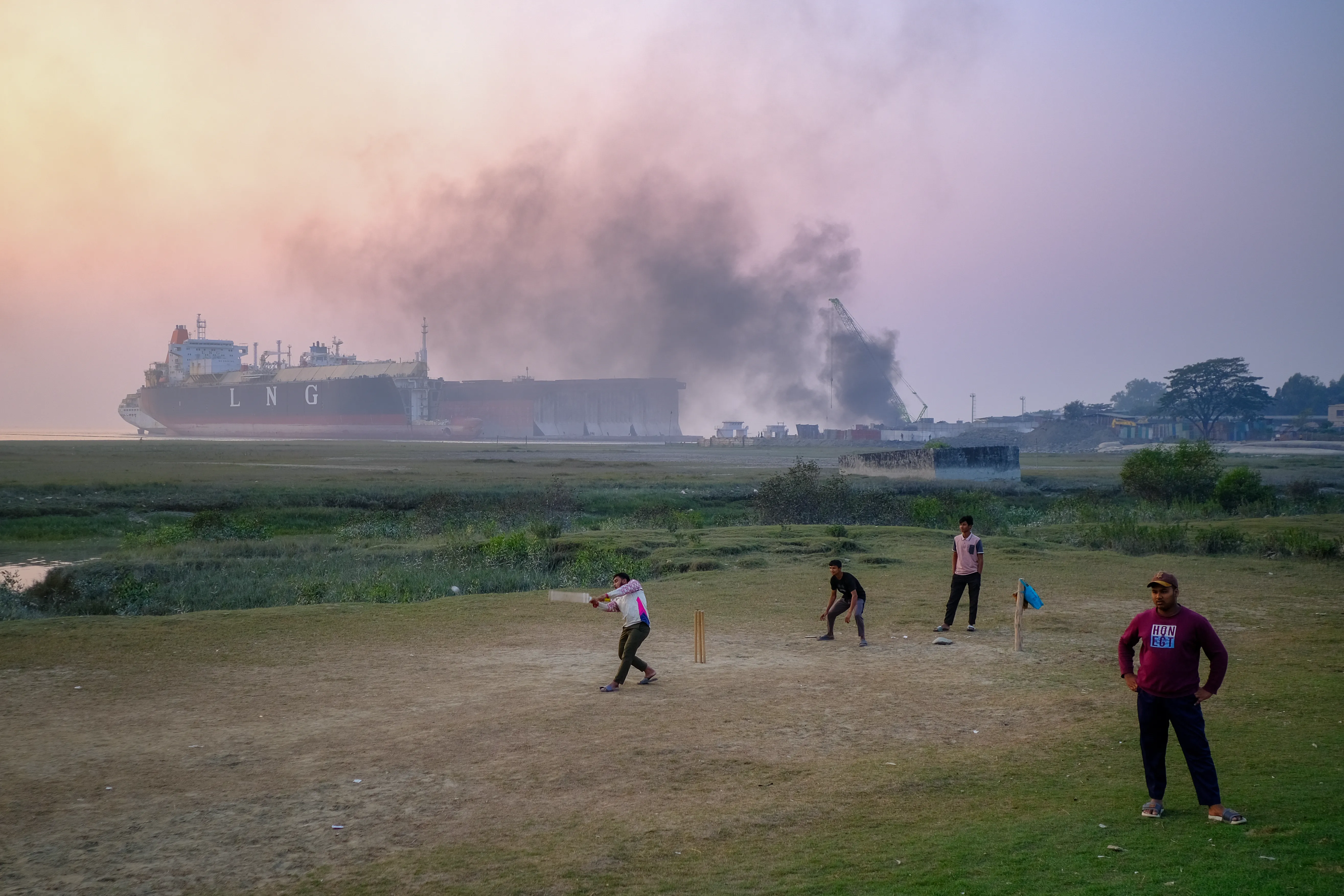
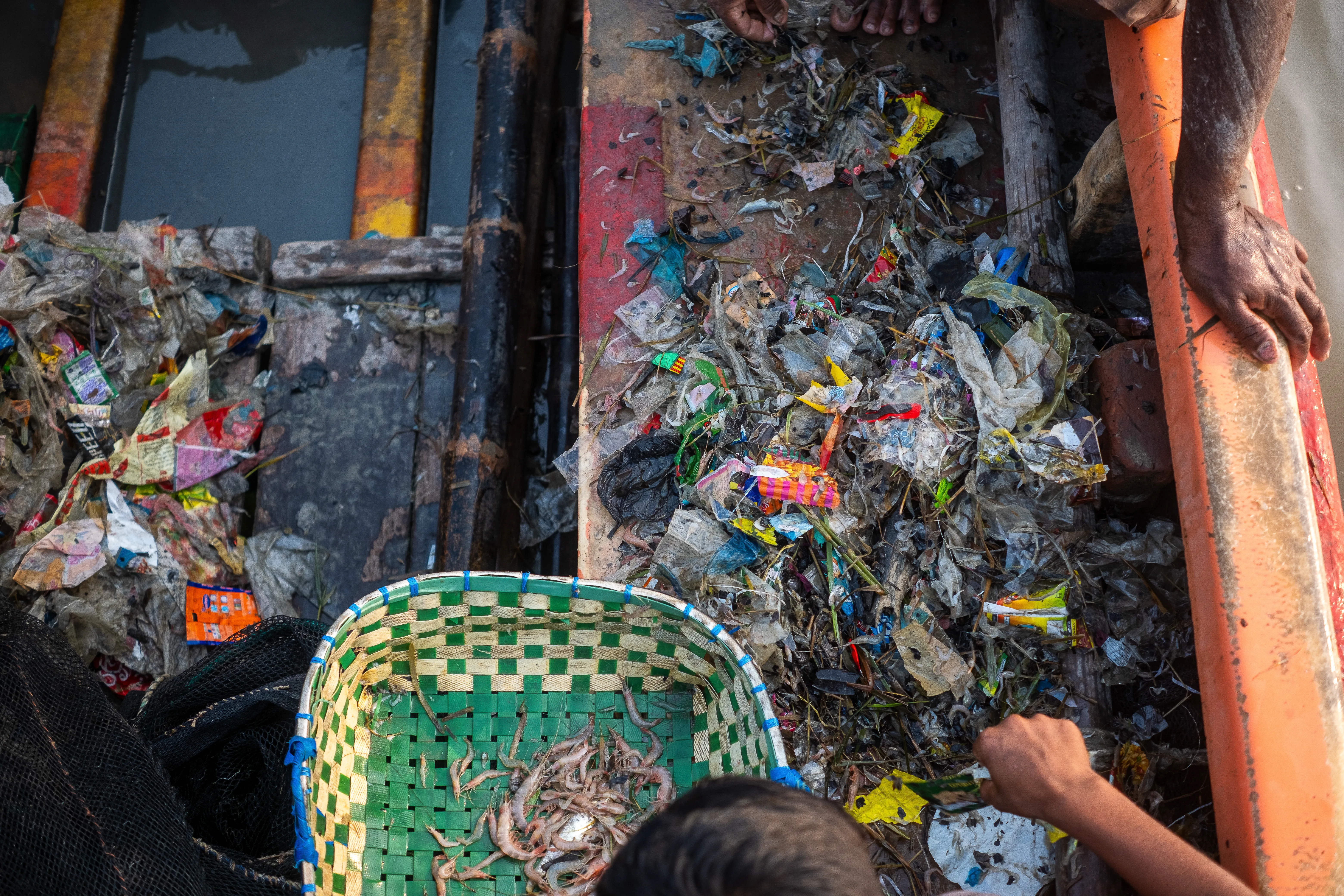
Like its human victims, shipbreaking also maims and exploits the local environment. There is poor downstream waste management: no monitoring or decontamination, no proper recycling or emissions reporting. The act of beaching uses the sea to conveniently wash away oil and chemicals. Mangrove forests are cleared for yards to expand. Items are burnt or dumped into landfill. There is so much toxic churning around that in Gadani, Pakistan the local sea snail population has dwindled because toxins found in paint have prevented females’ ability to reproduce.
Workers rarely understand how toxic the materials they handle are. Once stripped, parts not sent to the steel industry end up in local workshops and second-hand markets that backdrop the beaches, tinkered with, reused, and resold. But some of these carry invisible, deadly particles. “Awareness of the risks associated with asbestos is slim to none” says Spencer, “asbestos sheets will be reused as cheap building supplies, in walls, as tabletops, and one small workshop was using them as low-cost cooking ovens.” Once inhaled, asbestos fibres can cause scar tissue that leads, years later, to lung cancer or mesothelioma.
Dr Sahu Geetanjoy of the Tata Institute for Social Studies argues that government’s own financial interests may explain its reluctance to enforce labour and environmental rules. In India, the shipbreaking industry contributes around seven billion rupees, or €87.5 million, annually to Gujarat’s state coffers in taxes and land leasing. Yet governments do try to hide this from the outside world. “Every shipbreaking yard is surrounded by high concrete fences, some painted with cliché slogans like ‘Safety is Gainful, Accident is Painful’’ and guards patrolling 24/7. Placards warn workers that mobile phones or cameras are strictly prohibited,” says Call. The only way he could take photos was lying on the floor of a small fishing boat, draped under cloths, with a telephoto lens poking out.
Loopholes
But what about where these ships are coming from and who is sending them to these graveyards? Germany and Greece used to be the biggest and dirtiest players, but now it’s China, Japan, South Korea, and the UAE. “Roughly 25 percent of scrapped ships are still European-owned, 75 percent owned by companies outside Europe, but still the Global North.” says Mulinaris. All of these nations are Basel signatories, yet have found ways to dump ships and submerge their identities.
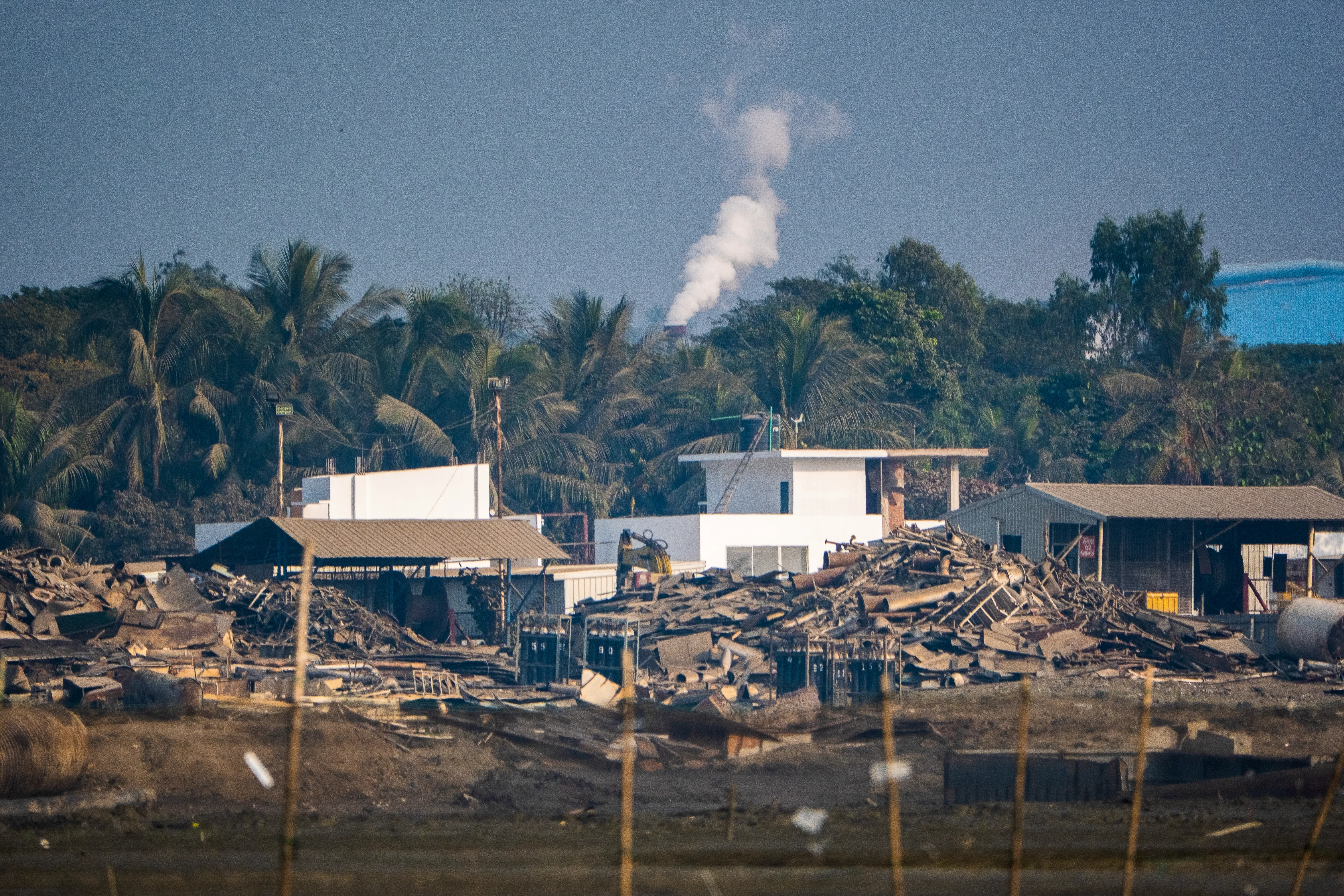
International ship owners rarely sell directly to a scrapyard, which risks legal and reputational damage. Instead, a middleman called a “cash buyer” keeps the industry well-oiled and hidden, buying and reselling end-of-life ships. “Sometimes the ship owner instructs them to use only the ‘best yards’; more often they’re after the maximum price possible,” and it is left to the cash buyer to find whichever yard offers the highest margin.
“Three or four cash buyers control 90 percent of sales going to South Asia,” says Mulinaris “If you go on their website, it looks like they are an NGO, talking about safety, about green steel. They have offices in Dubai, Singapore, Hamburg, London and Delaware.” Human Rights Watch has identified a small number of cash buyers – three or four firms – controlling roughly two-thirds of the global market.
But cash buyers are murky entities, who rarely buy ships under their own name. Instead, they will register the ship to a newly made shell company – a P.O. Box corporation – in a jurisdiction like the British Virgin Islands or St Kitts and Nevis, which becomes the ship’s new owner on paper. They then register the ship under a “flag of convenience,” a flag from a country with lower regulatory burdens. The ship gets a new name, new crew, and the original owner’s responsibility is washed away. According to the European Commission, EU member states using flags of convenience has “significantly undermined” their new regulation.
Margot Gibbs, an investigative journalist, exposed a leaked contract between a European oil major and a well-known cash buyer in 2015, to sell an ageing tanker to a newly formed shell company – whose real owner has never been found. Six weeks after the sale, the tanker turned up at Gadani. The contract required the ship to be renamed and reflagged “immediately upon delivery,” and passed all waste-disposal responsibility to the shell company. It made no mention of the asbestos, mercury, or banned PCBs the ship would have carried, nor any requirement it be broken up in a regulated yard. “[They] operate in the shadows and my experience of writing about them is that they want to stay there” says Gibbs. “During my time reporting on this at Finance Uncovered, cash buyers employed lawyers who tried to injunct us from publishing and threatened to sue us.”
Call explains how these deals to conceal crime higher up in the chain, have impacts on the ground, “The owner, typically a cash buyer, must provide pre-cleaning documentation and an Inventory of Hazardous Materials but these can be inaccurate or falsified. If a worker cuts into a tank with a torch while flammable residues remain, an explosion is likely,” citing an incident in September 2025 at a shipbreaking yard in Chattogram, where eight workers suffered burn injuries when an oil tank exploded.

Lobbying battle
Though laws exist, loopholes and enforcement gaps around them are what let the trade continue. In June 2025, the Hong Kong Convention for the Safe and Environmentally Sound Recycling of Ships entered into force under the IMO – a treaty first adopted in 2009 that took 16 years to gather enough ratifications to take effect. It requires recycling only at authorised facilities holding hazardous-materials inventories and ship-specific plans. For Mulinaris, that sounds nice on paper but it is a weaker legislation, with no teeth. “We campaigned strongly against the Hong Kong Convention; it doesn’t ban beaching, it relies on flag states and recycling states to police themselves, and leaves downstream waste management to national authorities – but we all know Bangladesh doesn’t have a single waste treatment plant.” Gibbs agrees,“It might look good to an outsider but there are dozens of ways in which it can be misused. The idea that flags of convenience can reliably enforce the convention, and that private classification societies can be relied on to issue accurate statements of compliance are fictions.”
The shipping industry is currently lobbying for the Hong Kong Convention to replace the Basel Convention, arguing that the latter was never meant to regulate shipping. Others see this as an attempt to weaken regulation around ship disposal further. “We believe the Hong Kong Convention should apply alongside the Basel Convention, not replace it. According to renowned lawyers, the UN Special Rapporteur on Human Rights, and around 100 NGOs, you cannot replace Basel unless you ensure an equivalent level of protection for people and the environment. The Hong Kong Convention, as it stands, is far from ensuring that” reiterates Mulinaris. As Gibbs puts bluntly, “By using those standards the industry appears to have decided that the lives of those working in the yards are expendable.”
Accountability and change
For Mulinaris, the only way to truly change what is happening when ships need to be disposed of, is to close the loopholes. This starts with tying responsibility to “beneficial ownership.” Right now, liability sits with the ‘exporting state’ (wherever the vessel is when it sets off for the scrapyard), with the flag state, or the recycling state. This system is easy to manipulate and obscures end-of-life-sales. But if, say, a Belgian company owns a ship that sails from China to a scrapyard in Bangladesh, responsibility should not rest with China alone; it should also sit with Belgium, since that’s where the company is registered and where the decision was made. Under that model, reflagging and a cash buyer’s anonymity would stop mattering since they have nowhere to hide.
But these slippery loopholes show that conventions and laws mean little without vigilant, robust enforcement by domestic authorities as well as the international community. The shipping industry, like pirates looking for loot, is driven by profit, not ethics, nor concern for human or environmental life. The NGO Shipbreaking Platform works at the UN level, with governments and authorities like Interpol to drive stronger enforcement. One landmark win in 2020 was the first prison sentence against a Norwegian shipowner for attempting an illegal export. “It made the industry realise these are not just admin fines, there are criminal consequences for individuals. Some started behaving better; others got better at hiding what they do.”
According to Call, most sailors, who spend their lives aboard these vessels, have “a vague sense of the situation” but remain largely indifferent – shipbreaking is simply “too many steps removed.” It is a theme running through our ever-globalised lives: we fail not just to ask where our products come from, but, more often, where they go once we’re through with them. Mounds of food waste. Sewage spilling into rivers. Tech and fast fashion piled in foreign landfills. And even these mighty vessels, bigger than almost anything else we build, disappearing out of sight. Until we care about disposal as much as consumption, shipbreaking will remain just another symptom of our throwaway culture. Knowing where our waste goes, and who it harms, is hopefully where that care starts.