On a cold October morning in 2010, I huddled with my fellow fourth-graders at the rocky banks of the Elwha River. Rain fell on our cheeks as we peered upward toward the high concrete wall that loomed above. The voice of a researcher cut through the falling water, explaining how the Elwha River dam had transformed the river, its inhabitants, the surrounding land and the people who had lived alongside it for thousands of years. My eye caught a shadow. Distracted, I peered down to the foot of the dam where I spied a fish swimming in restless circles, every now and then bumping its nose against the impenetrable wall.
At the time, bearing witness to the Elwha Dam, I could not have understood that the fish was showing me something larger. I only knew that watching it made something tighten in my small chest.
…
Before the Elwha Dam and the Glines Canyon Dam were built, the Elwha flowed freely from the mountains and pristine forests of the Olympic Peninsula into the Salish Sea and out to the Pacific Ocean, sustaining the Lower Elwha Klallam Tribe who lived on the river for thousands of years -not only with food, but with cultural and spiritual identity. Salmon returns once numbered in the hundreds of thousands. Then, between 1910 and 1927, both dams were constructed to generate hydroelectric power to the nearby city of Port Angeles and fuel the Peninsula’s growing timber and paper mill industries. It was illegal in Washington Territory at the time to block fish passage, but dam supporters convinced politicians to look the other way.
The consequences were catastrophic and compounding. The dams blocked salmon and steelhead populations from reaching over 90% of their spawning habitat. More than 20 million tonnes of sediment and woody debris accumulated behind the concrete walls, choking downstream nutrient flow, eroding the river mouth, degrading what spawning habitats remained. Salmon returns collapsed to just a few thousand. Hatcheries built to replace the wild salmon runs ultimately failed. The ancient connection between forest, water, fish, and people -a relationship woven across millennia -was broken.
The dams on the Elwha River caused deep, interconnected losses to the Lower Elwha Klallam Tribe across nearly every dimension of their culture. The Klallam are a salmon people for whom salmon occupies a central role in cultural values, traditions, and social and economic systems. For almost a century, each successive generation had fewer fish to catch, feed their families, and fewer to ceremony around. Ultimately, the fish-abundant Elwha River lived on only in stories passed down from generations alive before the damming.
For nearly a century, the tribe fought to reclaim their river, persistently lobbying Congress to honour the treaty rights guaranteed under the 1855 Treaty of Point No Point. In 1992, Congress passed the Elwha River Ecosystem and Fisheries Restoration Act, authorising all dams be removed from the Elwha to restore the altered ecosystem and the anadromous species within. In 2011, after a century of advocacy, what was then the largest dam removal project in United States history began, first taking down the Elwha River Dam. By 2014, the Glines Canyon Dam was gone, freeing the river in its totality and allowing the ecosystem to heal.
I returned to Elwha again in the fall of 2017, with my high school class. This time, instead of a dam, there were broken concrete foundations and dilapidated spillway structures. Where once there were reservoirs – Lake Aldwell and Lake Mills – now sat a basin recolonising with young vegetation and a river weaving through it. Fish carcasses painted the shore. Some had been caught and eaten by returning wildlife. Others, evading predators, had concluded their lifecycle by spawning, dying and washing ashore. We crouched beside a Chinook carcass as a researcher pointed out the distinctly male ridged back and hooked nose – features only developed upon their upstream climb as they return to freshwater and seek out their original spawning grounds.
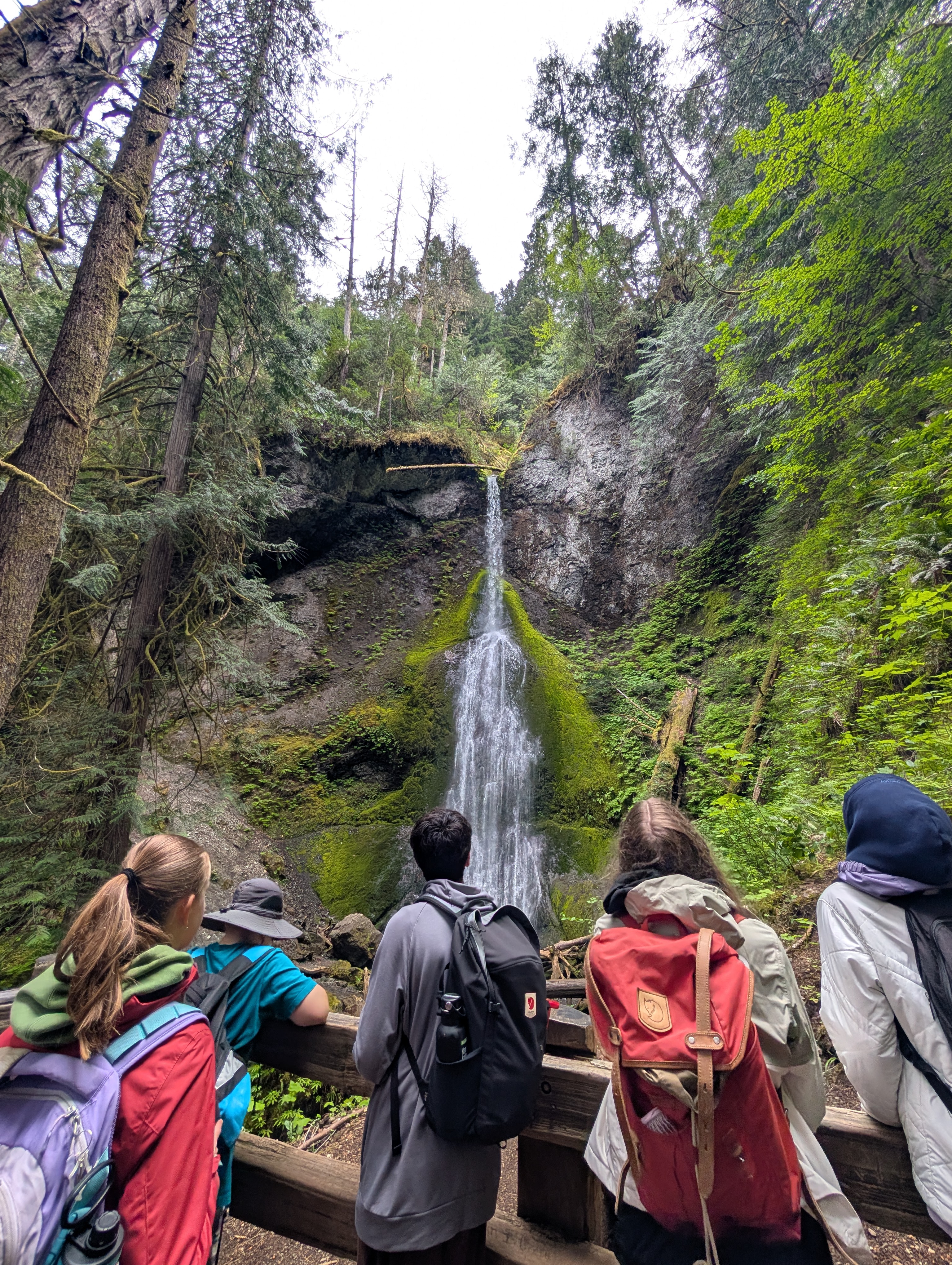
Many children of Washington State and the broader Pacific Northwest share some version of this experience. River health has been central to the state curricula. For decades, taking students to the Elwha, witnessing an environment at its tipping point, has been formative instruction, fostering common knowledge of the regional ecosystem and its social politics. Today, school children still visit the Elwha River – but instead of a wounded landscape, they witness a river healing. The first in over a century never to have known the river dammed – some of them descendants of the Klallam people, walk the banks and watch the salmon run, recalling the stories their elders passed down to them.
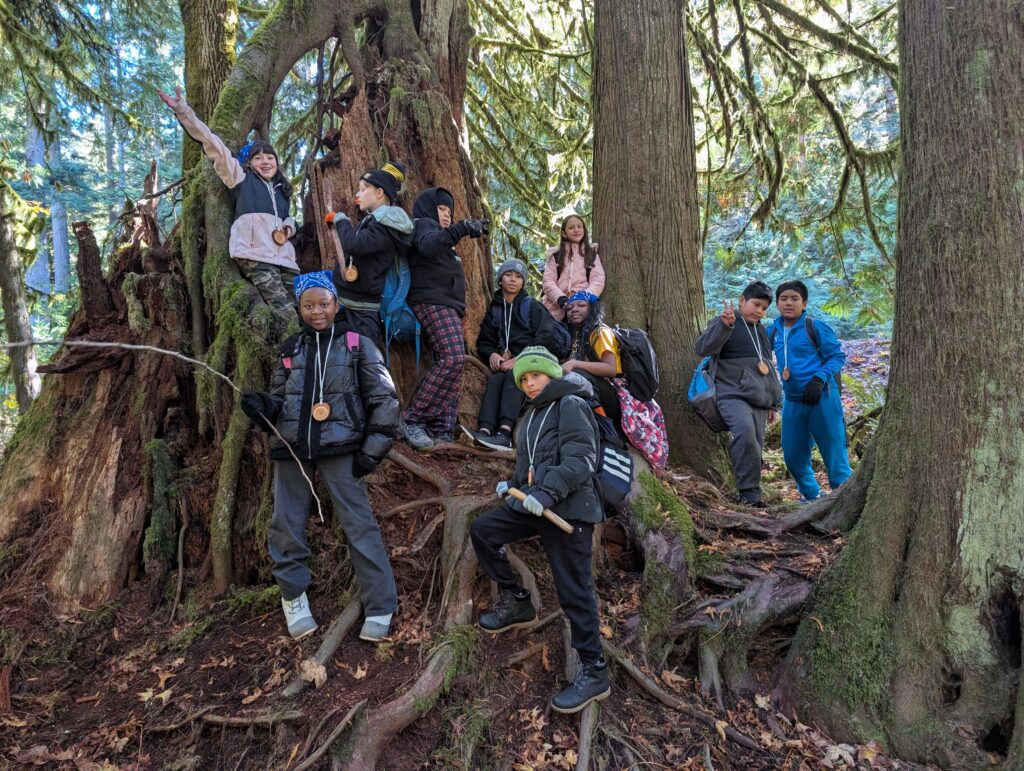
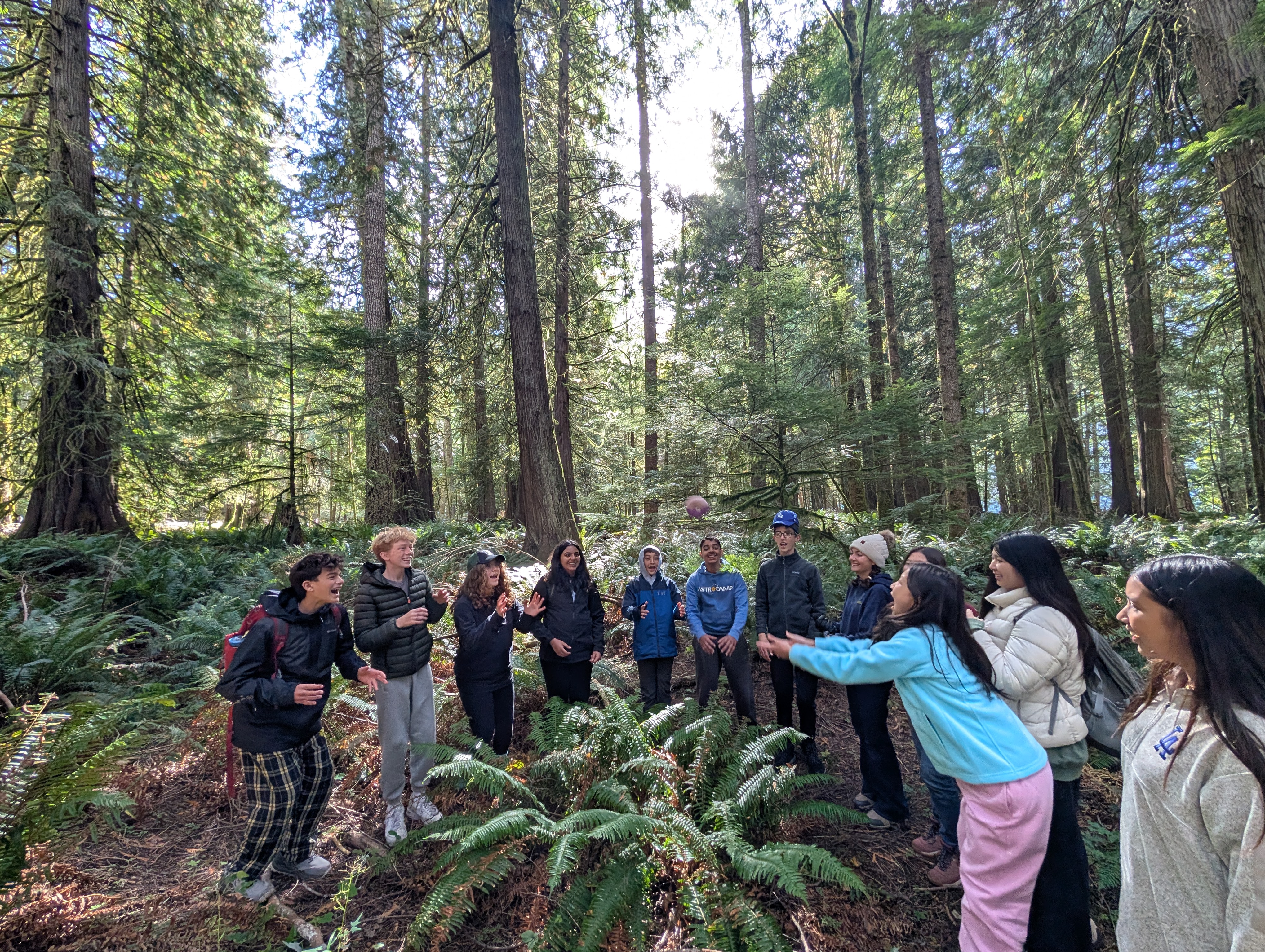
The river is a classroom. Organisations like NatureBridge have long acknowledged the teaching power of the Elwha and have been bringing young people into direct relationship with the river and surrounding watershed for decades, knowing that both a healing environment and a broken one have invaluable lessons to impart on the young who see and listen.
NatureBridge’s approach pairs in-classroom learning with fieldwork: before students ever set foot on the river’s banks, scientists like wildlife biologist Kim Sager-Fradkin visit schools to share the river’s environmental and cultural history, building a foundation of knowledge that the watershed then makes tangible.
Partnering with researchers from Olympic National Park, NOAA, and the Lower Elwha Klallam Tribe, among others, students then visit the river to collect real data that contributes to conservation efforts. From live-staking native plants to measuring elk browse patterns, students do essential work that contributes to scientific research all while cultivating a first-hand relationship with the Elwha.
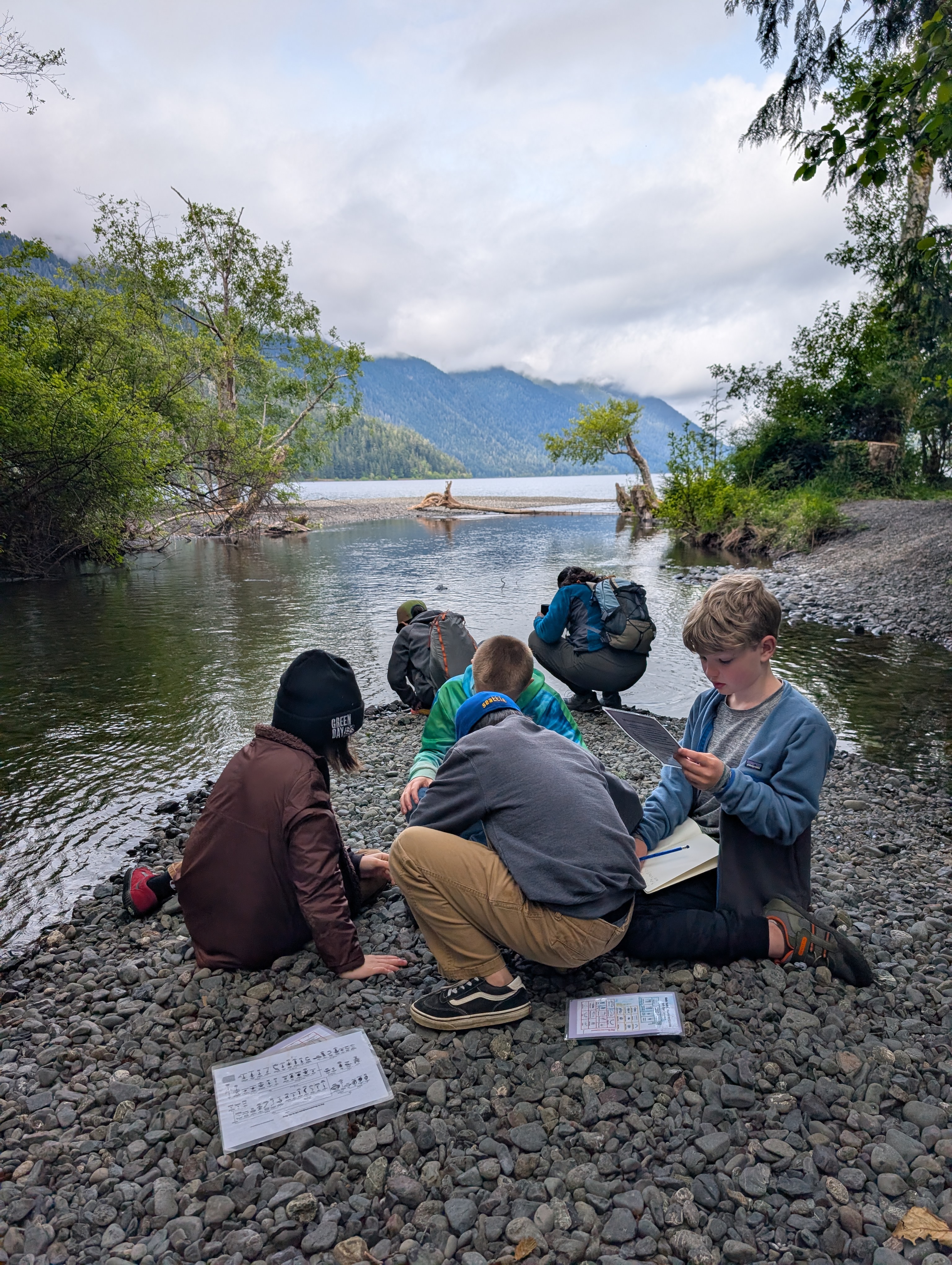
This kind of experiential learning practice asks students to internally reckon with the history of the river they now contribute to revitalising – who it belongs to, what was taken, and what is slowly being returned. In doing so, they start reflecting on their own effect on their natural and social environments.
Giving students a tangible understanding of an environment’s ecological connectivity makes known an environment’s delicacy. This knowledge compels young people to use critical thinking to investigate their own impact within the natural world.
Emily Volz, NatureBridge Olympic Education Director, describes an exercise run at the beginning and end of each programme: students are asked to draw a scientist. At the start, the drawings almost universally depict an unknown figure in a white lab coat. After the student’s multi-day programme, performing data collection and contributing to restoration projects, the same students are asked again to draw a scientist. Often, the second picture depicts themselves as the ones in the lab coat. “This is really impactful,” Volz says not only for what it reveals about a student’s relationship to science, but for what it signals about their relationship to the world they’re being asked to help protect. Volz notes that these programmes are “inspiring engagement in STEM subjects for our future and overall, how people see the environment as an essential cog in our lives.”
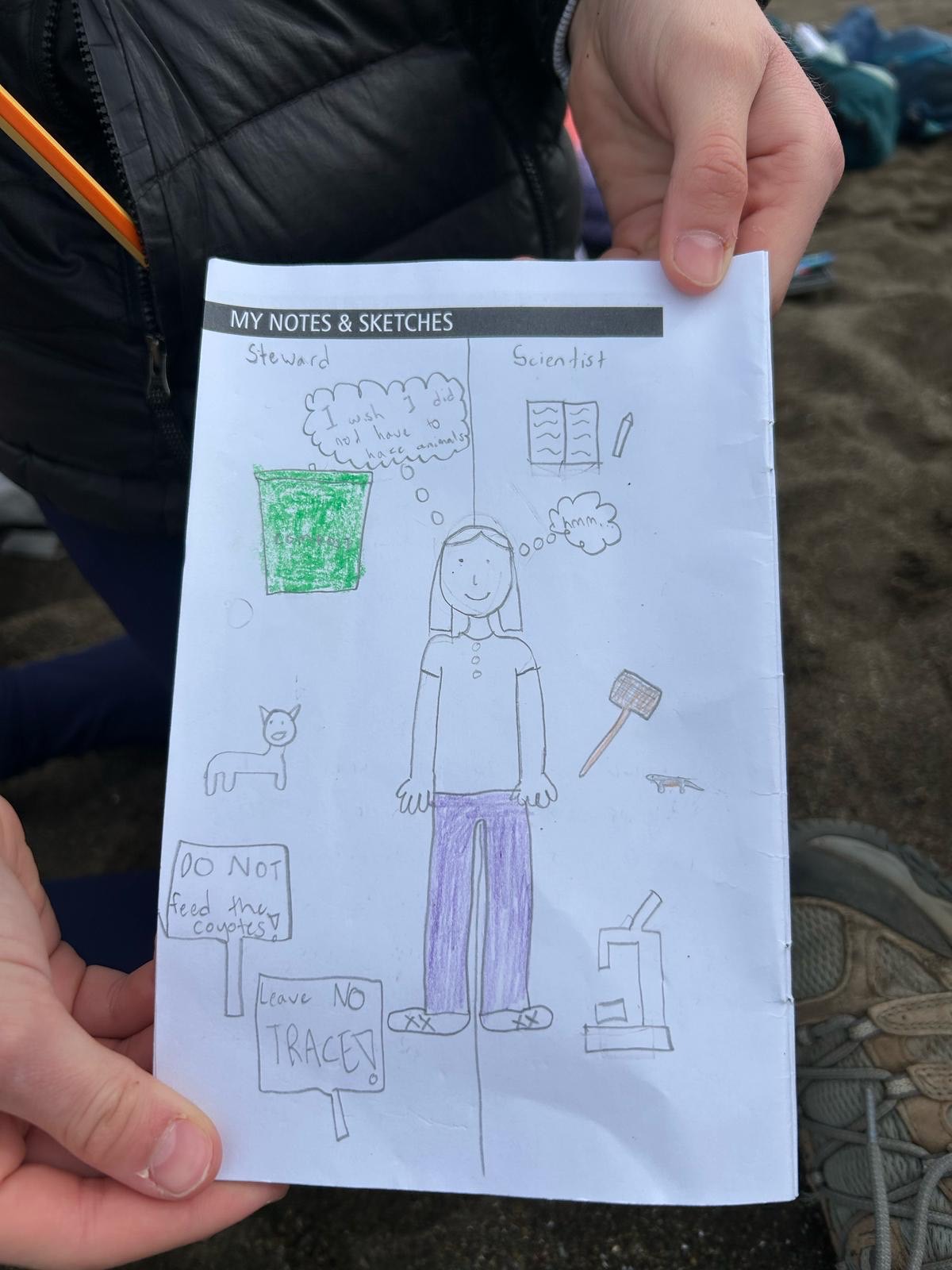
That shift in self-perception is perhaps the most radical outcome of programmes like NatureBridge. When students are entrusted with work that has real impact, and given the knowledge to understand it, that empowerment can ripen into agency and advocacy.
In NatureBridge’s 2025-2026 Annual Report, their student survey representing 1,800 students from all four of their campuses found that 77.1% of students replied “Likely” or “Extremely likely” in response to the statement “I will help to protect the environment.” Similarly, in the same survey, 76.8% of NatureBridge students said they planned to talk with their families and communities about what they had learned and experienced.
Kim Sager-Fradkin, who has led NatureBridge courses for over 25 years has seen this transformation ripple outward in lasting ways. She recalls a group of young women who approached her at the Elwha campground after a day on the river learning about wildlife radio tracking and salmon nutrients. The group of girls asked for advice on how they “could someday do what she does.” Years later, their teacher wrote to tell Sager-Fradkin that every one of those girls had gone on to pursue natural resources studies. “One of my overriding driving forces while teaching on the Elwha,” she says, “has been to teach youth about potential career pathways in natural resource science.”
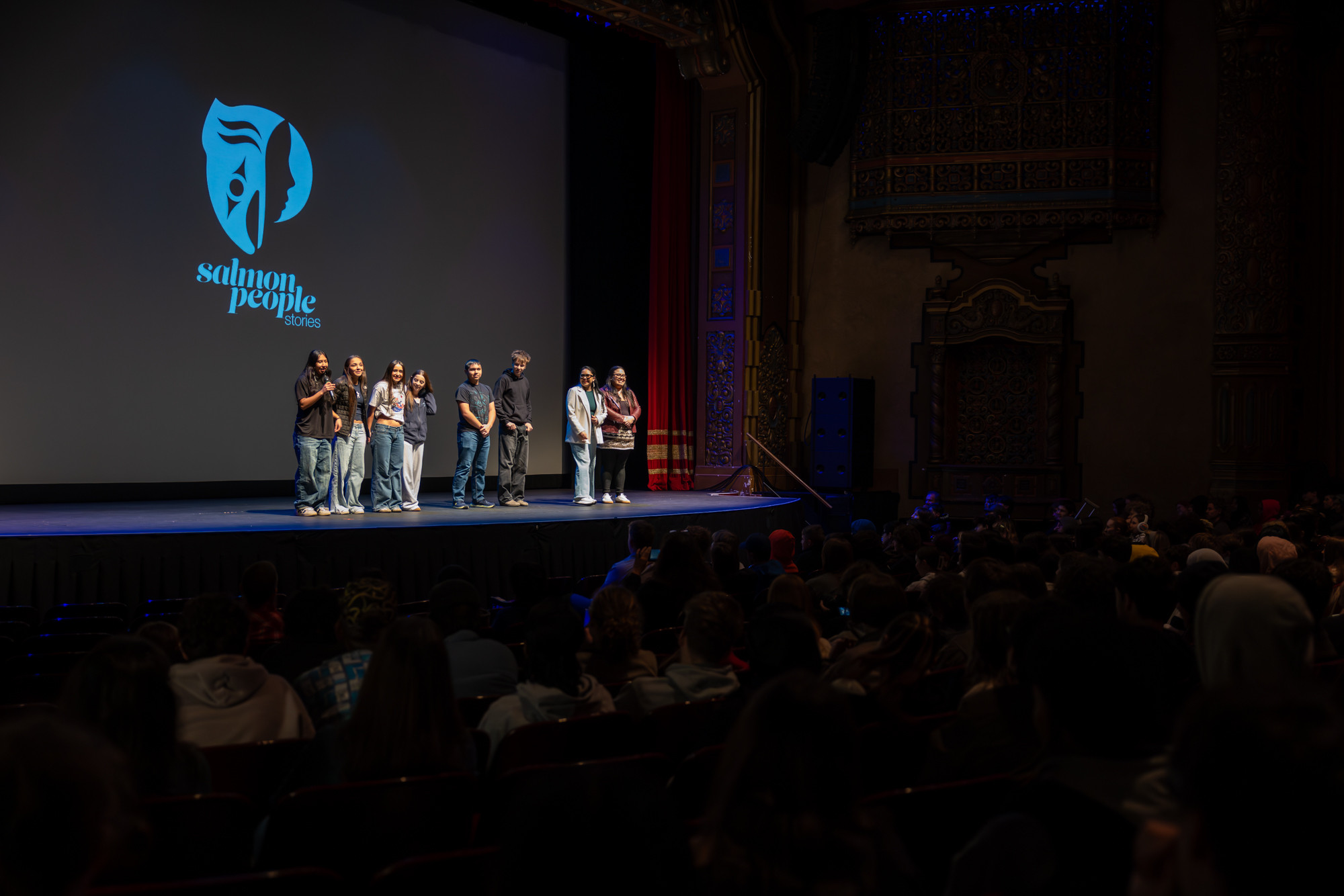
This past February, Children of the Setting Sun Productions, a Bellingham-based Indigenous-led non-profit, ran the first public screenings of their new film The River Remembers for more than 6,000 Whatcom County middle school students at the Mount Baker Theatre.
Walking into the theatre, the middle schoolers were quiet, “they didn’t want anything to do with you,” recalled Producer and Production Manager Adonia Cairns. Many kept their eyes low. But standing backstage while the film played, Cairns, fellow Producer and Writer for the film Noelani Auguston, and Director of Content and Relations Natasha Brennan, heard something unexpected: an uproar of applause, throughout the film.
At first, they thought the reactions marked the children’s assumptions that the film had ended, fading into black at some points. But the story was still unfolding. “We realised these kids are just in the moment, feeling all the feelings,” Cairns said. “That was beautiful.”
When the students filed out of the theatre afterward, the shift was visible. “There was a collective difference,” Auguston said, “They were walking out proud. They were ready to talk to you. They were doing the hy’shqe!” The directors and honoured guests had taken to the stage before the viewing to teach students the Coast Salish expression of gratitude before the film began. “Now, walking toward the exit, they raised their arms and called it out together,” Auguston said smiling. We were all smiling as we talked about what this story means for every young person, native and non-native.
The River Remembers is a multigenerational story of loss, perseverance, and renewal – tracing the decades-long fight by tribes working to restore the rivers that once sustained their people, their culture, and their identity. Beginning at the Elwha River, the film follows the historic advocacy for dam removal that would eventually set a precedent for the Klamath River – where the largest dam removal project in U.S. history was completed in 2024. Four hydroelectric dams were removed from the river. Two dams that support farming and water management and include fish ladders in their infrastructure remain, allowing fish to move upstream. The Klamath River now flows freely from Lake Ewauna out to the Pacific Ocean – an outcome made possible, in part, by the momentum created when the Elwha ran free again.
Told through the intimate lives of Vanessa Castle and Frankie and Molli Meyers, the film braids together historical battles and shared desires for their children: parents advocating for the rivers so that their youth will never have to know a river dammed. Vanessa Castle’s son Braven has never eaten a fish from the water that fed his ancestors for thousands of years, a loss shared by an entire generation who grew up without the river their culture depended on.
Their story, and the victories that followed, point toward what comes next. Young people growing up now will know rivers their parents and grandparents only dreamed of, and with that comes the knowledge – and the responsibility – that other rivers are still waiting.
“It’s definitely an intergenerational story,” Auguston said. “The burdens that the generations before us carry are still being carried – but they are different. The Boldt Decision happened in 1974 but still we are fighting for our treaty rights.”
She describes the film as part of a larger cultural system of witness and responsibility. “We have this ancient system of witness and remembrance and record keeping – older generations, younger generations and mid-generations are always represented. We really wanted to show the passing of intergenerational knowledge and responsibility that you have to your community, where you come from, and what you rely on—to fight for mother earth, for the salmon, for those who can’t speak for themselves.”
From the beginning, Children of the Setting Sun made a deliberate decision to premiere the film not at a festival or private industry screening – but first publicly for schoolchildren. It was, in many ways, a bet on the future.
Alongside the screening, the organisation created classroom discussion guides so teachers could continue the conversation after returning from the theatre to school. What followed surprised even the filmmakers. Students began writing back, and haven’t stopped.
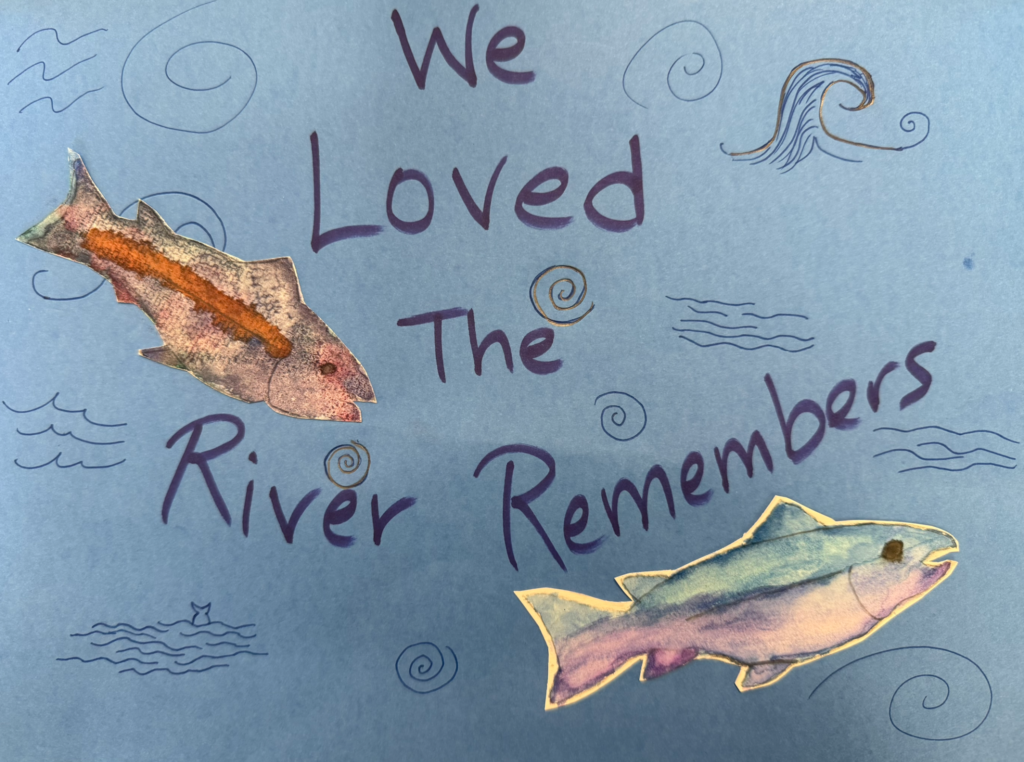
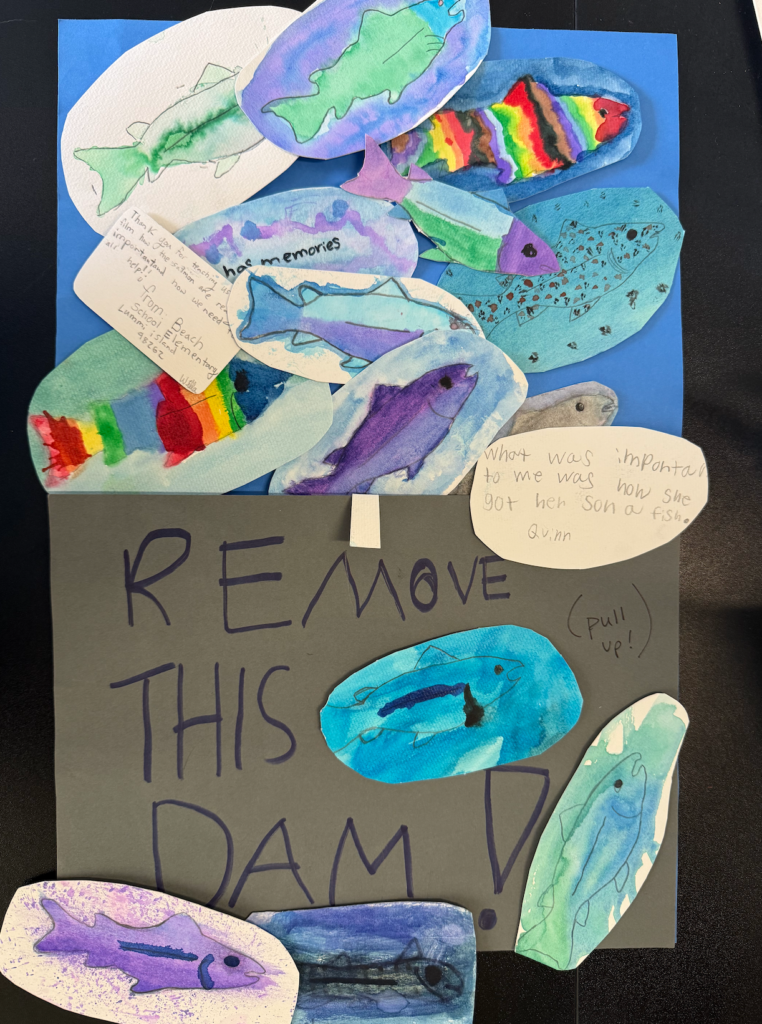
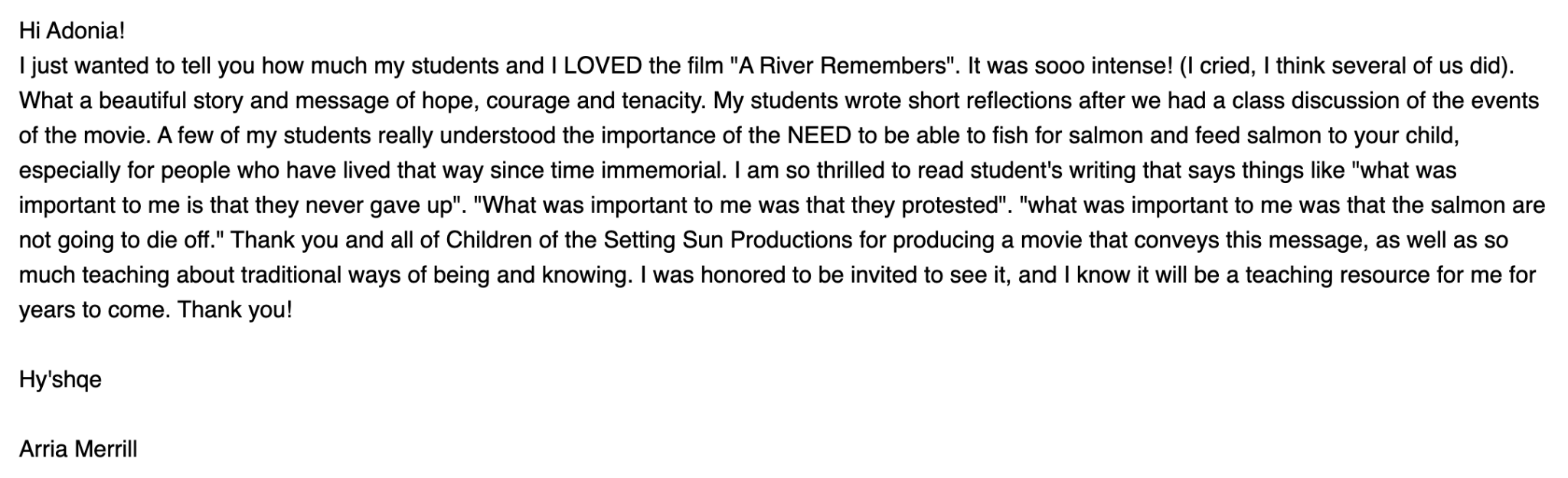
One letter arrived from a fourth grade class folded like a dam, the grey crafting paper reading “Remove This Dam!”. When the paper flap was lifted, watercoloured cut salmon spilled out. Inside, the students wrote about wanting to become advocates for rivers. Another message came from a teacher on Lummi Island, who brought her third, fourth, and fifth-grade classes to the screening. The letter shared some reflections from the students, including “What was important to me was that they never gave up,” one student wrote.
What was important to me was that they protested. What was important to me was that the salmon are not going to die off.
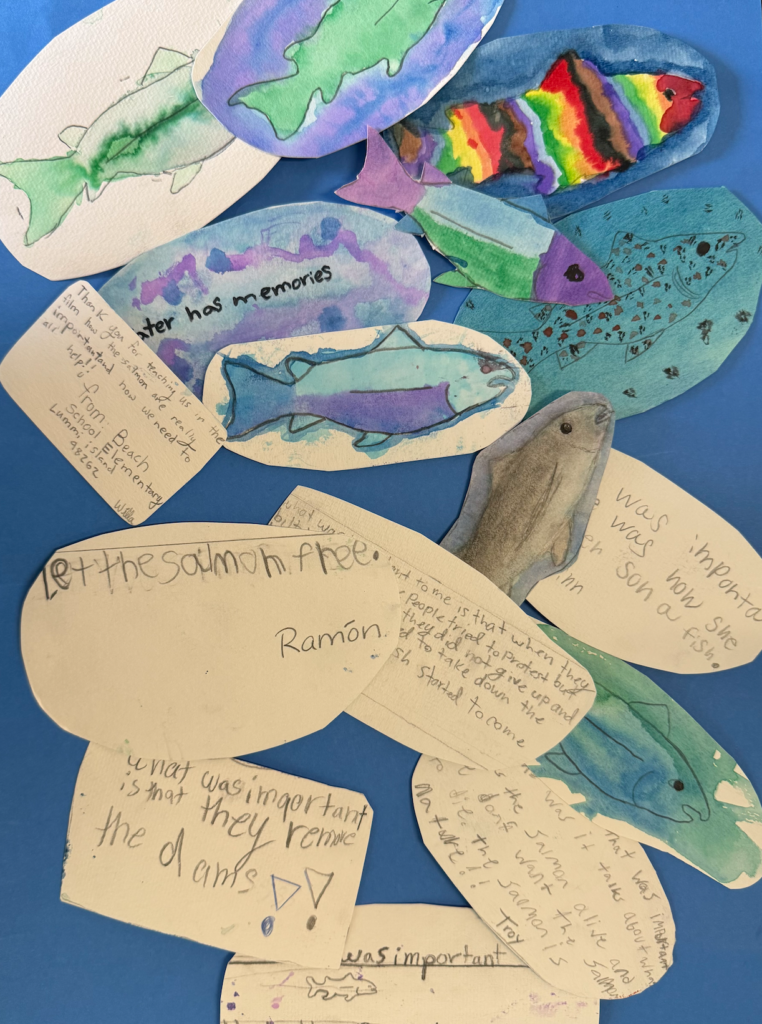
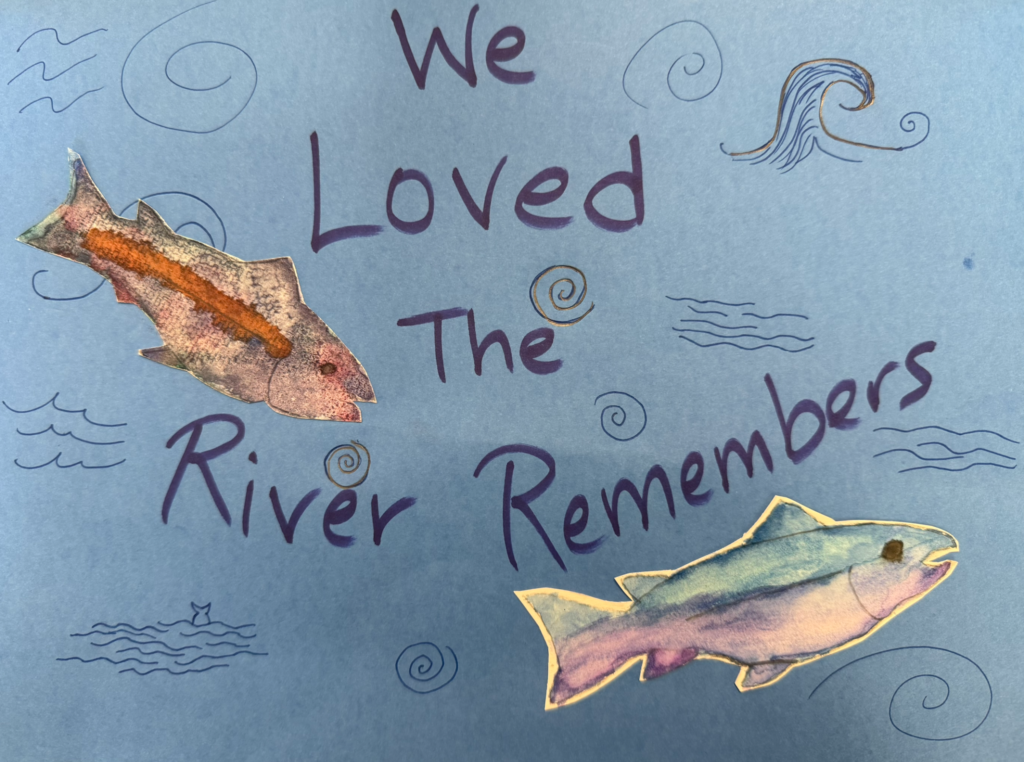
“That’s just one of many,” Cairns said, laughing.
For Cairns, these responses reflect the purpose of the film.
“Hope carries action,” she said. “It ignites a power from within. Seeing that especially in Native children – seeing that these generations can make change. These are stories of resilience and restoration and hope, and they include everyone. This story is for everyone.”
At its core, Children of the Setting Sun’s work is about gathering people into responsibility – not just awareness. “We want kids to walk away from this film understanding how to care for their neighbour,” Aguston said. “Care for your fellow human being no matter where they come from. Always walk your life with empathy, care and respect – and know who you are within your environment, within your community.”
For the filmmakers, it was essential that young viewers understand both truths at once: that change is possible, and that the work is ongoing. Because “This fight isn’t over. The
Klamath isn’t free. Many rivers aren’t free. There are so many other stories yet to be created” says Auguston. On Children of the Setting Sun’s The River Remembers website, a quote below the film reads, “There are thousands of champions on the Klamath and Elwha Rivers. So many stories of Tribal leaders, families and individuals participating in the plight to restore their waterways and homelands. Our film is only a chapter of the many Salmon People Stories.”
The filmmakers’ intentions were to encourage the telling of more of these stories everywhere, inspiring hope in young people to undam and free rivers and critical habitats. Auguston stresses, “We have these wins and battles. The kids need to know that the fight is never over to protect the earth and to protect our waterways and our homelands.”
“These stories are hard.” Cairns reminds us. “It’s heavy to talk about trauma and what’s happened to us. It’s hard to talk about it with our younger generations. So that’s the hope and the light you see throughout our creative work there’s always going to be that dose of medicine, that dose of light. We never introduce the threat or the trauma, without coming out of the story with light, hope and a vision for the future.”

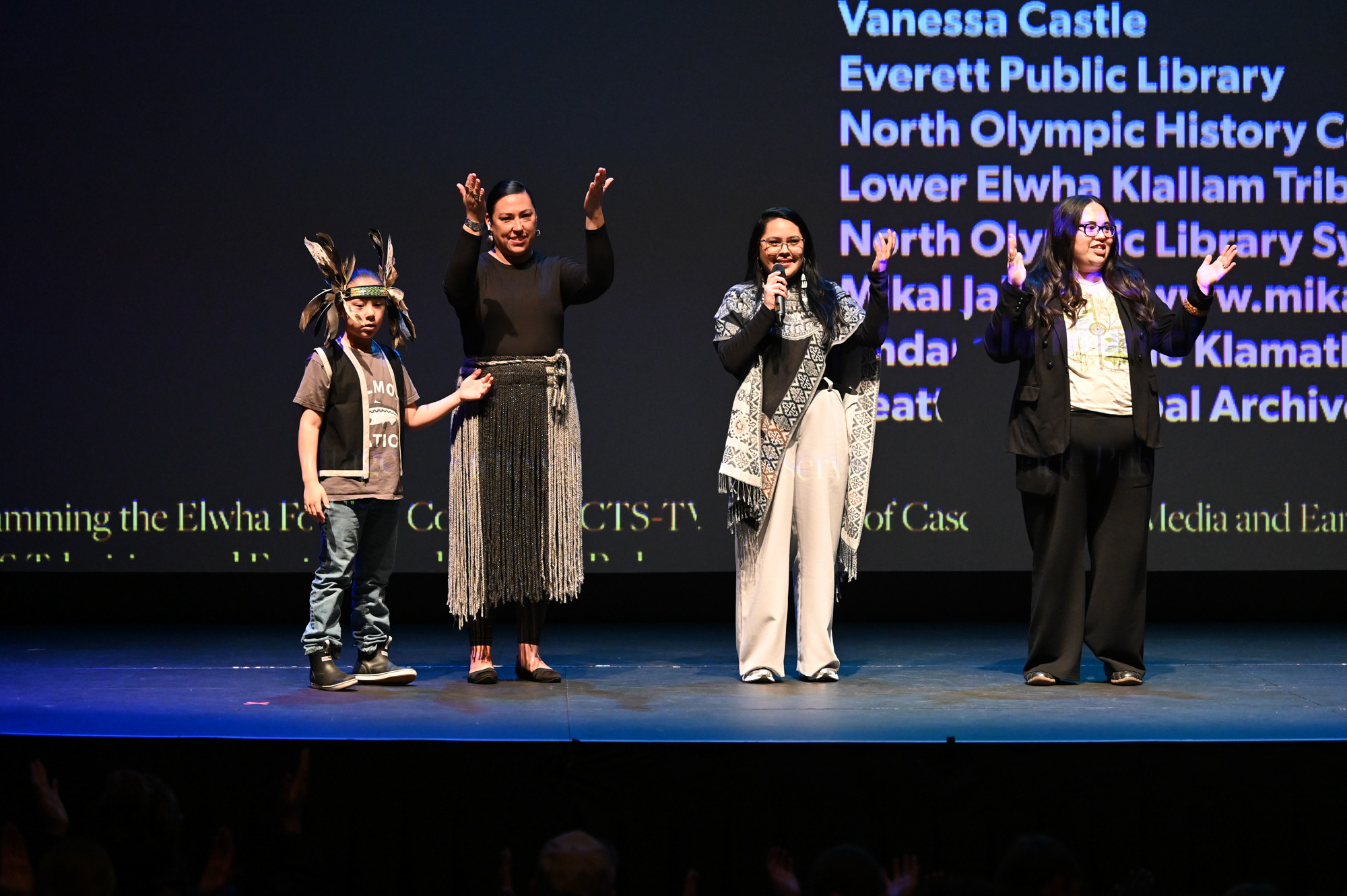
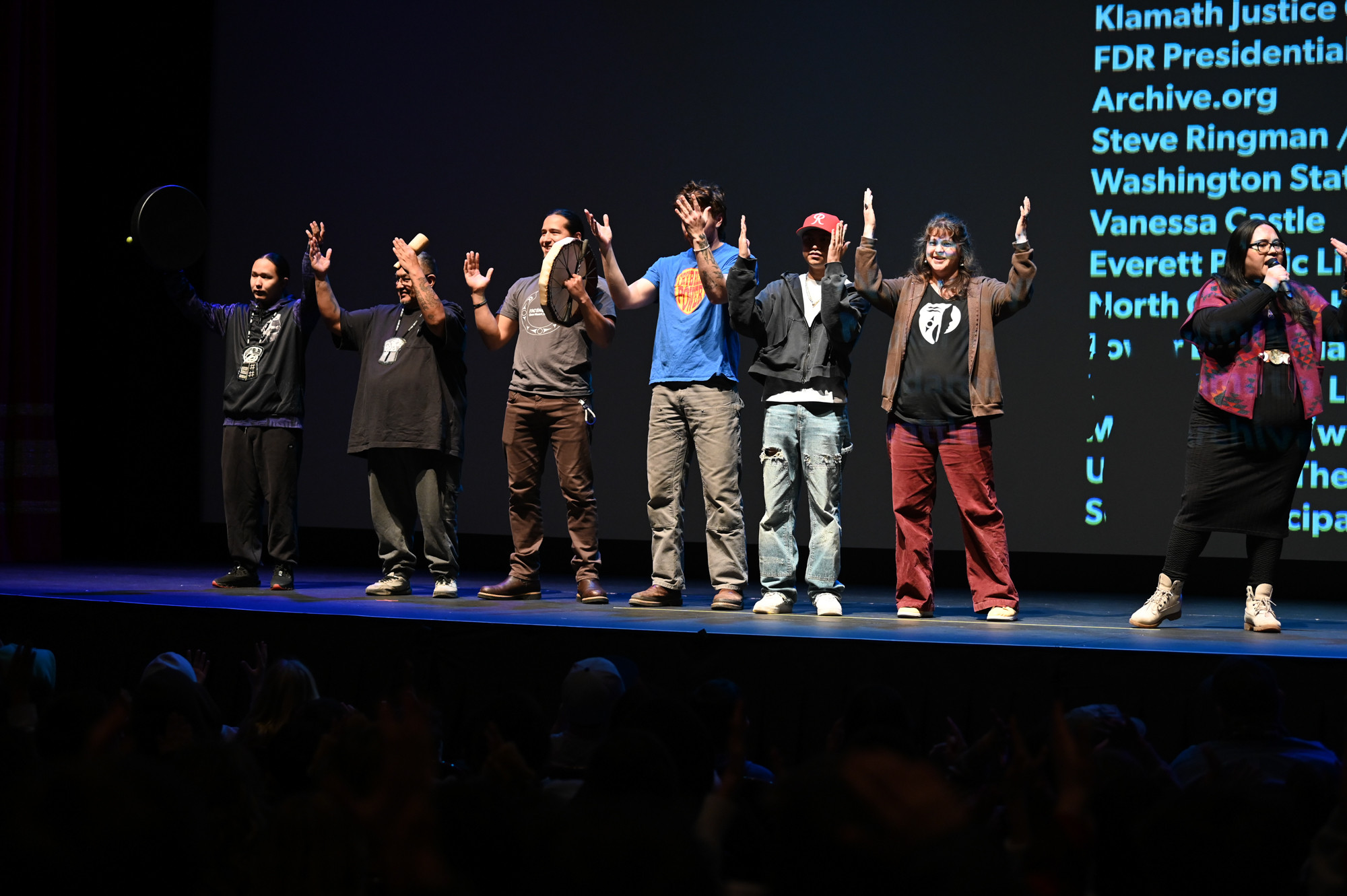
The film is currently making its rounds through several film festivals nationally.
Deliberately, bringing youth to the forefront of our most vulnerable environments is an investment in our future. Adults are increasingly making an urgent and intentional choice: to place children inside landscapes in crisis before those children are old enough to look away.
This instinct is not just pedagogical. Scientists can model collapse. Journalists can photograph it. But a child who has knelt at the edge of a dying reef, who has pressed their palm against the charred bark of a tree, holds a felt knowledge, a bodily memory, an emotional claim – something no textbook can replace. These young witnesses become living baselines: their embodied knowledge, acquired in the field, becomes the foundation of advocacy later in life.
Memory confers standing. A teenager who wades a restored salmon run, or who watched a mangrove nursery root in mud that was bare a year before, arrives at the public hearing, the ballot box, or the negotiating table with authority.
Bearing witness is no passive act. The adults who teach these stories, who insist that children stand at the edge of environments at their tipping points, are making a bet on the future: that memory outlasts policy, that presence creates obligation, and that a generation marked by loss and glimpses of regrowth, might also be the one most determined to act.