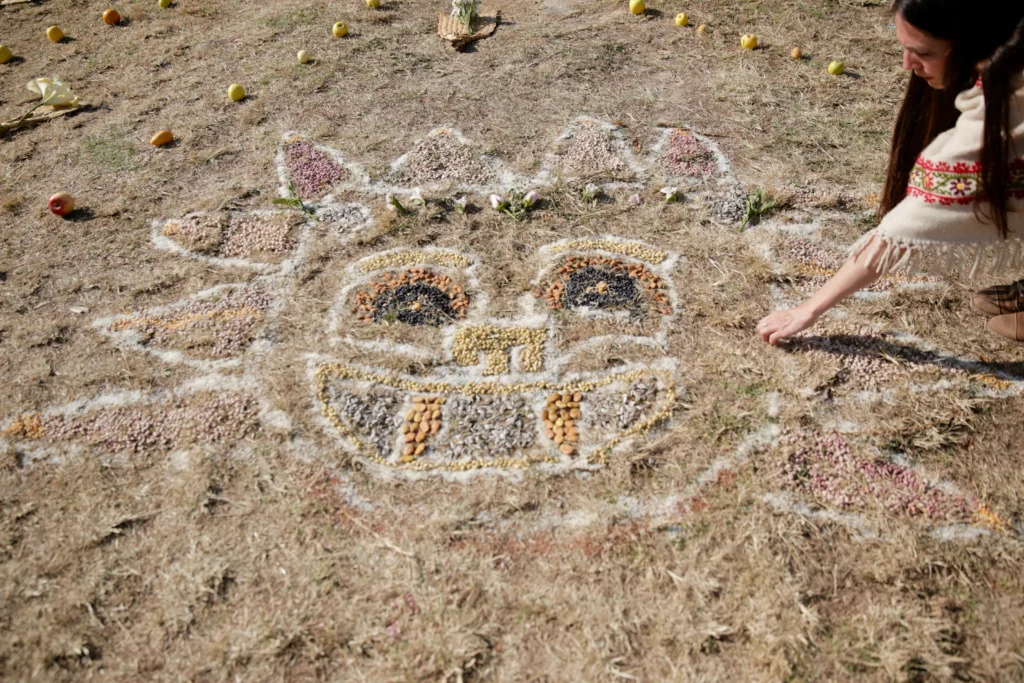
The Earth Elders are a global Indigenous-led movement that protects the world’s sacred sites from extraction, exploitation, and destruction. Now, their story is being turned into a film. Grounded in ceremony and ancestral stewardship, Earth Elders follows the global council of Indigenous elders who guard sacred sites and carry teachings passed through generations. It is a project created at their request, co-owned and co-directed by the communities themselves, and a deliberate move away from extractive storytelling toward relational, consent-led filmmaking. The film arrives at a crucial moment. Across Brazil, the Amazon continues to shrink under cattle ranching, burning, and illegal extraction. In the Andes, lithium demand is drying vulnerable watersheds. Sacred sites worldwide face pressure from tourism and industry. Land defenders continue to face threats for protecting what remains. Earth Elders captures our contemporary moment – a time when global transition plans lean ever more heavily on Indigenous territories, yet rarely on Indigenous leadership. In this conversation, Icarus Complex researcher and writer Linda Förster speaks with Earth Elder Mindahi Bastida, and film-maker Lucy Martens about what it means to recover, to honour Indigenous wisdom, and to find collective dignity.
Linda Förster: What inspired the Earth Elders film, and how did this journey begin?
Lucy Martens: It was the Earth Elders themselves who asked me to come join them and create a media team so they could have their own messaging and make this film. When Mindahi and Ken and Stephen approached me about the film, I thought, “This is the dream project.” They wanted to work in collaboration with someone they trusted because Indigenous people have so often experienced extraction, not just of resources, but also through the way films have been made, and this meant they wouldn’t have ownership of their story or the footage. This time, they wanted to make sure they could work with someone they trusted, and I already had a relationship with Mindahi and some of the council members I’d met through previous work, as I’ve mostly worked on Indigenous-led narratives over the past decade. For this project, the council members are all co-owners of the footage, co-directors of their own stories, and everything is kept safe, which means that we don’t release anything without their consent. They have the final say.
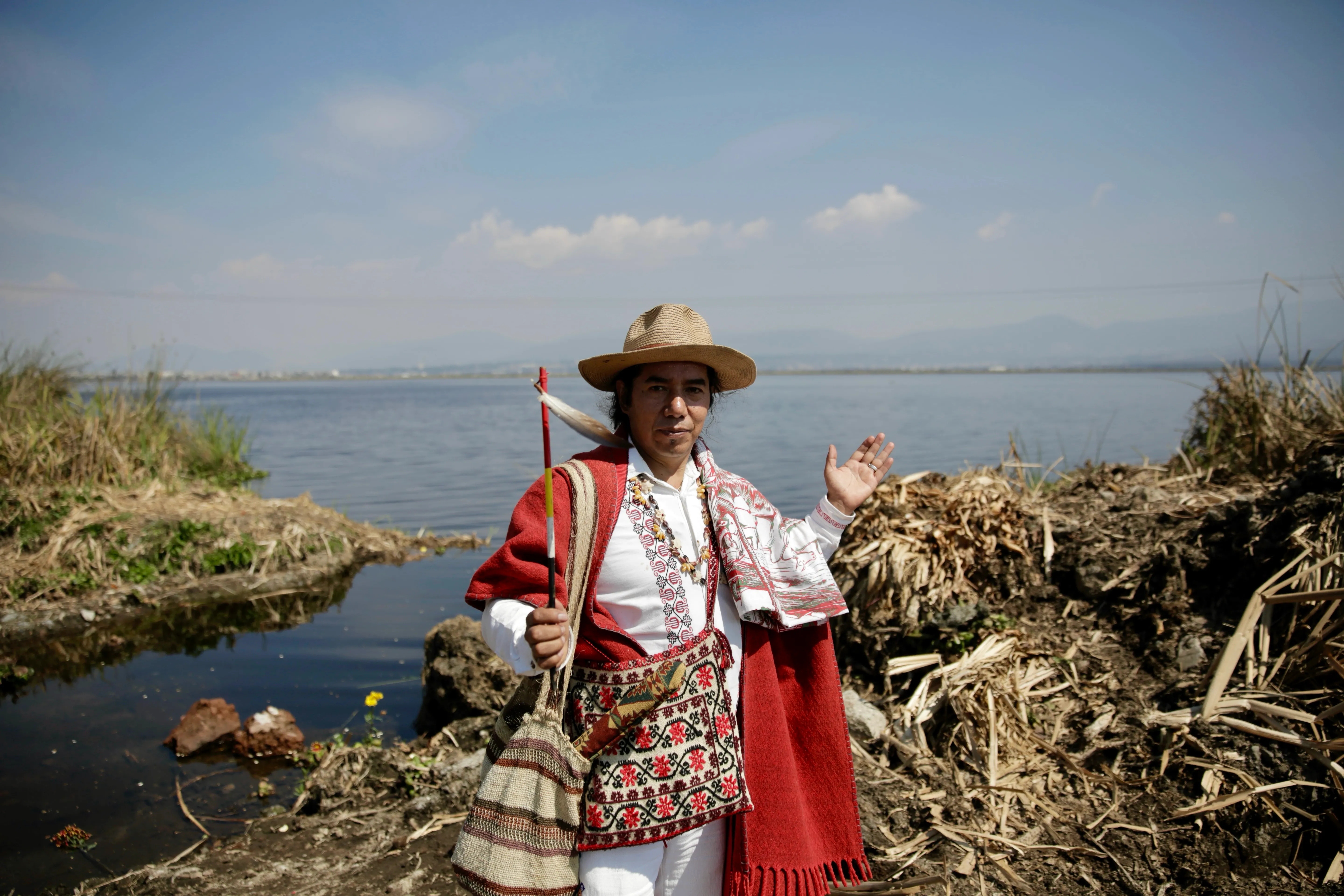
Mindahi Bastida: My personal journey has been with my family lineage from both sides – my father’s and mother’s. I received teachings from many mentors, especially my grandparents. Some of them have transcended, but we are still following their path. We’ve been working on what we call the unification process, following prophecies like the Eagle and the Condor, which are similar to other prophecies like the Rainbow or the White Lion. I think that we are in this process of unification now, not just among humans. It is with all expressions of life. So my work focuses on ancestral teachings and, lately, on the Earth Elders’ five mandates, which occupies most of my time.
LF: Much of the Earth Elders’ work involves sacred sites. Can you briefly explain their importance and centrality in the film?
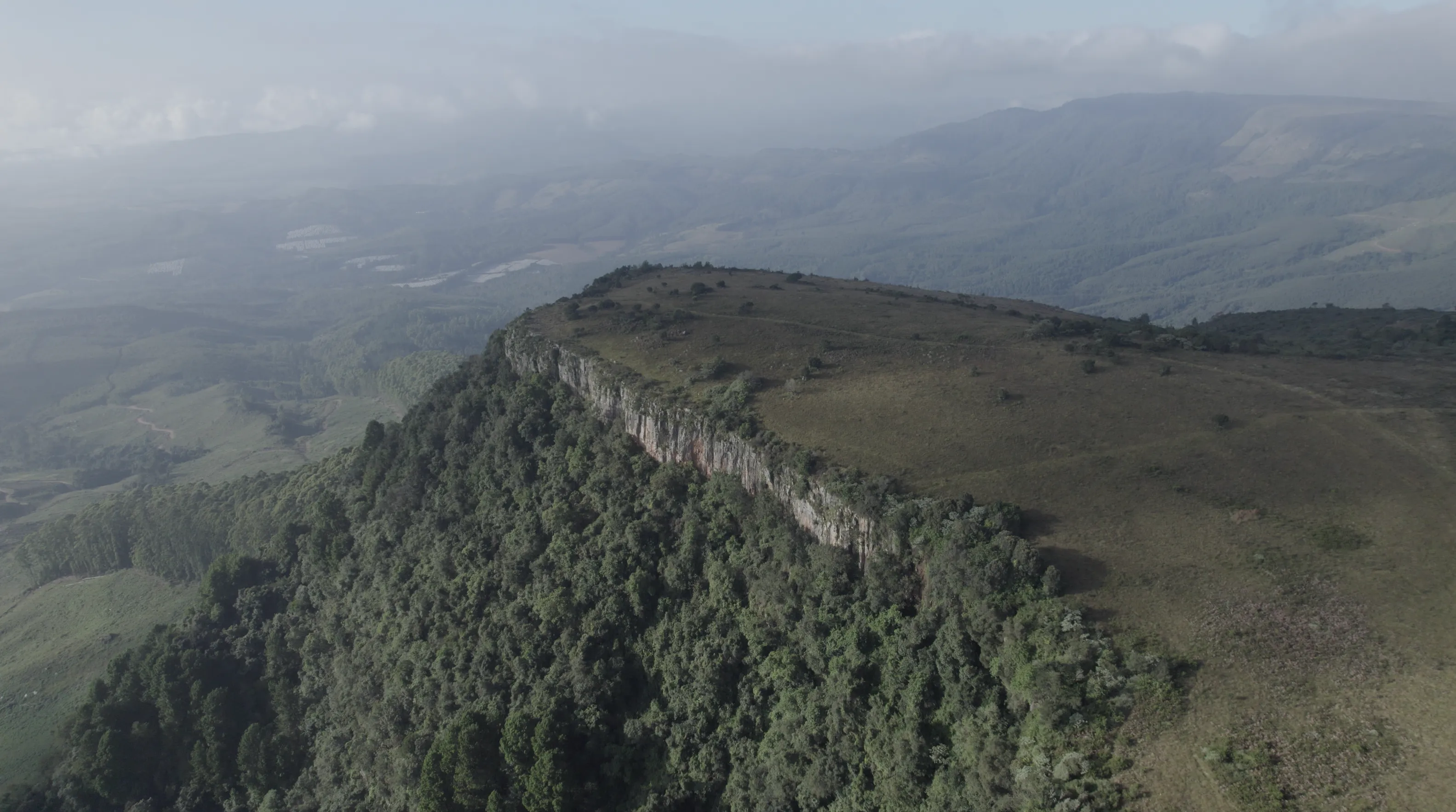
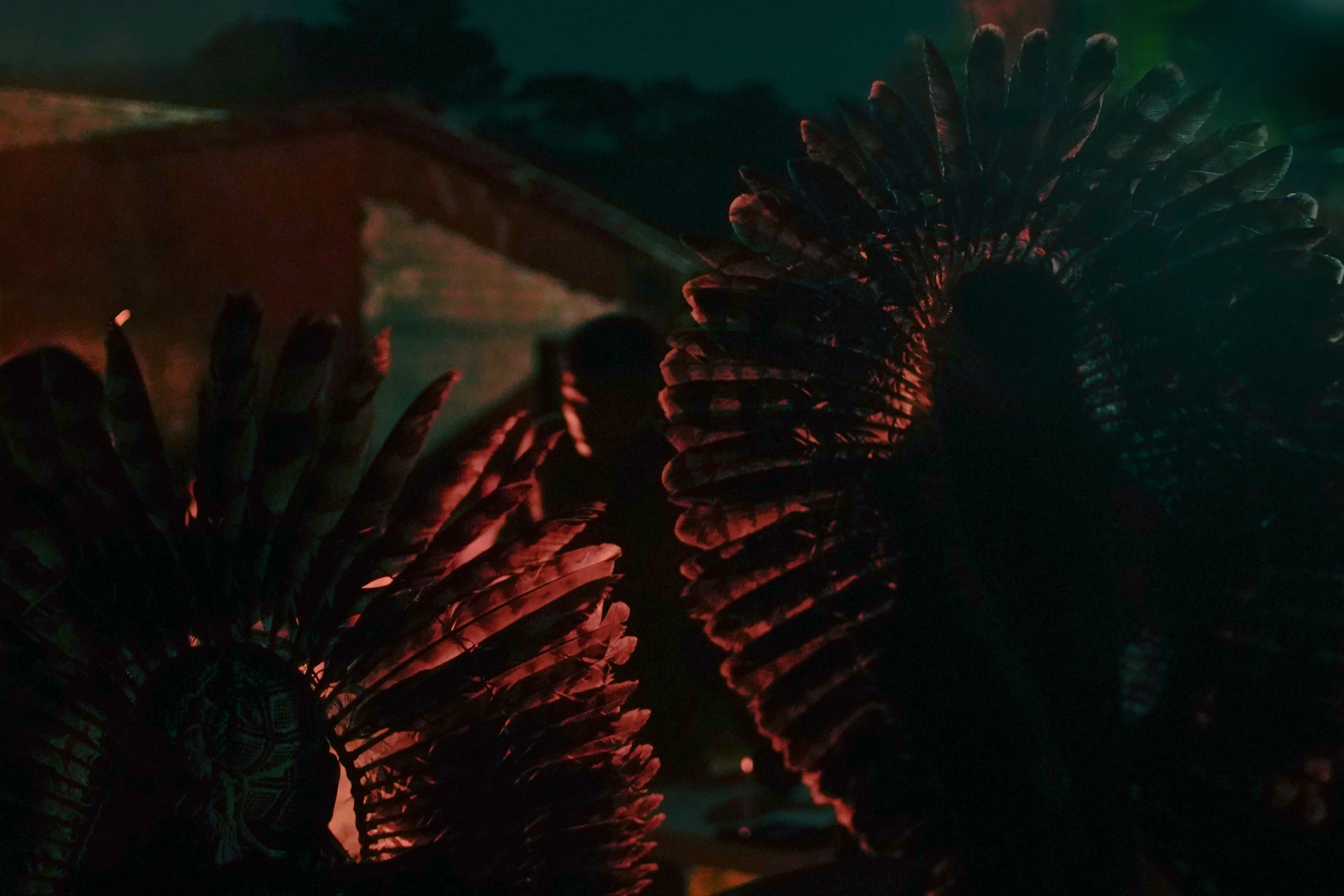
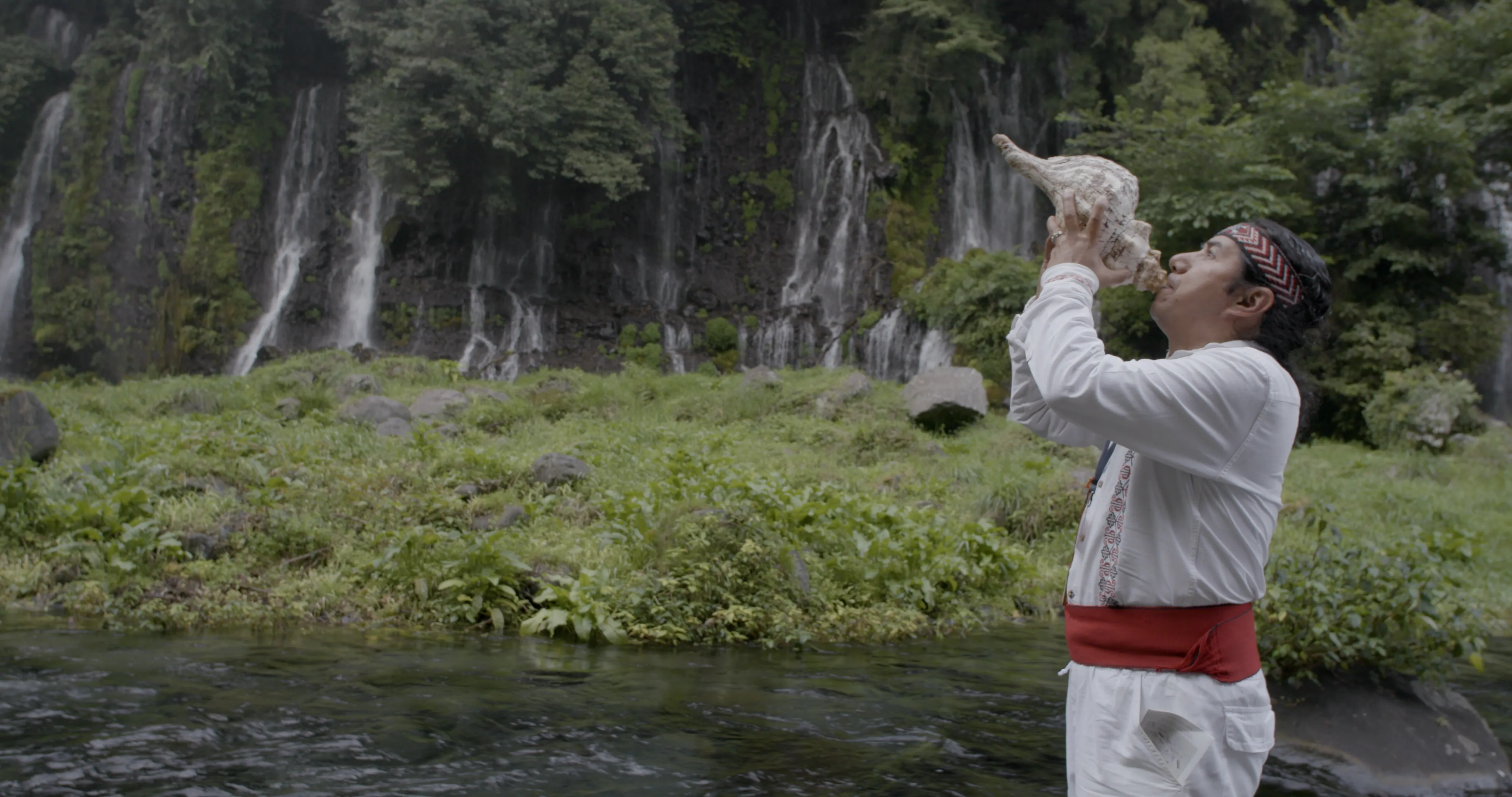
LM: They’re often the most stunning places in nature, like Mount Fuji, Mount Shasta, or Mount Kailash, which are holy in many traditions. I learned through ceremonies I’d filmed before that when the elders hold ceremonies on these sites, they’re not just “activating” them; they’re literally feeding the entities that dwell there, the protectors of those sites. These sites are like the chakras of the planet, and when one is blocked, it affects the whole flow of the Earth. In the past, many beings – unseen beings – guarded these sites, and that’s why they must be left in peace, not mined or turned into tourist spots. These sacred sites are like the energy points of the Earth. Keeping them healthy supports the planet as a living organism. The Elders see the Earth as a living body. Humans are not above nature. There’s no hierarchy. I’ve filmed ceremonies where you can literally see nature respond. The moment the ceremony begins, it might start raining out of nowhere, and when it ends, the rain stops. Or a big storm comes and clears the sky right after. It shows that nature responds, and that communication through ritual is real, but must be done respectfully. Many people visit sacred sites without understanding the protocols and can unintentionally harm them. It’s something you really have to respect. When I’ve been on these sites, it feels like another dimension, another world.
MB: Sacred sites are very important. The Eagle and Condor prophecy talks about a time when the people who were taken away from their territories will unite again the North and the South and the East and West – they are going to come together. Unification is spiritual. It’s a way we can expand cosmic thinking, which means we realize we are not the only ones who are intelligent. There is intelligence everywhere. The prophecy tells us about a time where we are going to recover human dignity, collective dignity, and behave together with other expressions of life like relatives, because for us, the mountains, the ceased, the caves, everything in the waters, the mountains, the volcanoes, the sky – they are relatives and they are our ancestors. So protecting sacred sites and recovering human and collective dignity are intertwined. Recovery is about understanding the sacredness of life, our relationships with water, earth, sky, plants, and animals.
LF: When you speak of ceremonies and rituals, can you illustrate what that looks like?
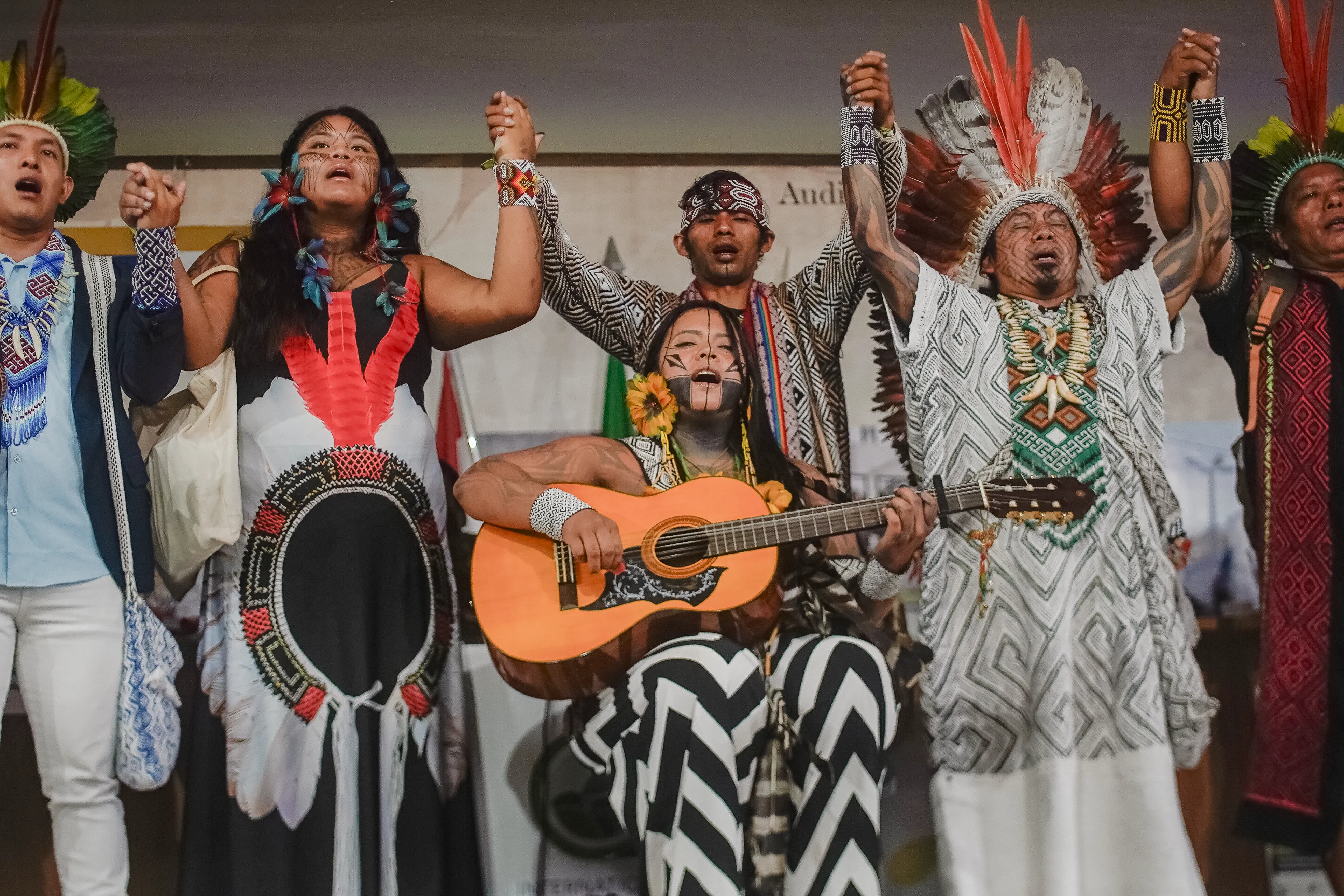
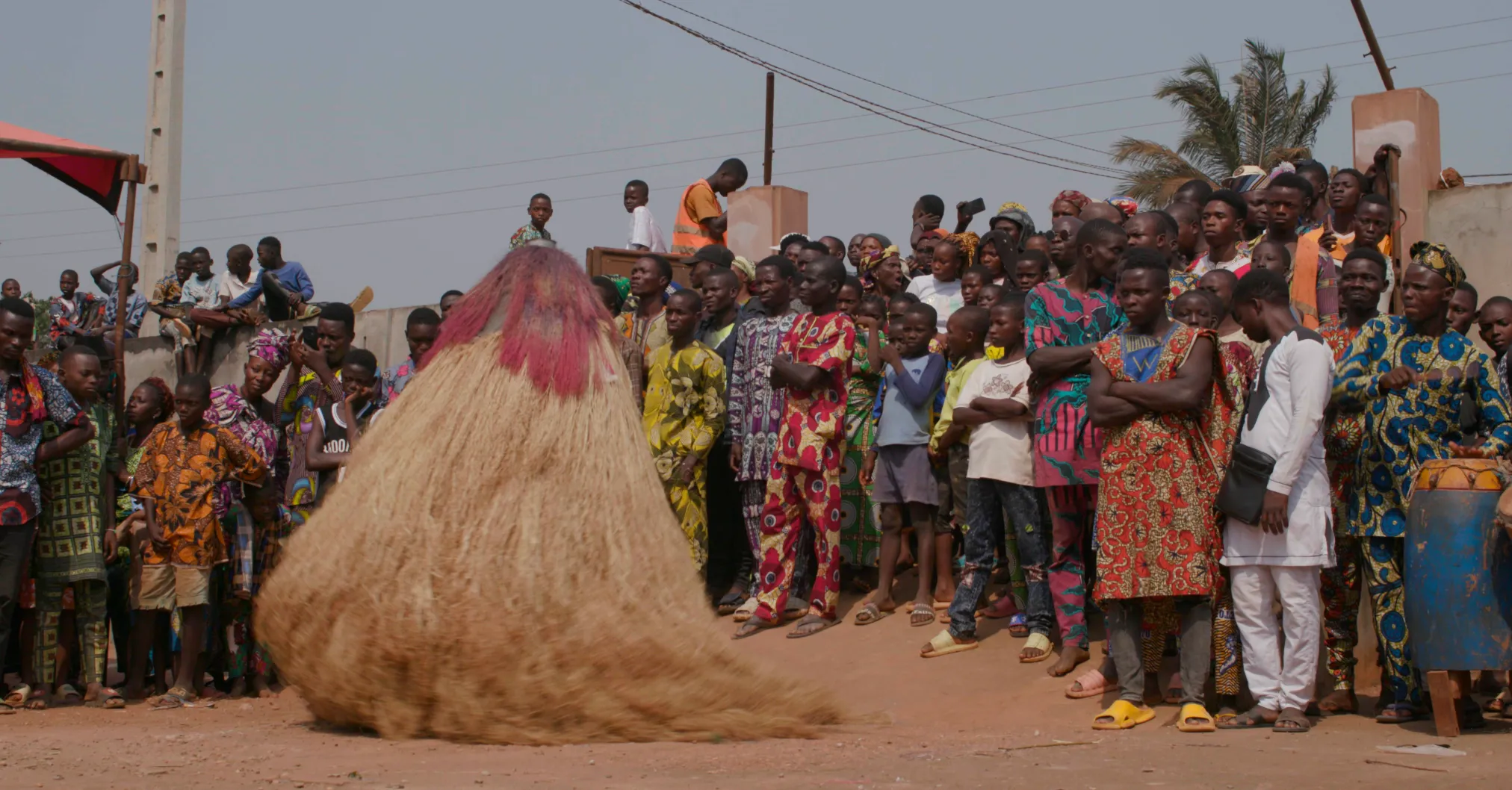
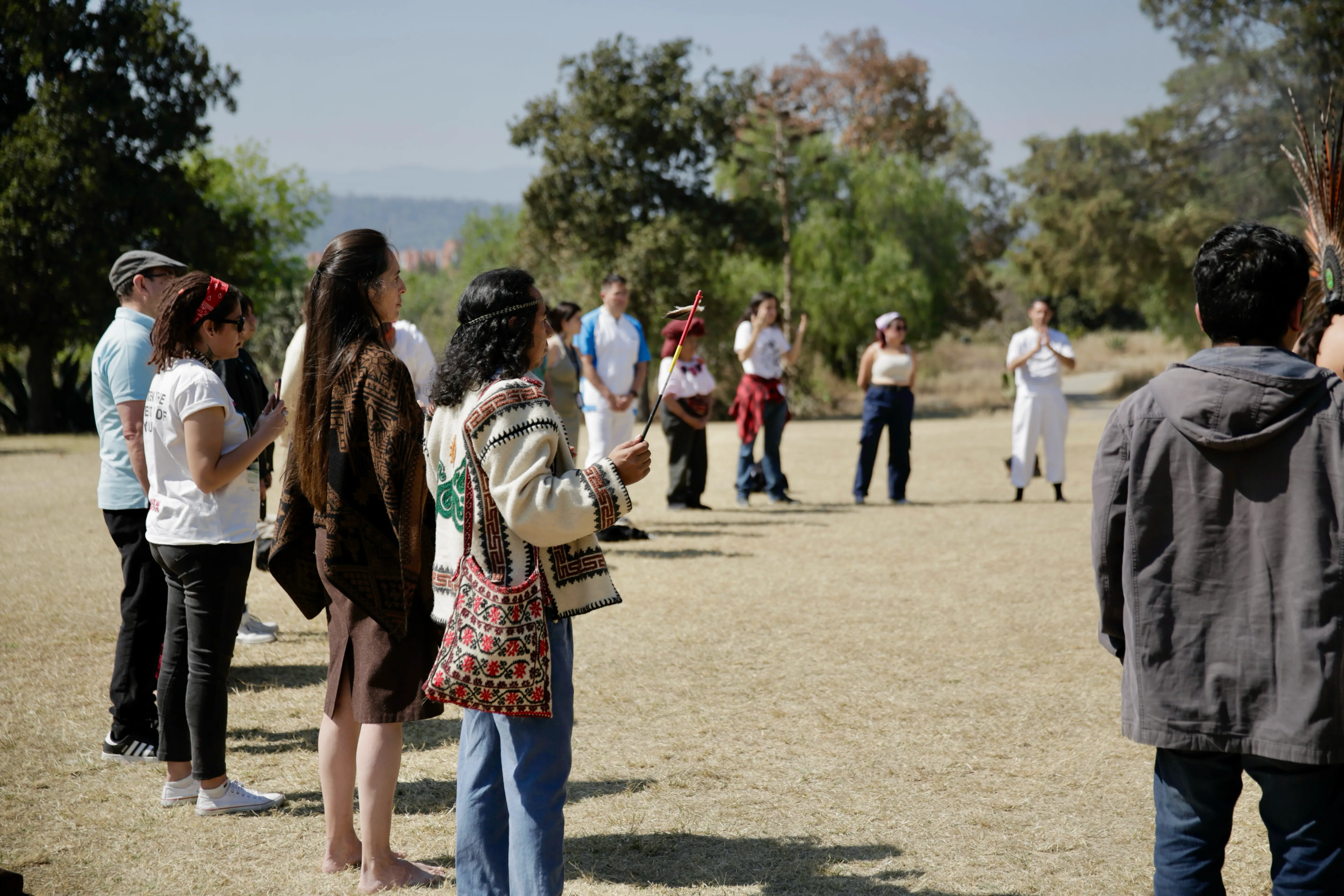
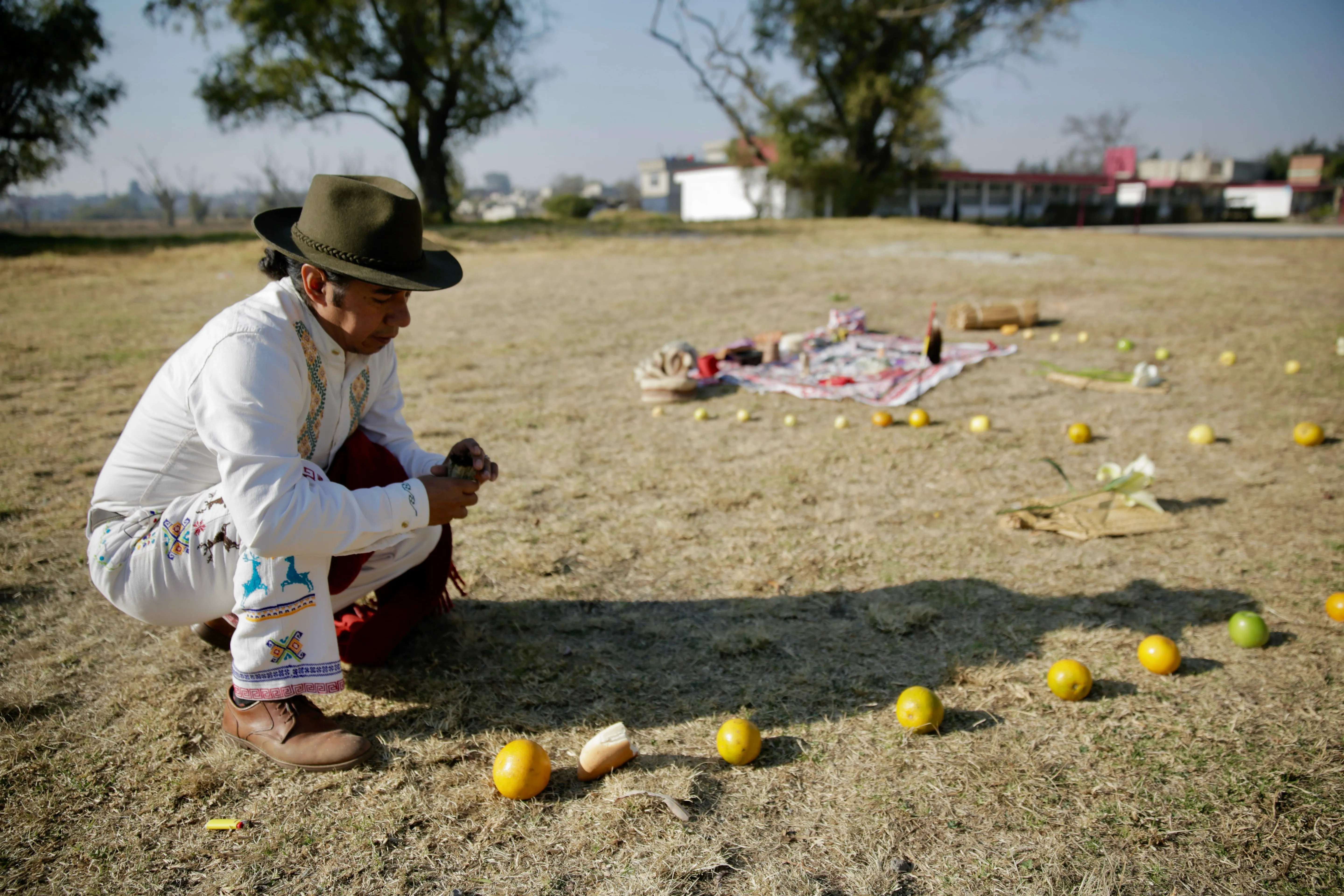
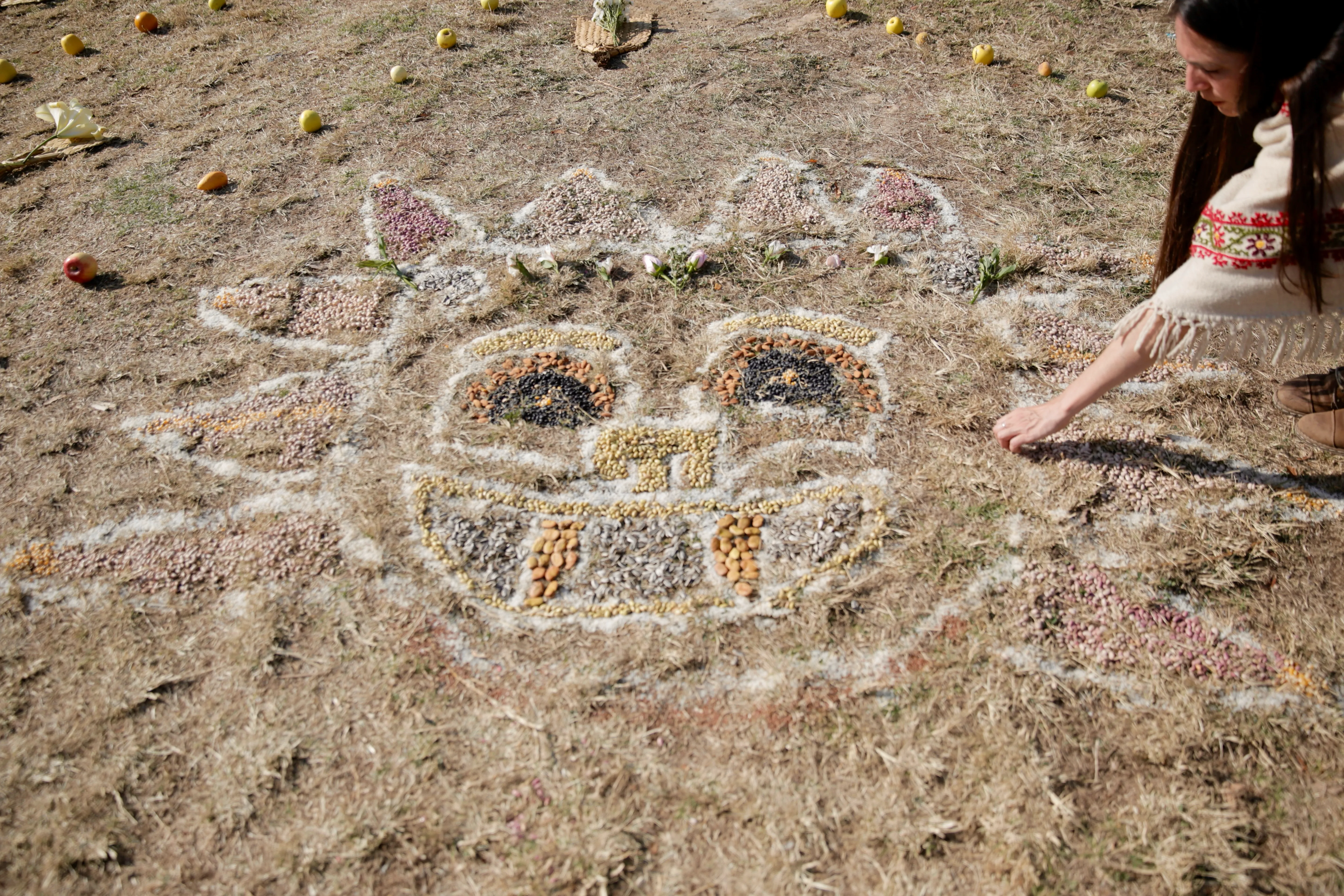
LM: Yeah. It could be as simple as giving an offering to a tree—approaching it, presenting yourself, singing a song, leaving something as a gift. Every tradition is different. In Zimbabwe, for example, they have something called kupira. Every morning they sit on the ground, clap their hands, and give a prayer, asking for permission. Rotendo also told me that in Africa, because it’s all about the ancestors, you can’t just sing a song from South America without first invoking the African ancestors. They wouldn’t understand it. So every place has its own specific rituals. The Kogi make pagamentos, small bundles of cotton into which they blow prayers, then offer them to nature. They do it constantly, giving back to restore balance. Chief Ninawa and his people sing sacred songs together in circles. It’s about putting everyone into the same heart vibration and connecting to nature through that shared frequency.
MB: Rituals are reciprocity and collective responsibility. Through ceremony, the young people learn stewardship of this land. Children and communities learn in observing action, seeing that harmony at home and with others is the source for dignity and recovery. Ritual is how we recover knowledge, align with ancestors, and guide for the benefit of all life.
LF: You’ve emphasized reciprocity, recovery, and centering Indigenous voices. Why is that important to you, and how is it implemented in the film?
LM: It’s their story. No one else can speak for them. The most authentic way to tell someone’s story is through their own voice. When Elders speak, they’re speaking with all their ancestors. You can feel that resonance in their voice. Having their voices as the narrative is key. Our role as filmmakers is simply to bring our craft – the camera, the storytelling – but they have the stories.
MB: Recovery can mean both healing and reclaiming, but it is not just in the material, but also in the mind and the spirit. Recovering is not just individual. Just think about the sea and the forest. Thanks to them we can be here. We always have to consult with these others to recover and to heal. It’s always at the same time as others, and because the other is you, you cannot see yourself individually. I cannot be dignified if others are not. I cannot be in peace if others are not in peace. And actual peace is a beautiful, beautiful thing, but people use it to justify doing nothing for others. This is why I talk about collective dignity and collective action – material, spiritual. Sometimes we are reclaiming, sometimes we are generating something new, always guided by ancestral wisdom. We need to decolonize our minds and bodies and spirits.
LF: How do you convey urgency about climate and biodiversity issues in the film?
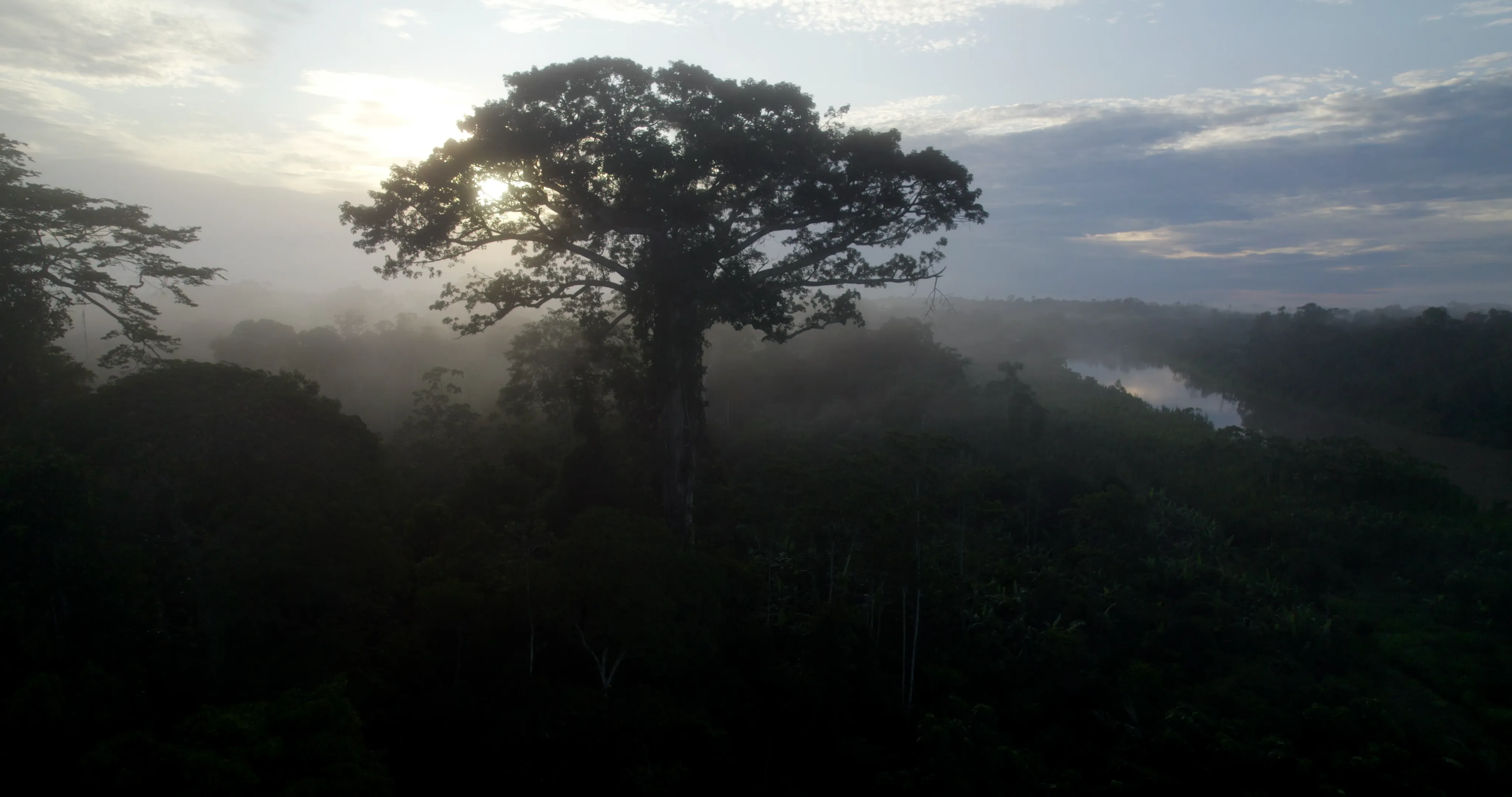
LM: The film has a slower rhythm, but the urgency is definitely there. Indigenous people protect 80% of the world’s biodiversity, and more people are starting to recognize that. But if we want their help, it has to be done the right way. The dominant system has realized Indigenous people hold the wisdom and land protection, so now everyone wants their knowledge, prayers, and energy, but they don’t give much back. People invite Indigenous leaders to speak but don’t pay them properly, or expect access to their knowledge without reciprocity. Extraction happens on many levels. In Brazil, where Chief Ninawa lives, for example, so much of the Amazon has been deforested. When he was a child, it was still a forest. Now, traveling by boat, it’s all fazendas, cattle farms, and soy plantations. Fields are burned illegally, rivers polluted. In Argentina, water is drying up because of lithium mining, much of it done illegally on Indigenous land.
LF: Indigenous land defenders face high levels of violence. How do you handle safety while filming?
LM: Absolutely. We work respectfully and discreetly. In Brazil, activists have been killed for defending the forest. We never disclose exact locations or routes publicly, and we never film something communities don’t want shown. Some ceremonies or songs are not meant to be recorded outside the community. We ask first and delete footage if consent changes. Safety – physical, emotional, and spiritual is always more important than the film.
LF: What do you hope audiences take away from Earth Elders?
LM: I hope they feel a sense of remembering – something ancient inside them waking up. I hope they realize we all have a relationship with the Earth and that we can all be guardians. It’s not about guilt or fear, it’s about reconnection. The elders always say, “Remember who you are.”
MB: And I hope people understand that recovery is collective. We are interconnected with all life, and through ceremony, teaching, and example, culture, ecology, and spirituality can be beautiful together.